Let’s Begin With Compassion by Esther Nelson

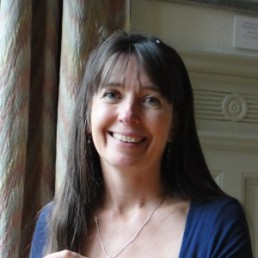
esther-nelsonEvery year, several churches in my area set aside a Sunday morning service to celebrate “The Blessing of the Animals.”  Parishioners bring animals (mostly dogs) with them to church.  The service centers around St. Francis, a Catholic friar and preacher (1181-1226), known for giving us the Christmas crèche, an artistic display prominently figuring Mary, Joseph, shepherds, and angels.  St. Francis soon added cows, donkeys, and sheep to his art.  He said, “Surely the animals praised the new Messiah just as the shepherds and angels did.”  The bulletin of one of the local churches participating in the celebration said, “In honor of this blessed saint [St. Francis] of the church we gather today with our animals, here and in spirit–our pets, our service animals, police dogs and horses, zoo animals and all God’s creatures and give thanks for what they do for us and for what they mean to us.”

The collective prayers that followed thanked God for “animals that comfort us, delight us and give us companionship.”  Also, “thank you, Lord, for animals that give us wool and feathers to keep us warm.  We thank you for animals that give us milk, cheese and eggs to help us grow and to keep us healthy.  We thank you for horses, donkeys and oxen that work hard on farms around the world.”  True enough, we do delight in an animal’s companionship.  We also benefit from animal products and their labor.  However, it seems to me that today, in industrialized societies (especially), we view animals predominately for their instrumental use, ignoring their intrinsic value.  In other words, our concerns center around how we can use animals to further our own wealth and well-being.  Isn’t that called exploitation? Continue reading “Let’s Begin With Compassion by Esther Nelson”

I Look To The Sky by Martha Cecilia Ovadia

I was10298689_10104523891581853_7256973903379376739_n formed by traditions. I was formed by religious rituals. I was a part of a religious community.

I no longer have traditions. I no longer have religious rituals. I am no longer part of a religious community.

I constantly have to tell myself the “no longers” when I feel the echos and ghosts of my past creeping up behind me, reminding me of not only who I was, but who I no longer am.

I sometimes whisper to my husband, “I sleep with ghosts…”

I do not just sleep with ghosts. I wake with ghosts. I sometimes even feel like a ghost. Why?

For me, the act of being Catholic was very much a part of my be-ing. To no longer have Catholicism as part of my be-ing leaves me feeling haunted.

My normal schedule when I was 21 looked like this:

6:00 am: Morning Prayer (Liturgy of the Hours)
7:oo am: Daily Mass, rosary
12:00 pm: Meet people at our church hall (the youth room) to then go to lunch (where we would do midday prayers before eating)
5 pm: sometimes mass again
7 pm: adoration, rosary, and then evening prayer with praise and worship

If it was Saturday or Sunday, it was even more intense (because I was not in classes).

When I was an active Catholic, I had a very distinct language for everything. I had a ritual for all occasions. I was an integral part of a community with very defined roles. I do not have these things anymore and navigating without them has been exhilarating but terrifying. Continue reading “I Look To The Sky by Martha Cecilia Ovadia”

Has the Phaistos Disk Been Cracked? by Carol P. Christ

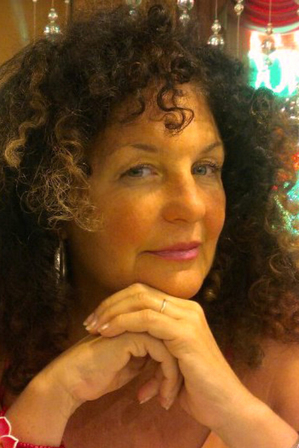
Carol Christ in LesbosRecent headlines in the international press announced that the enigmatic language of the ancient Cretan “Phaistos Disk” has been translated—in part—by the Welch-Cretan scholar Gareth Owens. Owens states that the Phaistos Disk records an ancient hymn to a Mother Goddess. More specifically he claims that one side is dedicated to a Pregnant Goddess and the other to a Birth-Giving Goddess.

All of this is very exciting, but is he right? Continue reading “Has the Phaistos Disk Been Cracked? by Carol P. Christ”

Ignorance and Invisibility by Ivy Helman

20140903_180423According to the United States Holocaust Memorial Museum, the Jewish population of Czechoslovakia numbered some 357,000 in 1933. By 1950, it was recorded to be 17,000. To be sure, some escaped to Israel or the United States. Yet, within the modern boundaries of the Czech Republic, some 77,000+ perished. You can find the names of the dead inscribed on the walls of Prague’s Pinkas Synagogue. The Jewish community here remains extremely affected by the effects of WWII and the lingering legacy of communism.

How much of that did you know? Did you know that Prague is home to what the Nazis once wanted to call the “Museum of an Extinct Race”? Did you know that most of the synagogues in this entire country are boarded up, torn down or used for something else? Did you know that the entire Jewish Quarter of Prague was almost destroyed until someone stepped in and persuaded others to preserve it? Did you know that Western media is saying that Jewish life in Prague is undergoing a grand rebirth, while at the same time, most tourists leave Prague thinking there are no Jews here anymore? Continue reading “Ignorance and Invisibility by Ivy Helman”

Painting “Unknown” Holy Women: Commissions, Gifts, and the Unsung Stories of “Ordinary” Women by Angela Yarber

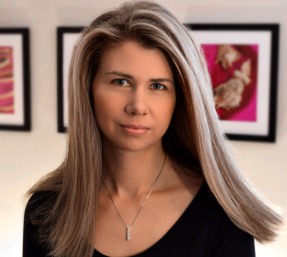
angelaEach month on Feminism and Religion, I feature a Holy Women Icon with a folk feminist twist. The painting is accompanied by an essay describing the holy woman’s life and the ways she stood for justice and peace, the ways in which she embodied feminism. Thus far, we have explored the stories of holy women that are well-known, perhaps not by the wider public, but by feminists seeking to uncover the forgotten truths of holy women throughout history. They are goddesses, saints, artists, dancers, scholars, clergy, and pillars of the faith: Virginia Woolf , the Shulamite, Mary Daly, Baby Suggs, Pachamama and Gaia, Frida Kahlo, Salome, Guadalupe and Mary, Fatima, Sojourner Truth, Saraswati, Jarena Lee, Isadora Duncan, Miriam, Lilith, Georgia O’Keeffe, Guanyin, Dorothy Day, Sappho, Jephthah’s daughter, Anna Julia Cooper, the Holy Woman Icon archetype, Maya Angelou, Martha Graham, Pauli Murray, La Negrita, Tiamat/tehom, and Mother Teresa, just to name a few.

We tell their stories in our classrooms. Other artists paint them. Many have biographies or autobiographies recounting their lives. Their stories embolden us to stay strong, and continue working for justice and equality. But what of the women whose songs really are unsung, whose stories never grace the pages of our textbooks? What about the “unknown” women who have, indeed, emboldened us, paved the way for us to be who we are, but who most people have never heard of? Many such women are also holy, thus deserving of canonization as Holy Woman Icons.

ElizabethI would like to dedicate this post to all the holy women who fill our lives, yet whose stories we never hear. Because it is not only these seemingly famous women—these heroines of feminism—who are holy and whose stories matter.   Continue reading “Painting “Unknown” Holy Women: Commissions, Gifts, and the Unsung Stories of “Ordinary” Women by Angela Yarber”

Max Dashu: Feminist Scholar, Author, Historian, Artist by Jassy Watson

JassyI had the honour of hosting Max Dashu, Feminist Scholar, Historian and Artist here at Goddesses Studio this weekend past. Max is currently on her second Australian tour and we were blessed for her to come on quite the journey to present to an intimate group of Wide bay Goddesses, “Rebel Woman Shamans: Women Confront Empire” and “Deasophy: Goddess Wisdom” with a little “Female Iconography” thrown in.

Max’s knowledge and gift of story-telling is inspirational. “Rebel Woman Shamans: Woman Confront Empire” looked at holy women and female prophets who led many rebellions to resist conquest, slavery, and colonization. These women visionaries, priestesses, diviners and medicine women challenged systems of domination on multiple levels and drew on their cultural traditions to resist empire. It was their direct access to transformative power that these women had, that makes the spiritual political, as they act to lead, defend, and protect their peoples. Continue reading “Max Dashu: Feminist Scholar, Author, Historian, Artist by Jassy Watson”

A Moment of Silence by Natalie Weaver

Natalie Weaver editedIn my last post, I shared with you my wonderment at the power of music to speak for us when we lack speech and to touch us when we are beyond reach.  Now, I experience wonderment at the power of silence.  For, it was silence that in the end helped my father-in-law, who was truly my father, to shed his mortal coil.  After the noise of caregivers and nurses, of talking and encouraging, of wailing and whispering, there was a window of silence when I sat alone with him, stroking his forehead lightly.  I knew he would be free in that quiet to exhale, and with that final breath, he too became silent.

Silence then filled the house, until it was punctuated by the tidal sounds of grief.  And, just like the tides, the grief now ebbs and flows between moments of gentle motion and moments of crushing force.  Behind that grief, though, and behind the rituals we perform to externalize that grief, there remains a giant silence.  It is strange to me that the silence is not experienced as emptiness.  It is not a void or a vacancy or a nothing.  It is an active presence, that is, the silence itself.  It is a deep mystery to be experienced in its own right, without the error of imposing upon it the productions of noise.  For, the silence of bereavement is a fathomless place from which to hear something we could not have heard before.   The silence is holy. Continue reading “A Moment of Silence by Natalie Weaver”

Get your fatwa off our backs! by amina wadud

amina 2014 - croppedIt’s not so easy any more to control the parameters of Islam and the way it is practiced by those who wish to stuff their opinion down the throats of other Muslim citizens, be they minorities or majorities across the globe.

This past week the Selangor Islamic Religious Counsel in Malaysia, issued a fatwa against Sisters in Islam (SIS), accusing them of being “deviant” because they subscribe to religious liberalism and pluralism.  They called for a ban on all their publications and to silence their social media. They sought to shun their activities and personhood “in the name of Islam.’

The next day SIS held a press conference and went on full counter attack.  This is what it has come down to for many who stand for justice, equality, and human dignity for all, within an Islamic perspective.

Let me step back and explain about a fatwa.  Continue reading “Get your fatwa off our backs! by amina wadud”

Voting Day by Sara Frykenberg

Sara FrykenbergCan we think of the voting place as an altar where we hole-punch a prayer to the honored dead?

This past Sunday, Barbara Adinger wrote a beautiful blog entitled “November, a Silent Month?” While welcoming the November darkness and a “delicious melancholy composed of silence and rest” settling over her home, Adinger reminds us that: no, we are not silent.

As human beings protesting invisibility and the erasure of the history of the marginalized, we are not silent. Given special command(ment)s to be silent in far too many patriarchal and kyriarchal religions, we cannot silently accept the violence, abuse and invisibility forced upon us or upon those whose struggle is different than our own.

At times, silence is a survival strategy. But this year and last, I am striving to thrive instead.

At times, silence is an important place of meditation: a spiritual necessity, an oasis and praxis in the creation of peace. But, today, my meditations lead me to speak.

When first reading “a silent month,” in the title above, I thought to myself: “I hope not.” I am glad that Barbara agrees. Today—November 4th, aka, “voting day”—those of us living with the privilege of citizenship in the United States have a responsibility to speak. As a woman, I also have a responsibility to my feminist sisters and brothers who won me this right—an inheritance that has become increasingly important to me. Continue reading “Voting Day by Sara Frykenberg”

Death with Dignity by Carol P. Christ

Carol Christ in LesbosIn the summer of 1960 when I was 14 years old my much loved grandmother Mae Inglis Christ died of a cancer that affected her brain. The last time I saw my Nannie was shortly after her diagnosis in the early spring. While we were visiting, the cancer affected her back, and she took to her bed. In those days children were not allowed in hospitals. I never saw my grandmother alive again, but my mother told us that our grandmother was hooked up to tubes much longer than she should have been. Mother vowed, “This will never happen to me.” I was driven to the funeral in a limousine with my grandmother’s girlfriends. They spoke about my grandmother’s last days, describing how (because her mind was affected by cancer) my little grandmother had screamed and screamed at them for not visiting–even though they were with her every day. They found my grandmother’s outbursts so traumatic that they said they were relieved to see her looking so peaceful in her coffin. Continue reading “Death with Dignity by Carol P. Christ”