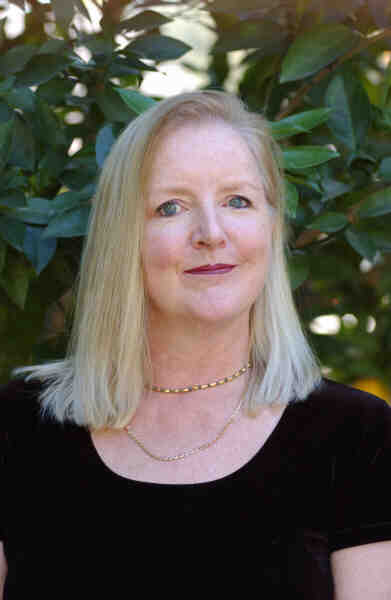
The Next Liberal Prophet: What Will She Look Like? By Amy Levin

Amy2

This past Martin Luther King, Jr. day, I was privileged enough to attend the 57th presidential inauguration at the U.S. Capitol.  Spirits were high and it seemed as if we were breathing recycled air infused with the hope of four years past.  As the President approached the stage, he appeared with the confidence of a second term sage, and yet there was a newer, fresher quality about him – purified and politically born-again. As he began to speak, the religious undertones leaped out into the pews.  Beautifully crafted in diction, rhetoric, and reference, Obama pleased and inspired his dedicated supporters. Guiding us historically through Seneca, Selma, and Stonewall, we understood the meaningful tributes toward women, African Americans, and the LGBT communities. But there was an excess – another constituent represented – God had entered the stage.

Continue reading “The Next Liberal Prophet: What Will She Look Like? By Amy Levin”

From Bihar, India—The Thirteenth Sakyadhita Conference by Rita M. Gross

Rita GrossAbove and all around us is a blue and white stripped fabric tent, as, about 250 strong, we participants in Sakyadhita’s Thirteenth Conference on Buddhist Women, shiver in the cold, listening to a wide variety of papers about women and Buddhism.  We are meeting in Vaishali, in Bihar, India, at a Vietnamese nunnery that was recently founded at the place where Mahaprajapati, the first Buddhist nun, was ordained.   She is a great hero to many Buddhist women for her persistence about receiving formal ordination as a nun, thus founding an institution that has endured for some 2,500 years in various parts of Asia, and now in the West as well, so it is fitting that we should meet here.  The nunnery complex is still incomplete and under construction, which is one reason why we are meeting, essentially, in the outdoors.  The thin fabric walls over little protection from the coldest winter in north India in forty years.  That was not part of the planning for this event! So everyone, speakers and participants alike, wear all the layers of clothing we have, and cheerfully practice patience.  It is quite a sight! Continue reading “From Bihar, India—The Thirteenth Sakyadhita Conference by Rita M. Gross”

Rebekah of the Hebrew Bible: A Mormon Feminist Model by Caroline Kline

Kline, CarolineThis semester I took a class on women in the book of Genesis. I was particularly interested in learning more about the language used to describe Eve, since she is such an important model of inspired action and proactivity for Mormon women. However, I also discovered another woman in the book of Genesis whom I saw as a potentially powerful model for Mormon feminists, a woman caught in a patriarchal context, but one who decisively and creatively figures out how to insert herself, her ideas, her inspiration into the events at hand: Rebekah.

Let me recap the most crucial incident: When Isaac is old, blind, and believes he is approaching death, he determines to give a special blessing to his firstborn son Esau. When Rebekah hears of his plans, she springs into action, ordering her younger son Jacob to impersonate Esau in order to obtain this blessing. Rebekah feels so strongly that Jacob should get this blessing – and no wonder, given her revelation from God forty years before that Jacob should inherit the promise – that when he objects, fearing a curse from his father if he is found out, she says to him, “Let your curse be on me, my son. Only obey my word, and go…..” (Genesis 27:13). Continue reading “Rebekah of the Hebrew Bible: A Mormon Feminist Model by Caroline Kline”

How To Find Those Lost Ancestors by Carol P. Christ

 carol p. christ 2002 color

Over the past year I have written several blogs on ancestor connection.  In this blog I will share what I have learned about how to find ancestors.

I recommend the popular television series Who Do You Think You Are? which has US, UK, and Australian, and other versions, and the PBS series hosted by Henry Louis Gates, African American Lives and Finding Your RootsWhile you might think, as I did, that genealogical research is about finding the names and birthplaces of ancestors, these programs set the genealogical quest in the great flow of history.

Records show that I have ancestors who immigrated to the United States from Ireland, Scotland, Prussia, and Germany in the early 1850s.  Historical research tells me that more than a million people left Ireland and Scotland in the 1850s due to the “potato famine,”* which affected the rest of Europe as well.  History explains why ancestors emigrated.

Begin your search by asking parents, grandparents, aunts, and uncles, for names, dates, places of residence, stories, and other information they remember.  Continue reading “How To Find Those Lost Ancestors by Carol P. Christ”

Brigit and Patricia: Comrade-Women by Elizabeth Cunningham

Brigit is my comrade-woman
Brigit is my maker of song
Brigit is my helping-woman
My choicest of women, my guide

Brigit, celebrated by pagans and Christians alike on February 1, is a goddess who knows how to incarnate. When Christianity came to Ireland, she became a saint without missing a beat and without giving up any of her reputation for healing, poetry, or smith crafting, for being the keeper of the sacred flames and wells. The verse above is one of my favorites from “The Blessing of Brigit,” several versions of which are recorded in Alexander Carmichael’s Carmina Gadelica, Hymns and Incantations Collected in the Highlands and Islands of Scotland in the Last Century (which is to say the nineteenth!)

I adapted the verse and sang it in memory of author, educator, priestess, and visionary activist Patricia Monaghan who died November 11, 2012. Dawn Work-Makinne offered a beautiful tribute to Patricia’s life and work. Today I want to reflect on Patricia in relation to Brigit, a goddess Patricia researched and celebrated (look for the forthcoming anthology she edited with her husband, Michael McDermott  Brigit: Sun of Womanhood)—and whose spirit she embodied as vigorously as the legendary Saint Brigit of Kildare. Continue reading “Brigit and Patricia: Comrade-Women by Elizabeth Cunningham”

Voice of Wisdom: What Hildegard Means Now by Mary Sharratt

sharratt$mary_lresHildegard von Bingen (1098–1179) was a visionary abbess and polymath. She composed an entire corpus of sacred music and wrote nine books on subjects as diverse as theology, cosmology, botany, medicine, linguistics, and human sexuality, a prodigious intellectual outpouring that was unprecedented for a 12th-century woman. Her prophecies earned her the title Sybil of the Rhine.

Pope Benedict XVI canonized Hildegard on May 10, 2012—over eight centuries after her death. In October 2012, she was elevated to Doctor of the Church, a rare and solemn title reserved for theologians who have significantly impacted Church doctrine. Hildegard is the fourth woman in the entire history of the Church to receive this distinction.

But what does Hildegard mean for a wider interfaith audience today?  Continue reading “Voice of Wisdom: What Hildegard Means Now by Mary Sharratt”

Three Sisters by Deanne Quarrie

From time to time I dive into the idea of seeing the Triple Goddess as Sisters rather than Mother, Maiden, Crone.  I have to confess that the idea of Sister Goddesses, complete in their familial connectedness, representing unity, connection, and interdependency, is very appealing.  We, who practice Goddess Spirituality, strive in our relationships to reflect this in our work together.  Shared power!

If I were to look at the sisterhoods individually, I enjoy the Ananke and the Moirae from Greek mythology.  I like them because they represent a balance.  One side setting the standards and the other, enforcing them!  A perfect example of the laws of cause and effect! Continue reading “Three Sisters by Deanne Quarrie”

And Thus God made a Covenant with Hagar in the Wilderness by Michele Stopera Freyhauf

Freyhauf, Feminism, Religion, Durham, Old Testament, Blogger, BibleWe are familiar with the covenant God made with Abraham and Moses, but are you aware that God also made a covenant with Hagar?

In the wilderness Hagar encounters a deity at the well named Beer-lahai-roi (Genesis 16). Water and wells are important because they symbolize fertility and life. Wells for women are common places where they met their future spouses. Because wanderers in the desert need water to survive, water itself becomes a symbolic of life-giving or life.

In the seemingly barren dessert, the fertile Hagar finds out that she is pregnant and going to be the mother of many children. Hagar is promised progeny in a motherless state.  According to Pamela Tamarkin Reis, this is called the “after-me” descendants, which guarantees Hagar that her children will live for “immeasurable generations;” a pattern that fits within the scope of this promise. This same promise of progeny is also given to Eve in Genesis 3:20, providing and interesting parallelism between Eve and Hagar.

It is worth pointing out the irony exists in this promise.  Sarai uses Hagar to “build her up.” According to Nahum Sarna, to be built up in terms of the number of children that you have, implies that you are mother to a dynasty.  In this pericope, however, it is Hagar, not Sarai that is built up through this divine promise.

This patterns of promise exists within the birth narrative through the annunciation of Ishmael and the promise of progeny.  It is through this narrative that Hagar enters into a covenantal relationship with the deity.  According to J. H. Jarrell, birth narratives have six common elements that establish this relationship:  mother’s status, protest, offer, son’s future forecast, Yahweh naming, and acceptance of the contract. Hagar’s story contain these elements:

  1. Mother’s Status:  Hagar is without child because she is a virgin (16:1).
  2. Protest:  Hagar flees from her mistress (16:8).
  3. Offer:  Return to your mistress and submit to her authority (16:9).
  4. Son’s Future Forecast:  He will live at the east of all his brothers (16:12).
  5. Yahweh Naming:  You will bear a son Ishmael because the Lord has given heed to your affliction (16:11).
  6. Acceptance of the Contract:  She called the name of the Lord (16:13).

Continue reading “And Thus God made a Covenant with Hagar in the Wilderness by Michele Stopera Freyhauf”

Les Miserables’ Fantine, Women’s Suffering, and Female Migrant Labor by Gina Messina-Dysert

Gina Messina-Dysert profileUpon the recommendation of several friends and colleagues I decided to see the film Les Miserables.  It is rare these days that I make it to the movies.  My life is generally over scheduled and spare time is nonexistent.  So with just a few days left until the start of the semester and with a pile of work on my desk, I decided to throw caution to the wind and head to the theater last-minute to see Victor Hugo’s masterpiece on the big screen.

First, can I say what a brilliant surprise the film itself was?  I wondered if Hollywood could do justice to Hugo; from the moment of the opening scene I was in absolute awe.  I left the theater experiencing a momentary resurrection.

Anne Hathaway / Les Misérables: © Universal Pictures.

While the entire film was amazing, I would have seen it for nothing else but Anne Hathaway’s performance as Fantine.  I felt her suffering in the depths of my soul and wept along with her.  In Fantine we see the suffering of Everywoman.  She represents the thin line between those virtuous and those fallen and mirrors women’s imprisonment within this dichotomy.     Continue reading “Les Miserables’ Fantine, Women’s Suffering, and Female Migrant Labor by Gina Messina-Dysert”

Body Talk by Kelly Brown Douglas

The more I reflect upon the complex and multiple ways in which various bodies are put upon and disregarded, the more I am persuaded that we have a body problem.

Our bodies communicate to us in many ways. They are a valuable source of knowledge in terms of our present realities and they are also valuable storehouses for memories. Long after the memories of the mind fade away, memories of the body linger. The mind may not remember, for instance, the details of a particular event, but the body remembers how it felt.  The memories of sadness, anxiety, hurt and pain as well as happiness, peace, healing and love are grafted upon our bodies. Feelings, sensations and instinctive reactions—things that are hard to explain—are oftentimes our bodies’ ways of communicating memories. These are embodied memories reminding us of what it means to feel torn apart or to feel whole. It is the body giving feedback at any given moment in time. Embodied memories certainly involve what Audre Lorde identifies as “erotic power.” This, Lorde says, is an “internal sense” and a “depth of feeling” “that is a source of  power and information” (Lorde, Sister Outside). Embodied memories are one of the ways in which our bodies speak to us and help us to know the good, right and just thing to do, from within ourselves and through depth of feeling. Continue reading “Body Talk by Kelly Brown Douglas”