Making America What Again? Reflections for the 4th of July by Sara Frykenberg

I find myself asking (again), when the religious right, evangelicals, and Christian fundamentalists hear Trump say, “Make America Great Again,” do they really hear him saying, “Make America Christian Again?” How can the really hear him saying that in light of what this man has actually said and actually done? The answer: because of the same mythical purity that erases the violence, slaughter, and atrocity attached to this “Christian nation’s” founding.

Sara FrykenbergMy mother sometimes likes to watch the movie “Independence Day,” on the 4th of July—you know, the one where Will Smith, the gutsy and heroic Marine pilot, Jeff Goldblum, scientist, and Bill Pulman, president, save the Earth from extraterrestrial invasion? It’s an action film loaded with implicit myth and exceptionalism, extolling “mankind’s” common humanness in the face of annihilating, “alien” difference. The heroes ultimately unify the globe with fly-by-the-seat-of-your-pants “American” ingenuity, luck, and bravery. Continue reading “Making America What Again? Reflections for the 4th of July by Sara Frykenberg”

Bikini Season by Sarah Kiefer

I grew up in a suburban town stuck in the middle of rural Indiana. I drove through corn fields to get to school and on more than one occasion I did have to crawl through my sun roof to get into my car because I was sandwiched between two monster trucks. My grandfather, an avid bird watcher, waged a personal war against the chipmunks and within one summer caught and drowned anywhere between fifteen and twenty of them until my mom pointed out that he was probably attracting them by putting bird seed on the ground.

I was raised in the non-denominational Christian church and part of my weekly activities was attending youth group. For those of you not familiar with youth group, it’s usually held on Wednesday night for the youth in the church. It’s basically church geared towards pre-teens and teenagers. Some of my fondest memories of my teen years are from youth group. You foster deep friendships in a fun environment and have good role models all the while learning about the Bible in a way that is more easily understood by a young person.

When I was about thirteen I went to a conference with the rest of the girls in youth group. It was a “modesty conference” geared at teaching young women the “biblical” truth of their role as a female and how that translates into how one dresses. We were taught that we are responsible for the relationship between our brothers in Christ and Jesus. One of the ways that we can make them fall is wearing too revealing clothes. If we wore something too tight, too low, or too short, the men wouldn’t be able to control themselves and would sin in the eyes of Jesus. We were encouraged to wear loose t-shirts and shorts that went to the knee in order to keep our brothers from sinning.

The last night was the long awaited fashion show of the conference and we had all stayed up the night before eagerly finishing the dresses we would be modeling the next day. At the end of the fashion show the lead pastor’s wife came out wearing a bikini. We were all cheering her on because she looked great. She stood at the end of the runway shaking and grabbed the microphone. As she spoke, the mood of the room dramatically shifted. She said she would never wear a bikini in public because her body is for her husband alone and other men looking at her would cause them to sin. The sadness and guilt her voice conveyed sobered all of us. We all vowed we would never wear a bikini again and from here on out it was modest, one piece bathing suits for us.

Looking back at this experience, I recognize quite a few issues I want to address. First, teaching young Christian girls that we are not only responsible for our own relationship with Christ, but also the relationship of all men feels wrong to my spirit and isn’t even biblical. Second, teaching us to be ashamed of our body’s natural shape and covering it in baggy clothing so men won’t sin when they look at us is detrimental to both men and women. The detriment to a young girl’s self-esteem because she has strict guidelines reinforced with guilt around dressing herself leads her to thinking there is something “wrong” or “bad” about her body. This also perpetuates the lack of accountability for men, as they grow up thinking they can’t control their sexual being so they don’t even try, placing the responsibility on women. Why do you think the question “well what was she wearing?” asked in the case of a woman’s rape comes up so often? (This thinking comes from the common misconception that rape is an act of uncontrollable sexual urges, not a man exercising an intentional act of power.) These innocent teachings have further reaching effects on society than we think.

Lastly, I want to address what the pastor’s wife shared with the group, particularly her comment on her body being her husband’s. True, our bodies are not our own, they are a gift from God. 1 Corinthians 6: 19 says “Do you not know that your bodies are temples of the Holy Spirit, who is in you, whom you have received from God? You are not your own; you were bought at a price. Therefore honor God with your bodies.” All God asks in return is that we treat our body respectfully. I don’t know about you, but I see nothing in that verse about a woman’s body being owned by a man. A woman’s body is not to be owned by a significant other no matter what their marital status is, just like a man’s body is not to be owned by a significant other. Language of possession and ownership in romantic relationships needs to be struck from the dialogue of Christianity and replaced with the language of respect.

Since I’m not the gatekeeper of heaven and hell I can’t say for sure, but I’m relatively certain if you wore a bikini you won’t be sending three men plus yourself into eternal damnation. With bikini season around the corner, take some time to reflect on the way you view your body. Do you treat it with respect? Do you own it? Do you love your body? Or have you given away that privilege to someone else? I say as a Christian woman, we unburden ourselves of the responsibility for our brother’s sin. We have enough to do. Like bikini shopping.


Sarah is graduating with her undergraduate degree as a psychology major with a pre-law concentration and minor in women’s studies in 2017. She has accepted a full ride scholarship to law school and is expecting to pursue prosecutorial work. Outside of the classroom, she serves as a Resident Assistant, plays on the championship lacrosse team, and also serves as president of Women’s Circle—the feminist student group that she helped to establish and for which she continues to lead discussion and events.

Remembering Sor Juana Inés de la Cruz’s Life and Legacy: Champion of Universal, and Non-Human Rights November 12, 1648/51 – April 17, 1695 by Theresa A. Yugar

She studies, and disputes, and teaches,
and thus she serves her Faith;
for how could God, who gave her reason, want her ignorant?

—Sor Juana Inés de la Cruz, Villancico, or, “Carol”, in celebration of St. Catherine of Alexandria (1692)

05.Yugar 1The reason for this blog, and for writing it on this day, is to celebrate and remember the life and legacy of Sor Juana Inés de la Cruz.

In 1994, I was exposed, by chance, to the life and writings of 17th century Novohispana feminist Sor Juana Inés de la Cruz. I am the product of twelve years of Catholic education, eight years of which were in an all-women setting. Again, by chance, I learned about Sor Juana in a liberation theology class while studying feminist theology at Harvard Divinity School. In this class, I learned about Sor Juana’s bold advocacy of the right of women to be educated. This spurred me to learn more about this Catholic Latina theologian whom I would later discover was the last great author of El Siglo de Oro (Spain’s Golden Age), recognized in her era as an esteemed poet, mathematician, astronomer, and more. This was the beginning of my life-long passion to reclaim the legacy of Sor Juana and her-story within the Christian, non-Christian Western tradition, and in Spanish and Mexican history. Continue reading “Remembering Sor Juana Inés de la Cruz’s Life and Legacy: Champion of Universal, and Non-Human Rights November 12, 1648/51 – April 17, 1695 by Theresa A. Yugar”

On Being an Occasion of Joy by Chris Ash

Christy CroftWhen I was 19, I fell hard into the kind of deep depression that hits college kids whose unstable upbringings, rife with inconsistency and trauma, left them ill-prepared to face the self-direction and responsibility of independence. I didn’t grow up religious despite my father’s attempts to turn visitation weeks into conversions, but had started attending the local Episcopal cathedral months earlier after seeing its stunningly beautiful windows on a historic tour. Having taken basic stained glass courses when I was 18, I’d been mesmerized by the artistry and would sit in a different pew each week, drifting into and out of awareness of the service, eyes trained on the nearest window, lost in contemplation, love pouring in.
When the darkness became too much and I sought more of that love through spiritual care and reflection, I walked into the church library and thumbed through the directory looking for resources, and was hopeful to discover that the Episcopal Church had convents. That afternoon, I dialed the number for the nearest convent, and in that especially dramatic way of depressed 19-year-old artist types with backgrounds in theater, I declared that I couldn’t handle life in the world anymore and that I might want to become a nun. Sister Ann told me that their order was less an escape from the world than a new way of being fully present in it, but invited me to spend Christmas at the convent.

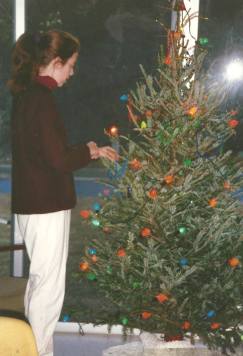
Decorating the tree in the convent's guest house
Decorating the tree in the guest house

What started out as a holiday visit became several months of me spending every day that I wasn’t in class or at work at the convent, living in the guest house, attending five services a day, helping with maintaining the grounds, and spending as many waking hours as I could in the library, face buried in the works of medieval women mystics. Over the coming years, I’d spend many long weekends in retreat at the convent, and the sisters became my second family. I visited with women I was dating and later with a Muslim boyfriend, and everyone was always welcomed with love. When my first child almost died as a newborn and I called to ask for prayer, two sisters drove to be with me in the hospital. I still cry now, twenty years later, when I tell people the story of a parish priest leading the small group gathered in my hospital room in prayer after my son’s first surgery, and how my heart swelled when halfway through the Lord’s Prayer, teary eyes closed, I began to hear the familiar lilt of women’s chanting over our soft-speaking voices. Continue reading “On Being an Occasion of Joy by Chris Ash”

Continuing Pre-Christian Traditions in the Czech Republic by Ivy Helman

20151004_161012Pelišky was one of the first movies I watched in the Czech Republic.  It takes place in the year (maybe years) before the Soviet Occupation.  It follows the lives and struggles of ordinary families.  One of the best and funniest scenes takes place at a small post-wedding dinner.  The couple receives some new-fangled plastic spoons as a wedding present.  The gift-giver is very proud of the fact that they were made in Eastern Germany.  One of the characters stirs her tea with the spoon and is about to lick it but as she takes it out of the hot tea it bends as if it was made of rubber.  Soon the scene dissolves into arguments, frustrations and disappointments.
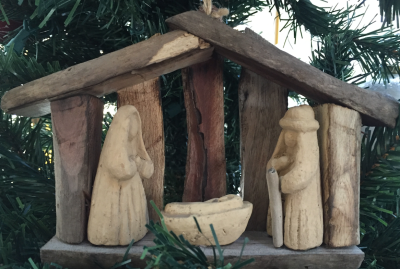
Another memorable scene I remember was around New Year’s Day.  An older couple pour melted aluminum into a bowl of water then pull it out and examine its shape in an attempt to divine what the new year will hold.  Neither can agree on its shape or its meaning. Continue reading “Continuing Pre-Christian Traditions in the Czech Republic by Ivy Helman”

Our Ladies of Sea, Earth, and Sky by Joyce Zonana

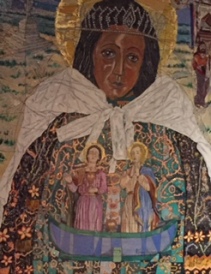
Sara and the Marys
Sainte Sara encompassing Sainte Marie-Salome and Sainte Marie-Jacobe

O Sainte Marie-Jacobe, priez pour nous.

O Sainte Marie-Salome, priez pour nous.

O gardeures de la Provence, priez pour nous.

The priest intoned the words in deep, liquid accents, his voice echoing from the ancient stone church in the remote village of Les Saintes-Maries-de-la-Mer, in the Camargue region of Southern France, where the waters of the Rhone River meet the Mediterranean Sea in a wild, wide, flat expanse populated by black bulls, pink flamingos, and white horses.

“O, Saint Mary-Jacobe, pray for us.”
“O, Saint Mary-Salome, pray for us.”
“O, guardians of the gates of Provence, pray for us.”

I could feel the words resonating through me, bringing sudden, hot tears. The people gathered in the small village square repeated the priest’s chant, their voices rising above the low, white-washed houses into the sunlit sky, out towards the shimmering sea where legend tells us the two Marys had drifted two thousand years ago in a boat without rudder or sail.

Continue reading “Our Ladies of Sea, Earth, and Sky by Joyce Zonana”

What If Jesus Had Gone to Daycare? by Katey Zeh

Screenshot 2015-12-08 09.47.34

As a maternal health advocate, I cherish the season of Advent as an opportunity to connect a beloved Christian story to the lives of women today who struggle to bring new life into the world under horrific circumstances. Every year I write something about Mary’s pregnancy and birth. In many ways she is no different from the “Marys” around the world who are young, poor, and unexpectedly pregnant, and who go on to give birth in unclean environments. I often pose the question to communities of faith, wasn’t the Christmas miracle equally that Mary survived the birth? How different would Jesus’s life have been if he’d never known his mother?

I continue asking these questions, but after my daughter was born last October, I have found my Advent reflections shifting to mirror my own parenting experiences. I began to think beyond Mary’s birth and into her early months of motherhood. One morning last December, after a particularly awful night’s sleep, I came downstairs to hear “Away in a Manger” playing on the radio. When it got to the line “But little Lord Jesus/No crying he makes,” I rolled my eyes dramatically and pictured Mary doing the same as she bounced a screaming baby Jesus in her arms. Continue reading “What If Jesus Had Gone to Daycare? by Katey Zeh”

Why Is Pizza Round? The Black Goddess of Rome by Stuart Dean

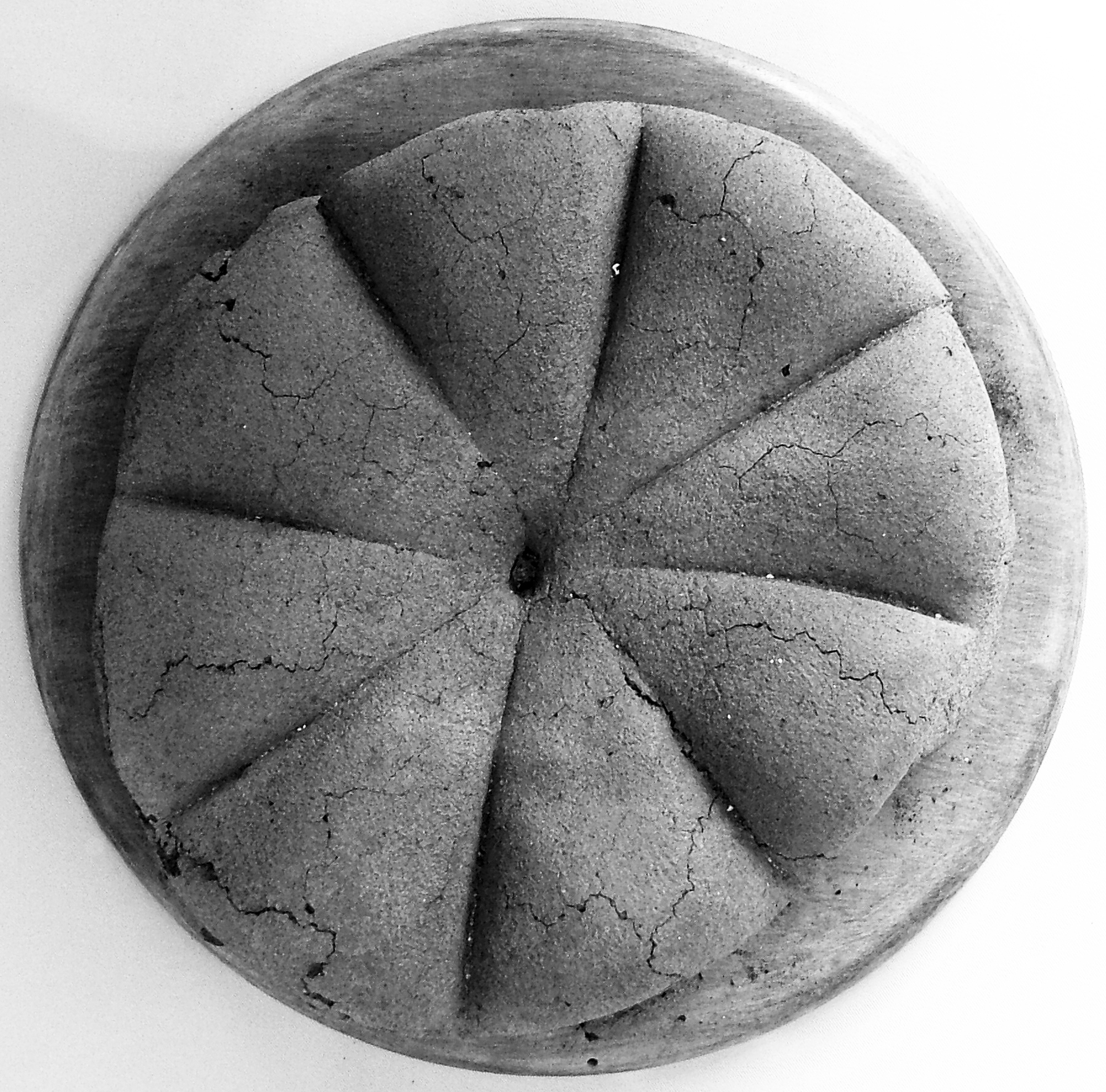
The remains of an ancient Roman bread pie from Pompeii, carbonized in the eruption of Vesuvius in 79 CE
The remains of an ancient Roman bread pie from Pompeii,
carbonized in the eruption of Vesuvius in 79 CE

The poem Moretum (discussed in my last post) narrates the preparation of a meal that can be characterized in modern English as ‘pizza.’  Round flatbread is baked; to go on it, a cheese spread is mixed.  The details of the narration are such as to create a recipe of its ingredients and related cooking instructions.  

The most important ingredient, however, is not an ‘ingredient’ as such, but a shape.  The bread, the cheese, and the cheese spread are all round.  That by itself might not seem remarkable, but the Latin terminology (words from which ‘orbit’ and ‘globe’ derive) is identical to then contemporary astrological terminology.  The bread is even scored into quadrants, symbolizing, among other things, the four elements and the quadrants of an astrological observer’s circle. 

The ancient audience of Moretum would have recognized in all this the world view of the Italian poet from southern Campania, Parmenides.  Though the only poem he is known to have composed is in Greek, the combination of the fact that he likely wrote it while in Italy and that it had over the centuries since its composition become one of the most influential philosophical works of pre-Christian antiquity meant Parmenides had special importance to Romans.  It is not surprising Moretum has the same meter and many of the poetic images as are found in the poem of Parmenides. Continue reading “Why Is Pizza Round? The Black Goddess of Rome by Stuart Dean”

Holding On Too Tightly by Sara Frykenberg

Raised in an evangelical, Protestant Christian tradition, I was repeatedly told that “God is love.” God is love. While much of my Christian experience was difficult and even abusive, I have always interpreted this teaching—while sometimes confusing to me, and other times, fueling my spiritual inquiry—as a positive thing. When learning to shed the abusive contexts in my life, I did so encouraged by those who knew that love and god/dess shouldn’t be abusive. When challenging and responding to abusive paradigms within Christianity through my dissertation writing process, I reflected on how leaving an abusive cycle can feel like a hiccup from love, a frozen breathlessness and confusion on how to access love in new ways; but I also had to conclude that love hadn’t really been absent, even if hard to find.

God/dess is love—even when the dominating power celebrated within a particular religion, family or society distorts access to god/dess-loving. Yet, this issue with access, the trained approach to receiving love that is taught in an abusive context, is a habit that I have had to continually and consciously shed. I catch myself falling into patterns of get-love-through-control or get-love-through-performance behaviors. I try to be someone or something to ensure my access to what I perceive as love, sometimes finding it hard to accept that I am loveable without performance, role-playing or being someone that somebody else wants me to be. The more I experience mutual loving—or as Carter Heyward puts it, “godding” –the less I fall into this trap of performance; and the more I realize that my “performing” who I think others want me to be actually hinders my most loving relationships. However, while living outside of the abusive context has become easier in my life, sometimes I panic. Sometimes I hold on too tightly, afraid of the reality of loving without (the illusion of) control. Continue reading “Holding On Too Tightly by Sara Frykenberg”

Feminism and Faith by Judith Plaskow, Rosemary Radford Ruether, and amina wadud

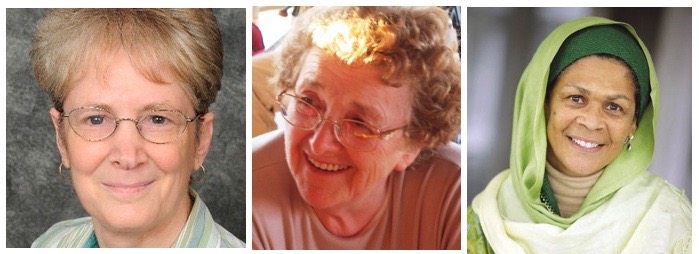
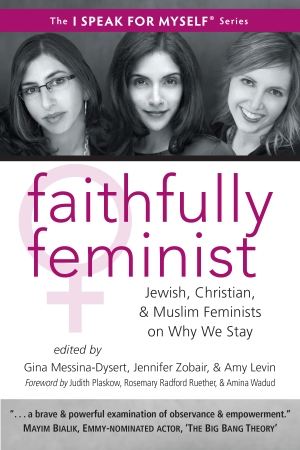
Foreword Image.001 (1)“Feminism saved my faith” is the concluding phrase of one of the writers in Faithfully Feminist, and though not everyone would say it that way, most of these women have found feminism and faith vibrantly interrelated. The contributors to this anthology articulate a range of reasons that feminists might choose to remain within a patriarchal religious tradition. They also remind us that women reconcile their faith and feminist identities in diverse ways. This volume testifies to the dynamism within the religious communities of Judaism, Christianity, and Islam in the United States, and to their internal diversity. This diversity allows for the contributors to engage in a process of their own development as feminists of faith that interacts with similar processes of development going on in their religious communities.

The overriding common bond for these women of faith is the shared conviction that the conflict between religion and feminism is real— even when it is generated by other people’s expectations that those two identities are separate and irreconcilable. Once each woman arrived at a place where she no longer felt an imperative to abide by an either/or dichotomy, she was able to define the terms of her religion and feminism for herself and to own both identities as significant.

Multiply the individual accounts in this volume by tens of thousands, and the effect of these women’s decisions and the concerted actions for change that have flowed from them has been enormous. For example, feminism has profoundly altered American Judaism in the last forty-plus years. Women are ordained in all branches of liberal Judaism and, in all but name, in modern Orthodoxy. New denominational prayer books written in English use inclusive language and incorporate writings by women. Feminists have written Torah commentaries, designed rituals for important turning points in women’s lives, and created new scholarship on women that contributes to a fuller history of the Jewish people.

Likewise, Christianity has been significantly impacted by the work of feminist theology. While some branches continue to refuse leadership roles to women, many others have acknowledged that every person embodies the spirit of Christ and have embraced the ordination of women. In 2006 the Episcopalian Church ordained its first woman bishop, the highest office in the church. Inclusive language has found its way into the prayers and rituals of many churches and feminist commentaries have shifted thinking on scriptural interpretations. Dialogue within and across branches of Christianity are expanding borders, and movements like Woman Church and online feminist spaces have created opportunities for women to claim agency and participate in roles that have been traditionally withheld.

In the long road to Islamic feminism, women have sometimes lacked agency to define either Islam or feminism. Traditional definitions of these words which operate as a constraint on work within Islam towards justice, equality and dignity; feminism was connected to Western imperialism and invasion into Muslim-majority nation states, and centuries of patriarchal control and interpretation stifled women’s efforts to claim Islam for themselves. This is changing, aided by campaigns such as the 2009 launching of the Musawah movement for equality and justice in Muslim family law. A new freedom is emerging that allows Muslim women the dignity and honor of defining Islam and feminism for themselves—no matter how little they might know of global discourses and historical traditions. All that was necessary was to, identify as a believer and expect a life of justice within that belief. Islam has also witnessed women-led prayers and a move toward inclusive prayer spaces.

The profound changes feminists have inspired and worked for do not mean that all problems have been solved and that women’s subordination is a thing of the past; there is plenty of work for a new generation. The difficulties with overcoming the glass ceiling and balancing work and life that women within the larger society face also bedevil women in all three religious communities. Panels, boards, and publications often exclude women’s voices completely or have only token female participation. Ordained women in Judaism are paid less than their male counterparts and rarely become senior rabbis in large or prestigious congregations. If women “choose” to serve smaller synagogues —the explanation often tendered to explain these gaps—that is partly because the expectations surrounding the rabbinate have not kept pace with its changing demographic, and women who want to combine rabbinic work with raising a family face considerable obstacles. Christian ordained women face similar obstacles within the priesthood and continue to be denied leadership roles in some branches, including Catholicism and Mormonism. Similarly, Muslim women are often excluded from panels at religious conferences and are underrepresented on the boards of religious institutions. The idea of women leading Muslim prayers remains controversial. And too often, discussions about women’s role in Islam still revolve around the issue of hijab, or covering.

The challenge for feminists today is passing on feminist insights and gains to the next generation. Is women’s history being incorporated into elementary and high school texts, or are students being taught the same parade of male names and faces? More particularly for Jews, Christians, and Muslims, when a girl or woman wants to mark some nontraditional ritual occasion, is it clear where to turn for resources? Do most Jews, Christians, and Muslims even know that it is possible to create new rituals that feel deeply meaningful and religiously authentic?

Finally, when teachers—and parents—talk about God, how is God imagined? Are children still growing up thinking about God as a distant male figure, or are they offered a range of images, and emboldened to create their own? Are children being encouraged to talk about and challenge passages in and interpretations of the Torah, Bible, and Qur’an that are misogynist or otherwise unethical? Are they developing critical tools that will allow them to engage with and transform difficult parts of tradition?

The next generation of feminists should consider a move beyond rhetoric and terminology towards substance and personal affirmation. Identifying as feminists of faith helps forge global alliances towards meaningful dialogue across difference—even the differences within. It is only when these deeper levels of change are addressed that the question, “Why stay?” will cease to be relevant.

FF_front-cover_FINALThis essay is the Foreword for Faithfully Feminist: Jewish, Christian, and Muslim Feminists on Why We Stay edited by Gina Messina-Dysert, Jennifer Zobair, and Amy Levin.  

For more on Faithfully Feministclick here.

Join the conversation on Twitter using the hashtags #FaithfullyFeminist and #WhyIStay.

Related Articles:

9 Badass Feminists of Faith You Should Know

Mayim Bialik Endorses Faithfully Feminist

Why We Stay

Judith Plaskow is Professor Emerita of Religious Studies at Manhattan College and a Jewish feminist theologian. Co-founder and co-editor of the Journal of Feminist Studies in Religionshe is co-editor of Womanspirit Rising and Weaving the Visions and author of Standing Again at Sinai: Judaism from a Feminist Perspective and The Coming of Lilith: Essays on Feminism, Judaism, and Sexual Ethics 1972-2003.

Rosemary Radford Ruether, Ph.D. is Professor of Feminist Theology at Claremont Graduate University and Claremont School of Theology.  She is also the Carpenter Emerita Professor of Feminist Theology at Pacific School of Religion and the GTU, as well as the Georgia Harkness Emerita Professor of Applied Theology at Garrett Evangelical Theological Seminary. Rosemary has enjoyed a long and distinguished career as a scholar, teacher, and activist in the Roman Catholic Church, and is well known as a groundbreaking figure in Christian feminist theology.  Ruether is the author of multiple articles and books including Sexism and God-TalkGaia and GodWomen Healing Earth and The Wrath of Jonah: The Crisis of Religious Nationalism in the Israeli-Palestinian Conflict. Her most recent books include Catholic Does Not Equal the Vatican: A Vision for Progressive Catholicism(2008), Many Forms of Madness: A Family’s Struggle with Mental Illness(2010), and Women and Redemption: A Theological History, 2nd ed.(2011).

amina wadud is Professor Emerita of Islamic Studies, now traveling the world over seeking answers to the questions that move many of us through our lives.  Author of Qur’an and Woman: Rereading the Sacred Text from a Woman’s Perspective and Inside the Gender Jihad, she will blog on her life journey and anything that moves her about Islam, gender, and justice, especially as these intersect with the rest of the universe.