The Power of Love by Marcia Mount Shoop

Love does not create powerful empires or concentrations of wealth or military might. Love is not what fuels the tanks of commerce or political clout or financial success. Many would say that love slows things down, mires us in complication. Love is not the way the successful and the effective move–it’s not fast enough, it’s not ruthless enough, it’s not excellent enough.

It’s no coincidence that women have often been seen as the carriers of love–the mothers of how we are loved and how we wish to be loved. The domain of women has been traditionally seen as “behind the scenes.” Women are the nurturers, the familiar narrative goes. Women are the ones who provide a soft landing after a hard day, an understanding ear for all the stresses of the world “out there.”

The extended narrative is that women will have to become masculinized to “play the game” of public life. Women will have to learn to be “like men” in order to compete, in order to win, in order to make an impact. Underneath these narratives of nurture and impact are the contours of power in patriarchy. Imprinting women with the responsibility to love in a context where love is secondary or even tertiary to things like aggression and competition, means women will often relegate themselves to the margins of public power. Not because we think we should be powerless, but because that’s where we often feel the most at home. And sometimes ceding public power can feel like the price women pay to truly love–to love ourselves, to love who we love, and to love the world around us. The contours of power in patriarchy can distort not just women’s lives, but everyone’s lives in ways that carry the weight of this distortion of love.

These gendered expectations of how and where love gets to live and move and breathe in this world distorts the power that love brings with it. After almost ten years of life working from the margins of institutions (church and academy) as an independent scholar and “freelance theologian” I have felt the push back about love as a respectable methodology and mode of operation enough to recognize it quickly.

Institutions often answer my invitation to a loving attentiveness to bodies, particularly to traumatized bodies, with legalities and anxieties: the language of “boundaries,” “reporting laws,” and “misconduct” can shut down work or conversation. The patriarchal hyper-sexualizing of love makes it a no-no or at least something to be feared as a slippery slope in institutional life. In ecclesial settings, where love is supposed to define our mode of operation, these conversations rapidly find their way to sin and human failure. Love is “in spite of” who people are, not because of who they are. Love is impossible without lots of grace and patience and overlooking the problematic things that people do. Love is, if we’re honest with ourselves in these contexts, a real chore in this iteration of its nature. And people default into feeling like a burden, not wanting to bother anyone with their problems, and feeling ashamed of who they really are.

Love is about trust: trusting a moment, trusting a space, trusting each other. And love struggles in contexts where spaces, moments, and people are not trustworthy. So many with whom I work in consulting, retreats, spiritual direction, and teaching struggle to trust and to love. They struggle to trust and love anything because they have encountered so many untrustworthy spaces along the way. The competitive intensity of doing good work can translate into a diminishing and demeaning cycle of “never enough” and the need to protect and defend.

It is amazing to witness what happens to people when they realize they can trust a space–even if it is just a temporary space, a pop-up beloved community where you can really be yourself and won’t be judged or scrutinized. The conventional standards of excellence might suggest such settings work from the lowest common denominator and the generated “product” will suffer from a lack of competition or lack of scrutiny. On the contrary, I see over and over again the beautiful things people can be and do and say and feel when they are loved and accepted. Art, poetry, unique insights, oratorical wisdom, powerful music, deep healing, a sense of freedom, clarity, creativity, peace, support, friendship, and good work all emerge in startling and potent ways when people encounter trustworthy love.

The academy and the church define themselves as places where people can learn and grow and find community. These institutions were formed by patriarchy, but are they doomed to reiterate the diminishing returns of patriarchy forever? Their aspiration is to help people find their way in the world in the most constructive ways they can. And in the world today, people need trustworthy love to truly find the music of their soul. The power of love can transform the spaces of enlightenment and ecclesia into truly collaborative, supportive, loving places of work. Far from screeching to a halt, these spaces might finally hit their stride.

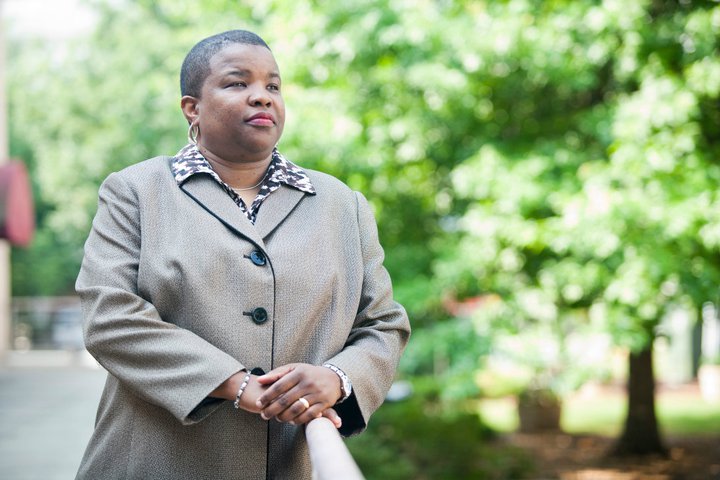
Marcia Mount Shoop is an author, theologian, and minister. Her newest book, released MMS Headshot 2015from Cascade Books in October 2015, is A Body Broken, A Body Betrayed: Race, Memory, and Eucharist in White-Dominant Churches, co-authored with Mary McClintock Fulkerson. Marcia is also the author of Let the Bones Dance: Embodiment and the Body of Christ (WJKP, 2010) and Touchdowns for Jesus and Other Signs of Apocalypse: Lifting the Veil on Big-Time Sports (Cascade, 2014).  Find out more at www.marciamountshoop.com

Danu, Celtic Mother Goddess by Judith Shaw

judith Shaw

Danu, of the flowing waters, Queen of the fertile land – Danu, the Great Mother Goddess of the Irish Celts, known as Don by the Welsh Celts, is the Creator Goddess of the Tuatha De Danann, the first wave of Celtic tribes to invade Ireland.   She is also known as Danann, Ana, and Anann.  She gave birth to all life in the land of the Celts.

No stories of Her survive but Her power remains strong. She is the most ancient of all the Celtic deities. In a silver flash of iridescence she appears in my mind’s eye.

As the “Flowing One” She is associated with the seas, wells, springs and the Danube River, gifting Her children the magic of transformation, inspiration, and wisdom. As an Earth Goddess, She bestows abundance and earth mysteries. She embodies the wisdom of living in balance with the Earth. She is sometimes associated with Flidais of the cattle and deer. She is also connected with Brigid, Goddess of Healing, Poetry and Smithcraft, who the original Neolithic people of Ireland worshiped long before the Celts arrived. Continue reading “Danu, Celtic Mother Goddess by Judith Shaw”

Transforming the Church from Within or Without? by Xochitl Alvizo

“Power belongs to those who stay to write the report!” stated Jeanne Audrey Powers during her presentation at the Religion and the Feminist Movement conference at Harvard Divinity School back in 2002. Though the statement sounds a little funny, it does raise a good question about how one participates in creating change. Where does the power for change and transformation lie? Is it in the writing of reports; is it from within institutions; from without? This question seems to be of particular relevance to those of us who have feminist visions and commitments and also remain involved in Christian churches – churches of a tradition with deeply embedded patriarchal habits and practices.

Recently, this concern was raised in a class for which I am a TA. We were talking about the fact that some feminist theologians develop feminist systematic theologies; by definition a cohesive theological system done from a feminist perspective. In part, the motivation is to reclaim the systematic way of doing theology and have it stand alongside other widely recognized theologies – but do so in a feminist way. Additionally, the traditional systematic format gives it validity and may serve to temper the prevailing habit of teaching feminist theologies as so-called ‘contextual’ theologies (as if other theologies are not also contextual, but that’s a topic for another post). A critique of this development, of course, is that by writing systematic theologies feminists are simply reinforcing patriarchal forms and patterns of academentia instead of expanding and creating new ones. Continue reading “Transforming the Church from Within or Without? by Xochitl Alvizo”

Inner and Outer Darkness in the Skoteino Cave by Coleen Clare

Coleen ClaireLast fall I undertook the Ariadne Goddess Pilgrimage to Crete and saw many wonders. Foremost for me was our descent into the Skoteino Cave, following in the footsteps of ancient Cretans who understood the cave to be the Source of Life, the womb of the Goddess, and a place of transformation. I ventured down tentatively taking very wary steps, protecting my two new hip replacements, determined to join our sacred ritual in the cave with my sisters. My hips called a stop to my descent half-way down. I perched perilously on a small rock ledge and there I confronted inner and outer darkness. It was indeed a profound transformation. Continue reading “Inner and Outer Darkness in the Skoteino Cave by Coleen Clare”

Creating Ritual by Linn Marie Tonstad

Linn Marie TonstadLast time, we considered whether the creation of rituals, I mean habits, might serve as an antidote to depression, or as a way of managing depression. But the creation of ritual has had a much more significant role in feminist religious practice than such an approach might suggest. Currently, WATER – Women’s Alliance for Theology, Ethics, and Ritual, a leading center for feminist religious thought – creates multiple rituals marking various seasons and events in the year, most recently for the summer solstice. These rituals can provide alternative ways of marking the year’s rhythms, and they can serve as ways to take control of liturgical spaces that have tended to exclude women or to allow women to serve only in various subordinate roles.

Yet the terminology is odd. What does it mean to create a ritual? If I think of the rituals of my childhood, what presented itself to me as ritual was connected either with religious practice, or with seasons of exception. Indeed, the most stylized rituals of the year were areligious (as I understood religion). They took place on Christmas Eve. First, during the distribution of presents, my father would put on a terrifying, horrifying, grotesque Santa mask. It was intended, clearly, to be a friendly Santa, which was why its leering was so fundamentally disturbing. My sister and I would try to run away, emotionally and sometimes physically petrified by the transformation of our father into this monster. Second, after Christmas dinner, we would eat cold rice porridge with cream and try to get an almond – “mandel i grøten” in Norwegian tradition. Getting the almond, which is blanched and hidden in the porridge, is considered an auspicious omen for the new year, and requires that the finder be given a gift – traditionally, a marzipan pig. Continue reading “Creating Ritual by Linn Marie Tonstad”

Extending Compassion and Vegetarianism by Xochitl Alvizo

“I did not know to recognize you as individuals when I bought you, but I know to recognize you as individuals now…”

I had been a vegetarian, and sometimes pescatarian, for more than 10 years before becoming vegan. Despite the length of my vegetarianism, in all that time I had not been inclined to go vegan. First, I really didn’t know too much about veganism and only began meeting a few vegans about five or six years ago here in Boston, none of whom had shared a compelling enough reason for their choice (at least not compelling to me). Further, I had no imagination for life without cheese or Cherry Garcia ice cream(!), and so I happily continued with my vegetarian ways. Then enters Carol Adams…

In a teleconference that WATER had with Carol Adams on March 14, 2012  (Women’s Alliance for Theology, Ethics and Ritual), the beauty of her veganism moved me to a new understanding of my food choices. I listened to the WATER audio recording some months after the actual event (these teleconference audio recordings are a great resource you should all access), and although I had been familiar with some of her work and had heard her speak before, I had not heard her talk about the compassion element of veganism. Her emphasis on increasing compassion, which I witnessed in action during her conversation with one of the listeners, was what moved me to my new practice. Continue reading “Extending Compassion and Vegetarianism by Xochitl Alvizo”

“From Teshuvah to Justice: Jonah’s Call to Change” by Ivy Helman

(I offer here an abridged version of the sermon I gave on Yom Kippur (5773) at Temple Emanuel in Lowell, MA.  The full version will be available on their website soon.  The book of Jonah is always read on Yom Kippur in the afternoon service as the Haftorah.  It is rather traditional that someone (usually the Rabbi) offer an interpretation of it.  Temple Emanuel asked me this year.  I thank the congregation for the honor and I hope my words offered them, and now you, food for thought.)

Scholars believe the Greek philosopher Plato lived between 428 BCE and 348 BCE.  The Allegory of the Cave is one of Plato’s most famous stories.  It illustrates the effects of a change in knowledge, education and experiences on the human being.  Some of you may know it or have read it at some point but for those of you who don’t, let me offer a very brief summary.

There are human beings shackled to a cave in a way that they can only see the wall directly in front of them.  Continue reading ““From Teshuvah to Justice: Jonah’s Call to Change” by Ivy Helman”

The Solace of Another Woman’s Story by Yvonne Augustine

This week, I read an excellent, gripping, poignant blog post by Feminist Philosopher Leanne Dedrick entitled “Things That Make Me Cry: The Practice of Unbelief.” The purpose of the piece was Leanne’s desire to address a misperception by some non-atheists that atheists are devoid of emotion, violently hostile to anything associated with faith, and unable to deal honestly with the Divine. She also corrects the erroneous assumption that atheists seek to “hide from, or purposefully turn […] away from, the ‘saving grace’ of religion.” In the post, she wrote specifically about her own journey from ultra-conservative Christianity to atheism. Continue reading “The Solace of Another Woman’s Story by Yvonne Augustine”

The Transformative Power of Daily Practices by Ivy Helman

My simple daily rituals and spiritual practices are what keep me mindful of G-d and G-d’s presence in my life.  They also remind me of G-d’s call to justice, care, compassion and love. 

“I find by experience, not by reasoning,

but by my own discovery that G-d is near me,

and I can be near G-d at all times.

I cannot explain it but I am as sure of my experience

as I am of the fact that I live and love,

but I know I do.

In the same way, I know I am in contact with G-d.”

This poem by Lily Montagu speaks to me.  I read it most mornings as I say my morning prayers, and it is one of those mantras I try to live by.  I have found that contrary to popular belief, sustained religious practices can be just as transformative as instantaneous conversion experiences.  This is why I have developed certain spiritual and specifically Jewish practices (For more about my joinery to Judaism, see one of my previous blogs “Reflections on my Spiritual Journey: Claiming Judaism”).  I find that they help me develop and cultivate a strong relationship with G-d.  For example, I keep a kosher home; wear a kippah daily; try to pray at least twice a day and before snacks and meals; practice the principles of Mussar; attend regularly Shabbat services Friday evenings at my Reform Congregation in Lowell and Saturday morning services at a Conservative congregation in Nashua, NH; light Shabbat candles; try not cook or create on Shabbat; make Havadalah to mark the end of Shabbat; give tzedakah as much as I can and study Torah with my friends.  This list is not all encompassing and there are quite a few areas of my practice I wish were more disciplined as well.

Continue reading “The Transformative Power of Daily Practices by Ivy Helman”

How Does Goddess Change the World? by Xochitl Alvizo

It can only be that She begins in a small way at a single place in the world. It can only be that She begins within us. 

Carol Christ’s post this week made me think of a favorite little passage I love from a Catholic theologian, Gerhard Lohfink, who wrote a book about whether God needs the church. I’m not going to engage that specific question here nor am I going to talk about the ins and outs of the book. I simply mention it because it holds within it the beautiful passage that deeply resonates with me and has become the primary image I hold on to when thinking about how I want to participate in the transformation of the world. The passage comes from a part of the book where Gerhard Lohfink muses about how God would start a revolution while still respecting human freedom and participation:

God, like all revolutionaries, desires the overturning, the radical alteration of the whole society – for in this the revolutionaries are right: what is at stake is the whole world, and the change must be radical, for the misery of the world cries to heaven and it begins deep within the human heart. But how can anyone change the world and society at its roots without taking away freedom? (Lohfink, 26)

The issue is that for centuries people have tried and tried again to change the world, to ‘free the masses’ and save people from suffering, misery, and oppression – but too often revolutionaries resort to violence as their means. The systems are so rigidly and stubbornly in place that the revolutionary comes to see no other way to bring about radical social change except through a widespread violent overthrow. Continue reading “How Does Goddess Change the World? by Xochitl Alvizo”