


As a minister’s daughter, I grew up almost literally in the church, its red door and ivied walls across the driveway from the rectory. On Easter the church was packed; every family received a pink or red geranium. There were Easter egg hunts, baskets stocked with chocolate rabbits and the jelly beans these magical creatures laid. The church rang with triumphant hymns: Jesus Christ is risen today. Although like all children I reveled in holidays involving excessive sweets, it was not the candy or the or the requisite rejoicing that moved me most.
It was the women, or in the Gospel according to John, the woman, bereft and brave, who went to the tomb to tend Jesus’s body. The male disciples had scattered and gone into hiding. In the Protestant Episcopal Church, Christmas Eve and Easter were the only times women played a prominent role in the story. Those were not the loud, triumphant moments. They lived in my child’s imagination as the quiet, mysterious times, Mary giving birth in the night attended by cows, donkeys, and stars. Dawn in a garden, wet with dew, the only sound birds waking and singing, the only people, the women, or the one woman who captured my imagination and, in my story, has her own apotheosis on that morning.
I did not question the miracle of resurrection. Miracles and magic made sense to me as a child. Theology didn’t. My father liked to expound on Jesus’s utterance from the cross “My God, my God why hast though forsaken me.” He insisted that Jesus was not crying out in despair but quoting Psalm 22, which ends in triumph. The Gospel narratives emphasize Jesus’s rising again “in accordance with the scriptures,” implying that he knew he would come back to life on the third day.

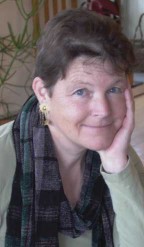 “Women, when you begin to make fierce sounds on your own, don’t be surprised if it’s difficult at first. Start gently. Get close to the earth. These sounds may bring up memories, emotions. Have a way to work with them. When you get together to make fierce sounds with other women, experiment. Try a growl, a howl. You are sounding for all the beings that have no voice. It’s bigger than your personal story. The sounds of outraged women have not been heard collectively on this planet for a long time. Let them out. We are a force of nature. It’s time to quit being afraid of our power. Many women are terrified of their outrage. They confuse it with anger. Anger is a small, though intense, emotion. Outrage is rooted in love. It’s ok. Understand it’s time. Time for these sounds to come out.” –Rebecca Singer, founder of the Fierce Heart movement
 Recently I traveled in India with my husband who did doctoral research there 48 years ago. I had no goals of my own other than to be open. Back only a short while, I am still pondering the journey. Here are glimpses of the women I saw, often only from a distance, with gratitude for so much kindness.

 When a poem shows me something in a strange and wonderful light and at the same time awakens some bone-deep knowing of my own, I feel more alive, I feel less alone. My soul is stirred and satisfied.
