It seems that the hearts of the whole world, and especially the hearts of women, are grieving now, as war and warmongering take over more and more of the Earth. Patriarchy rages on, like a monster in its death throes, and we wonder, “will they take us all down with them?” It is my hope that these poems will help us to keep on keeping on, keep on loving Her.
My grief, my love for the world
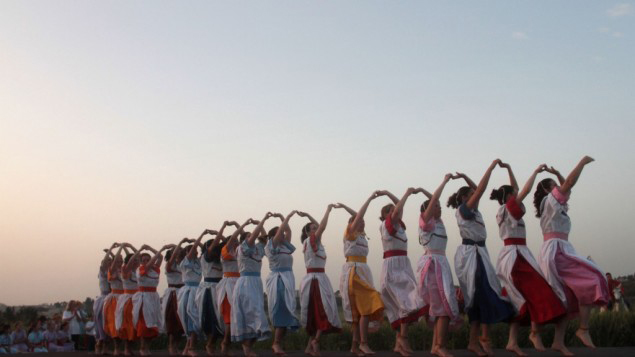
I watch the dancer, one arm framing her face, one hip drawing upward in the belly’s rhythm. The dance of mature women, Raqs Sharqi born of the sensuous music of the Middle East. Her hips pull us into infinity, an inward-outward shout of beauty and desire.
Joseph Campbell spoke of ‘mentors’ appearing to help the sojourner, and what Maureen Murdock called the gathering of allies. In my hybrid of these two archetypal journeys, there may be several mentors – human, power animals, divine guides or a combination. She could be a wise elder who helps the heroine prepare for the journey or gives her a gift for later use. In my case the wise elder was my 93 year old mom who became one of my mentors. When I expressed my excitement and fears, she said what she always says when I – one of her seven children – am facing a challenge: “Go get’em Tiger!” She also offered financial support so I could take time away from my psychotherapy practice.
Two other mentors showed up in what Carl Jung called my ‘active imagination’: Carol Christ and Marija Gimbutas. Both have transitioned so my active imagination conjured their support as divine intervention. I reread Carol’s reflections and teachings on the pilgrimage, and watched the videos she made as inspiration. I felt her invitation. I was ready to change.
Carol Christ’s Legacy honored by Laura Shannon, and the Ariadne Institute
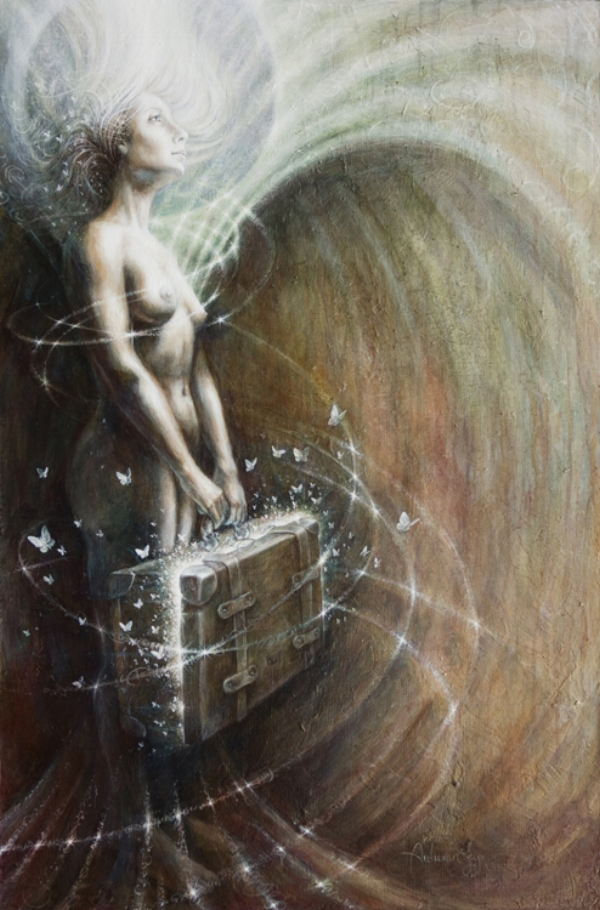
Adventure by Autumn Skye with permission of artist
When I teach the Heroine’s Journey in my Sophia Women’s Wisdom Group, I draw on Joseph Campbell’s idea of the mono-myth, an archetypal story that resonates with every human across time: The Hero’s Journey. I combine Campbell’s ideas with pieces of feminist Maureen Murdock’s heroine’s journey to recognize the unique pathway of the feminine. I call this my hybrid heroic journey. If you are not familiar with Maureen Murdock’s work, I invite you to see how she brought her feminist eye to Campbell’s iconic Hero’s Journey in her book The Heroine’s Journey: Woman’s Quest for Wholeness. After her conversation with Joseph Campbell six years prior to his transition, Murdock felt he missed “that the focus of female spiritual development was to heal the internal split between woman and her feminine nature” (p. 2). In my hybrid heroic journey, that split in the early stages is internalized negative masculinity. The rejection of our feminine nature may appear differently in each woman’s life but it is often characterized by treating ourselves how we imagine men perceive us.
My recent Pilgrimage to Crete was astonishing; my epiphany, gradual. As I share my adventure, imagine stages of your own heroine’s journey wherever you are in that cycle. I hope that by sharing this series, you will experience a real life example of Dion Fortune’s definition of magic: ‘The art of changing consciousness at will’. Starhawk, Truth or Dare, 1988.
I am my Mothers My Mothers are me I am the Goddess the Goddess is within me As blood as bone as the spirals of nuclei as ova as tears as breath I carry my Mothers as my Daughters will carry me
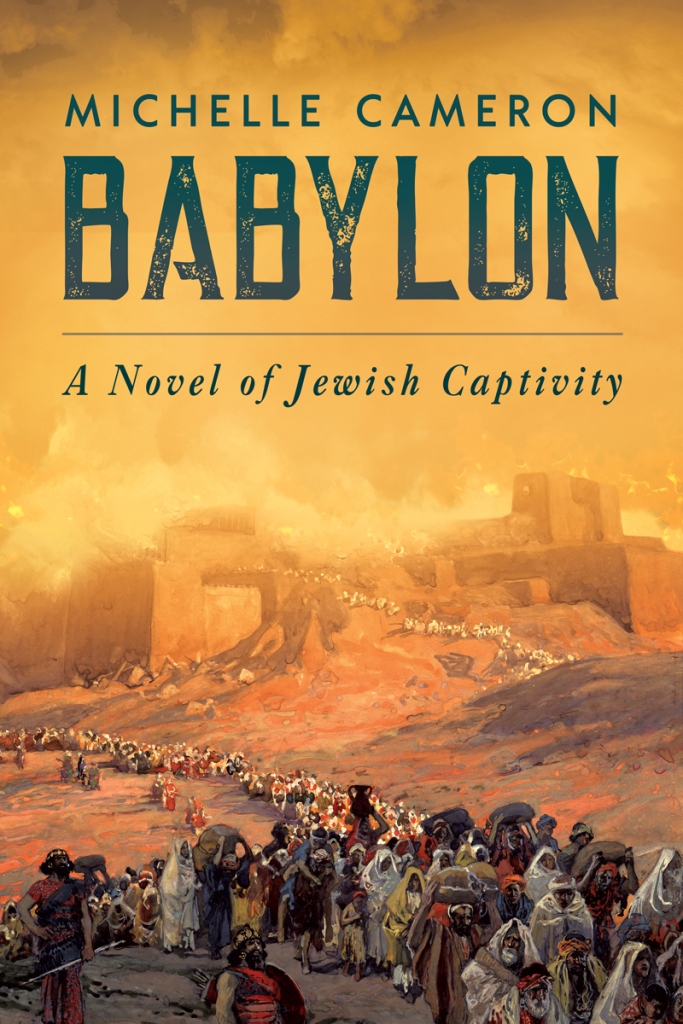
When one nation conquered another in antiquity, vanquished peoples typically switched allegiances to that country’s gods, since those deities were clearly stronger than their own. In my novel, Babylon: A Novel of Jewish Captivity, the prophet Daniel warns against this tendency, so the Judean exiles would remain faithful despite their captivity:
“You may be tempted to slip away from your Hebrew roots. Many of us struggle to remain steadfast to our faith. We are seduced by the lure of the gods of Ishtar and Marduk, Sin, Damkina, and Ea. Their temples overflow with riches and their ways are strange and compelling.
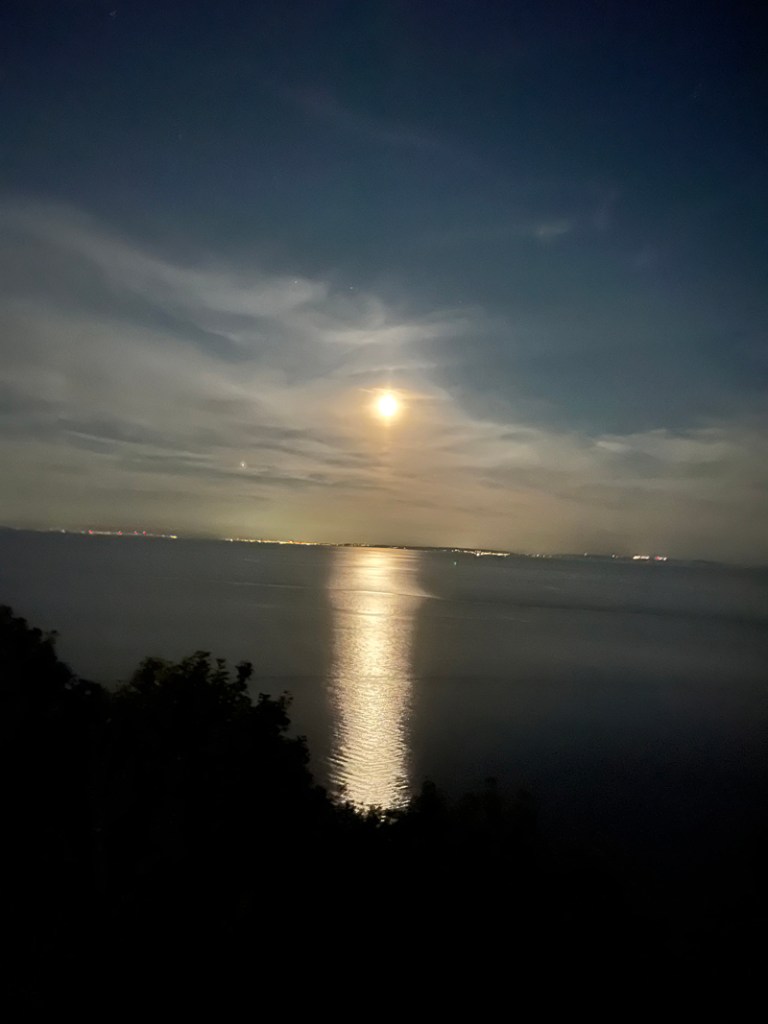
This year, the full moon on 30th August, which was a Super Moon, is also called Blue Moon – the name given to a second full moon occurring in the same month. I stayed up meditating and reflecting, because the rising of this moon flooded both my front room and my awareness with a light of great beauty. Beginning gold, she changed into a robe of silver, and eventually pearl white, with a crown of pastel shades, in her vault of luminous blue flecked with white feathered clouds. The full moon is always an inspiration, a Goddess who lights up the psyche, revealing hidden shadows to be faced, firing intuition, or illuminating the soul with her timeless wisdom. She has become my good friend over the years, and in my life as an elder human being, she offers me inspiration, visions of creative wisdom and possibility on those gold and silver paths stretching between the shores of Wales and The County of Somerset in England.
“Set out, pilgrim. Set out into the freedom and the wandering. Find your people. Godde is much bigger, wilder, more generous, and more wonderful than you imagined.” ― Sarah Bessey
Joy and justice reside in grace. Thrive in gratitude. Find fulminating llanos of miracle, might, and magic contoured in story. Etched in song. Sculpted in the untempered and unmanacled invitation of HER resplendent and resounding voice and vision willing us to be the very creative fires we wish to live. To come to recognize, at the time of age-ing and sage-ing, the call to freedom.
The call to be wage-ing pilgrimage and poetry with and because of being Grandparents, is a gift SHE bestows upon us, often when we are not even aware of the liminal’s need of our life’s learnings.
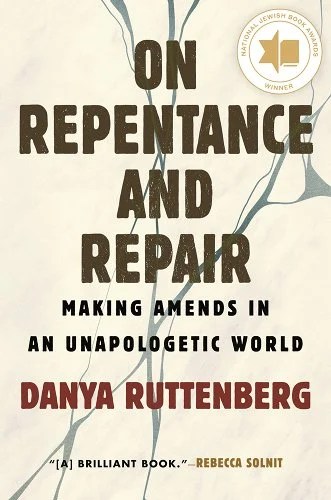
This is an excerpt of Rabbi Danya Ruttenberg’s On Repentance And Repair: Making Amends in an Unapologetic World, which comes out in paperback on September 12th. Called “A must-read for anyone navigating the work of justice and healing.” by Congresswoman Ayanna Pressley, it applies Maimonides’ Laws of Repentance to contemporary personal and systemic issues. This is an excerpt from Chapter Four, which addresses institutional repentance.
Most of us are part of many institutions—places of work, our own and/or our children’s schools and universities, houses of worship, co-working spaces, community organizations, sports leagues, social networking websites, the list goes on. And these institutions can and do perpetrate harm. Sometimes, that harm impacts us as individuals—as stakeholders or beneficiaries of those institutions, or as those excluded or hurt by them—and sometimes it can impact our local or national culture.
Elixir is an astounding book, revealing a little-known world of foragers, healers, and mystics in a remote corner of Bulgaria. Here people live in profound connection to nature, with respect for herbs and the earth and older women, echoing the peaceful Neolithic civilisations which once flourished in the same valley Kassabova describes.
When I first heard a Barbie movie was going to be released this summer I groaned. Like the awful complements of GI Joe, American Girl, and Trolls, I assumed that the content of this film would be designed to fleece parents out of the cost of tickets and popcorn. I am delighted to report that I was completely mistaken. Not only does Barbie enchant, she also delivers a complex message about idealism and womanhood.
But Barbie’s most important revelation is in her role as a psychopomp between the world of the ideal and the world of the real. Barbie Land is like a patriarchal heaven. Women are ideal, they don’t have flaws. They get shit done without breaking a sweat or wearing comfortable shoes, and the men are the accessories. It is what I imagine all the men who struggle with patriarchy idealize about what it would mean to be a beautiful, flawless woman- all of the power, where men can relax and be accessories for a change.




 Feminism and Religion