Can Secular Immigrant Assimilation Promote Equality? Pt. 2

Andreea Nica, pentecostalismI often wonder how my life would have been different if I had undergone a secular immigrant assimilation process. My former faith within Pentecostalism not only shaped my identity, but augmented my ability to assimilate into the American culture. Subsequently, this led me to explore how nonreligious narratives help immigrants better acculturate to western society. Despite my interests originating in personal exploration, emergent studies within religion and sociology show that there are many factors that come into play when considering social and cultural assimilation.

Following up on my most recent post, Liberations of Immigrant Women in Western Religious Conversion, I will draw on a comparative analysis to consider secular immigrant assimilation processes. Women’s experiences during their migration process contribute to their cultural and social identity formation. Many studies point to the established idea that religion is a key variable in influencing immigrant assimilation, particularly among the Latino community. “Faith plays an important role in their lives: 74 percent of Latinos say religion provides a ‘great deal’ or ‘quite a bit’ of guidance for them” (Philanthropy Roundtable). Continue reading “Can Secular Immigrant Assimilation Promote Equality? Pt. 2”

God the Father or Buffy the Vampire Slayer? by Linn Marie Tonstad

Linn Marie TonstadIn the second season of the television show Buffy, the Vampire Slayer [spoiler alert!], Buffy is faced with an agonizing dilemma. She is condemned to save the world “again.” Buffy’s former lover is the evil Angelus. Angelus – once the good Angel – has awoken a demon that will swallow up the whole world into an eternity of suffering.  In what follows, I read Buffy as God the Father. Angelus represents sinful humanity, Angel is Jesus, and the Spirit is the sword in Buffy’s hand. Buffy attempts to destroy Angelus. But at the moment that she is about to kill Angelus, his soul is returned to him. Unfortunately, only Angel’s blood will close the gaping mouth of the demon. The shift from Angelus to Angel gives a vivid representation of the shifting positions of the first and second Adam in the Christian narrative of redemption. Angelus is evil. Angel carries the weight of Angelus’s guilt without any of the responsibility belonging, strictly speaking, to him. Yet finally, the innocent Angel must bear the consequences of Angelus’s evil for the salvation of the world.

The gender dynamics of this scene complicate and illuminate traditional readings of the involvement of the Father in the crucifixion. Gender subordination and the subordination of the Son to the Father go together, and are ultimately justified by the same theological logic. Reading the Father as an 18-year old girl helps to mark the inadequacy of language to capture God. The evident implausibility, even absurdity, of the image, makes visible the theological truth that God is not a father among other fathers.   Continue reading “God the Father or Buffy the Vampire Slayer? by Linn Marie Tonstad”

Theopoesis and the Interior Divine by Natalie Weaver

Natalie Weaver

Last week I traveled to Leuven, Belgium for the 9th Leuven Encounters in Systematic Theology conference.  I have been to this conference before, and I find that my perspective is generously enlarged by hearing voices that emerge from contexts and concerns that differ from my own in the USA.   This year, the conference theme was “Mediating Mysteries: Understanding Liturgies.”  The keynote speakers offered inspiring investigations into what “full, active, and conscious” participation of people in the Catholic liturgy means today (for, such were the goals for liturgy articulated at the Second Vatican Council).  Some provided critical evaluation of the newly revived Roman missal.  One speaker offered a searing critique of the distinction between true mystery and fabricated mystique in the Mass.  The breakout sessions were exceptionally well designed.  Here I noticed a common thread of people searching beyond the formal magisterial liturgies and studying the value of those mediated mysteries that are celebrated and communicated in culture, literature, and art. Continue reading “Theopoesis and the Interior Divine by Natalie Weaver”

Making Inequality Visible: Mormons Seeking Women’s Ordination are Turned Away from Priesthood Conference by Aimee Hickman

DSC_0023 - Copy (2)Earlier this month, nearly 150 women were turned away from listening to the leaders of their church. The first weekend of October in the Mormon (LDS) Church is set apart for church members world-wide to hear messages from their leaders. The conference takes place in 5 two hour segments of speakers and music. The Saturday evening segment is called the Priesthood Session–a meeting all priesthood holding men and boys aged 12 and up are expected to attend. This year a new demographic asked to attend the Priesthood Session. Ordain Women, an activist feminist group which is petitioning LDS Church leadership to prayerfully consider the ordination of Mormon women to the priesthood, arrived at the conference doors and respectfully asked for admittance. These women were turned away one by one until the doors were closed and blocked.

On October 5th, I eagerly watched Twitter and Facebook feeds in anticipation of the news of the day: would the many dear friends I had who were petitioning LDS Church leaders for admittance into the Priesthood Session of General Conference be allowed to participate? The first word I got was from Ordain Women organizer Suzette Smith’s simple status update: “They said no.” Continue reading “Making Inequality Visible: Mormons Seeking Women’s Ordination are Turned Away from Priesthood Conference by Aimee Hickman”

Liberations of Immigrant Women in Western Religious Conversion by Andreea Nica

Andreea Nica, pentecostalismThe prolonged debate around feminist subjectivity and religious participation continues to evoke much compelling discussion in academia, political arenas, and public space. There have been a number of academic studies around the intersection of gender, religion, and migration, specifically on how gender and immigration assimilation is constructed and managed within western religious systems.

I am currently researching the trajectories of immigrant assimilation and conversion, and how gender relations and religious identities are managed within these processes to further develop my proposal for doctoral study. I find this area of research fascinating as it’s so diverse and pertinent to the progression of gender equity amongst religious participants. Continue reading “Liberations of Immigrant Women in Western Religious Conversion by Andreea Nica”

The Sisters In Our Midst by Natalie Weaver

Natalie Weaver

On September 28, 2013, Ursuline College hosted a symposium entitled The Impact of Vatican II on Women Religious in the United States.  The symposium featured five speakers.  Sister Karen Kennelly, CJS. gave the keynote address entitled “Women Religious in the U.S.: From the Vatican Council to the Present.”  Four other speakers gave breakout talks.  Sr. Mary Frances Taymans, SND, spoke on education.  Sr. Kathleen Feely, SND, spoke on social services.  Sr. Patricia Talone, RSM, spoke on health care, and Sr. Loretta Harriman, MM, spoke on foreign missions.  The symposium began with a Friday evening event featuring a lecture called “Progress and Promise: Local Conversations,” which surveyed the history of women’s religious communities in Northeast Ohio (FAR blogger Michele Stopera Freyhauf worked on this project with our team as well!).  In addition to the talks, the Northeast Ohio component of the national Women & Spirit exhibit (now retired), which was produced by the Leadership Council of Women Religious and which toured throughout the country from 2009-2012, was on display.

Having been a collaborator in the organization and management of the symposium, I had several months to reflect on the intentions, purpose, and hoped-for outcomes of the event.  As our conference committee reflected on an appropriate theme for a conference commemorating the 50th year anniversary of the Second Vatican Council, we wanted to focus on women religious, a group often conspicuously overlooked and generally under-represented in Vatican II anniversary conferences. Continue reading “The Sisters In Our Midst by Natalie Weaver”

No More Of This in Academe! by Grace Yia-Hei Kao

Last week, social media was ablaze over a September 18 Pittsburg Post-Gazette column entitled “Death of An Adjunct” by Daniel Kovalik that had the following teaser: “Margaret Mary Vojtko, an adjunct professor of French for 25 years, died underpaid and underappreciated at age 83.”  Inside Higher Ed reports that the column went viral as “adjuncts across the country reported seeing something tragically familiar in her story.”  The Chronicle of Higher Education likewise covered the story with this tagline: “An Adjunct’s Death Becomes a Rallying Cry for Many In Academe.”

This tragedy involves all sorts of issues with which readers of this blog are concerned: power, structural injustice, job insecurity, underemployment, unions, healthcare, and Catholic values (the last of these since Margaret worked at a Catholic institution), to name a few.

Continue reading “No More Of This in Academe! by Grace Yia-Hei Kao”

Truths My Mother Taught Me by John Erickson

I never gave much credence to religion but through my mother, I met G-d, and through her I understood that I’m not a feminist because of the books I’ve read but rather because of the woman I call mom.

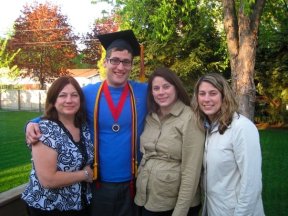
Graduation PhotoThe first question I always get asked when I’m in feminist spaces is: “What inspired you to become a feminist?”  Although I could go into the various histories revolving around men’s involvement in the early stages of the women’s movement to the similarities between the LGBTQ and women’s movements, my simple answer has always relied on one person: my mother.


I’ll be the first to admit (as well as many other people who will join me in the same chorus) that my mother deserves Sainthood for having put up with all the shenanigans I have, and still continue to, put her through. From running away from our local Catholic church the moment she dropped me off at Sunday School, to swearing like a sailor on leave at a very early age in front of Father Schmidt (who still fondly remembers me and the list I brought in with me to the confessional booth). Continue reading “Truths My Mother Taught Me by John Erickson”

The Purity Complex: Are Men Really Less Affected Than Women? by Andreea Nica

Andreea Nica, pentecostalismWomen’s bodies continue to receive an inexhaustible amount of attention. As a society, we have glorified, scrutinized, degraded, hypersexualized, underrepresented, and misunderstood the female body. Purity culture has orchestrated a movement around the management, perception, and regulation of women’s bodies. As a former Pentecostalist, I grew up knowing there was more focus on my body versus those of my  brothers in Christ. There was a bodily divergence between men and women that I did not fully comprehend but felt obligated to adhere to; the ideological basis of this difference was filled with much ambiguity.

Each time the church organized a sexual purity event and/or discussion, boys and girls were unfailingly segregated. I was always so curious about what was discussed in the boy’s group so I would ask my brother, Christian boyfriend, and male friends at the church to fill me in on the gossip. In my teens, I didn’t know how to perceive the information relayed to me. Looking back now, I am surprised at the discourse around purity culture and masculinity in the church. During my earlier years at college, I convened with the male pastoral leadership, and they confirmed the following main themes taught to men during sexual purity discussions. Continue reading “The Purity Complex: Are Men Really Less Affected Than Women? by Andreea Nica”

Painting Guanyin by Angela Yarber

As hundreds of thousands of people are dying in Syria and myriad individuals suffer from political unrest in Egypt, as we continue to debate the sexuality of young women (yes, we’re still talking about Miley Cyrus) in the face of America’s rape culture and as countless nameless victims are ravaged by war, poverty, racism, and violence, I sometimes find myself overwhelmed, as though my two hands are never enough to reach out, help, rage, change.  And I find myself—and our world—in need of mercy and compassion.  Since I always focus on one of my Holy Woman Icons with a folk feminist twist, I am drawn this month to the Goddess of Mercy.  So, Guanyin joins this great cloud of witnesses who inspire, embolden, and surround us: Virginia Woolf , the Shulamite, Mary Daly, Baby Suggs, Pachamama and Gaia, Frida Kahlo, Salome, Guadalupe and Mary, Fatima, Sojourner Truth, Saraswati, Jarena Lee, Isadora Duncan, Miriam, Lilith, and Georgia O’Keeffe.

In English we know Guanyin as the Goddess of Mercy and Compassion.  Generally regarded among East Asian devotees as originating from Avalokitesvara, her name is shortened from Guanshiyin, which means “One who hears the sounds/cries of the world.”  In the Lotus Sutra, Avalokitesvara is a bodhisattva who is androgynous and can take on the form of any female, male, adult, child, human, or non-human sentient being in order to teach the Dharma.  Typically she is depicted in female form and she is widely venerated by East Asian Buddhists.  Though she is particularly poignant for Buddhists, Guanyin is present in almost every facet of Chinese religion, from Buddhism to Taoism to shrines for local fishermen. Continue reading “Painting Guanyin by Angela Yarber”