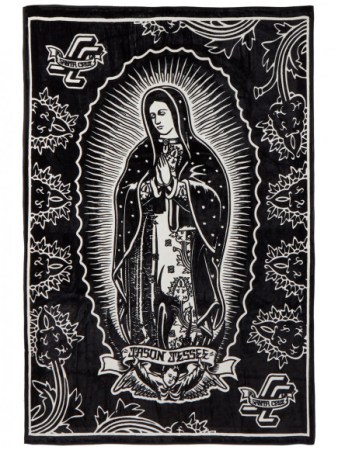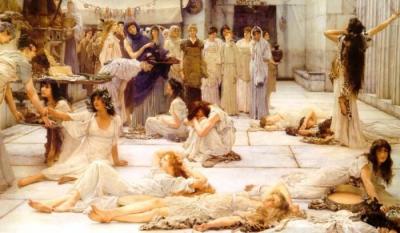
Since I began writing for FAR in July 2012, I have written about Mary Magdalen, or excerpted a passage from one of my novels, near or on her July 22 Feast Day. For why I made the controversial choice to depict her as a prostitute, see last year’s post. The below excerpt is from The Passion of Mary Magdalen. I made this selection in remembrance of all the refugees in the world today. In this passage, Judith, a Jewish widow whose family was driven from the land by tax collectors, returns to the place where Maeve (my fictional Celtic Magdalen) and her friends have recently founded a Temple to Isis on the outskirts of Magdala. Maeve has just invited Judith to join them. (Edited for brevity.)
She stared at me, her eyes full of anger and longing.
“I will not be a slave and a whore where I was once a wife, the one who made the challah bread, who said the Sabbath prayers over it. This was our place, my husband’s and mine. We brought the best we had to the temple, the finest oil and wine, the unblemished kid—”
“Goats? You kept goats? You know how to make cheese?”
She sat quietly for a moment before she answered. “How can I live here with you?” she wondered. “I don’t understand.”

 Today I am reposting the song and story of Kassiani, the Byzantine composer, poet, and hymnographer, who is not well-known to western feminists or in western history in general. In Christian Orthodox tradition, Kassiani’s most famous song will be sung this week on Easter Tuesday night or very early Easter Wednesday morning, placing a woman’s love for Jesus at the heart of the Easter drama.
 This year, I celebrated the Jewish feast of Passover on March 31st–almost three weeks before the holiday’s official start on the evening of April 19th, the 15th of Nissan. It turned out to be my best Passover yet.
 I think being a mother must be an amazing experience. I don’t really know the glimmers and shadows of any life but mine, even though I would be more than happy to listen. Recently, I’ve been reading the poems of Carol Ann Duffy, Scottish poet, U.K. Laureate, and once partner to poet Jackie Kay, and she writes something in one of her poems (“A Clear Note”) that I resonate with: “Never have kids. Give birth to yourself.” It is not Duffy, the narrator, who says this, but a character named Moll.