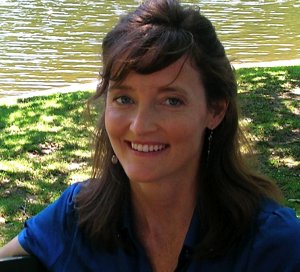
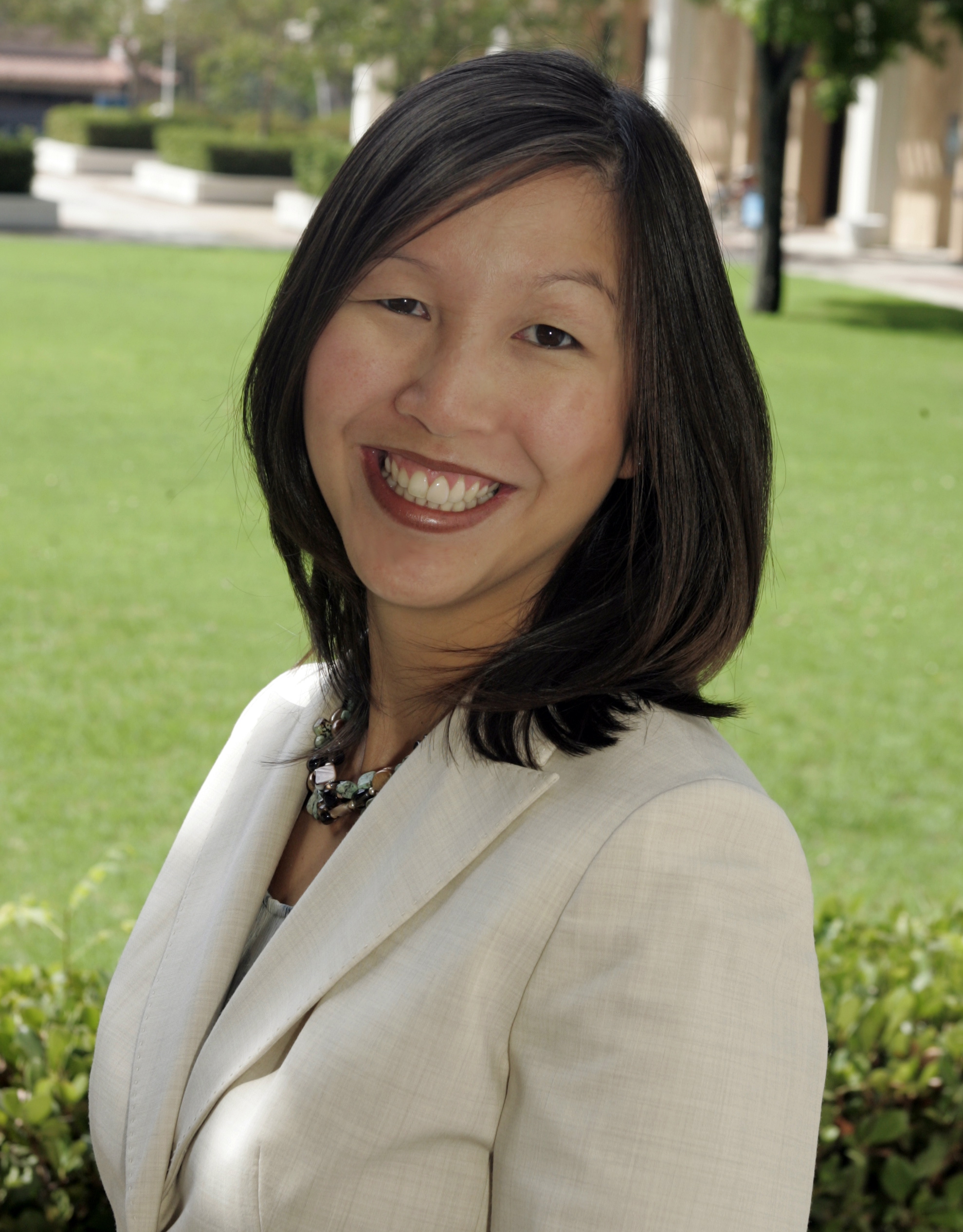
Reproductive Justice by Gina Messina-Dysert

Following the testimony of Sandra Fluke on the lack of availability of contraception and the appalling remarks by Rush Limbaugh that took place in early March, 2012, much discussion around issues of reproductive justice has emerged.  Among these conversations, Mary Hunt recently shared her thoughts in “Contraceptive Controversies” on the issue on FSR-Inc., and graduate students Katie German and Linda Claros organized an event at Loyola Marymount University to invite faculty members, students, and interested persons to engage in dialogue on reproductive justice.  I was honored to have the opportunity to participate in that discussion and would like to share my thoughts here in an effort to continue that dialogue.

To begin, I understand reproductive justice as the call for the social, political and economic ability to make responsible and healthy decisions about gender, sexuality, and procreation for ourselves and our communities with the goal of transforming power inequities and bringing about systemic change.  The denial of reproductive justice in the Catholic Church is a symptom of the larger rape culture.  When I use this phrase I am referring to a culture that not only perpetrates rape, but all forms of sexualized violence against women and girls. Continue reading “Reproductive Justice by Gina Messina-Dysert”

EASTER OF THE GODDESS: A VIEW FROM GREECE by Carol P. Christ

On Good Friday, Easter Saturday, Easter Sunday, and Easter Monday the blogs on feminismandreligion.com celebrated mothers and God the Mother.*

 This is my body, given for you.

This is my blood, given for you.

While these words are the center of a Christian liturgy celebrating the sacrifice of Jesus as the Christ, they are more appropriately spoken of our own mothers. Your mother and my mother and all mothers, human and other than human, mammalian, avian, and reptilian, give their bodies and blood so their offspring might have life. True, mothers do not always make conscious choices to get pregnant, but almost all mothers affirm life in their willingness to nurture the young who emerge from their bodies and from their nests. Had mothers—human and other than human–not been giving their bodies and their blood from time immemorial, you and I would not be here.

The Easter liturgy fails to acknowledge that the original offering of body and blood is the mother’s offering. Christianity “stole” the imagery associated with birth and attributed it to a male savior. If that was all Christians had done, it would have been bad enough. In most countries today there are laws against theft. Christian theologians and liturgists should also be given an “F” for plagiarism–defined as presenting the ideas of others as if they are one’s own. Z Budapest was right when she famously famously opined, “Christianity didn’t have any original ideas.

Continue reading “EASTER OF THE GODDESS: A VIEW FROM GREECE by Carol P. Christ”

Reflections on My Spiritual Journey: Claiming Judaism By Ivy Helman

“Is Ivy Helman Jewish?”   This question and knowing that eventually I’d have to respond one way or another to it has caused me many sleepless nights.  At the same time my faith journey has become integral to who I am and I would like to spend some time today sharing it with you.

Why share this and why now?  Well, first, I have not been ready until now.  In addition, external forces which I will talk about in a minute are making my spiritual path an issue.  So I share my story with a measure of concern about its possible effects but also with a great deal of joy about the ways in which my faith journey has challenged me to grow, reflect and change.

Margaret Farley emailed me about two weeks ago asking me how I identified religiously.  Someone had emailed her asking if I was Jewish because this person had read one of my past blogs in which I wrote “my rabbi” on feminismandreligion.com.  This same person is reviewing my book: Women and the Vatican: An Exploration of Official Documents.   Here is how I answered Margaret: “Hi Margaret, I’m Catholic although I do attend services at a Jewish synagogue on occasion since I was raised in essentially a multi-faith home.  On that blog, there really is no Jewish voice, so I try to comment on ideas from that tradition as much as I can.  Ivy.”  I felt unauthentic sending that email.  But, I did.

Still troubled by that answer and rather than put my friends and colleagues in the middle of questions about my faith, I feel that this has now become a public issue that I must address.  It is a question I have known I would have to answer at some point.  Nevertheless, this is not a decision that came easily or quickly.  I’ve literally agonized over it now for months.  During the time, I’ve never questioned my resolve to be Jewish and to continue to follow that spiritual journey in my life; I’ve worried more about how other people will respond and how their responses will affect my career in academia.   If I were allowed to rewrite that email to Margaret, then this is what I would say. Continue reading “Reflections on My Spiritual Journey: Claiming Judaism By Ivy Helman”

Resurrecting Scars by Shelly Rambo

What does it mean to be created through the scars of a (m)other? And what does it mean to be made new—to be recreated—by them?

It is my first Easter without my mother. My sister Jody reminded me of how much my mother loved religious holidays, especially Easter. One of my striking last moments with my mother was in the hospital operating room when the nurse was preparing her for a surgical procedure. As the nurse opened up the back of the hospital gown, she exclaimed: “What beautiful markings you have.” She was referring to the scars on my mother’s back from a previous heart surgery. “It’s like a work of art.” My mother never viewed them like that. Instead, she often kept her multiple scars hidden from us. But there were moments, as a young girl, when I would glimpse them, those in the front between the buttons of her tightly starched blouses, and those on her back when she’d be ironing her Sunday dress in her satin slip. I was both intrigued and scared by these tracks on my mother’s body, just as I was by the ticking of her mechanical heart valve that I could hear when I stood next to her, the traffic in the house at a standstill. Both were reminders to us that her life was sustained yet fragile.

Much of Western literature tells the stories of fathers and son. And the dominant Christian storyline has also been patrilineal. Continue reading “Resurrecting Scars by Shelly Rambo”

Do Man-Made Laws Trump the Authority of Jesus? Reflecting on the Meaning of Humility, Priestly Service, and the Issue of Women’s Ordination by Michele Stopera Freyhauf

Maundy Thursday – the imitation of Jesus’ act of service and submission is re-created.  Controversy surrounds the “disciples” – must they be all men?  Are women allowed?  Who steps into Jesus’ role?  Men, women, or both?  Why, when it comes to imitating the act of  humility and priestly service (rooted in our baptismal call), does a distinction of gender need to made at all?

As I progressed towards the intersection, I looked up to witness a grand procession of men dressed in white albs with stoles that often contained subtle hints of gold, worn in a manner to distinguish their role as priests and deacons.  They moved slowly down the sidewalk entering the Cathedral to begin their celebration of the Chrism Mass – a celebration of priesthood and priestly service within the Diocese where all priests and deacons gather to celebrate and re-affirm their commitment to ministry and service to the Church.  It is also during this Mass that the oils used in sacramental celebrations, used by each church, are blessed by the Bishop.

As I continued to watch, I could not help but search the processional line for those with a hair color other than gray.  I wanted to see  how many young priests were in that processional line.  What I found was no surprise –  an aging group of men with the sporadic appearance of younger priests.   The numbers stood as a staunch reminder that we, as a Church, may be faced with a severe shortage of priests in the future.  Something already known and planned for by the Diocese in its campaign to consolidate and close parishes.

Another sad observation was put on public display  –  the absolute absence of women. Continue reading “Do Man-Made Laws Trump the Authority of Jesus? Reflecting on the Meaning of Humility, Priestly Service, and the Issue of Women’s Ordination by Michele Stopera Freyhauf”

The Hunger Games, Holy Week, and Re-imaging Ritual by Xochitl Alvizo

Being passive spectators of violence and injustice, even if mournfully so, is not just a thing of Panem, it is our everyday reality.

In The Hunger Games Suzanne Collins takes the reality of an unjust society and gives it an imaginative makeover. In Panem, most people are kept at such extreme levels of hunger that even when they do eat they cannot fill the hollowness that has settled in their stomachs, while others are deciding on the next cosmetic alteration they will undertake – whiskers, jewel implants, or green-tone skin color? The disparate conditions between the rich and the poor, the few and the many are absurdly and starkly portrayed but done so in a way that we can still recognize our world in theirs. And at the center of this world is the state imposed ritual of punishment and control, the yearly Hunger Games – a nationally televised competition that all the people of Panem are required to watch. The 12 districts watch mournfully as two kids from each of their districts compete to the death, and the wealthy watch gleefully, for the games are the height of their excesses and entertainment. The yearly Games conclude when one kid, the lone ‘victor’, is left standing. All while the nation watches. Continue reading “The Hunger Games, Holy Week, and Re-imaging Ritual by Xochitl Alvizo”

THE CARELESS SPIRIT OF ANNIE CORLISS: TRUMPING DESPAIR IN THE NEW WORLD by Carol P. Christ

Annie Corliss was my great-great-grandmother. The Corliss name, also spelled Corlis, Corless, Corlies, Corlers, and Carlis, is derived from “careless” meaning someone who is “carefree” or “happy-go-lucky.”

Annie Corliss was the daughter of James and Mary Corliss, both born in Ireland. Her parents may have been tenant farmers, but given that their surname could refer to someone who doesn’t settle or own property, they may have been Irish Travellers– itinerant craft persons and traders, sometimes called tinkers because they mended cooking pots and farm implements.  “Irish Travellers are a traditionally nomadic people of ethnic Irish origin, who maintain a separate language and set of traditions. … Irish Travellers have their roots in a Celtic (and possibly pre Celtic) nomadic population in Ireland.” Continue reading “THE CARELESS SPIRIT OF ANNIE CORLISS: TRUMPING DESPAIR IN THE NEW WORLD by Carol P. Christ”

The Power of Feminist Rituals by Grace Yia-Hei Kao

“These were very simple rituals and yet they were so powerful.”

Jeanette Stokes’ 25 Years in the Garden is on my bedside table. It’s a book I read several years ago with a small group of feminist Christians when I was living in Blacksburg, Virginia. The following passage from one of her essays got me to thinking back to the 2012 PANAAWTM conference (Pacific, Asian, and North American Asian Women in Theology and Ministry) I had attended just two weeks ago:

“Rituals are part of everyday lives: reading the newspaper, checking the weather, waiting for the mail to come, or talking with a family member at the end of the day. Rituals can also mark the extraordinary events in our lives: the birth of a child, the death of a loved one, a birthday, marriage, anniversary, or divorce” (Stokes, 2002, p. 37).

Continue reading “The Power of Feminist Rituals by Grace Yia-Hei Kao”

In memory of Adrienne Rich, Lesbian Poet (1929-2012) by Kittredge Cherry


I light a memorial candle for lesbian feminist poet and essayist Adrienne Rich, who died March 27, 2012 at age 82.

Rich was one of the most influential poets of the 20th century. Her writing was a guiding light to me and countless others, both people of faith and secular readers. The following lines from her poem “Natural Resources” (from The Dream of a Common Language: Poems 1974-1977) became like a creed for many of us:

Continue reading “In memory of Adrienne Rich, Lesbian Poet (1929-2012) by Kittredge Cherry”

ON NOT GETTING WHAT WE WANT AND LEARNING TO BE GRATEFUL FOR WHAT WE HAVE BY CAROL P. CHRIST

Many women’s dreams have not been realized. How do we come to terms with this thealogically?

Although I am as neurotic as the next person, I am also really wonderful—intelligent, emotionally available, beautiful (if I do say so myself), sweet, caring, and bold. I love to dance, swim, and think about the meaning of life. I passionately wanted to find someone with whom to share my life. I did everything I could to make that happen—including years of therapy and even giving up my job and moving half way around the world when I felt I had exhausted the possibilities at home.

For much of my adult life I have asked myself: What is wrong with me? Why can’t I find what everybody else has? Even though I knew that there were a lot of other really great women in my generation in my position and even though I knew that many of my friends were with men I wouldn’t chose to be with, I still asked: What is wrong with me? Continue reading “ON NOT GETTING WHAT WE WANT AND LEARNING TO BE GRATEFUL FOR WHAT WE HAVE BY CAROL P. CHRIST”