
Gift-Economy in a Time of Lack by Elisabeth Schilling

Carol Christ wrote about gift economy on this blog in 2013, and I am taken by her story of the woman who brought raisins or cracked nuts to the group even though she had very little. In beginning to encounter the literature on gift economy myself, I am wondering how it all works, especially wondering, perhaps outside of such a conversation if it doesn’t relate or misses the point, what someone who feels they have nothing to give can give.

When Genevieve Vaughan wrote about gift economy in Ms. Magazine in 1991, she wrote, “where there is enough, we can abundantly nurture others. The problem is that scarcity is usually the case, artificially created in order to maintain control, so that other-orientation becomes difficult and self-depleting.”

I think we start to look for other ways of existing when we experience the brokenness of a current existence. The exchange economy under mindless capitalism does not honor equal, fair exchanges. If we could keep from manipulating and being deceptive about what a product is worth, if we could more generously assess the contribution of workers, then some of us might not be bothered. Of course, for that work which is never compensated by money, mostly women’s work, that is the other issue that might not be solved by more equal exchange, and probably more the point of Vaughn’s.

Continue reading “Gift-Economy in a Time of Lack by Elisabeth Schilling”
Making it Mine: An Un-Orthodox Passover by Joyce Zonana

Passover is a holiday of remembrance, of ritual re-enactment: this, we say, is what our ancestors experienced. This is what they felt and knew, what they tasted in their blood. The movement from slavery to liberation, from the soul’s winter to spring. We must never forget, we say, we must always remember, be thankful for our freedom, never take it for granted. “In each generation,” the Haggadah enjoins, “we should feel as if we personally had come out of Egypt.”

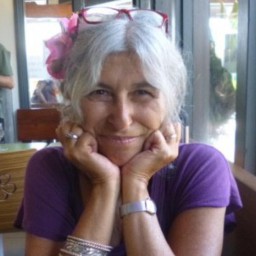
jz-headshotThis year, I celebrated the Jewish feast of Passover on March 31st–almost three weeks before the holiday’s official start on the evening of April 19th, the 15th of Nissan. It turned out to be my best Passover yet.
Because I’d been accepted for a residency at an artists’ colony beginning on April 17th, I had known since last Fall that I would not be home for the holiday. Given Passover’s importance for me–a Jew who left Egypt in her own lifetime, part of what some have called the “Second Exodus”–I had thought I might postpone the residency and even considered turning it down. But the colony could not change the dates, and, after much deliberation, I decided that my work as a fledgling translator was worth missing my usual gathering of family and friends. I told myself I could mark the arrival of Passover internally.

Continue reading “Making it Mine: An Un-Orthodox Passover by Joyce Zonana”

When the Cranes Come by Sara Wright

Departure.

I stood deep
in a toad hole
slinging mud
at twilight
when the sky
turned lemon
and gold.
They arced
over
my head
in pairs,
loose aggregations –
it seemed like thousands
crying out,
crossing
the river.
Ensouled.
Spirits defying
image or word.

A Mighty Migration begins…

I shivered.
Tears rose unbidden
Who calls them North?
I call out “I love you” –
Believing they know.
A crescent moon listens
cradled by nightfall.

To witness
a sky full
of Sandhill
Cranes
dark red heads
ebony eyes
long graceful necks
curved gray wings
dripping black legs
descending out of the blue
to roost
along this
winding Red
Willow River,
gracing fields
of depleted grain
is a Gift
given
at midnight;
the moment
before
departure.
This turning
of the wheel
births
days full of light
and an empty
sky bowl.

Haunting cries
in my ears
ring in the silence
of beloved crane absence
for another year.
Continue reading “When the Cranes Come by Sara Wright”

Honoring the Completion of the Year, by Molly Remer

“Beginnings and endings are so very sacred, to give honor to all that has transpired, every experience, every joy, every pain, is a doorway to the magical. Hold your entire year between your hands, every day, every thought, every breath. Now bless it with gratitude, love and humility. You have done more to transform this new year than a thousand resolutions.” 

 –K. Allen Kay

Two years ago, at the end of the year, I was supposed to hold a closing ceremony for a year-long Ariadne’s Thread study group I had been guiding throughout the year. Every member of the circle ended up backing out of the closing circle at the last minute, but I held the ceremony in full anyway, alone in my front yard, just for myself, and expanding it to include acknowledging and appreciating all the work I had completed in 2016, including my D.Min degree. People’s reasons for backing out of the ceremony were very valid and while on a cognitive level I understood why they couldn’t come, on an emotional level I still felt let down and disappointed at being “abandoned” by them. Holding the closing ceremony for myself anyway and acknowledging that I kept my own commitment to doing a full year of this work in circle, felt like a powerful declaration and affirmation of my own worth. In fact, it was such a validating and powerful experience that I continued the practice with a personal year-end closing ceremony for 2017 as well and I will do the same for myself this year too. Continue reading “Honoring the Completion of the Year, by Molly Remer”

The Gifts of Life: Do We Remember? by Carol P. Christ

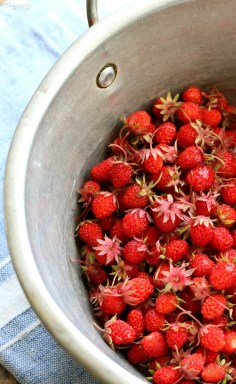
Strawberries shaped my view of a world full of gifts simply scattered at your feet. A gift comes to you through no action of your own, free, having moved toward you without your beckoning. It is not a reward, you cannot earn it, or call it to you, or even deserve it. And yet it appears.

Sweetgrass belongs to Mother Earth. Sweetgrass pickers collect properly and respectfully, for their own use and the needs of their community. They return a gift to the earth.

That is the fundamental nature of gifts: they move, and their value increases with their passage. The fields made a gift of berries to us and we made a gift of them to our father. The more something is shared, the greater its value becomes. This is hard to grasp for societies steeped in notions of private property, where others are, by definition, excluded from sharing.

The essence of a gift is that it creates a set of relationships. The currency of a gift economy is, at its root, reciprocity.

Robin Wall Kimmerer, Braiding Sweetgrass, 27-28

Thanksgiving has come and gone. We gave thanks for the food placed on the table and for the family or friends who shared it with us.

In our culture giving thanks can feel forced: I remember how my brothers and cousins and I hated to be asked to say grace at Grandma’s house. When we have not been taught, it can be difficult for us to understand that nothing is ours by right. Continue reading “The Gifts of Life: Do We Remember? by Carol P. Christ”

A Precious Gift by Natalie Weaver

This has been another hard month.  I don’t feel it to be hard.  I just know objectively that it is.  The typical challenge of balancing my work with the children’s needs and the management of a household has been intensified by the onset of a serious medical condition in my family.  I now enter that phase of elder care, which I understand is more or less bound to bankrupt the average household.  I have become the much-begrudged adult child, compelled to make decisions for other people’s lives and regarded in the fog of suspicion. My intentions are now under scrutiny; my time is usurped; my efforts are thankless.  I’m not complaining really.  I am just describing.

In the midst of things, I have managed to take my older son to the seeming ends of the earth to visit potential high schools.  I am managing a Destination Imagination team for my fourth grade son’s class.  I am teaching six courses, and my home is relatively clean.  I am running a weekly lecture series, I volunteered at the Church this month, and no one has missed any meals.  I even managed to sew a blanket for a friend’s new baby. There are many more serious family, medical, and economic issues that underlie my day-to-day, but along with everyone else, and perhaps a little more so than some others, I just accept that I am amazingly over-extended.

Continue reading “A Precious Gift by Natalie Weaver”

Sustaining Myself by Molly Remer

37880751_2142186212660256_8002693145366102016_nI touch the earth and offer gratitude
for this land I call home.

I reach towards the sky and offer gratitude
for sun, moon, and stars.

I place my hand on my heart
and breathe deep, offering gratitude

for all that I am and all that I have
and for the many blessings of my life…

June 2016

I am finishing my last semester of college teaching. I have four children ranging from 18 months to 12 years and a thriving home business. I am exhausted. I feel wrung out, weary, overloaded, sped up, and on the edge of collapse. My dominant fantasy, the one that pops unbidden to my mind as I work through my never-ending to-do list is to just lie on the floor, flat on my back. I tell my husband, “this isn’t a sustainable pace for me. If I keep going like this, something bad is going to happen to me.”

I keep going.

Continue reading “Sustaining Myself by Molly Remer”

 Witches in the Weeds by Sara Wright

In folklore Old women are believed to control all aspects of Nature – Fire, Earth, Air and Water, but in myth and story they have a special relationship with water.

The title “witches in the weeds” emerged after I did some research on the Datura plant. This plant is usually associated with old women and sorcery in myth and story. For example, in European mythology, the dark goddesses, Hecate, and Baba Yaga are associated with Datura. Datura is considered to be a ‘witch weed’ and is categorized as a poison along with deadly nightshade, henbane and mandrake. The seeds and flowers have a history of creating visions, delirious states, and causing death. Datura thrives in wilderness areas. Old women, dark goddesses and Datura have a lot in common.

Women and birds have been associated since Neolithic times. Scholar and mytho-archeologist Marija Gimbutas unearthed many bird-women sculptures that were fashioned out of clay in “Old Europe”. Old women in particular are most often associated with owls, herons, crows, ravens, and black birds of all kinds. It is probably the relationship between women and birds that is one of the roots behind the belief that old women can fly. The other root behind flight can probably be found in the relationship between women healers and the plants they used. Plants like Datura contain alkaloid properties (scopolamine, hyoscyamine, and atropine) that are capable of producing visions of flight and are used by folk healers and medicine women and men. Continue reading ” Witches in the Weeds by Sara Wright”

Wild Snail Festivals by Molly Remer

“It’s a wild snail festival out here!”
—Tanner (age 3)

This spring we took a family mini vacation to Table Rock Lake, about three hours away from home.

At its best, working and schooling from home with our family of six feels like a beautifully seamless integration of work and life—there is no need to compartmentalize or draw distinctions between “life” and “work,” because it is ALL just life and living. At its worst, it feels like the work bleeds into everything else in an all-consuming way and the to-do list just never ends and something or someone is always getting overlooked or shortchanged. We find that it is helpful for us all sometimes to just all step away and be somewhere else, while the to-do list stays at home! We try to take at least five family adventures/trips a year (some of them small and some more involved).

Continue reading “Wild Snail Festivals by Molly Remer”

A Feminist Liturgy of Old and Age by Elisabeth Schilling

blue fleurHow the voices speak of what is and isn’t tastes of a superficial sauce I let drip from my lips. In the first dialectic of aging (harkening back to Marie Cartier’s helpful division of conversational foci), usually what is spoken about has little to do with our mental, spiritual, or emotional states. It is not a comment on perhaps what it should be: how evolved in consciousness or how mindful a soul is, how evolved in practices of discipline and surrender one is, how creative we have been in our attempt to ease the suffering of ourselves and others. It is not this because when people comment on age or how old someone might be, it is usually, in my recent experience, from one who knows not a person well enough to address any of these former possibilities nor in a situation where those in conversation have the luxury of mulling over such glittering, dazzling musings.

For indeed, let beings sit together on rocks or leather couches, playfully and perhaps seriously, discuss opinions on reincarnation, what has appeared in Tarot readings of current life stages and what the presence of what that Major Arcana card might represent as intuited by our subconscious. We might share stories of the messages we have lately received from trees, how they surrender so seemingly freely to their baldness as we might, with a few tufts of auburn leaves on a naked limb, how sometimes the bark is smooth and ghostly pale and how other times the trees that catch our communion are thick and rough like we are, tempting us to press our soft flesh into each other’s bark and feel how specks of wood and sap enter us, how we all bend and break and maybe rise up in another season with a flamboyant, hairy green bush, taking up all the space that we can, as we reach our arms in passionate ecstasy to the sun and moon, learning that sometimes we can best speak in silence and trembling. Continue reading “A Feminist Liturgy of Old and Age by Elisabeth Schilling”