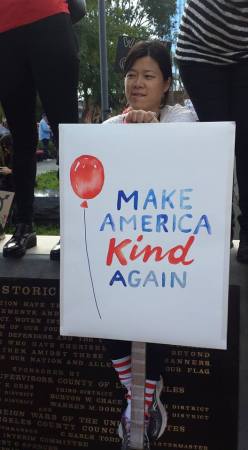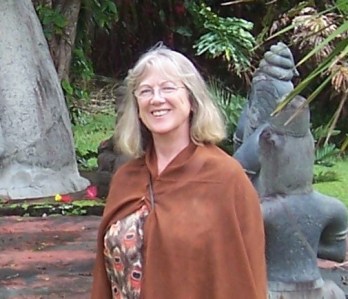
Gift giving is an important focus this time of year, along with reflection, reconciliation, and renewal. This spirit of charity is needed now more than ever. And yet, charity is not enough.
Thousands of women, maybe even millions, re-experienced the trauma of sexual assault when the American public heard and ignored Donald Trump’s admission of grabbing women “by the pussy” and the accusations of forced kissing by numerous women, electing him to office in 2016. This was followed by additional revelations of his immorality and corruption and, in a show of conscience by one political party, his impeachment by the U.S. House of Representatives.
Many have wondered how such a man could get elected and remain in office despite the many revelations of illegal activities, and complete lack of honesty, repentance, and conscience. The recent response by Trump and his allies to an editorial in Christianity Today favoring impeachment yields a clue: criticize Trump, and risk losing politically, financially, or worse. Today, one can’t even speak out. How many of Trump’s accusers received death threats? How many of his extramarital liaisons received a bribe to keep quiet?
The waters are muddy in the Trump era: politics divide us into winners and losers, and “our” administration sides with those who praise one man and against those who dare to disagree, aided by conservative religious leaders and institutions. This is a situation that our founders meant to prevent. But it is happening.
Also happening are racial and gender inequality on the rise. To many feminists this seems nightmarish and unexpected. Some of us saw it coming, but the extent of its public acceptance and open justification was something few could foresee.
At the same time, women and men are coming together; I have seen my networks and others expand more than ever. The increasing support and understanding for women’s issues by people of conscience, and the promotion of compassion and activism for all those who suffer, is a form of charity, one that is greatly needed now.
But such charity is not enough. And charity from those who remain quiet about the corruption, immorality, and bullying in and outside of our government is not even welcome.
What we need is acknowledgement. This would be an important first step. And it is that which Trump and his allies push against the hardest, perhaps because they realize it can lead to the next steps, repentance and then change.
Trump’s perfect flawless existence is a thin veneer that most of us can see through. And yet, here we remain, at a standstill that is supported by willful ignoring of his true face by those with something to gain.
Acknowledgement, not charity, is needed now. No one is perfect, least of all one who claims that he is.
Susan de Gaia teaches Religion and Philosophy online for Central Michigan University and is General Editor of Encyclopedia of Women in World Religions: Faith and Culture across History (ABC-CLIO, 2018/2019). Susan lives in California and is active in social and environmental justice, peace, and women’s spirituality movements. She works locally to promote environmental sustainability, cultural diversity, and political action. She holds a Ph.D. in Religion-Social Ethics with a Graduate Certificate in the Study of Women and Men in Society (USC), and B.A. in Women’s Studies (UCSB).


 For the past four Sunday afternoons, I’ve walked along Monument Avenue in Richmond, Virginia, to observe firsthand the changes happening to the statues of Confederate generals placed there a century or so ago. I focus here on the Robert E. Lee statue. Robert E. Lee (1807-1870) “…was an American Confederate general best known as a commander of the Confederate States Army during the American Civil War” (Wikipedia). These days, Lee’s statue seems to be home base for activists who are working diligently to keep protests and demonstrations ongoing, yet peaceful.
 As a feminist, I have learned how important it is to limit the scope of my claims to a reasonable space, demarcated by some genuine historical or current investment, connection, or participation. There are many things in this world about which I passingly feel or think something. And, even if I think about something quite a bit, if I have nothing but opinion, even an informed one, I find it best to keep to myself. I therefore tread lightly here. Nevertheless, I do have some opinions born out of years of studying the relationship between Christianity and slavery, professional risk in dealing with these subjects, and my own different, but very real, history of abuse by which I analogically understand some measure of pain and exploitation.
 I struggled with what to write about for my May post. Would I write about the ridiculous notion which has countless Americans buying into the idea that COVID19 is a hoax? I could write about how it is fool hearty for us to even consider lifting stay at home orders when the number of infected patients are still rising daily. The list goes on due to the rising pressures, frustrations, and anxieties that are surrounding each one of us.
 My eleven-year-old son, Nathan, a fifth grader, is doing his best to deal with changes the coronavirus pandemic has brought to his life. Before this time, Nathan’s biggest daily worries have been keeping his school papers organized and staying on top of his sometimes rigorous homework assignments. Nathan has ADHD, which poses certain challenges to his learning and behaviors, making some tasks that have many intermediary steps nearly intolerable for him. Nathan’s learning is complicated by the fact that, while it has always been apparent that his learning style was different, his teachers and family (including me) have not always had the skills or patience to see Nathan’s exceptional gifts and insights from Nathan’s own point of view.
  The wind changed during the night. Even as they slept, the Witch and the Ladies of the Magic Mirror felt it and stirred in their beds. Kahlil the raven, who was sitting on the roof, felt it, too, and as he looked down the highway, he spotted the travelers. “What’re those folks doing on the road?”
 You might be asking yourself, “Is Karen losing her mind?” Last post she’s asking us “
 I’ve been thinking a lot about something my grandmother would always tell me: “When life hands you lemons, sometimes you have to make applesauce.” I know, it sounds crazy, but life right now appears to be more on the crazy than the sane side.