Creating Space: Mosques Affirming All Bodies, Minds, and Hearts by Laury Silvers

Silvers, Bio Pic FRBlogIn my first blog for Feminism and Religion, I discussed the cognitive and embodied dissonance that some Muslims experience as a result of historically (not eternally) gendered ritual forms. I ended with a promise to share with readers the ways in which el-Tawhid Juma Circle mosques try to create space to break free of those forms. Our mosques affirm all human beings as spiritually, socially, and ritually equal and try to break down the social hierarchy of ritual and theological leadership by opening up a space for all bodies, minds, and hearts to lead and follow as equals among each other.

Continue reading “Creating Space: Mosques Affirming All Bodies, Minds, and Hearts by Laury Silvers”

Yes, You’re a Homophobe by John Erickson

Jesus loved sinners and Jesus would rather be dancing with me in West Hollywood on a Friday night than lugging through a swamp luring ducks into a trap with a duck caller made by a clan who think that my sexual actions are similar to that of an individual having sex with an animal.

John Erickson, sports, coming out.

To be able to walk down the street holding the hand of the one you love is a great feeling and an action that some of us aren’t able to perform without fear.

A line has been drawn in the sand between those who support gay rights and those who do not.  While some call it being on the “right side of history,” I simply now refer to it as not sounding and looking like a bigot in the halls of history and in the various books, Facebook posts, and Tweets that our children will one day read. Continue reading “Yes, You’re a Homophobe by John Erickson”

Baby, You Are My Religion by Marie Cartier

—it’s a girl and she weighs 240 pages!

I just heard from the United States distributor of my book, Baby, You Are My Religion: Women, Gay Bars, and Theology before Stonewall.

This blog has to be about that. I feel like I am waiting for my child to arrive and, as I’ve already written about in a previous post, I am announcing the “birth” of my book. The book is on the East Coast –  it’s almost here!

The book was published in the United Kingdom by Acumen Publishing and it has taken several weeks for the books to “cross the pond.” So although the book has been in my hands in galley form three times and I know it was published in the U.K. I have yet to see the finished copy! Continue reading “Baby, You Are My Religion by Marie Cartier”

Matthew Shepard Is a Friend of Mine…by Marie Cartier

Matthew Shepard died October 12, 1998 – fifteen years ago.  This month I have already attended three events memorializing his death. The first was a screening of the Emmy-award winning teleplay The Matthew Shepard Story  (starring the amazing Stockard Channing as Judy Shepard), where I served as the moderator for an impassioned question and answer session for the monthly meeting of Comunidad, the Ministry of Gay and Lesbian Catholics group where I serve on the board at St. Matthew’s in Long Beach, CA.  I also recently attended two productions of Beyond the Fence produced by the South Coast Chorale, in which my friend Robin Mattocks performs. This musical created by Steve Davison and others moved me to tears several times—and I know and teach the story of Matthew Shepard every year at this time—I have already done so four times this month. I attended with a friend the first night and because I am a professor the director let me come to the Gala the next night where I met Matthew’s real life best friend Romaine Patterson. 

Author (L) at Beyond the Fence with Matthew Shepard’s best friend and panelist speaker, Romaine Patterson

Romaine is described in the casting call for this show as “a 19 year old lesbian in a leather coat, fun loving, strong best friend (in other words—a butch dyke). Romaine was a featured panelist at the event. Romaine was also the one who created the “Angel Action” — the wall of angels which effectively blocked the Shepard family from having to walk by Fred Phelps and his band of religious homophobes at the trials of the murderers of Matthew. Phelps and his ilk held signs aloft with slogans such as “Matt dies! God laughs!” and “Fags burn in hell!”  The Angel Action activists wore wide white wings that extended, due to an ingenious construction, that created wings a few feet above the heads of the wearers (mostly Matthew’s college friends) and hid the protesters behind the wings of angels. The Angel Action launched in 1999 has been copied all over the world.

Continue reading “Matthew Shepard Is a Friend of Mine…by Marie Cartier”

Muslim Ritual Prayer, Social Submission, and Embodied Dissonance by Laury Silvers

Silvers, Bio Pic FRBlogWebsites run by Muslim scholars typically offer advice columns for those seeking legal rulings and religious guidance on personal concerns. One young Muslim woman wrote to a site about her doubts that wearing hijab was connected to being a good person. The gist of the opinion was that wearing a head scarf, whether she feels right about it or not, will internalize good behavior thus transforming her faith. The acting scholar, Shazia Ahmed writes,

“…performing good deeds, even if one may not be ‘feeling it’, can affect us and change us.  The limbs are inroads, and performing good deeds with them can soften a hardened heart, bring enlightenment to a closed mind, and give a person a feeling of rejuvenation and desire to come closer to Allah and do more positive things.”

If she wears a head scarf, her faith, ritual and ethical observance, and peace of mind will increase. This approach is supported by studies undertaken in the field of social and behavioral psychology. It’s been shown that standing or sitting in an open-bodied “power pose” increases testosterone and reduces cortisol, just as forcing a smile increases serotonin. That’s all well and good, and I’ve certainly got nothing against hijab. As we should all be aware by now, hijab has multivalent meanings for Muslim women that do not typically accord with non-Muslim assumptions of its oppressiveness. So hijab is not the point here. My point is that the use of repetitive behaviors and rituals, which are capable of transforming a person’s the inner life, may also act as methods of social control that may not result in the desired peace of mind.

Continue reading “Muslim Ritual Prayer, Social Submission, and Embodied Dissonance by Laury Silvers”

An Interview with Lyz Liddell from the Secular Student Alliance by Kile Jones

KileIn this post I interview Lyz Liddell, Director of Campus Organizing at the Secular Student Alliance.  I first got in contact with Lyz about the idea of building a Humanist Center at my school, Claremont Lincoln University.  She was very helpful and inspiring.  I then had the pleasure of meeting her face-to-face when I gave a presentation on “Atheism and Interfaith” at the Secular Student Alliance’s Annual Conference in Las Vegas.  So once again, I give you an interview with a strong female non-believer:

Lyz Liddell of the SSA

Can you give us a little background to how you became interested in secular activism and how you became the Director of Campus Organizing for the Secular Student Alliance?

I first became interested in secular activism via our Executive Director August Brunsman, close to ten years ago.  The editor of our newsletter had recently acquired some fame (that was Hemant Mehta, with the fame from his experience of selling his soul on eBay) and was no longer able to commit to the regular editorial schedule; I was asked to step up, and since I had some editing experience, I took it on.  Up until that point, I had been a “layman,” if you will – secular for sure, but not really an activist.  Through several years of editing that newsletter, I learned what secular student groups were doing, and what was happening in the secular movement at large.  The more I encountered, the more enthusiastic about it I was.  I started going to conferences to get more information and news for the newsletter, and got more involved with the organization’s staff and volunteers and affiliates.  When the campus organizer position opened up in late 2008, I stepped up into that position, and we’ve grown it from there (2 full time staff and some volunteers, a board of mostly college students) to the professional organization we are today (9 full time staff, 4 part-timers, a professionalized board and dozens of dedicated volunteers; we’ve grown from ~100 affiliates in 2008 to over 400 today).

Truths My Mother Taught Me by John Erickson

I never gave much credence to religion but through my mother, I met G-d, and through her I understood that I’m not a feminist because of the books I’ve read but rather because of the woman I call mom.

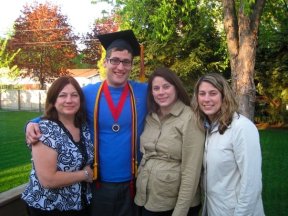
Graduation PhotoThe first question I always get asked when I’m in feminist spaces is: “What inspired you to become a feminist?”  Although I could go into the various histories revolving around men’s involvement in the early stages of the women’s movement to the similarities between the LGBTQ and women’s movements, my simple answer has always relied on one person: my mother.

I’ll be the first to admit (as well as many other people who will join me in the same chorus) that my mother deserves Sainthood for having put up with all the shenanigans I have, and still continue to, put her through. From running away from our local Catholic church the moment she dropped me off at Sunday School, to swearing like a sailor on leave at a very early age in front of Father Schmidt (who still fondly remembers me and the list I brought in with me to the confessional booth). Continue reading “Truths My Mother Taught Me by John Erickson”

Who is the Church? by Linn Marie Tonstad

Linn Marie TonstadThe headlines blared, “Who am I to judge?” News outlet after news outlet led with the pope’s conciliatory stance toward gays, expressed during an interview aboard the pope-plane as he returned from Brazil. Among the several headers from Fox News (I encourage not clicking!), we find discussions of the pope’s “reaching out” to gays and even one that combines this development with his “urging” of a “greater role” for women. The New York Times story introduced the pope’s comments as follows: “For generations, homosexuality has largely been a taboo topic for the Vatican, ignored altogether or treated as ‘an intrinsic moral evil,’ in the words of the previous pope.” Ignoring the astonishing comment that this has been the case “for generations,” as though homosexuality has historically been the kind of issue for the church it has become in the wake of radical queer movements – see Mark Jordan’s several books on this for the most helpful treatments – the story went on to say that the pope’s comments “resonated throughout the church.” Although the NYT article did a better job than some contextualizing and nuancing the pope’s comments, they were still termed “revolutionary” in an assessment better suited to an opinion page than to a news report. Better-informed commentators, such as James Martin, offered a measured response. Martin said that although the pope’s remarks didn’t really signal a significant change in policy, “in the church, style often proves substantial,” implying that the “pastoral” tone might have effects in the implementation of policy. More significantly, Martin praised the pope’s adherence to Jesus’ injunction not to judge as an instance, first and foremost, of the pope’s commitment to mercy as the hallmark of his pontificate.

My Facebook feed, predictably, lit up with links to and discussions of these comments. While most were thrilled, a few posts noted that, even if Pope Francis is in fact (which is not proven) walking back Benedict XVI’s language of “intrinsically disordered,” the church’s policy has not and will not change in any significant way. What was missing in all but a few instances was attention to the pope’s comments in the same interview on women, and the deep theological problems with the assumptions contained in those comments. And while I, as a queer theologian, would never wish to downplay the struggles of LGBTQI people in the Roman Catholic church, there are rather more women than queers in that church (as elsewhere!). What’s more, it is arguable that it is the sexism and heterosexism of what Marcella Althaus-Reid memorably termed “T-Theology” that underlies condemnation of homosexuality in Roman Catholic theology. Continue reading “Who is the Church? by Linn Marie Tonstad”

THE TWO AND THE ONE: CAN WE EMBRACE AND CELEBRATE SINGLENESS AS MUCH AS MARRIAGE? by Carol P. Christ

carol p. christ 2002 colorLike many other readers of this blog, I have followed the progress of the Prop 8 and DOMA cases to the Supreme Court and waited with bated breath during the month of June to see how the cases would be decided. 

On June 26th I rejoiced in decisions that brought the United States several steps closer to affirming the full equality of all human beings.  I am happy that lesbian and gay couples can now get married in California, the state of my birth, the state where I still vote.  As one commentator remarked, “This story has a happy ending—it leads to marriage.”  I am also pleased that lesbian and gay couples will not be excluded from “marriage benefits” offered to heterosexual couples, simply on the basis of their sexual preference.

Still, the gay marriage victories raise other questions.  Much of the rhetoric surrounding the push for marriage equality assumed that “marriage” is or should be “the norm” for all people.  Those arguing for the right of gay people to marry often seemed to be saying: “We are just like everyone else.”

This assumption leaves out a whole lot of people—among them large numbers of single women.  Continue reading “THE TWO AND THE ONE: CAN WE EMBRACE AND CELEBRATE SINGLENESS AS MUCH AS MARRIAGE? by Carol P. Christ”

To Have and to Hold: Gay Marriage and the Religion Question

If a conservative religious traditions can’t give their mothers or sisters full equality, how can we expect them to give a GLBT individual the time of day?

John Erickson, sports, coming out.Outrage.  Anger.  Fear.  Hatred.  These are just a few of the words that flashed across my Twitter feed as I woke up on that fateful Wednesday, June 26 morning when the Supreme Court of the United States ruled that the Defense of Marriage Act (or DOMA) was unconstitutional and that supporters of Proposition 8, the hotly contested voter initiative in California that banned same-sex marriage, had no standing.   People were mad.  However, it wasn’t just the typical kind of mad that is associated with hatred, it was a type gay_marriage_81102178_620x350of mad that was met with impossible anguish because what I was reading and feeling was a result of one thing: there was nothing more they could do.

What does all this mean?  Questions from friends and family were filling up my inbox and although I wanted to take a moment to just hit “Reply All,” and input the words: Equality, I had to hold back and start to examine the notion that although equality may now be firmly on the proverbial table, there is still a lot of work to be done, specifically for gay marriage and those wanting to marrying inside the traditional church spaces they grew up in and not just the ones that have come out as open and affirming in recent years towards LGBT individuals. Continue reading “To Have and to Hold: Gay Marriage and the Religion Question”