A dear friend of mine is dying. Yes, the saying might be true—we all die alone. But we all are not necessarily lonely when we die. How can we die happy…with our self-respect intact?
We are all alone, born alone, die alone …I do not say lonely — at least, not all the time — but essentially, and finally, alone. This is what makes your self-respect so important, and I don’t see how you can respect yourself if you must look in the hearts and minds of others for your happiness. —Hunter S. Thompson
Many of the women that I interviewed in my book Baby, You Are my Religion: Women, Gay Bars, and Theology Before Stonewall lived a closeted gay life. Their respect for their gay self had to be hidden in order to survive. It was how they respected the gay inner self—it is how they protected that self’s very survival.
Many of them, as many of us do, had friends that affirmed their inner identity even as it was hidden to a majority of the outside world. As they grew older, their friends (as many of our friends will do) died. That meant that the friends they had in the gay bars died holding the secret of their gay lives. Many of these women grew up into adulthood without the benefit of a community. For them “gay pride,” “coming out,” and even the word “lesbian” were not words they would ever use in their common conversation. Continue reading “Old and Gay – Dying Alone and Rae’s Friends by Marie Cartier”
Even as my book, Holy Women Icons, is printed, bound, and available for purchase, filled with the stories of nearly fifty holy women, my project of painting these beloved saints continues. Joining all my other Holy Women Icons with a folk feminist twist is the brave, bold, and revolutionary Pauli Murray.
A few days ago I had the pleasure of giving a talk at the Secular Student Alliance Conference on how non-believing persons can work with Churches. Amidst the chaos of conferences–managing your time, deciding which talks to attend, and making sure you have enough water (it was a Burning Ring of Fire outside in Tempe, AZ)–I got to meet some pretty incredible secular women.
One of them was Heina Dadabhoy.
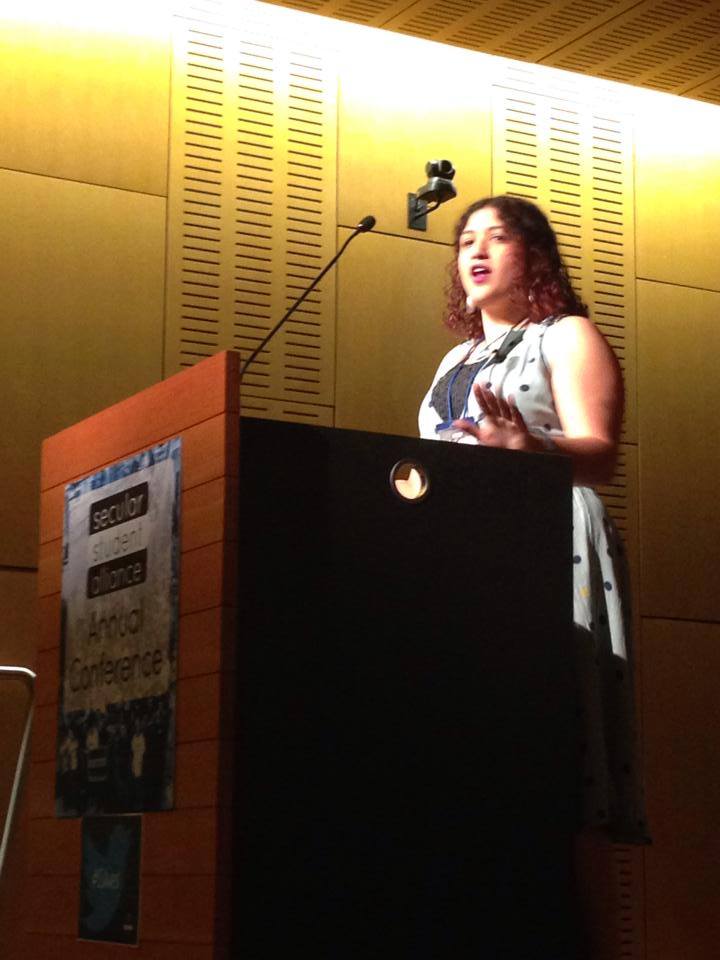
Heina speaking at SSA.
Former Muslim, blogger at Freethought Blogs, and overall bad-ass, Heina spoke about ways in which secular groups can create a more welcoming environment for ex-Muslims and Muslims beginning to doubt. Her talk, “Of Murtids and Muslims,” (a “murtid” is a public apostate) was not only about her experiences coming out as a secular humanist, but considered some of the absurd questions people ask her (and other ex-Muslims) about leaving Islam. “So did your parents try to honor kill you?” “Have you gone through FGM?” It was disturbingly humorous.
What I considered to be Heina’s main point, was that we should respect each others’ individual differences and not generalize and caricature all Muslims with the depictions of some. “Just because you read Ayaan Hirsi Ali’s book,” Heina notes, “does not make you an expert on Islam.” Heina made sure to emphasize the radical diversity that exists in Islam. She also spoke of the some of the issues that people go through when they leave Islam: How do I create a new identity when my old one was intricately tied up in my Muslim community, family, and culture? How do I navigate popular culture when I have missed a bunch of it? How do I find myself in this new secular world? Heina’s answers were refreshingly honest and insightful.
P.S. Aisha (one of Muhammed’s wives) should not simply be reduced to the young person Muhammed married; she was also a war leader, influential Muslim thinker, and someone who contributed greatly to early Islam. This is, of course, Heina’s insight.
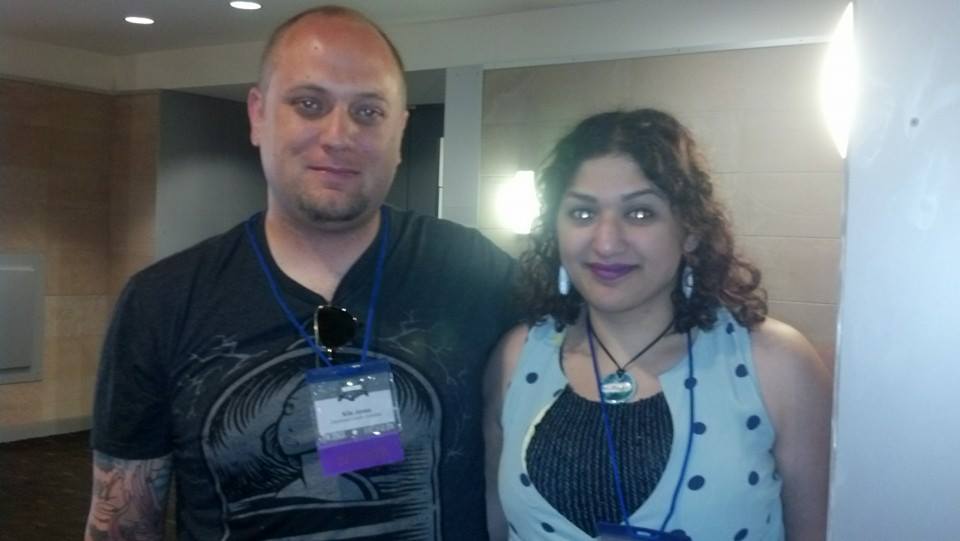
Me and Heina at SSA
Another awesome secular woman I met, was Sarah Morehead.
Sarah. Photo from Apostacon.
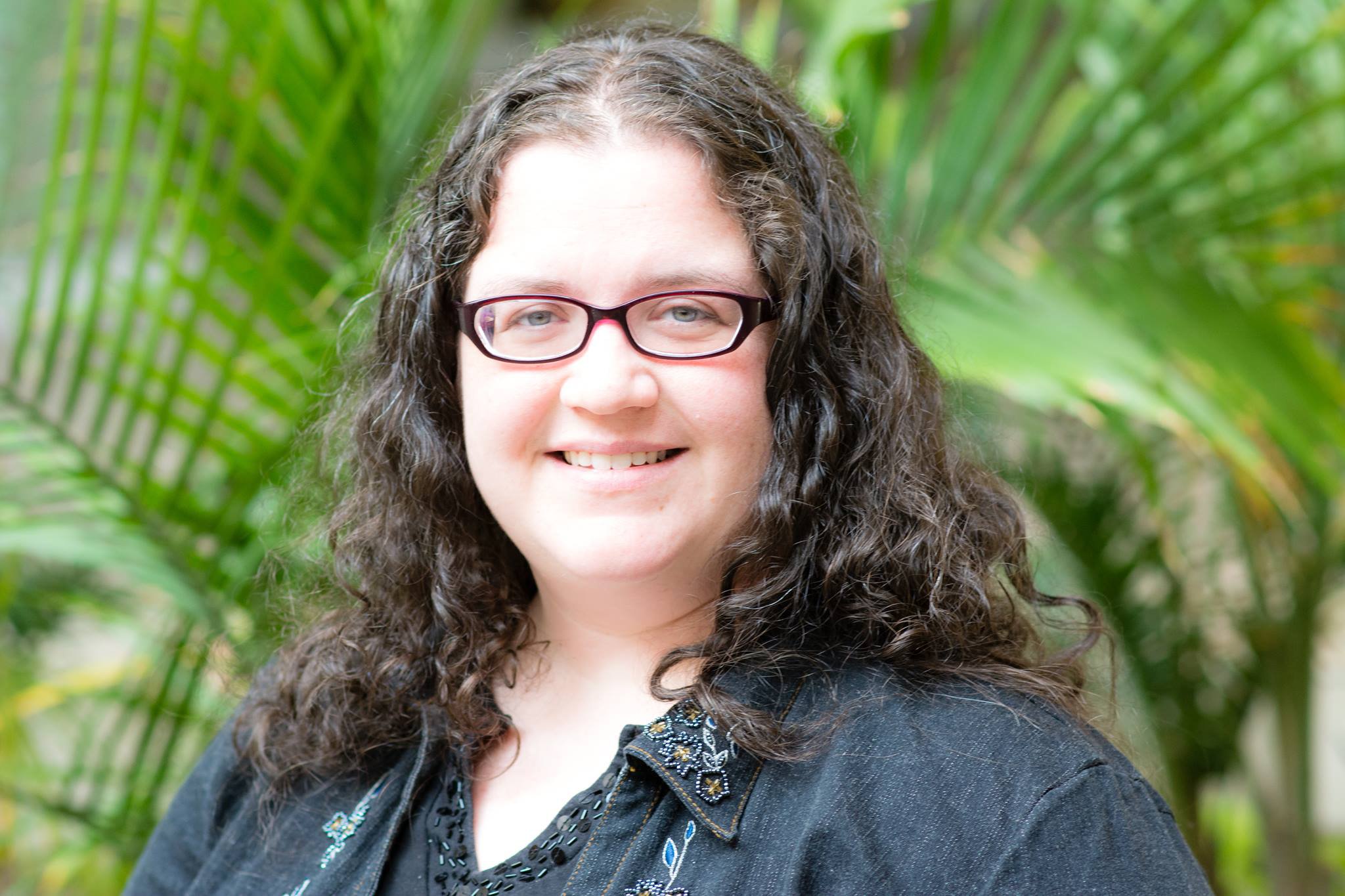
Sarah is a former evangelical Southern Baptist, Executive Director of the “Recovering From Religion” project, and another overall bad-ass. She spoke on how to start up a Recovering From Religion group on your campus. Here is a blurb about Recovering From Religion,
“If you are one of the many people who have determined that religion no longer has a place in their life, but are still dealing with the after-effects in some way or another, Recovering From Religion (RR) may be just the right spot for you. Many people come to a point that they no longer accept the supernatural explanations for the world around them, or they realize just how much conflict religious belief creates. It can be difficult to leave religion because family and culture put so much pressure on us to stay and pretend to believe the unbelievable. If this is you, we want to help you find your way out. Don’t let people convince you that you just didn’t have ‘enough’ faith, or that you just haven’t found the “right” religion.”
Sarah and I chatted (and often laughed) about our old experiences as conservative Christians. We discussed some of the funny language (Christian-eze) we used to use, the various levels of guilt and shame that were cast upon us, and how science helps explain some of the interesting displays of piety often seen at Pentecostal services. Sarah’s jovial and welcoming demeanor was calming, and as an Executive Director for a project aimed at helping people “recover” from religion, I cannot think of a better person for the job.
Lyz. Photo by SSA.
The last woman I have in mind is Lyz Liddell.
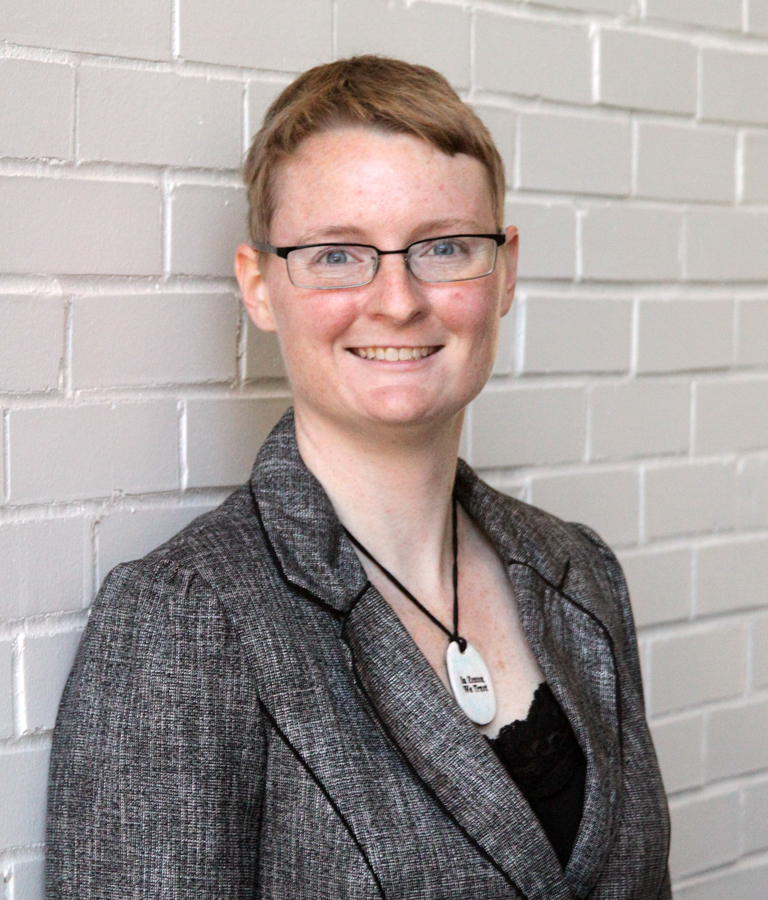
Lyz is the Director of Campus Organizing for the Secular Student Alliance. I have an interview I did with her a while back, on this very blog! Besides running around with her headset on, standing on chairs for announcements, and generally keeping the world of SSA from not crumbling into oblivion, Lyz is a great motivation and example. If you are ever interested in starting a SSA group on your campus, talk to her.
To all those who attended this years SSA West, or who are involved with helping secular students: Unite!
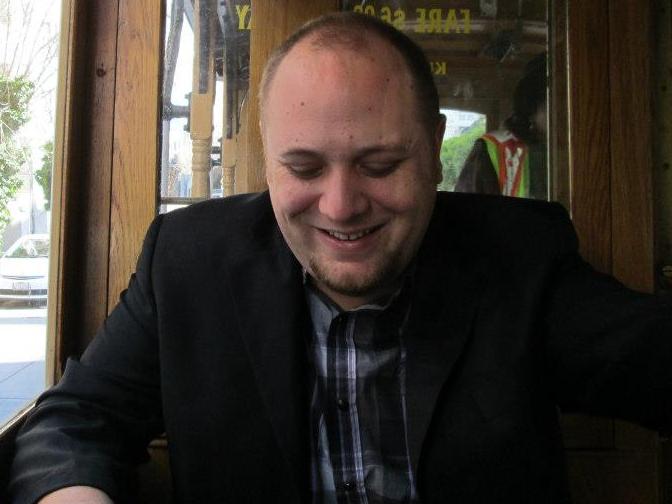
Kile Jones holds a Bachelors of Theology (B.Th.) from Faith Seminary, a Masters of Theological Studies (M.T.S.) and a Masters of Sacred Theology (S.T.M.) from Boston University, and is a current Ph.D. in Religion student at Claremont Lincoln University. He also holds a Certificate in Science and Religion from the Boston Theological Institute. Mr. Jones has been published in Zygon: Journal of Religion and Science, Philosophy Now, Free Inquiry, World Futures, Human Affairs, and the Secular Web. He is the Founder/Editor-in-Chief of Claremont Journal of Religion (www.claremontjournal.com), and is the Founder/Director of Interview an Atheist at Church Day (interviewatheists.wordpress.com).
It is World Pride in Toronto this year. The city is filled with people from everywhere celebrating the gorgeous spectrum of humanity and the right of all human beings to live with dignity. In honor of World Pride and happy coincidence of the beginning of Ramadan, I would like to share one of the earliest sermons I gave at Toronto Unity Mosque reflecting on the struggles of our LGBTQ refugee congregants. I share this to honor those refugees, as well as our other congregants whose journey is no less significant, and also to honor my friends and co-founders of the Toronto Unity Mosque, El-Farouk Khaki and Troy Jackson, as well as Adnan Hussein who was with us from the early days.
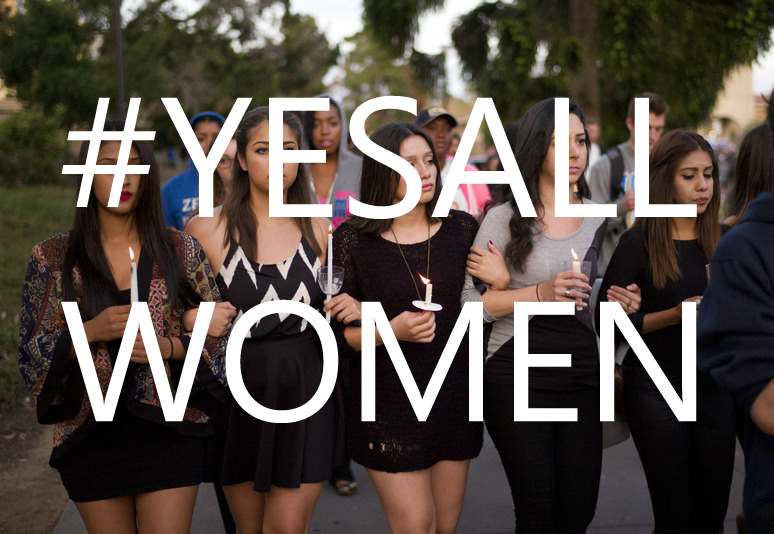
#YesAllWomen proved that although not all men commit horrible crimes against women, the men that often get the headlines and create the most controversy are the ones that need to be watched out for.
The one thing I typically will choose to do on the rare occasion that I’m able to sit down and relax is to watch a documentary. While some people may go to the gym, read a book, or hang with friends, I typically choose to stay in, nestle up on my couch, and learn. While on my last bout of relaxation, I chose to watch the HBO documentary Questioning Darwin. Although it offers very little new insight into the evolution vs. creationism debate, it does offer an interesting new way to look at the recent social media hashtag war feminists, allies, and supporters found themselves in over the #YesAllWomen movement that took the world by storm.
Now, before I discuss #YesAllWomen, I have to admit that I did not enter into the safe space women created for themselves to tell tales of the horrible things they have and have had to face on a daily basis. I firmly believe that men should not have entered into the digital space Continue reading “#YesAllWomen, the Darwin Debate, and the God Complex by John Erickson”
Tomorrow I will be going to a friend’s 7th grade classroom presentation of “famous people in history.” She has 120 students who will be dressing up as someone in history and doing a presentation board about this person—as well as dressing in costume. She asked me to come in costume as Frida Kahlo. As many of you know, I admire/adore Frida Kahlo and wrote a blog last year extolling her praises; actually it was a “valentine towards an ethics of loving women and art.” (And every year I dress as Frida and help a friend do a lively lotería game at an LGBT celebration of Cinco de Mayo at our Church.)
My friend told me that while there would not be a Diego Rivera in her crowd of costumed living historians—there would be Frida’s lover Josephine Baker (someone saw the movie Frida and knew Josephine and Frida were “friends”), and there would be several Guadalupes.
This got me thinking that for children/teens – especially children brought up in religious households (and especially Catholic households, of which I was such a child) – saints and real people are often conflated. And famous real people one admires often are given “sainthood” in one’s imaginary church. Continue reading “Jesus, Mary and Joseph: Who Are Our Saints? by Marie Cartier”
I am taking this space, this month to share two very wonderful pieces of news. And I will make the caveat opening here: this is a blog about the benefits of gratitude and I am reaping them here—with a bit of shameless self-promotion. I am advocating here again for my work, my “book child”, as I did in my birth announcement blog!
As we move into spring, I want to step back and take stock of what I have planted that is coming into bloom. And with this, I hope to suggest to you all, dear readers, that you do the same. I (I’ll speak for myself here) tend to rush so much and feel I have so much to do that sometimes when something amazing happens that I have worked so hard for—it just passes me by, and I am on to the next thing before I get a chance to really acknowledge even what that amazing thing was. Continue reading “Taking Time to Smell Your Roses: What Are You Grateful for This Spring? by Marie Cartier”
Phelps didn’t just live a life filled with hate but he also embodied the very reasoning why so many communities cannot cross that proverbial bridge to work together to see past their differences and maybe never will. In the case of Phelps, sticks and stones may break our bones, but words really do hurt.
Fred Phelps, an American Pastor who headed the Westboro Baptist Church in Topeka, Kansas died at the age of 84 on March 19, 2014. While some individuals leave behind legacies of their good deeds and loving memories, the only thing Phelps left behind was a family and church founded on the principle of hate.
A frequent eyesore at various events ranging from military funerals and gay pride gatherings to mainstream events that captured the attention of our pop-culture obsessed society, Fred Phelps and his clan believed it was their sacred duty to warn others of God’s anger over the growing acceptance of not only modernity in general but also issues like gay rights and abortion. From slogans and signs such as ‘God Hates Fags’ to ‘Thank God for IEDs (Improvised Explosive Devices), Phelps has caused many controversies both during his lifetime and after his death.
One of my academic joys is interviewing people I find particularly interesting (see most of my posts here). This time I am honored to present a recent interview I did with Judith Butler.
Lori Gottlieb’s article in the February 9 New York Times magazine, “The Egalitarian-Marriage Conundrum,” was yet another tired entry in the New York Times’s annual clickbait misogyny Olympics. Who doesn’t remember the supposed opt-out revolution, and the sadness of the decade-later follow-up demonstrating every single consequence that any feminist could have predicted? Or the weekly gender terrorism spewed by Maureen Dowd, who somehow gets people to believe that constant belittling and feminizing male Democratic politicians counts as incisive, progressive political commentary? To name just a few of the most memorable, and most infuriating, examples.
Gottlieb’s article rehashed the studies – I’ve lost count of how many times I’ve read about them in one version or another – that suggest that equality in household labor leads to decreased frequency of intercourse among married heterosexual couples. The most revolting lines in the article – among many contenders – start with a quote from Julie Brines, the author of the study in question: ‘”The less gender differentiation, the less sexual desire.’ In other words, in an attempt to be gender-neutral, we may have become gender-neutered.” It is possible that Brines may be quoted out of context, or that what she intended to say was something quite different, but as the quotation stands, it implicitly suggests that so-called “traditional” gender differentiation is necessary for sexually satisfying heterosexual relationships. (For, of course, there are plenty of other ways in which gender differentiation might be present in heterosexual relationships. Gender differentiation is here being equated with a very particular set of decisions about ‘housework’, a notion that arguably exists only to render some parts of women’s work invisible.) That’s before getting into the implications of the word “neutered” used in the second sentence. Why would egalitarian distribution of household labor be considered “gender-neutral” to begin with? Continue reading “Anti-sex feminism? by Linn Marie Tonstad”


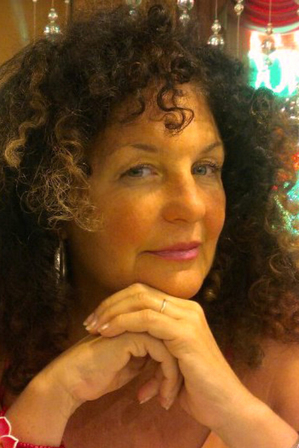 A dear friend of mine is dying. Yes, the saying might be true—we all die alone. But we all are not necessarily lonely when we die. How can we die happy…with our self-respect intact?



 tor who headed the Westboro Baptist Church in Topeka, Kansas died at the age of 84 on March 19, 2014. While some individuals leave behind legacies of their good deeds and loving memories, the only thing Phelps left behind was a family and church founded on the principle of hate.

 Feminism and Religion