“Vaginas are Everywhere!”: The Power of the Female Reproductive System by John Erickson

Nice girls don’t say the word vagina.

I have a beautiful picture of vagina hanging on my wall.  However, for the longest time it was in the back of my closet, with a plastic bag covering it.  I wasn’t ashamed of it but my ex-boyfriend, like most gay men, refused to have it on the wall where he could see it.  He is now long gone; the vagina is now out and proud.

I bid on the picture one fall during a showing of the Vagina Monologues at Claremont School of Theology.  One of my best friends was in the show and I had always loved its powerful message.  I walked out of the theatre, waiting for my friend, and there it was: the picture of the vagina.  I found myself caught up in its beauty.  Its gaze had mesmerized me.  The outlying layers of red, the contours of its shape, they all began to mold into a figure before my eyes.  While I have never thought of myself as a religious person, I realized that at that moment I was no longer looking the old photo but rather I was staring at the outline of the Virgin Mary.  At that moment, I realized that I had to have the picture.

My ex boyfriend was ashamed of the photo.  I let him shame me into putting it in the back of my closet and cast it away like it was nothing.  Like the experience, call it religious or not, had never happened.  When we ended our relationship, I found myself inconsolable and pacing up and down my stairs in a never-ending cycle of sadness and downheartedness.   As I was pilfering through our items, I came about the picture.  I saw it and for a split second, I was no longer sad. Continue reading ““Vaginas are Everywhere!”: The Power of the Female Reproductive System by John Erickson”

Hagar – Demoted Servant or Egyptian Princess? By Michele Stopera Freyhauf

A socio-political examination of Genesis 16 explores how ancient myth can influence the story of Hagar and Sarai. Socio-political events could have occurred between the Egyptians and King Solomon that influenced the writing of this text.  According to John Currid in Ancient Egypt and the Old Testament, the Egyptians and Hebrews borrowed many things from each other and because of that, an inter-relatedness exists between the languages as well as cultural and religious practices of both kingdoms (26).  It is this inter-relatedness that I wish to explore and ask the question -was Hagar an Egyptian Princess demoted to a lower position of servitude in order to make a political statement of superiority of the Israelites over the Egyptians?  Or is this a story of conflict between two of Solomon’s wives?  Finally, could this story tell us about events that occurred after Solomon’s death since the Biblical texts from the pre-exilic period began to take shape during the reign of David and Solomon?  This is a very brief exploration of these theories.

In Genesis 16, Hagar and Sarai connect Egypt and Israel in a familial relationship, one rooted in strife.  These two women, an Israelite and an Egyptian, are brought together because of Sarai’s barrenness and need to fulfill the covenantal promise. Because of this, Hagar becomes Abram’s secondary wife.  This is not the only time that marriage between an Israelite and Egyptian occurs in the Old Testament.  Joseph marries and an Egyptian, the daughter of a priest of On (Genesis 41:45).  Solomon also has an Egyptian wife who seems to have some importance because she is mentioned six times in the Old Testament (1 Kings 3:1; 7:8, 9:24; 11:1-2; 2 Chronicles 8:11).

Important is the fact that this passage could be rooted in the writings that emerged in that period that portray family strife.  Savina J. Teubal in Ancient Sisterhood: The Lost Traditions of Hagar and Sarah, states these “andocentric writing and editing” of the biblical narratives portray conflicts between women who “vie for the attention of their husbands or sons” (19).  In this case the story really could be a tale of family strife inspired by two of the wives of Solomon, one of which was Egyptian.

Continue reading “Hagar – Demoted Servant or Egyptian Princess? By Michele Stopera Freyhauf”

Where Did the Gods Come From? by Barbara Ardinger

A man in the group leaned forward and asked, “But how did the Goddess get overcome?” So I told him. Young “warrior heroes” came galloping out of the Russian steppes and the Caucasus Mountains, including Afghanistan, which no one (not even Alexander the so-called Great) has ever conquered. The boys were carrying their thunder-solar-sky gods with them.

I attended a book club at a beautiful metaphysical bookstore a few weeks ago where we discussed the conquest of matrilineal civilizations by the patriarchy. A man in the group leaned forward and asked, “But how did the Goddess get overcome?” So I told him. As my friend Miriam Robbins Dexter writes in her essay in The Rule of Mars, young “warrior heroes” came galloping out of the Russian steppes and the Caucasus Mountains, including Afghanistan, which no one (not even Alexander the so-called Great) has ever conquered. The boys were carrying their thunder-solar-sky gods with them. Those gods included Jehovah, Zeus, Jupiter, and Ares. (Allah arrived later.) Some of these young “heroes” were outlaws “who live[d] at the edge of society and are connected in legend and myth to wolves, dogs, or other animals.”[1] Dexter does not use the term “biker gangs,” but that’s what they were. Testosterone-crazed invaders out to have a good time. They ran over every goddess and temple in their path, and to make themselves seem more legitimate, they “married” former Great Goddesses (like Hera) to their thunder gods (Zeus). Their gods are famous for hurling lightning bolts, enticing their generals to invade peaceful, Goddess-worshipping lands (like Canaan), and populating their new turf via rape, which is how the innumerable sons of Zeus were conceived. More recently, during the last two or three millennia, one of those gods has inspired his prophets and preachers to roar about sin and hell and idol-worship and punishment. The new gods and their carriers thus planted the seeds of warfare in society and its literature. I describe one such invasion in the prologue of Secret Lives, where after a horrific vision that causes her the blind herself, the shaman sends her people out into the world to escape the coming hooligans on their horses and become the secretive, dark “little people” of Europe. Continue reading “Where Did the Gods Come From? by Barbara Ardinger”

Still Practicing Her Presence By Barbara Ardinger

In my blog of May 11 about practicing the presence of the Goddess, I explained how Brother Lawrence of the Resurrection inspired me. Many thanks to everyone who read that blog and commented on it. One comment came via email from a friend, who said, “I kept thinking as I read about that expression ‘walking one’s talk.’” But of course. It would be lovely if anyone outside a nunnery or monastery could be as filled with their god or goddess as Brother Lawrence was. Though we try to be as mindful as we can, we obviously don’t always succeed as well as we’d like. But surely it’s better to have a positive intention than a negative one.

So let’s get practical. Instead of filling our heads with what’s been called monkey-chatter, let’s fill ourselves with the Goddess so that our thoughts of Her can go on autopilot. Instead of obsessing over, say, if the Lakers, Packers, or Cardinals are going to win their next whatever-they-play or who’s gonna win this week on Dancing With the Stars, let’s set our minds on the Goddess so our thoughts go to Her when we don’t have to concentrate on some specific, important task at hand.

Stop reading now. Listen to the Goddess Chant. Turn on your sound and click here:

  Continue reading “Still Practicing Her Presence By Barbara Ardinger”

When Music Touches Your Soul by Elise Edwards

It’s incredibly liberating to have the co-mingled sensation of being elevated by aesthetic delight, affirmed by words that reflect the life experiences of you and your loved ones, and honored by another’s desire to relate to you.  This type of liberation is spiritual.

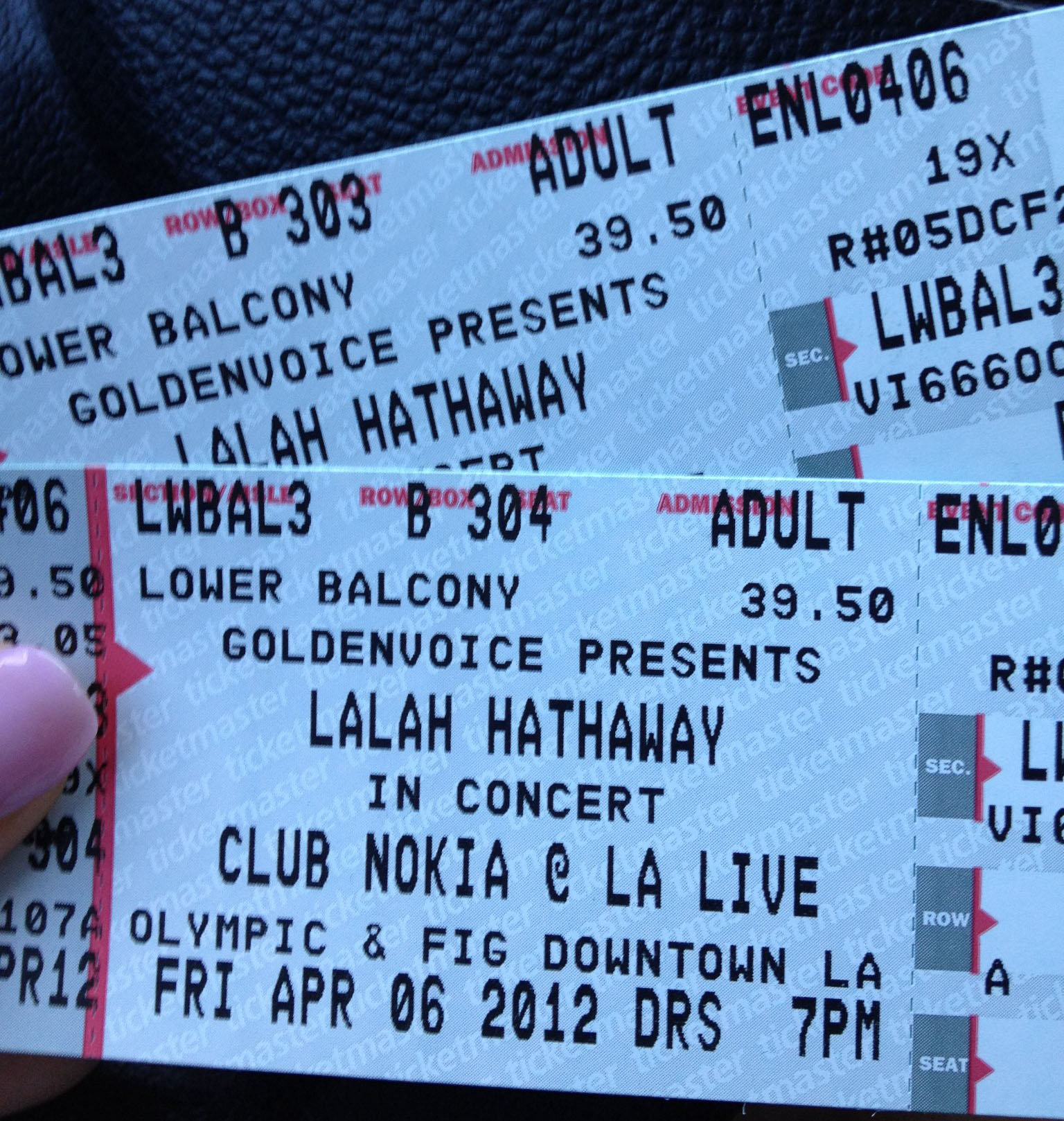
Last month, I attended a Lalah Hathaway concert, the first live concert I think I’ve attended in about a year.  For those of you who don’t know, Lalah Hathaway is an R&B singer and daughter of the late Donny Hathaway.  It was my first time hearing her perform and the audience’s response to her artistry sparked some thoughts in my mind about authenticity, soul, and participation in the black church.

I should probably admit that my favorite genre of music is R&B/soul because of what its name suggests – the ability of the music to connect to the innermost parts of my being, the spirit inside of me that recognizes what is true.  Whether they are speaking about joy or pain, love or loss, soul singers have a way of making me feel the authenticity of their souls conveyed through their music and lyrics.  Because I agree with the feminist principle that the personal is political, I believe that feminists must take the time to recognize what is personally true for them and what is most real.  This is so that feminists’ energies directed toward making the world a more just place can be sustained during times of struggle, and maintained with integrity, regardless of what sphere they’re located within.  Soul music helps me remember who I am. Continue reading “When Music Touches Your Soul by Elise Edwards”

SHE WHO CHANGES* by Carol P. Christ

She changes everything She touches and everything She touches changes. The world is Her body. The world is in Her and She is in the world. She surrounds us like the air we breathe. She is as close to us as our own breath. She is energy, movement, life, and change. She is the ground of freedom, creativity, sympathy, understanding, and love. In Her we live, and move, and co-create our being. She is always there for each and every one of us, particles of atoms, cells, animals, and human animals. We are precious in Her sight. She understands and remembers us with unending sympathy. She inspires us to live creatively, joyfully, and in harmony with others in the web of life. Yet choice is ours. The world that is Her body is co-created. The choices of every individual particle of an atom, every individual cell, every individual animal, every individual human animal play a part. The adventure of life on planet earth and in the universe as a whole will be enhanced or diminished by the choices we make. She hears the cries of the world, sharing our sorrows with infinite compassion. In a still, small voice, She whispers the desire of Her heart: Life is meant to be enjoyed. She sets before us life and death. We can choose life. Change is. Touch is. Everything we touch can change. Continue reading “SHE WHO CHANGES* by Carol P. Christ”

AN ALTAR WITHOUT GOD? A “PLACE” FOR THE SACRED by Sara Frykenberg

The altar was not for particular spirits, but honored all the ‘spirits’ we brought with us to share: the spirits of the women and men in our stories, the memories imbedded in the items we gathered together and the spirit of every person present in the class that day.

Last week my students and I created a non-religious altar to conclude our class, Women, Religion and Spirituality.  We read about different feminist spiritual traditions in which women created altars to honor their ancestors, spirits or deities; and I thought it might be fun to practice our own form of literal physical creation.  I asked students to bring in inspiring items, pictures of people who’d helped them to grow or anything that honored what they considered sacred in their lives.  I also asked them to bring food to share, as no altar seems complete without food of some kind.  However, asking my students to participate in a course ritual, I also felt it was important to respect their very different beliefs… which resultantly, left me wondering how we would create an altar without God.

My religious experience taught me that altars were a place to surrender gifts in return for a greater gift of God’s blessing or love.  The church I attended as a child did have a literal, physical altar; but this raised table was only used monthly to present the communion bread and grape juice before it was passed through the pews.  Otherwise, I came to understand, one’s heart was the altar and we needed to present our sacrifices there.  Financial gifts needed to come from the heart, then put into the offering plate.  Gifts of time or action had to start in the heart, even when required by the youth group or spiritual authority; and resistance to giving these gifts also required sacrifice.  My resistance or lack of desire to sacrifice required that I leave my unwillingness at the altar so that I might become appropriately grateful.

At some point I started leaving too much at the altar; and like Abraham’s Daughter I said enough is enough.  I recognized myself in the sisters and brothers lying under the sacrificial sword, and I took back my heart.  My heart, I realized, hadn’t been the altar; it had been the offering and sacrifice. Continue reading “AN ALTAR WITHOUT GOD? A “PLACE” FOR THE SACRED by Sara Frykenberg”

Liberalism as Feminist Religious Tradition: Friend or Foe? By Amy Levin

Come, come, my conservative friend, wipe the dew off your spectacles, and see that the world is movingElizabeth Cady Stanton

Whenever I find myself in conversation with a liberal skeptic who assumes that the existence of a liberal Mormon or Catholic is about as likely as aliens walking the planet, I do two things. First, I show them our blog. Second, I attempt to describe the complicated, long, and constantly evolving relationship between American liberalism, religion, and feminism. The roots of this complex triad are planted in a complicated history whereby, on the one hand, religious liberalism helped women gain equal rights and social justice, while on the other hand, it created divisions among some religious women who felt liberalism threatened their theological beliefs. Of course, the term “liberalism” is fraught with its own contemporary meanings. However, religious feminists throughout history have nevertheless engaged in practices we could place under the rubric of liberalism, including the push toward cosmopolitanism, modernism, and political progressivism. The difficulty was (and still is) maintaining their religious practices and beliefs.

Continue reading “Liberalism as Feminist Religious Tradition: Friend or Foe? By Amy Levin”

Art – A Bridge Between the Physical and Spiritual Worlds by Judith Shaw

judith shaw photoBrushing yellow gold on top of deep crimson, I sense the paints coming alive, even as I feel myself moving outside of ego, outside of time, and inside to my deepest source.

At least forty thousand years ago the human family began to make art; drawing, painting, sculpting and playing music. For much of human history, art has served a dual purpose. Some art has been purely decorative, while much art has expressed a spiritual understanding of our physical existence.

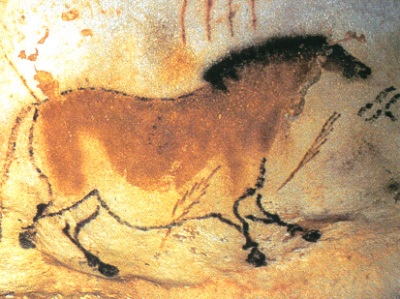
During the Paleolithic period, c.15–18,000 B.C. on the walls of a sacred cave, Lascaux, in southern France, our ancestors created beautiful paintings, often interpreted as a ritual that invoked sympathetic hunting magic. They are a reminder of the bond between the spirit world and the human world. This was a magical time in which humans lived immersed in the connection between the physical and spiritual worlds. Art was a means to both express and facilitate that connection.

Neolithic Goddess Figure

The seasons turned and the art and mythical imagery of the Paleolithic era was transmitted to the Neolithic era in Old Europe. Worship of the Goddess, as giver of all life, continued as did the art which honored Her and our connection to Her. The artists from these ancient days expressed their communal worship through the creation of cult idols and objects, shrines, painted pottery, and religious ceremonialism. The artists, though anonymous, were the hands and eyes of the creator, deepening and transforming the consciousness of their community.

As the human community in the western world developed and grew, art remained firmly grounded in the spiritual. From the megalithic stones of the Celtic era, to the illuminated manuscripts, mosaics and fresco paintings in the churches of the Middle Ages, right up to the work of painters like Van Gogh, Kandinsky, Malevich and Mondrian in the more modern era of late 19th and early 20th century – art expressed our human connection to the divine.

Continue reading “Art – A Bridge Between the Physical and Spiritual Worlds by Judith Shaw”

Reflections on My Spiritual Journey: Claiming Judaism By Ivy Helman

“Is Ivy Helman Jewish?”   This question and knowing that eventually I’d have to respond one way or another to it has caused me many sleepless nights.  At the same time my faith journey has become integral to who I am and I would like to spend some time today sharing it with you.

Why share this and why now?  Well, first, I have not been ready until now.  In addition, external forces which I will talk about in a minute are making my spiritual path an issue.  So I share my story with a measure of concern about its possible effects but also with a great deal of joy about the ways in which my faith journey has challenged me to grow, reflect and change.

Margaret Farley emailed me about two weeks ago asking me how I identified religiously.  Someone had emailed her asking if I was Jewish because this person had read one of my past blogs in which I wrote “my rabbi” on feminismandreligion.com.  This same person is reviewing my book: Women and the Vatican: An Exploration of Official Documents.   Here is how I answered Margaret: “Hi Margaret, I’m Catholic although I do attend services at a Jewish synagogue on occasion since I was raised in essentially a multi-faith home.  On that blog, there really is no Jewish voice, so I try to comment on ideas from that tradition as much as I can.  Ivy.”  I felt unauthentic sending that email.  But, I did.

Still troubled by that answer and rather than put my friends and colleagues in the middle of questions about my faith, I feel that this has now become a public issue that I must address.  It is a question I have known I would have to answer at some point.  Nevertheless, this is not a decision that came easily or quickly.  I’ve literally agonized over it now for months.  During the time, I’ve never questioned my resolve to be Jewish and to continue to follow that spiritual journey in my life; I’ve worried more about how other people will respond and how their responses will affect my career in academia.   If I were allowed to rewrite that email to Margaret, then this is what I would say. Continue reading “Reflections on My Spiritual Journey: Claiming Judaism By Ivy Helman”