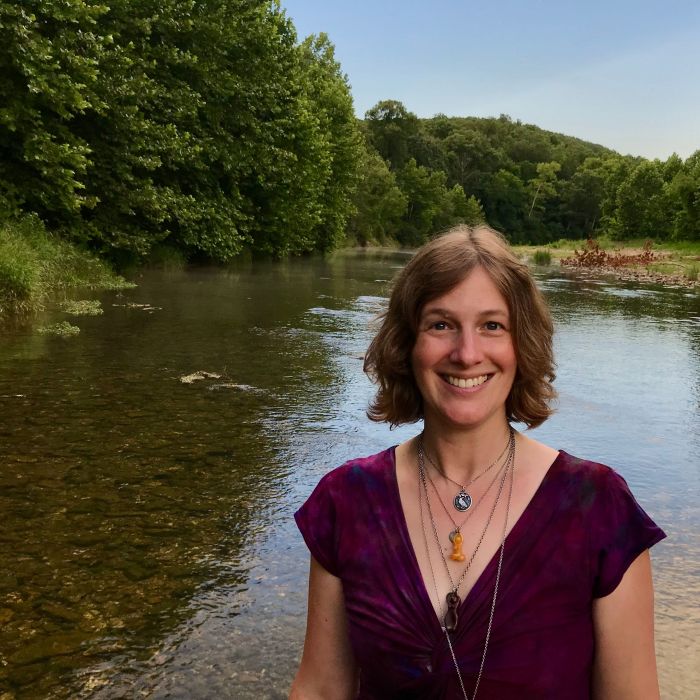
Singing Is a Sacred Power by Carolyn Lee Boyd

Carolyn Lee Boyd

A moss-soft ballad sung from a mountain top to the sunrise.  A parent’s lullaby to soothe a newborn to sleep. Thousands of voices rising together to banish injustice from our planet. A single wavering melody infusing inspiration into a moment of despair. Whenever we open our mouths to sing, no matter how tuneful or discordant our song, we have instant access to a well of power to transform ourselves and others.

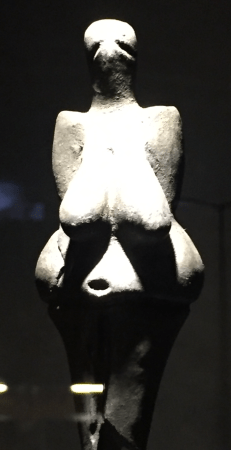
Over the years, I’ve been amazed at how often singing denotes spiritual power in myths and stories about goddesses and holy women from across the globe and throughout time. These are just a few examples from around the world. You may know others.

Continue reading “Singing Is a Sacred Power by Carolyn Lee Boyd”

Schism of Reality, Schism of the Republican Party By Anjeanette LeBoeuf

The failed insurrection on January 6th  should have been a watershed moment for many to abandon the parasitic party of Trump. Sadly, after the dust and armed guards cleared, many have returned to their delusions and skewed realities. A few key Republican politicians have refused to return to the fold; Liz Cheney (WY) and Adam Kinzinger (IL) have become the most vocal in their opposition.

Continue reading “Schism of Reality, Schism of the Republican Party By Anjeanette LeBoeuf”

Lessons From the Mother Tree by Sara Wright

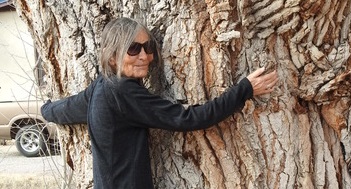
Picture of Sara Wright standing outside in nature

Last night I was reading Forest Scientist Susanne Simard’s new book “Finding the Mother Tree”. She was writing about how uncanny it was that her personal life has paralleled that of trees, the forests, the plants, the fungi, the mycorrhiza (underground networks), she has been studying for more than thirty years. This weaving of Nature’s ways through human lives has also been my life experience, although I am a naturalist and not a scientist. (I capitalize the word “nature” to accord her the Sovereignty that is missing because most humans see Nature as a “resource” to be used – not a Living Being). I take note of the fact that so many of these tree advocates are women.

I observe and listen to Nature by paying close attention to weather patterns, to flourishing or withering leaves, bowed or broken trees, to wind, to parched ground, to birds, to animals, to water, to fire, water, earth and air, and by being emotionally present to whatever is happening in my own backyard while scanning earth and sky for ‘signs’ of what’s to come. I receive the answers I need if not through a bird sighting, a porcupine, a clump of moss, a dying tree, then through dreams. For months now I have been threatened by the immanent loss of our forests by way of dreaming.

Continue reading “Lessons From the Mother Tree by Sara Wright”

Teacher Appreciation Week & Appreciating Teaching by Sara Frykenberg

Part of discovering my love for teaching and moving through my anxiety involved reconsidering my “ideals” of teaching, which were numerous and high minded.

I always wanted to be a teacher. Sure, I had other career dreams as a child too. I wanted to be a model, because I wanted to be pretty like a model. I wanted to be a flying missionary to please my father—you see, it was not quite enough just to do missions. I also needed “save” (pun intended) people with my daring airplane recuses. And in moments of practical mindedness, I thought I should definitely be a “cleaning lady” (aka a housekeeper), because I was very good at cleaning, which was a way of life and survival in my home. But “teacher” was a persistent calling, so I followed in my teacher-mother’s footsteps AND tried to satisfy paternal aggrandizement by becoming a professor.

It occurred to me recently that I have actually been teaching now for nine years. I’ve also discovered in the last few years that I like teaching. And no, I didn’t always know this. I always wanted to like teaching; and sometimes I was sure that I did indeed like teaching. But non-teaching associated trauma during my early career and my social anxiety also sometimes made (and makes) the process excruciating. (Neo-liberal and late-capitalist academic practice, politics and policy don’t help either.) Part of discovering my love for teaching and moving through my anxiety involved reconsidering my “ideals” of teaching, which were numerous and high minded.

Continue reading “Teacher Appreciation Week & Appreciating Teaching by Sara Frykenberg”

What Does a Woman Want? by Esther Nelson


Sigmund Freud (1856–1939), well-known Austrian neurologist and founder of psychoanalysis, “…said once to Marie Bonaparte: ‘The great question that has never been answered, and which I have not yet been able to answer, despite my thirty years of research into the feminine soul is, ‘What does a woman want?’” (“Was will das Weib?”) ― Sigmund Freud: Life and Work (Hogarth Press, 1953) by Ernest Jones.


I don’t believe Freud ever answered the question posed here satisfactorily.  Women’s desire—even today—hovers in the taboo category.  After all, in our hierarchal, patriarchal society women’s wants/desires are mediated through social structures and institutions that favor men.  It’s easy to overlook since we all are spawned and then swim in those patriarchal waters.

Continue reading “What Does a Woman Want? by Esther Nelson”

Biblical Poetry, Part 2 by Janet MaiKa’i Rudolph

Last month, I wrote about a new project I have been playing with which is to re-write biblical verses as spiritual poetry rather than follow along with stricter translations (although truth be told, my translations have never been strict). My main goal is to strip away the layers of patriarchy that grew up around universal, earth-based, mystical lessons. In my last blogpost I wrote about why I translate El (god in English versions) as All-Potential Powers. You can read it here: https://feminismandreligion.com/2021/04/15/biblical-poetry-by-janet-maikai-rudolph/

I have written before about my translation of YHVH as mother/father creator. You can read that here: https://feminismandreligion.com/2019/03/05/eve-by-any-other-name-by-janet-rudolph/ 

YHVH, the sacred 4 letter tetragrammaton, is always translated as LORD in the bible. It is truly a wondrous name with many layers of meaning which the English one-word term LORD doesn’t capture. I find that the English translations of these two words – LORD and god – are dull and without sacred energetic aspects. In ancient times, the words used to depict divinity in general, and YHVH specifically, were meant to be intoned and chanted.

Continue reading “Biblical Poetry, Part 2 by Janet MaiKa’i Rudolph”

The Red Hand on the Cave Wall by Carolyn Lee Boyd

As I have gotten older, I find I am drawn more to non-anthropomorphic, inexpressable-in-words, nature, and everyday focused visions of the Divine. Whereas before my spiritual practice involved more rituals and circles, unusually indoors, with others, now I more often engage in solo quiet contemplation, outside in the wild when I can. I think more about ways of being rather than ways of doing and more about the small messages I want to leave to generations to come instead of  major accomplishments.  I feel as if I am contracting in towards the center of the spiral of my spiritual journey.

All over the world, very ancient cave art includes hand prints made by painting or blowing ochre around a hand or putting ochre on a hand and pressing it to the wall. Research has shown that about 75% of these were made by women, making them a very early form of feminist art. I wonder if some of them might have been made by women who had transformations and thoughts similar to mine. Here is a poem in the voice of such a woman. 

Continue reading “The Red Hand on the Cave Wall by Carolyn Lee Boyd”

‘Mother’ West Wind and Mary’s Gold by Sara Wright

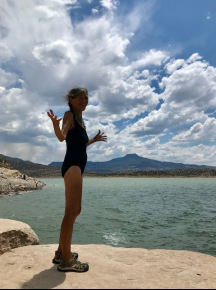
One day last week it almost drizzled. When I stepped outside that morning I was engulfed by fragrant mist. Rarely does light fog give the thirst- driven forest a temporary reprieve, greening needles, and encouraging tiny leaves to unfurl. With this destructive weather pattern in place the next round of west wind hits the following day, graying out the green and cracking open the earth, perhaps bringing down another round of trees. The Cloud people continue to withhold the precious gift of water…

We have been suffering from drought for so long now that every tree, bush, and plant appears without an emerald coat. Harsh northwest winds, unseasonable heat, cold, and air so dry my lips are cracking have stunted most spring growth. Wildflowers have shrunk to half their size, and in places the woods are bare. High ground is parched. Lowlands are dry, and frogs, toads, and salamanders have few vernal pools in which to lay eggs. A glaring sky that denies the earth healing rain month after month brings on deadly headaches, my body’s response to endless frustration and longing.

Continue reading “‘Mother’ West Wind and Mary’s Gold by Sara Wright”

Bamidbar: Our Role in the In-Dwelling by Ivy Helman.

This week’s Torah portion is Bamidbar (Numbers 1:1-4:20).  Mostly, it concerns itself with: a census; the organization of the Isrealites in camp as well as while traveling; who is responsible for which parts of the Tabernacle; and the redemption of the firstborn males.  The parshah contains only two allusions to the existence of women. As Jewish feminists, what are we to make of it?

Before we get to answering that, let us look at where women are in the parshah.  The first indirect reference to women (and children) is hidden within the census.  In 2:34, the text describes how the camp should be organized according to the tribes of male descendants.  The verse also explains, that even though the camp is organized around men, their families should live with them.  The other indication of the very existence of women can be found in verse 3:12.  Here, the firstborns are described as the ones “who open the womb.”  It is disheartening that, here, women appear only as a body part.  Likewise, there is no acknowledgement that firstborns may be female.

Continue reading “Bamidbar: Our Role in the In-Dwelling by Ivy Helman.”

Feminist Parenting About Sexuality – Hold on, because this is going to hurt by Trelawney Grenfell-Muir

I have been asked numerous times by numerous people over the years to write about feminist issues, especially regarding teaching kids about consent, pornography, and healthy sexuality. The reason I have not tackled this project yet is that I know full well most people—even people who think they want to know what I have to say, who think they probably agree with me to a large degree—will find what I have to say too overwhelming, depressing, and painful to handle.

People have interesting perceptions of me, which shape their expectations of what I will say. I am generally cheerful and affirming to be around. I frequently advocate for justice issues by speaking with passion and blunt honesty in ways people find uncomfortable or comforting, depending on where they stand on that particular issue. People want to feel safe and affirmed by me personally, but they also want me to keep speaking out about justice—so long as I do not make them too uncomfortable.

Continue reading “Feminist Parenting About Sexuality – Hold on, because this is going to hurt by Trelawney Grenfell-Muir”