

 While Frida Kahlo is arguably the world’s most famous woman artist, most women in the surrealist movement have been overlooked. But Frida’s sister surrealists now seem to be experiencing a long overdue resurgence, with recent international exhibitions showcasing Leonora Carrington, Meret Oppenheim, and Dora Maar. The 2017 documentary film, Out of the Shadows, focuses on Penny Slinger. (For more on Slinger and her work, check out her spookily accurate Dakini Oracle.) American art photographer Lee Miller is the subject of The Age of Light, Whitney Scharer’s boldly feminist debut novel which sold to Little Brown and Company for seven figures, following a fierce bidding war.
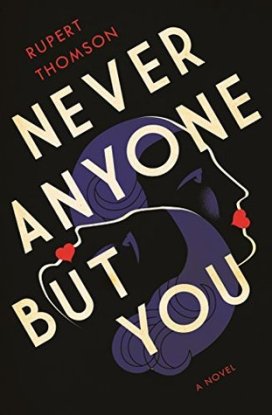 Though I was familiar with these artists, Rupert Thomson’s novel, Never Anyone But You, reveals two extraordinary women I’d never heard of—Lucie Schwob aka Claude Cahun (1894 – 1954) and Suzanne Malherbe aka Marcel Moore (1892 – 1972). They met as teenagers and fell irrevocably in love, beginning a passionate relationship which would endure until Cahun’s death. In a twist of fate no novelist could invent, Moore’s widowed mother married Cahun’s divorced father and the two secret lovers became stepsisters, enabling them to live together without suspicion in an age when lesbian relationships were taboo. Moving to Paris in the 1920s, they adopted androgynous pseudonyms and became involved in the newly fledged surrealist movement. In 1937 they left Paris for Jersey. Later, when the Germans occupied the island, the women created an anti-Nazi propaganda campaign. They were arrested and sentenced to death, but the war ended before their executions could be carried out. Continue reading “Forgotten Female Surrealists by Mary Sharratt”




 In
In  For almost four years, I’ve been living with the long-term effects of an inner ear lesion. The lesion is long gone but its side effects are not. Throughout the day, I feel a combination of unsteadiness and sudden, unpredictable sensations of movement. On better days, the unsteadiness is almost non-existent and the feelings of movement are minimal. On worse days, I’m troubled with a type of brain fog that makes it hard to concentrate as well as disrupting unpredictable sensations of being on a boat that can’t pick one direction in which to move. It’s frustrating, tiring and demoralizing.
 I was recently invited to address a gathering of resident chaplains in the pastoral care department of a major urban medical center. Specifically, they asked me to present the shamanic point of view of team building with an emphasis on creating alliances and community.
 I had a startling experience in church recently. It was Father’s Day, and the pastor was talking about how “God is our heavenly Father.” For the first time in 17 years, that idea held some appeal to me. But no sooner did the thought enter my mind, then it was ripped away by the realization that my church will never allow me to symbolize the divine as a “father.”
 Seventy-two hours out of every week, I carry a hotline phone. While calls come in waves and some shifts are silent, my everyday and professional lives are peppered with reminders that evil doesn’t just pierce reality through acts of power, control, and violence – it seeps through in discrediting voices and disbelieving questions. It rolls into us off the well-meaning tongues of community members who’d rather protect the status quo than hold people accountable. It wraps its tendrils around us as we walk through each system we are forced to navigate – systems that are not set up to protect our vulnerable hearts and human dignity. Evil powers the backlash wave that tries to knock down every survivor who speaks out about gender, sexual, or intimate partner violence, and it also is in the fear we swallow when we choke down our own stories, press them down deeper, grasping to avoid yet another assault on our integrity, intelligence, and truth.
