

In my current trajectory linked to community development — via both activism and my professional field — I’ve learned that popular education is a very useful practice and methodology to decentralize all types of knowledge. Since I embraced Islam, part of my activity has focused on creating spaces for the production, discussion, and appropriation of religious knowledge for women at the grassroots. Religion is not separated from the daily life of believers, therefore, each of them carries knowledge that has been deliberately obliterated by hegemony.
The feminist hermeneutic of Islam is a paradigm that aims to provide Muslim women with skills and concepts that allow them to boost their agencies in their respective contexts, encouraging a transformation in the understanding of religious phenomena and its trajectory towards gender justice. For this transformation to be possible, knowledge must be accessible in language, methodology and location.
Paulo Freire’s pedagogy of liberation is a tool I consider to be critical and necessary for feminism, including Islamic feminism, at a time when debates about decolonization are very fashionable in academia. Freire’s methodology is democratizing because it allows, on one hand, to transfer knowledge from privileged circles to the margins and, on the other, to make visible the experiential knowledge produced in the periphery — to include them in the spectrum of what we understand and as such subvert, in this way, the dynamics of power, representation and discourses.
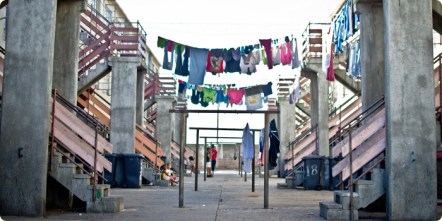
During my time in South Africa, I have engaged with popular education on topics related to Islam and Gender with Muslim women from the Cape Flats. These women have different backgrounds, races, life trajectories, and religious journeys. They exist in the geographic, cultural and epistemological margins of the social reality of Cape Town. Their experiences as Muslims do not appear in academic journals, nor are they even “noticed” by their highly androcentric communities of belonging.
For the past 7 months, I have met with them on a regular basis to talk about Gender and Islam. “Talk” is a methodological definition that means that we are placed in equal and interchangeable positions of teacher-student during our dialog — assuming than rather than learning something new, we are facilitating for each other a way to communicate things we already know. Muslim women of the Cape Flats know, indeed. But they have been told that they do not know by a system of privilege formed for the ulemas, for academia, or for the Islamic institutions. Continue reading “Talking Gender and Islam at the Grassroots by Vanessa Rivera de la Fuente”
 Since patriarchy is atrocious, and capitalism is currently driving the earth to a very real catastrophe, we can get passionate about these issues. We can get angry. We can get self-righteous.
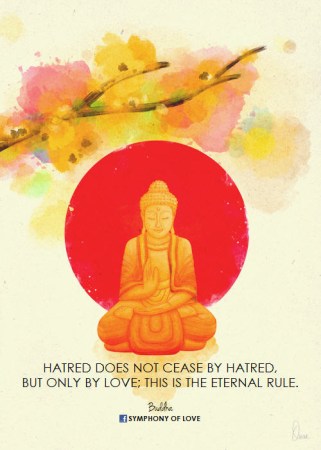 However, as one of the most famous verses of Dhammapada goes:


 Katey Zeh, M.Div is a strategist, writer, and speaker who inspires communities to create a more just, compassionate world. She has written for outlets including Huffington Post, Sojourners, Religion Dispatches, Response magazine, the Good Mother Project, the Journal for Feminist Studies in Religion, and the United Methodist News Service. She is the co-host of
 Despite having thought
 During this time, I came across the Greek Orthodox prayer rope (komboskini) that had been spontaneously removed from her person and given to me by the Mother Superior of the
 It is in our hearts –one’s sense of superiority exists within. We are all and each capable of hate and bigotry.
 It is quite common, I think, for Jewish feminists to gravitate to the first creation story of Genesis/Bereshit as an example of human equality but struggle to claim this same passage as an example of the goodness of embodiment. Genesis/Bereshit 1:27 reads, “So G-d created humankind in the divine image, in the image of G-d, the Holy One created them; male and female G-d created them.” In this passage, we have not only equality between men and women, in direct contrast to the second creation story, but also a description of human nature.


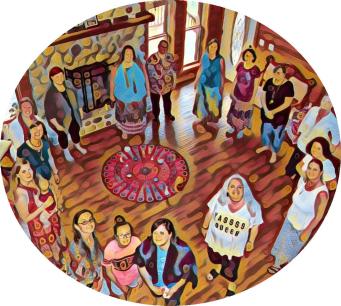 tapestries, their faces are turned towards me, waiting expectantly. We are here for our first overnight Red Tent Retreat, our women’s circle’s second only overnight ceremony in ten years. We are preparing to go on a pilgrimage. I tell them a synopsis version of Inanna’s descent into the underworld, her passage through seven gates and the requirement that at each gate she lie down something of herself, to give up or sacrifice something she holds dear, until she arrives naked and shaking in the depths of the underworld, with nothing left to offer, but her life.


