Fuerzas Para La Lucha: Sources of Strength for the Struggle

Art work designed by Jaysen Waller - http://www.jaysenwaller.com/
Art work designed by Jaysen Waller – http://www.jaysenwaller.com/

When Ada María Isasi-Díaz lived in Chile, she had a neighbor who lived in extreme poverty who she remembered as someone “who never lost her sense of dignity and purpose of life,” even while she struggled day after day for her survival. She explained,  “I remember the steadiness of her struggle: day after day she dealt with the reality of the present and survived that day in order to be able to face the next.”

From that experience Ada María Isasi-Díaz began to develop la lucha as a category of social analysis and as a theo-ethical category. La Lucha is a way of recognizing the reality of the grand injustices very much in place impacting people in their every day lives and how embedded these are into our intersecting systems and structures. The need for fuerzas para la lucha (strength for the struggle) is therefore great. Continue reading “Fuerzas Para La Lucha: Sources of Strength for the Struggle”

Body of Nature by Oxana Poberejnaia

oxanaIn the medieval European philosophy, woman’s body was seen as a vessel filled with sins, while man was regarded as a more spiritual being. This is one of the reasons why the concept of body is reassessed in feminist studies and why body is elevated in neo-paganism and Goddess spirituality. My fear is that nowadays body can be treated as an instrument for social advancement.

OLYMPUS DIGITAL CAMERA

We still live in a society that is deeply hostile to women’s bodies. Alla Demidova, an actress I respect for her talent and her critical mind, did a programme of Christmas-related poetry. I could not listen to more than five minutes of it.

The poems have been all written by men. I am not saying that men do not have the right to write about birth. I am saying that our prevalent image of Christmas should not be based on male view alone. In this sense I much better like the Carol from “The Vicar of Dibley” (one of my favourite British comedy series, about a female Vicar), which describes the movement of baby Jesus through Mary’s birth canal.

Continue reading “Body of Nature by Oxana Poberejnaia”

Painting the Virgen de la Caridad, Doing Intersectionality by Angela Yarber

angelaThe most recent Holy Woman Icon with a folk feminist twist that I’ve painted is the Virgen de la Caridad. Like Mary, Guadalupe, La Negrita, and the Virgin of Regla, she was commissioned by a bold and brilliant friend, a scholar who lives, teaches, and does the work of intersectional feminism on a daily basis. As with my beloved friend who taught me so much about Jane Addams last month, this dear friend has taught me so much about feminist understandings of Marian Spirituality and of the need for many secular scholars to keep a connection to their religious roots.

When we discussed her commission, she wanted to make sure that the Virgin of Caridad was the primary focus of the icon, but since she is also often associated with Oshun, she also wanted elements of this Yoruban goddess to shine through. I was thrilled with the opportunity to learn, research, grow, and paint. Little did I know what kind of important learning was in store. Continue reading “Painting the Virgen de la Caridad, Doing Intersectionality by Angela Yarber”

Kasich Cuts Women by Gina Messina-Dysert

Gina Messina-Dysert profileKasich is cutting women from Ohio’s budget. In an attempt to prove himself a conservative and worthy of the title of POTUS, he has taken a step towards joining the ranks of Trump and Cruz using fear and misogyny as primary tactics.

Beginning with his defunding of Planned Parenthood in Ohio, Kasich is participating in the ongoing marginalization of women in the US based on supposed Christian values. His comment that “women are coming out of the kitchen to support me” demonstrates his inability to recognize the important role that women play in this nation. Likewise, it shows support for the ongoing notion that women belong in the home, and idea firmly entrenched in Christian dogma.

The former Catholic now Anglican presidential candidate continues to buy into the idea of complementarity, that men and women have distinct roles, a teaching Pope Francis calls “an anthropological fact.” And what does this mean? That women belong in the home, rearing children, and cooking for their husbands while men do the “important” work. Continue reading “Kasich Cuts Women by Gina Messina-Dysert”

A Choir for Reproductive Freedom by Katey Zeh

choir-305352_1280

I was home watching the live stream of those gathered in front of the Supreme Court building to show their opposition to this law that has prevented so many women from accessing the abortion services they need. The speakers, many of them leaders in reproductive justice organizations, powerfully called out the many ways that this unjust law has targeted women of color, immigrant women, and poor women.

During one of the speeches, those gathered in support of this law began singing “Spirit of the Living God.” It was audible over even the most powerful voices speaking out against it. I began to get irritated. But as the song continued, I got angry–and then I got inspired. Continue reading “A Choir for Reproductive Freedom by Katey Zeh”

Updates on Listening by Xochitl Alvizo

X.Alvizo CSUN Profile 2-editedThe pieces of my dissertation are beginning to float to the surface, piece by piece, released into the world as smaller parts of the whole. At some point this all may become a book, but for now, I have enjoyed the opportunity to share some of the learning from my dissertation research in book chapters, articles, and blog posts, which I’d like to share with you all so that you can see some of what I’ve been up to these days.

The most recent piece that has come to be is an article on The Listening Guide, the particular method of narrative analysis I used to analyze the transcriptions of the interviews I conducted with participants of Emerging Church congregations. I’m particularly excited about this piece because I think it could be a useful tool to many of us in our respective fields of study and work. And although my particular context is theological and, even more specifically, Christian, as a tool and method, The Listening Guide can be used for reflection and be of great value in a variety of contexts.  Continue reading “Updates on Listening by Xochitl Alvizo”

“Respect: Dualism Subversion and So Much More in Survival Reality Television,” by Ivy Helman.

20151004_161012In “Ecofeminism and Wilderness,” Linda Vance believes that Western society defines wilderness by “… the absence of humans, we are saying, in effect, that nature is at its best when utterly separated from the human world. The idea of wilderness is thus an extreme manifestation of the general Western conceptual rift between culture and nature,” (62).  Reality television shows, focusing on survival or living off the land, often reproduce this dualistic way of thinking.

At the same time they reproduce another of Vance’s concerns, “I would argue that wilderness recreation “re-creates” more than the self: it also recreates the history of the conquest of nature, the subjugation of indigenous peoples, the glorification of individualism, the triumph of human will over material reality, and the Protestant ideal of one-on-one contact with G-d. And as for the elements of physical challenge and risk, I think it goes without saying that they appeal most to those for whom day-to-day mobility is a given, and for whom danger isn’t always close at hand,” (71).  However, by presenting this dichotomy, many of the shows also subvert the ideal of untouched wilderness, challenge the notions of human abilities and highlight our lack of embeddedness and embodiment when it comes to survival situations. Continue reading ““Respect: Dualism Subversion and So Much More in Survival Reality Television,” by Ivy Helman.”

Rita Trumps the Donald by Esther Nelson

esther-nelsonThe phrase “politically correct,” words we hear over and over again these days, has a history. Some of that history, far from definitive, is captured here.

The following quote, taken from this blog, resonates with me:  “…maybe we should drop the phrase [politically correct] from our lexicon. Not because it doesn’t describe anything, but because it describes so many things that you can’t use it without worrying that people won’t understand what you’re talking about.” (I see it similarly to the word, God. I often find that in conversations about God, each participant has their own idea(s) about what God is or isn’t.)

Today, though, I’m interested in how Donald Trump uses the phrase “politically correct.”  When he says, “I’m so tired of this politically correct crap,” what is he saying?  What do we hear?  I agree with Colby Itkowitz (“The Washington Post,” 12/09/15) that the phrase “politically correct” is often “used as a put-down, a way to brush off the offended person as being overly sensitive. So while Trump is asserting his right to free speech, he is at the same time calling into question the listener’s right to complain about what he’s saying.” Continue reading “Rita Trumps the Donald by Esther Nelson”

To Work and to Pray in Remembrance by Elise M. Edwards

Elise EdwardsOne hundred years ago, Jesse Washington was lynched downtown in Waco, Texas. Next week, on March 20th, some of my colleagues and I are organizing a memorial service to remember this horrific event and pray for a better future for our city.

We invited submissions of original prayers, poems, spoken-word pieces, music, drama, and other pieces of liturgy for this ecumenical memorial event.  We received a number of thoughtful, heartfelt submissions, but we also a question:

“Why in the world do we need a memorial for one person who was lynched?!?! In the reality of things, Jesse Washington was one of thousands of Blacks that were lynched in America during the time period.”

I thought the answer was so obvious that I initially brushed off the question. But as our group proceeded with the plans, I thought about the question and wondered whether our university community would understand why we are doing this. And honestly, in moments of exhaustion when I put off responding to emails, I wondered, too. Why am I doing this?

To remember. We memorialize one person who was lynched to remind us that every single one of the thousands who were lynched was a human being who was killed unjustly.

In the speech “Lynch Law in America,” from 1900, Ida B. Wells-Barnett describes the injustice: “Our country’s national crime is lynching. It is not the creature of an hour, the sudden outburst of uncontrolled fury, or the unspeakable brutality of an insane mob. It represents the cool, calculating deliberation of intelligent people who openly avow that there is an “unwritten law” that justifies them in putting human beings to death without complaint under oath, without trial by jury, without opportunity to make defense, and without right of appeal.”

Wells-Barnett was an African-American journalist and activist for civil rights and women’s suffrage. Her writings and activism advanced anti-lynching campaigns adopted by Black women’s clubs and the NAACP. Unsurprisingly, her work was controversial, even among women’s groups. Wells-Barnett argued that lynching began after the emancipation of slaves to repress “race riots.” When a constitutional amendment permitted black men to vote, lynching was used to violently prevent their participation in state and national elections. When fraud, intimidation, and local policy succeeded in suppressing the black vote, the brutality continued in the name of avenging or preventing rape and assault of white women.[1] For this argument, lawmakers, ministers, and women’s groups accused Wells-Barnett of defending rapists and subverting “justice” for their alleged victims.

She did not defend rapists. (Neither do I.) She condemned a system that used allegations of rape of white women to legitimate hanging, burning alive, shooting, drowning, dismembering, dragging, and displaying black men’s bodies. Some allegations may have been true. Many were false. Despite the veracity of the allegations, the vigilantes tortured and killed men, women, and children in brutal, public ways, and we must not mistake that for any form of justice. Lynching apologists explicitly valued white lives over others. Lynching was, and remains a crime against humanity.

In our own age of campaigns against the impartiality of law and law enforcement, we should remember the lynching victims and the tensions within earlier waves of feminism and the temperance movement over anti-lynching campaigns. We do not have to condone criminal behavior to call for humane law enforcement or prison reform. We can affirm the humanity of accused and convicted criminals in the pursuit of justice. So we remember Jesse Washington and the other lynching victims to engage more consciously in the activism of our time. We remember so that we don’t lose sight of the complexities of our work. We work in remembrance of the many victims of injustice.

We also gather to pray. For some people, prayer is about making requests to the divine. But in a more expansive sense, prayer is communication with the divine. In prayer, we set time aside to connect to something greater than ourselves. It’s our hope that gathering as a community to pray for the future of our city prompts us to see beyond individual concerns. In a liberation ethics framework, as explained by Miguel De La Torre[2], prayer is not limited to individual, private conversations with God in hopes of gaining wisdom and guidance. De La Torre presents prayer as a communal activity that brings together different members of the spiritual body. It involves the critical application of the biblical text to the situation at hand. This involves critical analysis of the social context that gave rise to the text or its common interpretation. So we pray to give us time to come together, to read scripture, to seek God and hear God through other members of our community.

So why are we gathering? Why do we memorialize one person when there are so many others who have been harmed, not just in my local community but all of our communities?

To remember past wrongs.

To commemorate.

To honor.

To inspire.

To call attention to persisting injustices.

To make us mindful in our work.

To provoke us to pray.

[1] This argument about the reasons for lynching is found in several of Wells-Barnett’s essays, but is quite developed in The Red Record: Tabulated Statistics and Alleged Causes of Lynching in the United States (1895).

[2] See Miguel A. De La Torre’s Doing Christian Ethics from the Margins (2nd Edition, 2014).

Elise M. Edwards, PhD is a Lecturer in Christian Ethics at Baylor University and a graduate of Claremont Graduate University. She is also a registered architect in the State of Florida. Her interdisciplinary work examines issues of civic engagement and how beliefs and commitments are expressed publicly. As a black feminist, she primarily focuses on cultural expressions by, for, and about women and marginalized communities. Follow her on twitter, google+ or academia.edu.

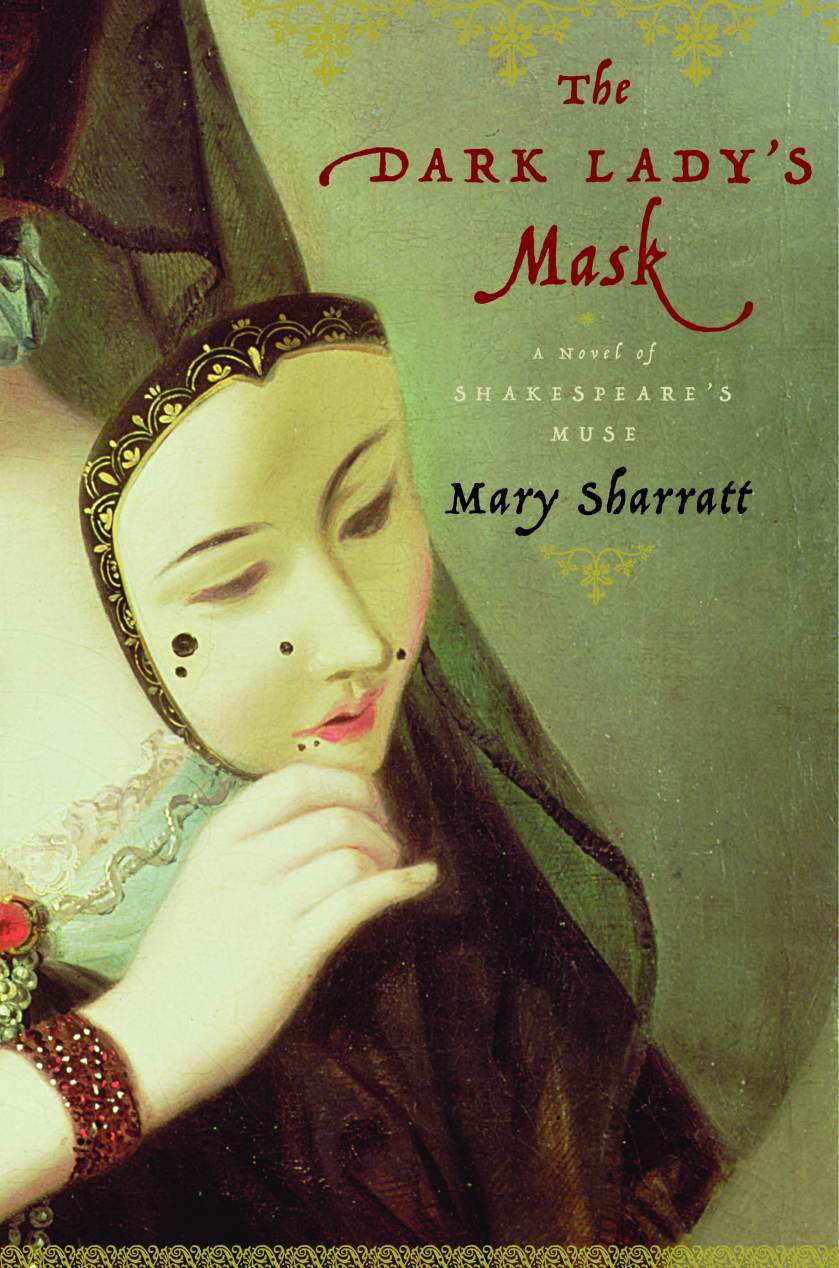
Rewriting Religion: the radical poetry of Aemilia Bassano Lanier by Mary Sharratt

Sharratt_DarkLady-hi


Aemilia Bassano Lanier (also spelled Lanyer) is the heroine of my new novel The Dark Lady’s Mask.  Born in 1569, she was the highly educated daughter of an Italian court musician—a man thought to have been a Marrano, a secret Jew living under the guise of a Christian convert. She may have also been the mysterious, musical Dark Lady of Shakespeare’s sonnets, although most academic scholars dispute this. What we do know for a fact and what really matters is that she was the first woman in England to pursue a career as a published poet.

In Italy women such as Isabella Andreini published plays and poetry on a wide variety of secular subjects, but in England Lanier effectively had only one option—to write devotional Protestant verse. Her English literary predecessors, Anne Locke and Mary Sidney, wrote poetic meditations on the Psalms.

But Lanier turned this tradition of women’s religious poetry on its head. Published in 1611, her Salve Deus Rex Judaeorum (Hail God, King of the Jews) is a radical, ground-breaking tour de force, a searing vindication of the rights of women—and of herself as a woman writer.

In this epic narrative poem, Lanier describes the passion of Christ from the viewpoint of the women in the Gospels. In comparing the sufferings of women in male-dominated culture to the sufferings of Christ, she upholds women as Christ’s true imitators.

Most significantly Salve Deus is dedicated and addressed exclusively to women, and is prefaced by nine praise poems dedicated to the royal and aristocratic women whose patronage Lanier sought. She also included a dedication in praise of all women.

Having thus established her female audience, Lanier attacks the theological roots of male domination, namely the blame attached to Eve—and by extension all women—for humanity’s fall from grace. In “Eve’s Apology in Defence of Women,” Lanier argues that the original sin was actually Adam’s for accepting the forbidden fruit. For he, unlike Eve, was fully aware of the consequences. Out of selfishness and desire for power, Adam let Eve take the fall.


If Eve did err, it was for knowledge sake,

The fruit being fair persuaded him to fall:

No subtle serpent’s falsehood did betray him,

If he would eat it, who had the power to stay him?


Not Eve, whose fault was only too much love.


Lanier contends that male culpability in crucifying Christ far exceeds Eve’s tragic misunderstanding. Therefore there is no moral or divine cause to justify women’s subjugation. Here Lanier explicitly champions women’s rights and freedoms:


Let us have our Liberty again,

And challenge to yourselves no Sovereignty,

You came not into the world without our pain,

Make that a bar against your cruelty;

Your fault being greater, why should you disdain

Our being your equals, free from tyranny?

If one weak woman simply did offend,

This sin of yours hath no excuse, nor end.  


Lanier’s poetry lays claim to women’s God-given call to rise up against male arrogance, just as the strong women of the Old Testament rose up against their oppressors. While wooing her highborn female patrons, Lanier uses the scriptures to assert a sense of social egalitarianism that foreshadows the Levellers and the Quaker religious movement that emerged a few decades after her poetry’s publication. “God makes both even, the cottage with the throne,” Lanier writes in her dedicatory poem to her former pupil, Lady Anne Clifford. (Clifford was herself a feminist firebrand who fought long and hard to regain her properties after her father disinherited her because of her sex. Anne Clifford was an ancestor of Vita Sackville West and the historical inspiration for Virginia Woolf’s novel, Orlando.)

Lanier’s book ends with “A Description of Cookham,” an elegiac ode to the country house where she lived for a time with Anne Clifford and her mother Margaret, who was Lanier’s greatest patron. Cookham was the blessed refuge where Lanier received both her spiritual epiphany and the confirmation of her vocation as a poet.


Farewell (sweet Cookham) where I first obtained

Grace from the Grace where perfect Grace remained,

And where the Muses gave their full consent,

I should have the power the virtuous to content.


Salve Deus Rex Judaeorum is a corpus of poetry celebrating female and divine goodness, penned by a poet who found her own sense of salvation in a community of women who supported her and believed in her.


Mary Sharratt’s book Illuminations: A Novel of Hildegard von Bingen, won the 2013 Nautilus Gold Award, Better Books for a Better World. Her forthcoming novel, The Dark Lady’s Mask, will be published by Houghton Mifflin Harcourt in April 2016. Visit Mary’s website.