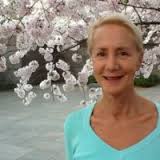
On June 22, 2015 Carol Christ translated an article on the refugee crisis in Greece for her FAR blog. I have been visiting Carol in Lesbos this September and have been observing the crisis close at hand. This blog describes what Carol and I have witnessed and our reactions.
*****
It’s one thing to read about the flood of migrants and refugees to Greece and another thing to see it.
I have been in Lesbos for ten days this past September and have been stunned by the mass of humanity trying to escape war and destruction in Syria, Afghanistan, Iraq and other countries in the Middle East and Africa.
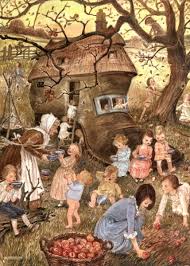
There was an old woman who lived in a shoe, She had so many children she didn’t know what to do. She gave them some broth without any bread; She whipped them all soundly and put them to bed.
Look! Here she comes. Like most old women, she has a lot to say. Let’s listen in:
“Well, that’s what an old nursery rhyme says. But I’m that old woman, and I can tell you for sure that the only thing ‘true’ about that rhyme is that I’m old. I’m older than anyone I know.Oh, I see you there, eavesdropping. That’s okay. You’re welcome here.
You know what? I’ve been called many names by the (mostly) men who make up those rhymes and stories. I’ve been the old witch in the candy house who serves pie to children and then serves the children in the pie. (But did that German guy who wrote that opera about me ever say who eats those pies?) I’ve been the thirteenth old woman at the christening who wasn’t invited and brings a curse that’s as big as the blessings from the first twelve. I’ve been the evil, wicked, mean stepmother.
Pope Francis offered many words of wisdom and discussed key issues in his address to US Bishops in Washington DC. He acknowledged the sex abuse scandal as a crime and called for bishops to be healers. He asked that bishops move beyond their own perspectives and be open to dialogue. And his personal call to act as pastors to immigrants in the US is one that we should all adhere to. However, I must ask, what about the women?
Noticeably absent from Pope Francis’ address are the many issues that are directly connected poverty and keep women suppressed in the Catholic Church. While he has addressed particular women’s issues on certain occasions, the pope’s comments have been brief and not followed with action. In addition, they do not honor the ongoing struggles women endure as a result of institutional violence that stems from Vatican teaching.
Where is the humanity? Why are my sisters and brothers continuously subjected to persecution? Who will help and stop this madness?
I am a member of the human race. Collectively I identify with those who need help and are oppressed. I do not identify with the oppressors, for they are like Pharaoh whose heart was hardened. In identifying with this group, I will provide a label of humanity; for the oppressors do not show care or love but evil and sin towards my people – they cannot be part of this group. As my people flee the boarders from the oppressors, the world has opened their gates to let them in. The world has not turned their back on them. However the oppressors continue to mar their homeland, destroy their culture, and attempt to erase their history, their identity, their footprint on this earth. They are not oppressors but are in fact committing cultural genocide. They are committing genocide against humanity, against anyone who does not follow their ideology, their way of life.
Why should we care? Should we care? For this I say yes. My people need protection and help, but like the Israelites in the story of the Exodus, they yearn for their homeland – a place they were forcibly exiled from. They yearn for food and clean water. They yearn for safety and protection. While you may think that my people were not forcibly exiled – they were. They fled for their own lives – for their own people, and the community’s hearts became hardened to their pleas for help.
The Syrian crisis is one that we have allowed to repeat over and over again. According to World Vision, nearly 12 million Syrians have been forced from their homes – half of which are children. At least 7.6 million have been displaced within Syria and more than 4 million have fled the country. Children affected by this crisis are at risk of becoming ill, malnourished, abused, or exploited. Save the Children produced a video that shows what happens to a girl after three years of conflict:
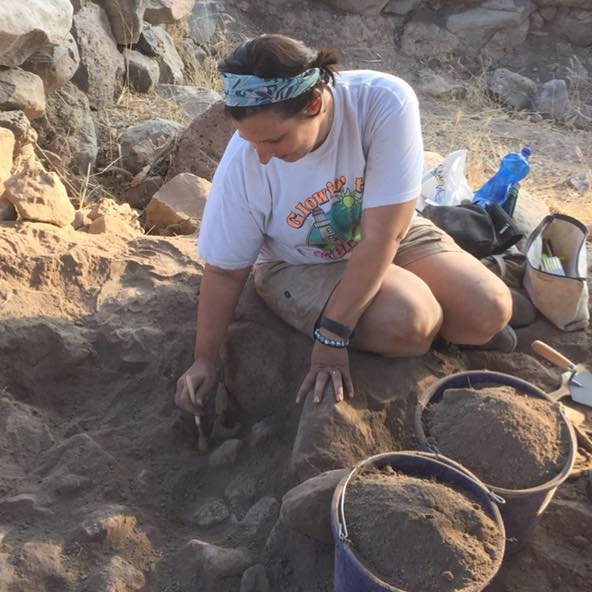
She’s his only savior. African in origin, her figure bears witness to her homeland: her hair twisted in dreads, her lips full, her color dark, her chest broad with pendulous breasts, her stomach flat and firm, her legs slender, her feet broad and ample.
The passage above translates the portrayal of Scybale, the black female slave of the farmer in the poem Moretum, that as discussed in an earlier post, is the source of the phrase ‘e pluribus unum.’ It is reasonable to infer it is a self portrait.
The case for Moretum being the work of a woman (and perhaps incorporating a self portrait) begins with the very fact that it portrays a woman so positively. Portrayals of women in such positive terms in ancient literature are rare. The details are impressive because they seem so real. The form of the description manifests a diagnostic technique (head to feet) well attested in ancient poetry. That includes Sappho’s self portrait (S. 58b), which reads as if composed while standing in front of a mirror, as does this portrait. Continue reading “E Pluribus Unum: The Woman From Africa by Stuart Dean”
Last week, the Catholic Studies Chair in the public university where I teach sponsored an event that brought Monsignor Kevin Irwin from The Catholic University of America; School of Theology and Religious Studies, Washington DC, into our midst. His hour-long talk was titled, “Pope Francis’ Teaching on the Environment.”
The monsignor couched his talk in the Latin American proverb, “We drink water from our own wells.” In other words, our life experiences (to a large extent) give us a prism through which we see the world. We construct a “reality” from that view–a view that in turn shapes us. Pope Francis, according to the monsignor, was shaped by the huge unemployment rate and resultant poverty that happened (and is still ongoing) in his native country–Argentina. In addition, he saw first hand how large corporations had taken over the country, laying claim to resources not belonging to them. Furthermore, environmental destruction has taken a heavy toll on the Amazon in Brazil–an area “beloved” to the current Pope. These are some of the waters from the well which Pope Francis has drunk, shaping his worldview. Continue reading “Dying For the Triune God by Esther Nelson”
I am an inventor, a mythmaker, who has received/taken remnants of her indigenous religious heritage, and newly available parts, and spun and woven new threads, fabrics and stories.[i]
My method of approach has been informed by my deep personal involvement … my need to “place” myself here – as feminist philosopher Luce Irigaray suggests that woman needs to do.[ii]
Irigaray said that woman is not situated, “does not situate herself in her place,” that she serves as a thing and is thus nude.[iii] I have intuitively felt the need to “clothe” myself, to find the Place within me, to move from object to sentient subject.[iv]
The way the Cosmos was for a white girl child of Western European descent growing up in country Australia, with Protestant religious teachings, was a place surveyed scrupulously by a vengeful Father God, who was at the same time spoken of as the epitome of Love. What did that do to one’s understanding of Love? How does a woman – or any person – become functional within such a cosmology? Continue reading “Re-creating a Gynocentric Cosmology: Situating Myself by Glenys Livingstone”
One of the most famous Catholic icons is the model for a Haitian Vodou goddess who protects lesbians.
Traditional images of Erzulie Dantor, the Vodou defender of lesbians, are based on the Black Madonna of Czestochowa. They even share the same two scars on the dark skin of the right cheek.
Every year more than 100,000 people view the original Black Madonna of Czestochowa icon in Poland at one of the most popular Catholic shrines on the planet. John Paul II, the Polish pope, was devoted to her. Few suspect that the revered icon of the Blessed Virgin Mary has a lesbian connection. Continue reading “Black Madonna Transforms into Vodou’s Lesbian Defender by Kittredge Cherry”
Society has created this vortex of fear surrounding women aging. Yet, as I turn 30, I am only feeling awe. Awe over everything I accomplished in my twenties and awe in all the things yet to be realized in my thirties. The interesting thing is how other people are experiencing me turning thirty. Some are reminiscent of their twenties or how their experienced their thirties. Others start to bring up certain things which are apparently still lacking in my life. The biggest ones are a husband and children. They look at my eve of thirty-hood as the clock ticking away on me finding love and most definitely on my biological clock.
One of the most exciting times of the semester occurs when we watch “Sita Sings the Blues” in class. This film by Nina Paley – one she has made available to the public by withholding copyright – is a wonderful addition to what has come to be known as the Ramayana tradition. Unlike a few decades ago when scholarship focused on only pan-Indian literary Ramayanas, scholars today are beginning to acknowledge that most people get to know of Rama and Sita through folk and oral tales, women’s songs and local and regional tellings.
But the thing about “Sita Sings the Blues” that struck me most was how, in 81 short minutes Paley masterfully reflects the complexity of the tradition; the Ramayana in its various forms has been questioned, adapted, revered and challenged by commentators and devotees alike in the two millennia it has traveled across space and time, from north India to Bali to New York. But what scholarship has elaborated over three decades and endless research, Paley has managed to show in less than two hours.
The Ramayana as my last post explained acts as a blue print for daily living for millions of Hindus worldwide. There are various problematic episodes in the epic, one of the most controversial being Rama’s unceremonious treatment of his own wife, the ever loyal and faithful Sita. Paley like so many others who have joined the debate over Sita’s treatment – one that began in antiquity – gives Sita a voice of her own when she ingeniously has the tragic heroine of the Ramayana singing to Annette Hanshaw’s songs; Hanshaw was an American jazz singer whose success soared in the 1920s and 30s. Throughout the film, her melancholic voice reminds us of the universality of the story, one of a woman scorned by the man she loved. Paley herself could feel Sita’s pain, for amid the various layers of the film, is woven her own experience of love and betrayal. But Paley is present throughout the story in another way – the animation, design and editing is entirely hers. Continue reading “Sita Sings the Blues. Literally. by Vibha Shetiya”


 On June 22, 2015 Carol Christ translated an article on the refugee crisis in Greece for her FAR blog. I have been visiting Carol in Lesbos this September and have been observing the crisis close at hand. This blog describes what Carol and I have witnessed and our reactions.
 You know what?
 She’s his only savior. African in origin, her figure bears witness to her homeland: her hair twisted in dreads, her lips full, her color dark, her chest broad with pendulous breasts, her stomach flat and firm, her legs slender, her feet broad and ample.
 Last week, the Catholic Studies Chair in the public university where I teach sponsored an event that brought Monsignor Kevin Irwin from The Catholic University of America; School of Theology and Religious Studies, Washington DC, into our midst. His hour-long talk was titled, “Pope Francis’ Teaching on the Environment.”
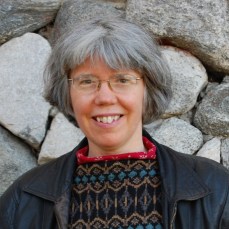
 Society has created this vortex of fear surrounding women aging. Yet, as I turn 30, I am only feeling awe. Awe over everything I accomplished in my twenties and awe in all the things yet to be realized in my thirties. The interesting thing is how other people are experiencing me turning thirty. Some are reminiscent of their twenties or how their experienced their thirties. Others start to bring up certain things which are apparently still lacking in my life. The biggest ones are a husband and children. They look at my eve of thirty-hood as the clock ticking away on me finding love and most definitely on my biological clock.
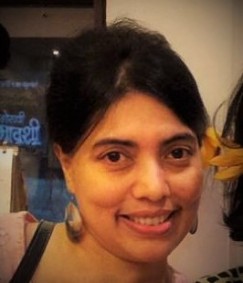 One of the most exciting times of the semester occurs when we watch “Sita Sings the Blues” in class. This film by Nina Paley – one she has made available to the public by withholding copyright – is a wonderful addition to what has come to be known as the Ramayana tradition. Unlike a few decades ago when scholarship focused on only pan-Indian literary Ramayanas, scholars today are beginning to acknowledge that most people get to know of Rama and Sita through folk and oral tales, women’s songs and local and regional tellings.
