 Around the age of 8, or maybe 10, I learned my aunt had had a hysterectomy. I remember visiting her house either shortly before or after the operation. I can’t remember which, and it doesn’t really matter. At the time, I don’t think I even knew what a uterus was or that I too had one.
Just like me, she had suffered from uterine fibroids. This year, at the end of May, after nearly two years of various treatments including a failed myomectomy and ineffective prescription medication, I followed in her footsteps. It was really the only option for me, although it was not an easy decision. After surgery, there was the usual post-op pain and restrictions, but luckily my body has been healing well.
Since the surgery, and as I prepare to teach “Gender and Religion” again in the fall, I’ve been thinking about a conversation I had with a student the first time I offered the class at Charles University. We were about to begin discussing the article, “Why Women Need a Feminist Spirituality,” by Judith G. Martin, when a student pressed me on why we weren’t acknowledging that not all women bleed. What he really wanted was to make sure that in our category of women, we were including transwomen. Continue reading “Post-Hysterectomy Reflections: Not All Women Bleed by Ivy Helman”




 On the eve of the Jewish Sabbath and the start of Rosh Hashanah, Supreme Court Justice Ruth Bader Ginsburg breathed her last breath. She was 87. She fought so hard for so long. She is an American patriot, hero, champion for women’s rights, and for many she was the stalwart bastion of justice and ‘liberal’ rulings. She was a Supreme Court Justice for 27 years. Her life has been put into books, a movie, and the most notorious memes around. She became known for elaborate collars over her Justice robes. We mourn the lost of her, we celebrate her memory, and we must pull up our boots and continue the fight.
 I contemplated doing a post on the current rising issues of the Coronavirus but as so much of life has been stopped, altered, and/or rearranged, that I figured I would embody the proverbial statement of “Just Keep Calm and Carry On.” So, this month’s post is a mixture of observation/product review on recent Holocaust narratives, especially found in movies, TV shows, and books.
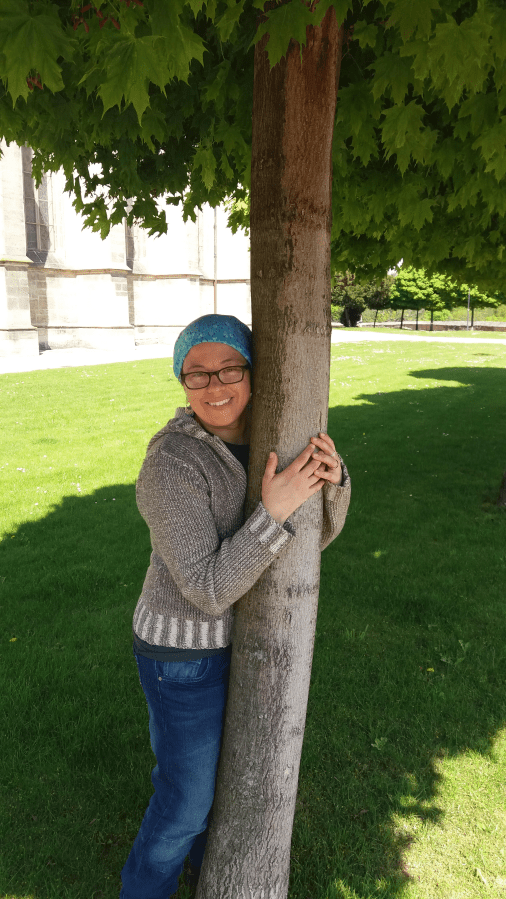 Tomorrow is Tu B’Shevat, the New Year of the Trees, or their birthday. It is the day of the year when all trees, regardless of when they have been planted, turn another year older. The rabbis standardized this day in an effort to minimize complexities, since in the land of Israel, fruit can only be eaten from trees that are four or older (Leviticus 23-25). Tu B’Shevat, then, on a practical level, marks how old fruit bearing trees are.
  The Torah parshah Ki Teitzei, Deutornomy 21:10 to 25:19, contains 74 of the 613 commandments/mitzvot found in the Torah. These mitzvot cover a wide range of topics and concerns. For example, there are mitzvot about how to sow and harvest your fields and others about aiding those in need, including animals. Some of the mitzvot describe how and why divorces can be decreed, to whom can one charge interest, and the punishments for various crimes. There is a mitzvah concerning the requirement to erect a fence on one’s roof to prevent people from falling off, one about not wearing clothes of the opposite gender, one about returning and/or caring for lost property and another detailing from what type of material one’s clothes can be made.
  In “Time Telling in Feminist Theory,” Rita Felski suggests that there are four main ways feminists discuss and use time: redemption, regression, repetition and rupture. They are aptly named as they behave similar to their labels. Redemption is the linear march of time, hopefully progressing step by step towards a redeemed, or at least better, future even if sometimes things get momentarily worse. Regression is the want to go back in time or at least return to idyllic and/or imagined pasts: to matriarchy or to a time before patriarchy’s violent arrival. Repetition is a focus on the cyclical nature of time in bodies, in daily chores, in seasons and so on. Rupture posits a break in time in a way what was before no longer makes sense or doesn’t exist. Think utopia or dystopia.
 Feminism and Religion