

 When I was growing up in 1950s Bensonhurst, in Brooklyn, NY, my identity as a Jew was often called into question. “You mean you’re Jewish? And you don’t know about gefilte fish?” my best friend’s Eastern European (Ashkenazi) Jewish mother asked, shocked to discover that our family ate stuffed grape leaves rather than stuffed cabbage. “What kind of a Jew are you?” schoolmates challenged. When I answered “Sephardic . . . from Egypt,” they would reply. “But all the Jews left Egypt a long time ago, isn’t that what Passover is about?” “No,” I would say, having been taught the words by my father. “Some Jews returned to Egypt when they were expelled from Spain.” [Later I would learn that some Jews actually lived in Egypt for millennia, never having left.] “There are no Jews in Egypt,” my little friends would retort. “We never heard of any Jews in Egypt. You can’t be Jewish.”
It was puzzling, I knew, but I could find nothing further to say. Aside from a handful of relatives, I did not know any other Jews from Egypt either. An Egyptian Jew. To my neighbors, it seemed a contradiction in terms, an oxymoron. To myself as well. What was the Egyptian part, what the Jewish? How did they fit together? Maybe I wasn’t really Jewish. Later, when acquaintances continued to wonder about my identity, I was similarly stymied. “You mean you don’t speak Yiddish?” they would ask after I had painstakingly explained that my grandparents spoke Arabic and French.
Continue reading “On Not Eating Gefilte Fish by Joyce Zonana”
 As so many of us recoil in horror at the Trump administration’s cruel attempts to enforce an impenetrable border between the U.S. and Mexico, I find myself struggling to understand what he and his supporters mean by “borders,” and why they are so invested in maintaining them. The administration’s vicious immigration policy, recently epitomized in a brief tweet on June 19th, 2018—Juneteenth, the day in 1865 when slaves were finally freed throughout the U.S. at the end of the Civil War—“If you don’t have Borders, you don’t have a Country” has sent me back to
  Donna Henes, familiarly known as “
 I was in graduate school when I first read
  I wake up each morning in a simple bedroom lit by the rising sun: a wardrobe, a bookshelf, a small wooden table, and a chair, arranged on painted plank floors. Just outside the window behind my head are the tallest trees I have ever seen, their grey-brown trunks growing straight up into a sky I cannot quite make out from my warm bed, with its white cotton sheets, white coverlet, and cozy down comforter. The room’s soft yellow walls reflect and amplify the winter light. Part of me wants to luxuriate, to lie here for hours, feeling the sun on my face as I gaze up at the trees and allow my consciousness slowly to return from dreams.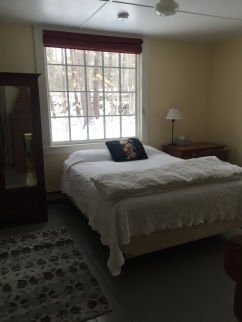
 This year, February 28th, the 14th of Adar on the Jewish calendar, is the first night of Purim, a holiday the orthodox
  During the summer of 2005, I was living alone on Venus Street, in New Orleans’ Gentilly Terrace neighborhood, in a small Craftsman cottage I’d purchased two years earlier after breaking up with my longtime partner. I loved the house: modest yet gracious, it had a dining room with French doors that opened onto a screened porch, gleaming wood floors, cove ceilings, numerous multi-paned windows, a large bedroom, and a comfortable study looking out on royal palm trees where a flock of green parrots nested. I liked to think it resembled the home my parents had left behind in Cairo, Egypt when they emigrated to the U.S. in 1951.
 A few days ago, at the
 I had few expectations before my visit in the winter of 1999 to Cairo’s
