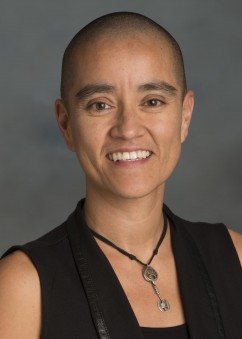
What My Mothers and Mentors Taught Me about Self-Care by Elise M. Edwards

Elise EdwardsDuring another week of killings, war, protests, and debates about whether Black Lives Matter or Blue Lives Matter, I’m concerned about the toll it takes on those who are witnessing the violence and fighting for justice.

I’m not on the front lines of these battles, but I can feel my energy draining, nonetheless. Over the past few days, while I’ve stayed informed about the latest tragedies and conflicts, I’ve intentionally limited my exposure to most news and social media outlets. I’ve begun preparing for a contemplative retreat with other women who also care about justice.  For me to continue to participate in any effort of transforming society, culture, or the church, I must nurture my mind, spirit, and body.

Audre Lorde put it like this:

“Caring for myself Is not self-indulgence.  It is self-preservation, and that is an act of political warfare.”

Self-care is a radical practice of self-love. It is absolutely necessary when engaged in conflict against those who do not show love to you, or worse, those who seek to destroy you.  Your survival and your flourishing are defiantly brave.  Self-care honors the God who created you, the One who loves you, and the Spirit who sustains you. Continue reading “What My Mothers and Mentors Taught Me about Self-Care by Elise M. Edwards”

Garden of Eden Retold by Trelawney Grenfell-Muir

Trelawney bio picture

Today, I came up with a less patriarchal Garden of Eden story:

Endelyn (age 7): “When I think of my soul, in my name “fire-soul,” I think of a powerful wind.”

Me: “That makes sense, since one of the names in the Bible for God/ess is Ruach, which means “breath” or “wind”, but we call it the Holy Spirit. God/ess is also symbolized by the other elements: fire, air, and earth – like when she shaped Eve and Adam out of clay.”

Endelyn, “What? I don’t remember that story.”

Me: “Oh, ok, I’ll tell you.” ……

Here’s the part where I froze momentarily, thinking “how can I tell my children that misogynist failed mentor story? how? how?” <deep breath>
Continue reading “Garden of Eden Retold by Trelawney Grenfell-Muir”

What Traci West Taught Me about Dominant and Excluded Voices by Elise M. Edwards

Elise EdwardsIn my previous post, I mentioned a book I am writing about how theological and ethical considerations in architectural design can define good architecture.  In that post and in ones to follow, I am acknowledging the feminists and womanists and mujeristas who have influenced me while also opening up the dialogue to the feminists in this community who continue to inspire and guide me to do my best work.

But today, instead of talking about creativity or architecture, I want to discuss how I arrived at the conviction that community decisions about how we ought to live—whether those are decisions about laws, institutional policies, religious practices or architectural buildings—need to include the voices of the diverse people they directly and indirectly influence. Continue reading “What Traci West Taught Me about Dominant and Excluded Voices by Elise M. Edwards”

Wonder Bread by Natalie Weaver

Natalie Weaver editedIt is a difficult thing to wake up and realize you are living a life you do not recognize. This happens for all sorts of reasons. Sometimes, it happens dramatically as in the case of death, job loss, personal trauma, or illness. Other times it is a slow and insidious transition from what you knew to what you have become, as you find yourself looking at your workplace and recognizing no one or wondering who these people are in your home. Sometimes it is as simple as getting a haircut or a pair of contact lenses, when suddenly you see some wrinkle or skin mark you didn’t know had been forming while you slept. I find this experience shockingly regular now, and while I am no longer surprised that it happens, I am consistently surprised at what I discover.

For example, my son is now an altar server in the Roman Catholic Church. This has occurred concurrently with my very unexpected involvement in an annulment case, which has revealed an outrageous lack of pastoral sensitivity on the part of the Church. Witnessing the hurt this process causes, I could run from the Church. But then there is my son in the choir and serving at Mass, trying to understand this world that I both introduce him to and also roundly critique. I was chatting with a colleague at lunch over such matters and noticed her quieting after a time, eyes cast off into the distance. After a long pause, she murmured, “How did I get here again?” Continue reading “Wonder Bread by Natalie Weaver”

What Dorothee Soelle Taught Me about Creativity by Elise M. Edwards

Elise EdwardsI’m currently developing a book that considers how theological and ethical considerations in architectural design can define good architecture.  My book discusses five virtues related to the architectural design process that promote human participation in bringing out God’s intention of flourishing for humanity and creation.  Those five virtues (or values) are: empathy, creativity, discernment, beauty, and sustainability.  In the book, I’ll explain how these virtues orient design tasks to the social and ethical aims of architecture.

In this virtual space, I want to have a discussion about what these virtues mean from a feminist standpoint.  In my writing, I draw from theological ethics, architectural theory, and feminist theory to emphasize community discernment and participation.  It’s fitting, then, to claim opportunities in my work to acknowledge the feminists who have influenced me while also opening up the dialogue to the feminists in this community who continue to inspire and guide me to do my best work. Continue reading “What Dorothee Soelle Taught Me about Creativity by Elise M. Edwards”

Mixing Work and Faith: Redefining my Relationship with the United Methodist Church by Katey Zeh

photo-1457049946030-985b401546ce

The United Methodist Church (UMC) General Conference, the denomination’s legislative body that meets every four years, is currently underway in Portland, Oregon. For self-avowed “MethoNerds” this is a highly anticipated event akin to watching the Olympics. Meanwhile I’m doing my best to keep my distance from the happenings there.

For six years I worked in the public policy and advocacy office of the UMC, the church into which I had been baptized as a teenager. My position was one coveted by many and for good reason. I got to write, speak, and travel the country, connecting with congregations and training people of faith in advocacy for women and girls. But I was also required to witness the political infighting of General Conference in 2012, which left me in tears and with little hope for a more just, compassionate church.

After that experience my work in the church began to lose its luster. The daily grind of halfheartedly upholding an institution that didn’t align with my theological values, especially around LGBTQ inclusion and abortion care, took its toll. And my life circumstances changed dramatically: I moved from DC to North Carolina, got married, and had my daughter (without any paid time off, which is another matter needing attention.) As a breastfeeding mom of a newborn, many of the aspects of the work that once appealed to me—constant travel, trainings, speaking engagements—were now logistical nightmares. I decided it was time to move on. Continue reading “Mixing Work and Faith: Redefining my Relationship with the United Methodist Church by Katey Zeh”

A Complicated History by Elise M. Edwards

Elise EdwardsIn my previous post, I wrote about my participation in planning a memorial event for the lynching of a man named Jesse Washington in Waco, Texas one hundred years ago. It prompted me to reflect on the challenge of faithfully remembering a conflicted past.  It’s important that we don’t just remember past events, but that we remember them appropriately.

I’m convinced that when we remember the past, we must avoid oversimplifying the stories of what occurred to suit our present day agendas and sensibilities.  We have to acknowledge the complexity, tension and conflict in what occurred, and perhaps even our own guilt and complicity in what is still occurring.  As a black feminist Christian ethicist, I face this challenge when one aspect of my identity seeks to address a particular issue through a narrative that implicates or denigrates another aspect of my identity. Uncomfortable as it is, I recognize Christianity’s complicity in its defenses of chattel slavery.  I recognize women’s support of patriarchy.

I went to a lecture a few weeks ago by Walter Brueggemann, a well-respected Old Testament theologian, titled “The Risks of Nostalgia.” Brueggemann warned us of the dangers of mis-remembering the past.  Pointing to texts from the prophets and Psalms, he demonstrated how the people of Israel remembered a past before exile without remembering the difficulties, the exploitative conditions, and the tensions of that time.  Excluding these harsher realities allowed them to gloss over the differences among them to unite in hatred and distrust in a common enemy—the one responsible of their present situation.  By misremembering, they lamented a version of past that didn’t belong to all of them because it didn’t include their diverse histories.  But the singular narrative served a purpose—it furthered their cause, their yearning and motivation to return to the way things were before.  Did this cause really serve all those who were yearning for it? It’s a question that comes to mind when I hear women yearn for a pre-feminist era or Christians yearn for an era of Christendom.

Like the Old Testament people of exile, we are in moral danger when we remember the past with a nostalgia that sweeps over the real stories of what happened in the past.  We risk buying into a narrative that harms us in its oversimplifcation.  A simple solution will suffice if we believe we have a simple problem.

Lynching was not a simplistic problem and the Waco Horror is not a simplistic story.  A black man was lynched for raping and murdering a white woman named Lucy Fryer.  I’ll admit it. The realities of the story make me uneasy. Jesse Washington confessed to a crime and was found guilty in the court proceedings that preceded his murder.  It makes sense to question whether the criminal proceedings were biased and whether his confession was coerced or illegitimate in some other manner.  But even if we question his confession or conviction, we shouldn’t gloss over them as if they never occurred. To present him as a purely innocent victim would be to distort the past to serve a cause – and even a cause as noble as community unity or racial justice should not be attained through lies.  People of integrity must guard against distorting the past for “the good” because the distortions themselves cause pain and harm.

Fryer’s family is still experiencing pain over her murder which precipitated the lynching.  Sadly, their pain is made worse by the remembrances of Jesse Washington.  Their pain does not mean we should not remember, but it does mean we cannot, as people of good conscience, romanticize violence or idealize its victims.  Some people might make Washington out to be a hero or a martyr, but the organizers of the memorial service didn’t remember him that way.  We didn’t cast him as a blameless victim.  But we remembered him as a victim, nonetheless.

We didn’t romanticize the lynching crowds and their pursuit of justice, either. Washington was brutally tortured and killed before a crowd of thousands.  If Christians are a people who embrace the love and mercy of a God who forgives the worst of sinners, they have to condemn even those crimes committed in the name of justice; crimes committed against criminals.

Noble causes, if they are just, must stand in the truth – the messy, complicated truth that resists casting all our heroes as saints, all our villains as irredeemable sinners.  Real humans aren’t characters who wear the white hats and black hats of the old Westerns (or even the white hats of Olivia Pope & Associates on ABC’s Scandal).

When we resist remembering simplistic, nostalgic stories, we can begin to grapple with the reality of how difficult it really is to achieve justice.  We can see humankind for who we really are. And maybe then we can ask for help.

We can ask victims to help us heal the wounds that persist.  We need their help to understand their pain and the underlying causes we seek to solve.

We can ask for the help of those who study the various aspects of our world and culture—the economists, the sociologists, the historians, the artists, the theologians and ethicists, the criminologists, and the scientists. We can be humble enough to learn what we don’t know about what’s really going on.

And I hope we also ask for divine assistance.  Despite their own complicated histories, wrongs, and imperfections, our faith traditions can enable us to do more than merely rightly remember, consider, and observe the problems in the world. They can embolden us with the courage of Harriet Tubman, Sojourner Truth, and Ida B. Wells-Barnett to speak a complicated truth and yet still dare to fight to make this a better world.

Elise M. Edwards, PhD is a Lecturer in Christian Ethics at Baylor University and a graduate of Claremont Graduate University. She is also a registered architect in the State of Florida. Her interdisciplinary work examines issues of civic engagement and how beliefs and commitments are expressed publicly. As a black feminist, she primarily focuses on cultural expressions by, for, and about women and marginalized communities. Follow her on twitter, google+ or academia.edu.

Updates on Listening by Xochitl Alvizo

X.Alvizo CSUN Profile 2-editedThe pieces of my dissertation are beginning to float to the surface, piece by piece, released into the world as smaller parts of the whole. At some point this all may become a book, but for now, I have enjoyed the opportunity to share some of the learning from my dissertation research in book chapters, articles, and blog posts, which I’d like to share with you all so that you can see some of what I’ve been up to these days.

The most recent piece that has come to be is an article on The Listening Guide, the particular method of narrative analysis I used to analyze the transcriptions of the interviews I conducted with participants of Emerging Church congregations. I’m particularly excited about this piece because I think it could be a useful tool to many of us in our respective fields of study and work. And although my particular context is theological and, even more specifically, Christian, as a tool and method, The Listening Guide can be used for reflection and be of great value in a variety of contexts.  Continue reading “Updates on Listening by Xochitl Alvizo”

To Work and to Pray in Remembrance by Elise M. Edwards

Elise EdwardsOne hundred years ago, Jesse Washington was lynched downtown in Waco, Texas. Next week, on March 20th, some of my colleagues and I are organizing a memorial service to remember this horrific event and pray for a better future for our city.

We invited submissions of original prayers, poems, spoken-word pieces, music, drama, and other pieces of liturgy for this ecumenical memorial event.  We received a number of thoughtful, heartfelt submissions, but we also a question:

“Why in the world do we need a memorial for one person who was lynched?!?! In the reality of things, Jesse Washington was one of thousands of Blacks that were lynched in America during the time period.”

I thought the answer was so obvious that I initially brushed off the question. But as our group proceeded with the plans, I thought about the question and wondered whether our university community would understand why we are doing this. And honestly, in moments of exhaustion when I put off responding to emails, I wondered, too. Why am I doing this?

To remember. We memorialize one person who was lynched to remind us that every single one of the thousands who were lynched was a human being who was killed unjustly.

In the speech “Lynch Law in America,” from 1900, Ida B. Wells-Barnett describes the injustice: “Our country’s national crime is lynching. It is not the creature of an hour, the sudden outburst of uncontrolled fury, or the unspeakable brutality of an insane mob. It represents the cool, calculating deliberation of intelligent people who openly avow that there is an “unwritten law” that justifies them in putting human beings to death without complaint under oath, without trial by jury, without opportunity to make defense, and without right of appeal.”

Wells-Barnett was an African-American journalist and activist for civil rights and women’s suffrage. Her writings and activism advanced anti-lynching campaigns adopted by Black women’s clubs and the NAACP. Unsurprisingly, her work was controversial, even among women’s groups. Wells-Barnett argued that lynching began after the emancipation of slaves to repress “race riots.” When a constitutional amendment permitted black men to vote, lynching was used to violently prevent their participation in state and national elections. When fraud, intimidation, and local policy succeeded in suppressing the black vote, the brutality continued in the name of avenging or preventing rape and assault of white women.[1] For this argument, lawmakers, ministers, and women’s groups accused Wells-Barnett of defending rapists and subverting “justice” for their alleged victims.

She did not defend rapists. (Neither do I.) She condemned a system that used allegations of rape of white women to legitimate hanging, burning alive, shooting, drowning, dismembering, dragging, and displaying black men’s bodies. Some allegations may have been true. Many were false. Despite the veracity of the allegations, the vigilantes tortured and killed men, women, and children in brutal, public ways, and we must not mistake that for any form of justice. Lynching apologists explicitly valued white lives over others. Lynching was, and remains a crime against humanity.

In our own age of campaigns against the impartiality of law and law enforcement, we should remember the lynching victims and the tensions within earlier waves of feminism and the temperance movement over anti-lynching campaigns. We do not have to condone criminal behavior to call for humane law enforcement or prison reform. We can affirm the humanity of accused and convicted criminals in the pursuit of justice. So we remember Jesse Washington and the other lynching victims to engage more consciously in the activism of our time. We remember so that we don’t lose sight of the complexities of our work. We work in remembrance of the many victims of injustice.

We also gather to pray. For some people, prayer is about making requests to the divine. But in a more expansive sense, prayer is communication with the divine. In prayer, we set time aside to connect to something greater than ourselves. It’s our hope that gathering as a community to pray for the future of our city prompts us to see beyond individual concerns. In a liberation ethics framework, as explained by Miguel De La Torre[2], prayer is not limited to individual, private conversations with God in hopes of gaining wisdom and guidance. De La Torre presents prayer as a communal activity that brings together different members of the spiritual body. It involves the critical application of the biblical text to the situation at hand. This involves critical analysis of the social context that gave rise to the text or its common interpretation. So we pray to give us time to come together, to read scripture, to seek God and hear God through other members of our community.

So why are we gathering? Why do we memorialize one person when there are so many others who have been harmed, not just in my local community but all of our communities?

To remember past wrongs.

To commemorate.

To honor.

To inspire.

To call attention to persisting injustices.

To make us mindful in our work.

To provoke us to pray.

[1] This argument about the reasons for lynching is found in several of Wells-Barnett’s essays, but is quite developed in The Red Record: Tabulated Statistics and Alleged Causes of Lynching in the United States (1895).

[2] See Miguel A. De La Torre’s Doing Christian Ethics from the Margins (2nd Edition, 2014).

Elise M. Edwards, PhD is a Lecturer in Christian Ethics at Baylor University and a graduate of Claremont Graduate University. She is also a registered architect in the State of Florida. Her interdisciplinary work examines issues of civic engagement and how beliefs and commitments are expressed publicly. As a black feminist, she primarily focuses on cultural expressions by, for, and about women and marginalized communities. Follow her on twitter, google+ or academia.edu.

so said black Jesus by Natalie Weaver

Natalie Weaver editedLast month, I went to a conference in San Antonio, Texas. Feeling overwhelmed by the combined elements of work, family, and creative writing, I did not have much of a desire to go. It was right before Valentine’s Day, which I try to celebrate with the kids, especially since my oldest is named Valentine. The house was not clean. I was not packed. I had not bought or helped fill out cards for the kids to distribute in the classrooms, nor did I remember whether I had signed up to bring in juice boxes or cupcakes. I just wasn’t ready to travel.

Beyond that, I developed some health issues last year that impact my daily life. I have found it hard to recognize the consequent shifts in my energy or output as legitimate bodily realities. I must be imagining it, right? I’m not this tired really… just lazy or something. Among the things impacted, my vision is sometimes dark and distorted. Plus, I broke a toe at the beginning of January, and I am still limping. As I imagined traveling alone, I felt myself wondering whether I was up to trekking through the airports with a broken gait, blurred vision, and the fatigue that sometimes quite rapidly descends when I least expect it. I didn’t want to go.

To top it off, I knew I wasn’t going to a regular hotel. I was going to the Oblate Renewal Center. I felt I could handle the Riverwalk and a couple nights at the Hilton, but I was really questioning whether I was in the right mental space for a retreat center. I was not feeling still, nor did I really want to be still. I had too much to do, of course. I compounded that feeling by stopping off on my way there for a short visit with my sister’s family at the point of my flight’s connection, where she and I drove around for hours picking up and dropping off her five school age children at their various extra-curricular activities. When I eventually made it to the retreat center, I was very much decentered in my own skin and underprepared mentally. I had neither gifts to bring nor expectations about what I would take home.

And this led to something remarkably beautiful… Continue reading “so said black Jesus by Natalie Weaver”