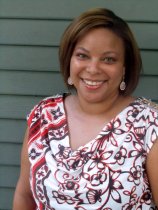
Religion: Trapped in Love Through Shame by Andreea Nica

Andreea Nica, pentecostalismI was first introduced to shame in the church. Shame paradoxically drew me closer to God, prevented me from committing sins, and helped me repress certain natural urges. The church I grew up in indoctrinated its congregation to believe that shame would transform us into true and wholehearted believers – that as carnal beings, we needed to feel both guilt and shame in order to be saved and transformed into spiritual entities.

One question that permeated my mind growing up, but I’d never dare to publicly ask:

Why would Jesus die for me when I never asked Him to? Continue reading “Religion: Trapped in Love Through Shame by Andreea Nica”

Painting and Ordaining the Holy Woman Icon by Angela Yarber

angelaThis month on the Spring Equinox I celebrate ten years of ordination. And for the first time in over fourteen years I am not employed as a minister at a local church. While I miss preaching and occasionally long for liturgy, I have never been more happy, and I find company and solace in the myriad holy women that fill my life. They have become my beloved community. They hold me accountable to my calling. They celebrate the birth of my child, dry my tears, laugh with me heartily, and remind me to dance for justice even when it’s difficult.

Most of them are real flesh and blood women—my wife, friends, family, colleagues, even the Feminism and Religion virtual community. Many are also the  Holy Woman Icons with a folk feminist twist that I feature each month: Virginia Woolf , the Shulamite, Mary Daly, Baby Suggs, Pachamama and Gaia, Frida Kahlo, Salome, Guadalupe and Mary, Fatima, Sojourner Truth, Saraswati, Jarena Lee, Isadora Duncan, Miriam, Lilith, Georgia O’Keeffe, Guanyin, Dorothy Day, Sappho, Jephthah’s daughter, Anna Julia Cooper.

So, as winter turns to spring and I enter the next decade of ordained life now outside the church’s walls, I find myself clinging to Walt Whitman’s admonition: “From this hour forward I ordain myself loos’d of limits and imaginary lines.” As I think about this great cloud of witnesses surrounding me—my beloved Holy Women—I recall the ways in which we are all called to be prophets for justice.

Many have claimed that artists are our contemporary prophets, those who rage against the status quo, and call us to actions of justice that create beauty in the lives of all humanity, even all creation. So I turn to a great artist whose music has set free countless women and queer folk in search of new symbols, new language, new stories that are deep and wide enough to contain our subverted and searching spiritualities. The great womanist prophet, Tracy Chapman, sings these words in her song, New Beginnings: Continue reading “Painting and Ordaining the Holy Woman Icon by Angela Yarber”

Anti-sex feminism? by Linn Marie Tonstad

Linn Marie TonstadLori Gottlieb’s article in the February 9 New York Times magazine, “The Egalitarian-Marriage Conundrum,” was yet another tired entry in the New York Times’s annual clickbait misogyny Olympics. Who doesn’t remember the supposed opt-out revolution, and the sadness of the decade-later follow-up demonstrating every single consequence that any feminist could have predicted? Or the weekly gender terrorism spewed by Maureen Dowd, who somehow gets people to believe that constant belittling and feminizing male Democratic politicians counts as incisive, progressive political commentary? To name just a few of the most memorable, and most infuriating, examples.  

Gottlieb’s article rehashed the studies – I’ve lost count of how many times I’ve read about them in one version or another – that suggest that equality in household labor leads to decreased frequency of intercourse among married heterosexual couples. The most revolting lines in the article – among many contenders – start with a quote from Julie Brines, the author of the study in question: ‘”The less gender differentiation, the less sexual desire.’ In other words, in an attempt to be gender-neutral, we may have become gender-neutered.” It is possible that Brines may be quoted out of context, or that what she intended to say was something quite different, but as the quotation stands, it implicitly suggests that so-called “traditional” gender differentiation is necessary for sexually satisfying heterosexual relationships. (For, of course, there are plenty of other ways in which gender differentiation might be present in heterosexual relationships. Gender differentiation is here being equated with a very particular set of decisions about ‘housework’, a notion that arguably exists only to render some parts of women’s work invisible.) That’s before getting into the implications of the word “neutered” used in the second sentence. Why would egalitarian distribution of household labor be considered “gender-neutral” to begin with? Continue reading “Anti-sex feminism? by Linn Marie Tonstad”

Love and Happiness by Elise M. Edwards

Elise EdwardsAs Valentine’s Day approaches, it seems normal to think of love, perhaps with cynicism or hope or a mix of conflicted emotions.  Last year, I wrote a post on this site about Valentine’s Day, and I’m happy to contribute this year around the same time.  But this year I’ve been doing a different kind of reflection.  Maybe it’s because I just took my artificial Christmas tree down this past weekend, but I’ve been a little slow to get in the Valentine’s spirit, more specifically to reflect on the idea of a holiday dedicated to love.

It’s not that I haven’t been talking about love and relationships—I’ve been doing a lot of that lately.  I’m teaching a class that is currently in the middle of a unit on Christian sexual ethics, I’ve been conversing with friends about their upcoming weddings and future plans, and I have spent a lot of time on the phone navigating the terrain of a long-distance relationship.  But all this talk hasn’t left me too much time to reflect.  It wasn’t until last night, as the church choir rehearsal I was attending was ending, that my thoughts of devouring chocolate hearts were interrupted by a litany prepared by two choir members in honor of Valentine’s Day. Continue reading “Love and Happiness by Elise M. Edwards”

Why I Don’t Believe in Female Pastors by Andreea Nica

Andreea Nica, pentecostalismIt may come as a surprise to those who identify as both feminists and religious practitioners that I don’t believe women should be pastors of any dominant religious congregation. This includes most religions which, I assert, are rooted in and structured by the tenets of patriarchy. Does that mean I think women should be congregants of a patriarchal-originated religious system? You guessed it – no. While this may seem like a radical notion to some, it took me quite some time to come to terms with my own conflict in being both feminist and a believer.

My transition from the Pentecostal sect was a long, intricate process that involved life-altering decisions. The notion of leaving the church was driven by my immersion in women’s studies during my undergraduate degree. There were many difficult questions I simply didn’t have an answer for, as the church didn’t provide me with them.

One of them being: Can women instruct an entire congregation of believers?

For those who are female pastors, I’m sure you’ve heard this one a million times, but somehow it never fades from religious and secular discourse. Whether it’s the Islamic, Jewish, Christian, or Mormon faith, women have had to constantly fight for their right to preach religious doctrine. In the beginning of my transition, I was on the side of: Preach it ladies! Continue reading “Why I Don’t Believe in Female Pastors by Andreea Nica”

Painting Anna Julia Cooper by Angela Yarber

angelaAs we celebrate Black History Month I’d like to honor a remarkable black woman who joins the Holy Woman Icons with a folk feminist twist that I feature each month. Anna Julia Cooper stands alongside Virginia Woolf , the Shulamite, Mary Daly, Baby Suggs, Pachamama and Gaia, Frida Kahlo, Salome, Guadalupe and Mary, Fatima, Sojourner Truth, Saraswati, Jarena Lee, Isadora Duncan, Miriam, Lilith, Georgia O’Keeffe, Guanyin, Dorothy Day, Sappho, and Jephthah’s daughter.

Cooper was born a slave in Raleigh, NC in 1858.  Her mother was a slave and her biological father was her mother’s white master.  After living and working as a slave until the age of five, Cooper began her formal education at a school for slaves.  She would grow up to become one of the most educated and intellectual black women of her century.  In fact, she was the fourth African American woman to earn a Ph.D. in the United States, writing her dissertation on “Attitudes toward Slavery in Revolutionary France.” Continue reading “Painting Anna Julia Cooper by Angela Yarber”

Give Away All That You Have, and Then You Shall Receive…by Natalie Kertes Weaver

Natalie WeaverOne of the loudest refrains I perceive in the Bible is the message that good spirituality means giving everything away.  It is a radical concept that begins in an obvious way with material things, especially those that we have in excess.  The wisdom here is not too difficult for me to grasp: one cannot meet the Lord if s/he is wrapped up in the routines of acquisition and hoarding.    

But, this is only the beginning.  The teaching reaches down much deeper than the critique of riches and speaks in some totalizing fashion to the very essence of personal being.  It seems to say to me that good spirituality involves letting the self be so entirely poured out of the ordinary instincts and behaviors of self-consciousness and self-preservation, of the self qua self, that it is capable of receiving the inpouring of God’s wisdom and light.  

Put another way, the self has to condition itself to receive that which is genuinely extrinsic, that which is outside itself, and that encounter cannot occur so long as one is self-absorbed.  This insight, of course, is not exclusively biblical or Christian.  Indeed, it is perhaps the most common point of agreement among all the great spiritual traditions. Continue reading “Give Away All That You Have, and Then You Shall Receive…by Natalie Kertes Weaver”

Evangelical Missionaries Preach Death in Uganda by Andreea Nica

Andreea Nica, pentecostalismA former evangelical Christian friend of mine sent me information on the intriguing documentary God Loves Uganda. The newly released documentary addresses how the American evangelical movement has prompted a political and social shockwave in the country of Uganda. While missionaries are typically associated with delivering aid and improving the conditions of third world countries, the spreading of Christian values and ideals has inflicted suffering upon ethnic communities through evangelical indoctrination.

The intent of the film is to raise awareness of the political and social brutality that the evangelical missionaries are instigating; specifically through their teaching that homosexuality is a sin and should be dealt with accordingly. In Uganda this means death. Given the rise of globalization, transnational religious actors have been more enabled to engender other nations with their respective religious beliefs, often with minimal regard for the cultural and political landscape of the nation they wish to transform. Continue reading “Evangelical Missionaries Preach Death in Uganda by Andreea Nica”

Remember the Sabbath Day: The Cost of Difference by Linn Marie Tonstad

Linn Marie TonstadI grew up Seventh-day Adventist and was educated at Seventh-day Adventist schools all the way through college. I can tell endless quirky stories about growing up – about the time my parents gave me The Lion, the Witch, and the Wardrobe to read at the age of seven and I was certain, certain, that they had no idea what devilish literature they had given me (all those horrible hags and werewolves), so I promised myself never to tell them because they would feel so bad for having led me astray. (I figured it out when I reread the story at the age of nine.) About my joy in meeting missionaries from the Church of Jesus Christ of Latter-day Saints, or Jehovah’s Witnesses, at the train station on my way to and from school, so that we could proof text against each other. I was always certain that my marked Bible (marked with Sabbath texts, carefully traced with different colored pens, based on a pamphlet I had picked up somewhere) would eventually lead someone to the truth. (Again, I was nine.) As I entered adolescence, I became increasingly worried about the early Adventist dictum that the degree of responsibility you have as a believer is proportional to the degree of light you have been given – after all, I had a lot of light! In fact, I knew the truth.

But no stories like this will tell the truth of my relationship with the church. Yes, I grew up in ways that seem strange to many people: keeping Saturday holy starting Friday at sundown, without TV or movies until about the age of eleven, as a life-long vegetarian (although I became a pescetarian in my twenties), believing that Jesus Christ will return soon, having read the Bible cover to cover by the age of nine (do you see a pattern emerging?), and so on. Having spent the last decade plus outside Adventist institutions, I know much more than I did then about the ways in which my upbringing and beliefs were unusual by mainstream standards. Yet unlike many people who become theologians, and unlike many women who become feminist theologians, I never experienced the church as a particularly repressive site, even though the external forms of my life look very different now. I loved the church, and despite some unfortunate experiences with authority during my high school and college years, the church gave me gifts that I have valued ever since. Continue reading “Remember the Sabbath Day: The Cost of Difference by Linn Marie Tonstad”