A Feminist Retelling of Cain and Abel by Trelawney Grenfell-Muir

Eve and Adam had many children. Two of them, the sisters Cain and Abel, were best friends. When they grew up, Cain became a farmer, and Abel became a shepherd. In their community, people shared what they had with each other. They shared this way in order to help the community be strong, and to practice gratitude. They shared with each other in sacred, holy ceremonies, in which they put their communal offerings onto an altar for Sister God/ess, to be blessed. One day, both Cain and Abel brought an offering to their community. Cain brought some food she had grown, and Abel brought a sheep. The community gathered for the ceremony. They prayed prayers of gratitude and blessing, and thanked the Earth for its abundance. They each laid hands on the sheep and thanked her for her life, blessed her spirit that it might journey peacefully and joyfully to reunite with Sister God/ess, and praised her for giving her body to feed the community.  Then they killed the sheep, as quickly and carefully as they could, and set the meat in the sacred fire to cook. Abel was glad that she could help her community be fed and healthy with the sheep she had given.

Continue reading “A Feminist Retelling of Cain and Abel by Trelawney Grenfell-Muir”

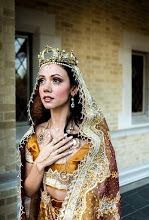
Queen Esther from The Goddess Project: Made in Her Image by Colette Numajiri

Queen Esther
An orphan child,
who became
a well respected queen,
Esther, the Queen of Persia,
was a woman of integrity,
Wisdom and courage,
a beautiful woman, truly supreme,
favored by God,
She had a awareness of dependability,
steady strong, long-suffering faithfulness, with vision foreseen
in courage to stand in times of trouble
with true self esteem,
wise above measure,
Esther, Queen of Persia.
Like many Goddess tales, Esther (from the Old Testament “Book of Esther” or the “Megillah”) took full control of a dangerous situation and against all odds created a miracle, saving the lives of ALL OF HER PEOPLE.
There is a yearly Jewish celebration because of Her called PURIM (today, March 1st this year) where people wear costumes, re-read the Megillah, feast and give gifts of food and money to the needy.

Continue reading “Queen Esther from The Goddess Project: Made in Her Image by Colette Numajiri”

Introducing the 2018 Progressive Asian American Christian (PAAC) Lent Devotional by Grace Yia Hei Kao

I’ve been part of an exciting online community for the past 1.5 years called Progressive Asian American Christians (PAAC) that was founded by two women: Lydia Shiu, a pastor (at City Church San Francisco) who originally created the PAAC Facebook group, and Liz Lin, a writer whose viral blog, “The Loneliness of the Progressive Asian American Christian,” is largely responsible for populating it.

PAAC describes itself thusly:

PAAC is a community for socially, politically, and theologically progressive Asian American Christians (of East, Southeast, South, and West Asian descent, as well as Pacific Islanders and Native Hawaiians) to support each other and talk about faith, identity, and current events. Continue reading “Introducing the 2018 Progressive Asian American Christian (PAAC) Lent Devotional by Grace Yia Hei Kao”

Questions that Matter: What is Feminism? by Elise M. Edwards

elise-edwardsIt certainly is a busy time of year for me, but I’m fortunate that many of the events I am participating in offer a chance to share what is important to me.  Next week, I’ll be speaking to a group of students in one of my campus’ residence halls about feminism and Christianity.  For this informal setting, I was allowed to choose my own topic under the broad heading of “Questions That Matter.” I’ve decided to take on the f-word in religion and attempt to explain why it’s important to me and how it relates to my religious identity.  Although I’m still trying to figure out what to say, I’d like to share my thoughts so far and get some insight from you. Continue reading “Questions that Matter: What is Feminism? by Elise M. Edwards”

A Rescue Remedy, Part 2 by Barbara Ardinger

The handsome but uncharming prince having been magicked, the witch and her coconspirators know it’s time to focus on finding Ella. The witch looks around the table.

“Mrs. Janedoe and Mrs. Worthington,” she says, “you are two of our most highly experienced sauceresses…I mean sorceresses. Mrs. Bezukhov, you are also a woman of great, if temporarily diminished, power. Let us work together and see what we can do. Surely when people of good will work together they can raise energy that leads to positive results. Yes?” She looks around. “Please come up to my study.” The ravens of course know they are members of this ad hoc coven, and Mrs. Bezukhov goes out to her little room (actually a stall) in the barn to fetch her old scrying stone.

“Now,” says the witch, “we need to find out where Ella is and—”

“Before that,” says Kahlil, the prophetic raven, “we gotta fly that…er…sausage to the city ’n’ drop it on that lousy prince and hit ’im where it’ll do the most good. Make sure he got the message, doncha know. I got a new buddy who’ll fly with us.” He waves a wing at the window and another raven flies in. “This’s Icarus.” The new raven bows. “Despite his name, he’s a good flyer ’n’ he knows the safest routes to the capital and the bestest ways to get around the city.” Kahlil shows the bagged sausage to Icarus, who studies it and shakes his head like he’s just been attacked by a million fleas. “Okay,” says Kahlil, “youse girls just keep an eye on us in that there scrying stone.” He starts to rise from the table, but Mrs. Worthington stops him.

Continue reading “A Rescue Remedy, Part 2 by Barbara Ardinger”

Opening Our Hearts Through Armenian Dance by Laura Shannon

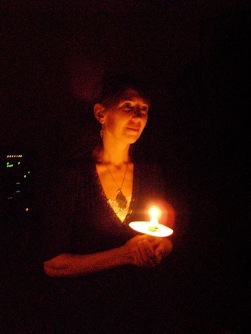
The candle represents the light of love, compassion and connection kindled in our hearts as we dance.
In these challenging times, one of the hardest things to do is to keep our hearts open. Grief and despair tend to shut them down. And even among close friends, colleagues, family members, and people with whom we share worship, when we clash over differing political opinions, trust can swiftly erode. These kinds of losses and sorrows can make us just want to close the doors to our hearts.
Yet hardened hearts and minds are not going to help us overcome conflicts and affirm connections. Only if we can open our hearts to one another, holding the fullness of our (and others’) feelings in a compassionate way, can we weather the storms which threaten to divide us further. And only if we are united can we find our way together through those storms.
One of the best ways I know to connect with others and to open my heart is through the joyful experience of traditional circle dance, particularly Armenian dances. I have written previously on this blog (The Dance of MemoryThe Wishing Tree) about Armenian dances and their ancient roots, their links to the pre-Christian Goddess, and how they affirm survival throughout the traumas of history. I have also written about my friend and colleague Shakeh Major Tchilingirian and her inspiring Circle of Life project, which brings Armenians, Turks, Kurds, Assyrians, and other survivors of atrocities and genocide to dance together for reconciliation.

Continue reading “Opening Our Hearts Through Armenian Dance by Laura Shannon”

A Rescue Remedy, Part I by Barbara Ardinger

A year, now. It has been a full year since the phony election that put El Presidente in the Golden Office. A year since people began leaving the capital and the nation’s other large cities. While some of the refugees emigrated to quasi-democratic nations, most of them settled in the small towns and on the farms across the countryside, where they began building new, rural lives. A year ago, it was a flood of refugees. Now fewer people are able to escape.

A year, now, and even though she has studied and practiced, the wicked witch is no wickeder than she ever was. Nowadays she even forgets to put on the wicked-witch mask that she used to think scared people. But it’s easy for everyone to see that, masked or not, she’s just an ordinary woman practicing an old-time religion. She’s never fooled anyone, not the sixty or so refugees who now live on her farm, especially not the various ravens who drop by regularly for snacks in exchange for gossip.

Continue reading “A Rescue Remedy, Part I by Barbara Ardinger”

Difficult Dialogues by John Erickson

Let’s have a conversation about men and feminism and how we can continue to abolish the patriarchy together rather than writing mean, hurtful comments online.

logo-CCWA few months ago Governor Jerry Brown appointed me to be the first man on the prestigious California Commission on the Status of Women and Girls. I am so excited and honored by this amazing opportunity to continue the great work that California is doing to tackle issues such as pay equality, advancing more girls in the STEM field, creating more opportunities for women in leadership positions across California, and a host of other hot topic issues.

From the moment I started telling people, the responses were extremely positive. People were very excited that we could have a conversation about how men can be included in creating change to better impact the lives of women and girls from all walks of life.  It felt great to see such a positive response from so many people that I love, trust, and admire. However, while much positivity still remains, it has come to my attention that some people are not so thrilled about my appointment. However, what these people and groups online do not realize is that I fully expected and am happy to see such conversations occurring about men in feminism.

Continue reading “Difficult Dialogues by John Erickson”

Another Season of Reflection and Review by Elise M. Edwards

elise-edwardsI turn inward and become reflective at this time of year.  It’s the Advent season in the Christian liturgical year, which encourages practices of piety focused on preparation, examination, and hopeful longing.  It’s the end of a semester and a calendar year, which provokes review of the months before.  In the northern hemisphere, it’s a time of darker days and longer nights, which suggest a retreat indoors, in silence or in stillness.

During this time of year, I’m typically exhausted, and so I seem to enact annual rituals with a recurring sense of ambivalence.   I really love the celebration of Christmas, but preparing for it takes a lot of energy.  So I do some decorating, but not as much as I planned.  I attend some parties and celebrations, but end up missing or cancelling others.  I start a new devotional book, only to set it aside within a week or so.  I want this time of year to be both reflective and celebratory.  I want it to be spiritual and religious.  I want to be sociable with friends and family and also find time to rest and recover in solitude.  At some point, those goals seem too contradictory to be realizable and then I start practical negotiations:  How much decorating will I do? What kind of time will I set aside for solitude and self-care?  Will I have enough energy to be joyful and present with my family and friends?

“Some, but not enough” is the answer I seem to come to every year.

Some decorating, but not enough.  Some time for solitude and self-care, but not enough.  Some energy for social occasions, but not enough.  This year, I want to let go of that voice that says it’s not enough.  That voice that says I am not enough.

To help myself let go of the guilt and self-deprecation, while retaining the reflective focus of the season that may be life-affirming, I reviewed my previous years’ December writings on this blog.  What might I discern from this pattern of yearly reflection?

In 2012, I wrote about why women might be tempted to cancel Christmas.  I was in my final year of the Ph.D. program when I wrote that, and was prompted to do so when I heard that friends and colleagues were planning to skip Christmas preparations or scale them back dramatically.  That year, I sought to maintain “religious and social rituals associated with Christmas” so that I could be “spiritually grounded, emotionally provoked, mentally rested, and physically fed.” I don’t have a vivid memory of that year’s holidays, but as I read it again, I wonder if I was carrying a sense of religious obligation rather than release.  Did I feel free or beholden to social custom? I’ve learned that I will only be able to let that “not enough” voice go when I let go of the expectation that Advent and Christmas should look a certain way or I should be present to it in a certain way.  I’m more willing this year to let peace and joy ebb and flow  in celebrations and moments of sadness and mourning that accompany the season, too.

In 2014 and 2016, my Advent reflections were more focused on justice and peace at the societal level than in the household.  They were mournful.  In December 2014, I was trying to stave off despair after Michael Brown’s killer was not indicted by a grand jury.  The police officer would not stand trial for killing the black teen.  That year, I was mourning Michael Brown and Trayvon Martin and the loss of my own naivete as I became more conscientized about racial violence. I had a similar wake-up call last year when Hillary Rodham Clinton lost the US presidential election and I working through the anger and dread I felt at 45’s approaching presidency.  This year, the struggle continues as we anticipate changes to the tax code and DACA.  But at least Roy Moore lost.  We do continue to work for progress and systemic change, and sometimes, it works.

Feminists have long asserted that the personal is political and that the political is personal.  I’m acknowledging this holiday season that my perpetual weariness during Advent and Christmas is legitimate, as it emerges from personal and political struggle.  I am frustrated with the injustices and hardships I encounter at home, work, and the broader community.  I would not be weary if I was not awakened to the suffering.  This year, I accept that the exhaustion is part of the cost of my work and my calling.  The weariness will ebb and flow, as will joy and peace. Being able to teach and write is a blessing that allows me to help others become more aware of injustice and more involved in addressing it.  This year, I’m acknowledging that I’ve done what I can do.  I’m resisting the impulse to assess whether it was enough.  In previous years, I’ve been trying to hold on to hope; this year I’m resting in God’s grace.

As Christmas approaches, I’m embracing the Christian teaching that the divine meets humanity where we are.  The beauty of the Incarnation is that the eternal meets the temporal and that God unites with human to bring light to a suffering world.  That’s a gift for me this year, a comfort to be able to shift the focus from my own action and being to divine action and being.

I can see the sacred work and presence in this online community and other communities of faith.  Holiday blessings to you all.

Elise M. Edwards, PhD is a Lecturer in Christian Ethics at Baylor University and a graduate of Claremont Graduate University. She is also a registered architect in the State of Florida. Her interdisciplinary work examines issues of civic engagement and how beliefs and commitments are expressed publicly. As a black feminist, she primarily focuses on cultural expressions by, for, and about women and marginalized communities. Follow her on twitter, google+ or academia.edu.

Jewish Folklore and Women’s Clothing: When Things are the Text by Jill Hammer

Two weekends ago, I had the pleasure of visiting the Jewish Museum on Fifth Avenue in Manhattan.  The Jewish Museum has long been a favorite museum for me.  My wife and I took our daughter to this particular exhibit because we knew she’d like it.  The exhibit is entitled “Veiled Meanings: Fashioning Jewish Dress from the Collection of the Israel Museum, Jerusalem.”  It consists of many, many garments created and worn by Jews, from Moroccan wedding clothes to German prayer shawls to Yemenite amuletic (meant to protect the wearer) dresses.  Accompanying the garments were placards explaining the folk traditions giving rise to the various garments.  What I realized (again) after viewing the exhibition was how much I could learn about the culture of Jewish women, and Jewish culture in general, by looking at things, not texts.

The sacred texts and laws central to Jewish life, while they certainly discuss Jewish women, tend not to be created by or for Jewish women.  This means many aspects of how Jewish women thought or acted (before the present day) are obscured. However, these garments were created by and often for Jewish women, and their shapes and symbols tell a great deal.  For example, the Moroccan Jewish wedding clothes I mentioned were embroidered with spirals, representing (according to the accompanying written material) the spiral of life.  These spirals were also found on Jewish tombstones. The spirals resembled, to me, the spirals I’d seen carved on stone at Newgrange and Knowth in Ireland—the ancient symbols of life and journey.  I was amazed to see them in a Jewish context.  Another dress that mixed Sephardic and Moroccan style also had spirals featured prominently.

Continue reading “Jewish Folklore and Women’s Clothing: When Things are the Text by Jill Hammer”