Francis: My Holy Conundrum by Linda Pinto

Linda PintoChicago enjoys a long history of women whose voices echo a call for dignity and equality.

Jane Addams was a pioneer American-settlement social worker, public philosopher, sociologist, author, and leader in women’s suffrage movement. In an era when presidents such as Theodore Roosevelt and Woodrow Wilson identified themselves as social activists, Addams outshined them as one of the most prominent reformers of the Progressive Era.

Ida Bell Wells was an African-American journalist and newspaper editor, a sociologist, and an early leader in the women’s as well as civil rights movement. Notably and disturbingly, she courageously documented lynching in the United States, showing that it was often used as a way to control or punish blacks who competed with whites.

Frances Xavier Cabrini was an Italian nun, who founded the Missionary Sisters of the Sacred Heart, serving the Italian immigrant population in Chicago. Despite the lack of support by bishops and clergy alike, her groundbreaking outreach to the poor and marginalized, earned her the privilege of being the first naturalized citizen of the United States to be canonized by the Roman Catholic Church.

More contemporary Chicago feminist prophets include Tina Fey, Jennifer Hudson and Chaka Kahn. And, I would be remiss not to invoke the names of the Holy Trinity of contemporary Chicago women saints….Hillary Clinton, Michele Obama and Oprah Winfrey.

So, now we focus on Francis, who I call my Holy Conundrum.

His words are, indeed, impressive….listen to what he says…..

The best wines come from every person who risks everything on love.

Things have a price and can be for sale, but people have a dignity which is priceless.

Let the church always be a place of mercy and hope where everyone is welcomed, loved and forgiven.

It is vital that government leaders and financial leaders take heed and broaden their horizons working to make sure that all citizens have dignified work, education and healthcare.

Finally,

Let us not be afraid to say it: we want change, real change, structural change. We want change in our lives, in our neighborhoods, in our everyday reality. We want a change which can affect the entire world, since global interdependence calls for global answers to local problems. The globalization of hope, a hope which springs up from peoples and takes root among the poor, must replace the globalization of exclusion and indifference!

Makes one wonder….

Does Francis truly intend to inspire the church to become the open window of John XXIII, letting in the fresh air of the Spirit or does he represent an institutional dose of air freshener; hoping we would smell the roses rather than the stench of a clerical system which, at best isolates women and at worst, renders them invisible? Continue reading “Francis: My Holy Conundrum by Linda Pinto”

The Book Is Finished, Now On to Publicizing It by Carol P. Christ

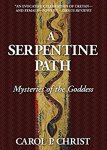
Carol in Crete turquoiseGoddess and God in the World: Conversations in Embodied Theology by Carol P. Christ and Judith Plaskow, forthcoming from Fortress Press in 2016.

In Goddess and God in the World, two leading theologians model a new method of embodied theology, rooted in experience and tested in dialogue. Christ and Plaskow agree that the God who is dead in our time is the transcendent and omnipotent male God of traditional theology. They believe that we must create new understandings of divinity because theologies not only help us to make sense of the world, but also provide guidance as we face the urgent social, political, and environmental issues of our time. In contrast to traditional views, Plaskow and Christ situate divinity in the world and place responsibility for the fate of the world firmly in human hands. They argue for an inclusive monotheism that affirms the unity of being through a plurality of images celebrating diversity and difference. Carol believes Goddess is the intelligent embodied love that is in all being, a personal presence that can inspire us to love the world more deeply. Judith understands God as an impersonal power of creativity, the ground of being that includes both good and evil. Their intense questioning of each other’s views provides an exciting model for theological conversation across difference.
Continue reading “The Book Is Finished, Now On to Publicizing It by Carol P. Christ”

The Great Dragon, Níðhöggr by Deanne Quarrie

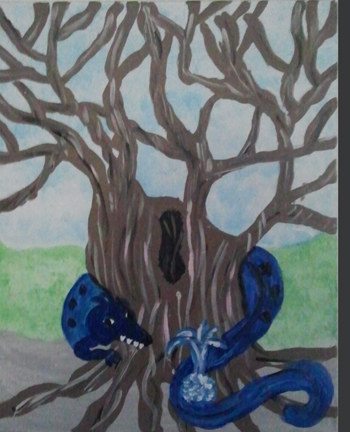
Deanne Quarrie, D.Min.I am a student of the Northern European/Old Icelandic worldview known as Seidr. What I find particularly fascinating in my studies are not the deities but rather the creatures living on the World Tree, along with the Primordial Giants who predated the gods. One such creature is Níðhöggr, the “Derision Striker.” Níðhöggr is a great dragon who lives at the base of Yggdrasil, the World Tree. She gnaws on the roots of the tree, stimulating new growth. Her home stretches from icy Niflheim, near what is called the “Roaring Kettle”, the sacred well of all the rivers of Niflheim, all the way to Dead Man’s Shore in Helheim where she devours the piled corpses.

NíðhöggrNíðhöggr embodies the principle of rot, which is that all things must decay to make room for those things that are new. It is Níðhöggr’s job to clean up the mess! She is involved in acts of undoing. She reminds us of the impermanence of life and that eventually, all that is must become undone. It is important to know this so that we can be prepared for unexpected or difficult changes in our lives.

Níðhöggr is there to devour nasty things in one’s self, both physical and emotional. She is there to take away anything that no longer serves us, as long as we are willing to give it to her. She also is there to help anyone working to clean up the environment, especially from our own pollution.

Many fear Nidhogg because of the job she must do but without this part of the life cycle there would be no cycle at all. We make every effort to hide things that are unpleasant. We flush our human waste into our water supply instead of simply giving back to the Earth where we can restore it and use it as nourishment for new life. Menstrual blood is hidden away as if somehow shameful. We hide all that is ugly or that which makes us uncomfortable. And so it is too, with creatures and characters in mythology. Somehow in our dualistic world, the lines between good and bad, negative and positive are clearly drawn. So often those things we suppress, hide and call negative are actually, what save our lives. They are the things in our basic natural spirit that propel us forward into becoming better human beings.

Níðhöggr also serves us as a moral agent, reminding us that our own cruelty, especially harmful acts that undermine another’s sense of self. Bullying behavior is a good example. She reminds us that our actions always have consequences to the energy of the whole, not just our own lives.

Her work is much like that of the vulture, a bird so ugly it is beautiful. I have always thought of vultures as the great recyclers, returning what is lifeless and no longer useful back to the Earth to make ready for new growth.

She is truly all about roots, and keeping them clean. As that, she reminds us that real strength is found in one’s roots.

In her story, at the end of days, Níðhöggr chews through a root and upends the World Tree. Clearly if this were the root upon which all else depended, the mighty tree would fall. Perhaps this would represent our own failure to clean up after ourselves, both in our own lives as well as here in this place we call home, the Earth.

Deanne Quarrie. D. Min. is a Priestess of the Goddess. She is the author of five books. She is the founder of the Apple Branch where she teaches courses in Feminist Dianic Witchcraft, Northern European Witchcraft and Druidic Shamanism. She mentors those who wish to serve others in their communities. She is also an Adjunct Professor at Ocean Seminary College and is the founder of Global Goddess, a worldwide organization open to all women who honor some form of the divine feminine.

The Dog Days of Summer by Carol P. Christ

Sirius in the Sky


Sirius rises late in the dark, liquid sky
On summer nights, star of stars,
Orion’s Dog they call it, brightest
Of all, but an evil portent, bringing heat
And fevers to suffering humanity. –Homer, The Iliad


The dog days of summer are associated with the reappearance of the brightest star in the sky, the “dog star,” also known as Sirius, just before dawn from July 23 until August 23. This star heralds the days of the most intense summer heat. Though this is the time of the summer harvest in Mediterranean cultures, it a time of death. Energy wanes. The grasses have dried out on the hillsides, plants in gardens will die too unless they are watered. The healthy “sit out” the heat of the day with closed shutters, while those who are old or very ill often give up the ghost. They say that this is also a time when babies are conceived during long and languid afternoon naps.

The Greater Mysteries of Demeter and Persephone were celebrated at the end of this period, and the Greek Orthodox festival of the Dormition (Death) and Assumption (Rebirth) of the Panagia (the Virgin Mary) echoes an ancient rhythm.

This year I have spent most of the dog days in air-conditioned rooms, feeling little inclination to brave the heat of the day even for a refreshing swim in the sea. During this time, Judith Plaskow and I completed the final draft of the manuscript of Goddess and God in the World and submitted it to our publisher: a midsummer harvest!

To be truthful, I also spent many of the dog days days glued to my computer watching reruns of D.C. Banks and Blue Murder. These days of rest were good for the knee I had injured earlier in the summer, which now is almost healed. They must have been good for my spirit as well, for a friend who had not seen me since late spring told me that I looked refreshed and renewed.

In nature, the death days of late summer are followed by rebirth. At the very time when the sun is at its most intense, the days become shorter—first imperceptibly, and then quickly. While sun “stands still” for several months, setting at more or less the same time before and after the Summer Solstice, all of a sudden (or so it seems), the sun sets half an hour earlier. From then on, it sets several minutes earlier each day: a clear indication that fall is on its way. Before long, the rains come and the hillsides become green again.

beachttime in anaxos by Andrea Saris

For me, August 14, celebrated in Greece as the day of the Dormition of the Panagia, marks the beginning of the end of the intense heat of midsummer. Yesterday, on this day, with some trepidation, I packed my dogs into a hot car and headed for the sea. Our favorite tavern was empty and a light breeze coming from the sea tempered the heat. A friend arrived unexpectedly, and—joined by my intrepid miniature schnauzer—we enjoyed a swim so refreshing we didn’t come out of the water until our fingers became wrinkled. Just before sunset my friend and I met again to ascend the stairs to the shrine Church of the Panagia on the Rock to light candles for Rebirth and Renewal, ending our day with dinner by the sea.

As I write the next morning, I feel poised on the edge of rebirth and regeneration. I don’t yet have new ideas in my mind, nor do I have the fullness of energy I know will continue to return as the heat wanes. I look forward to the coming of fall and await new green shoots of inspiration in my life and my work.

carol mitzi sarah

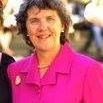
Carol P. Christ leads the life-transforming Goddess Pilgrimage to Crete (facebook and twitter).  Carol’s books include She Who Changes and and Rebirth of the Goddess; with Judith Plaskow, the widely-used anthologies Womanspirit Rising and Weaving the Visions and forthcoming in 2016 from Fortress Press, Goddess and God in the World: Conversations in Embodied Theology. Explore Carol’s writing. Photo of Carol by Shanti Jones. Photos of beach at Anaxos by Andrea Sarris.

No Longer Moved … by Symbols that Once Moved Me Profoundly by Carol P. Christ

Carol in Crete croppedThis week Judith Plaskow and I submitted the final version of our new book Goddess and God in the World to our publisher at Fortress Press. Just before completion, I added a shorter version of the following passage to my final chapter. In it I tried to describe the odd feeling of not being moved any longer by a religion that once moved me profoundly. Our book, which explores an embodied theological method, will be out in the summer of 2016.

I have never regretted my decision to leave Christianity. Although I have a sentimental attachment to Christmas trees, Christmas dinners, Christmas carols, and some hymns, I miss little else about Christianity. At a distance of several decades, I find that I quite simply have no feeling for the Christian edifice of doctrines and rituals based on the life and death of a single individual. Jesus was a visionary, but there have been many others like him—including Martin Luther King, Elizabeth Cady Stanton, and Gandhi, all of them flawed, as Jesus must have been as well.

A few years ago, I decided to participate in the Greek Orthodox Easter week services, because they are attended by so many of my neighbors. But while enjoying the company of the women who decorated the epitaphios (tomb for Jesus), the procession through the streets of our town on Friday night, and the lighting of candles at midnight on Saturday, I came to a clear understanding that the Easter drama is no longer my drama. During the Thursday night services, I realized that many of the women were openly grieving the death of Jesus. Though intellectually I could understand that the Easter drama allowed my friends to release pent-up and repressed feelings, I found their deeply emotional response to the re-enactment of the death of Jesus bizarre.

P6115475
Idean Cave

In leaving Christianity, I had gained the freedom to name the sacred in my own experience, confirmed my deep inner knowing about the human connection to nature, and found the power to create and participate in rituals that have meaning in my life. For me now, the rituals on the Goddess Pilgrimage to Crete are at the center of my spiritual life. To listen to Alice Walker’s words, “We have a beautiful/mother/Her green lap/immense/Her brown embrace/eternal/Her blue body/everything we know”* on a mountaintop or to repeat Ntozake Shange’s cry, “we need a god who bleeds now/whose wounds are not the end of anything”** at the mouth of a cave, moves me more than any passage from the Bible.

Singing “Light and Darkness” in the depths of caves is an embodied act of reclaiming the womb as a symbol of creation and the darkness as a place of transformation. I still enjoy singing the Doxology (Hymn of Praise)—and doing so connects me to my history. But I now sing it in front of altars laden with summer fruits or winter vegetables and with words that express my spirituality: “Praise Her from whom all blessings flow/Praise Her all creatures here below/Praise Her above in wings of flight/Praise Her in darkness and in light.”***

*Alice Walker, “We Have a Beautiful Mother,” Her Blue Body Everything We Know: Earthling Poems 1965-1990 (New York City and Orlando, FL: Harcourt Books, 1991), 459-460.
**Ntozake Shange, “we need a god who bleeds now,” A Daughter’s Geography (New York: St. Martin’s, 1983), 51.
***See Carol P. Christ, She Who Changes: Re-imagining God in the World (New York: Palgrave Macmillian, 2003), 238, for a discussion of the meaning of the new words.

Carol P. Christ leads the life-transforming Goddess Pilgrimage to Crete (facebook and twitter).  Carol’s books include She Who Changes and and Rebirth of the Goddess; with Judith Plaskow, the widely-used anthologies Womanspirit Rising and Weaving the Visions and forthcoming in 2016 from Fortress Press, Goddess and God in the World: Conversations in Embodied Theology. Explore Carol’s writing. Photo of Carol by Maureen Murphy. Photo of Idean Cave by PJ Livingstone.

ALTERNATIVE IMAGES OF GOD BY CAROL CHRIST AND EMMA TROUT

Carol P. Christ at Alverno College 1
Carol Christ at the Conference of Women Theologians

Today I am publishing an early work on female language for God that I wrote with Emma Trout at the first Conference of Women Theologians in 1971. Highly contested at the conference, this essay is a foreshadowing of my subsequent work on the need for female imagery for divinity.

Rereading this essay more than four decades later, I am gratified to see that though we began our essay with the image of God giving birth (which I still view as an important image), Emma and I were aware of the danger that female imagery for God could reinforce “a false sexual polarity.” We insisted then that female imagery for God must not repeat sex role stereotypes, but rather must shatter them. Continue reading “ALTERNATIVE IMAGES OF GOD BY CAROL CHRIST AND EMMA TROUT”

Barth and Woman at Yale by Carol P. Christ

Carol P. Christ at Alverno College 1
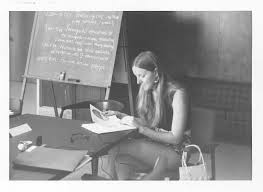
Carol P. Christ at the Conference of Women Theologians, Alverno College, 1971

I recently located a copy of an essay on Karl Barth and women that I wrote as a graduate student at Yale University in the Alverno College archives. Rereading it decades later, I am a-mazed at the brilliance and tenacity of my younger self. Had I been a male graduate student, I imagine that I would have been encouraged to publish this paper. Instead, though distributed by Alverno College after the Conference of Women Theologians, it was never published. I am correcting that oversight here. Read  A Question for Investigation (Barth and Women)-Carol P. Christ (1971) and view the original typescript Barth’s Theology and the Man-Woman Relationship by Carol P. Christ (1970). Please note that the essay does not restrict itself to Barth’s view of women, but rather uses Barth’s view of women to raise questions about his theology and theological method. Continue reading “Barth and Woman at Yale by Carol P. Christ”

Changing the American Story? by Carol P. Christ

Carol in Crete croppedIn a moving part of Goddess and God in the World, the book Judith Plaskow and I are writing together, Judith describes how the Sabra and Shatila massacre  forced her to confront the fact that “her people” are just as capable of perpetrating evil as any other group. Growing up in the shadow of the Holocaust and the pogroms that had scattered her people across the world, Judith was taught to think of the Jewish people as the victims of history rather than as the perpetrators of evil. The willingness of the Israeli army to countenance the outright massacre of up to 3500 people told another story: when in power, Jews too were capable of great evil.

I tell this story because I believe the lesson Judith learned is a lesson that Americans as a group still need to learn. I am thinking about this in the days following the heated debate that led to the removal of the Confederate flag from the Capitol of North Carolina.

In a brave and impassioned speech, Jenny Horne explained that though she is a descendant of Jefferson Davis, she was speaking against the display of the Confederate flag because it is a symbol of the harm that has been done and continues to be done to slaves and descendants of slaves in her state. Jenny Horne was rejecting the story she had been told about what it is to be an American in South Carolina. Continue reading “Changing the American Story? by Carol P. Christ”

Where are the Jewish Feminists? by Ivy Helman

10953174_10152933322533089_8073456879508513260_oLast month in my regular post, I suggested that a lesbian who passes as an Orthodox man subverts Jewish traditional gender roles and understandings of sexuality at the same time she is conveying something true about her own relationship to the Holy One.  Not a single comment challenged me on that proposition.  Not one.  Why?  I think I know the answer.

While I absolutely love this site and have been a regular blogger now for three and a half years, I must say there are whole worlds of ideas, insights and conversations that we are missing. Whenever I write a blog on this site related to Judaism, it is rare that I receive a comment from someone Jewish (at least recognizably so).  And, as the above example illustrates (especially if you were to read the comments of said post), no one even recognized the problematic nature of such a suggestion or challenged me as to how I think it would accomplish subverting gender roles and traditional views on sexuality.

The fact that I am the only regular Jewish contributor writing about Judaism in this blog doesn’t help. The last one left over two years ago. Also as far as I can tell from regular reading and a few searches, the last guest blogger who was both Jewish and wrote about something related to Judaism was about this time last year.  Where are the Jewish feminists?  Not here. Continue reading “Where are the Jewish Feminists? by Ivy Helman”

Painting Perpetua and Felicity: Patron Saints of Same-Sex Couples by Angela Yarber

angelaRecently, I realized the heart’s capacity to hold both extreme tragedy and utmost joy simultaneously. Surely this is something I’ve experienced in the past, but both personal and nation-wide events have served as poignant reminders. First, the racism that primarily persists in microaggressive forms—in the underbelly of a society that too often prides itself in the heinous sin of “colorblindness,” claiming that racism no longer exists in the United States—reared its violent head in the most blatant and painful ways in the slaughter of nine innocent people in Charleston. Because the shooting took place in a church, some media outlets have tried to claim that the shooter’s intentions were to attack persons of faith. It is clear, however, based on Dylann Roof’s words, photos, and history, that these killings were hate crimes targeted specifically at black people. Hearts broke. Lives ended. We, as a nation, were reminded, all too soon and yet again, that the lives of black people are valued less. Racism is present, evil, persistent, both blatant and hidden. It is more than hearts can hold.

Only days later SCOTUS ruled that same-sex marriage is now the law of the land. As my wife and I were packing to leave on a year-long journey throughout the country, we had already made copies of our marriage license (from Maryland before North Carolina recognized the legality of our love), two separate adoption decrees because our state did not recognize us as a family when my wife first adopted our child a brief 20 months ago, and all of the other legal paperwork that we could use to “prove” the legitimacy of our family in the case of an emergency (if medical staff wouldn’t permit us both to be in a hospital room with our child, for example). With those files copied and stored neatly in a suitcase, everything changed for us. Now, no matter what state we visit, our family is legally recognized. And while I’d like to think that our paperwork is no longer necessary, I know that the legality of the court’s decision doesn’t automatically change the hearts and minds of everyone in the country. Heteronormativity still reigns supreme. While we rejoiced at the ruling, we simultaneously acknowledged that marriage is only one small step in dismantling straight supremacy. Though countless couples can now marry, receiving all the legal rights and privileges therein, many may still live in states that allow LGBTQs to be fired for their sexual orientation or gender identity, where housing may be denied, where hate crime protections do not include sexual orientation or gender identity, and the list could continue. Still many queer people, myself included, found ourselves reveling in utter joy. Continue reading “Painting Perpetua and Felicity: Patron Saints of Same-Sex Couples by Angela Yarber”