Tug-of-Warring over the Female Body (Part 1 of 2) by Jameelah X. Medina

Cover up! No, get naked!

Haraam [Sin]; cover yourself! Be free; show some skin!

AstaghfirAllah [seeking forgiveness from God]; aren’t you ashamed?! Damn, aren’t you hot in that?!

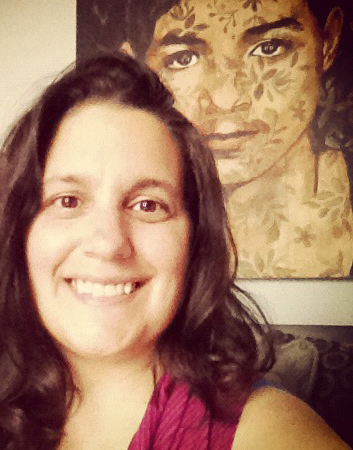
The Muslim woman’s body feels like a battleground, especially during times like last month (April) with the whole FEMEN “topless jihad” controversy sparked by the Tunisian woman who protested the female body as a source a familial honor. On one side is essentialized feminism and patriarchy on the other end with both sides pulling hard. Both sides have Muslim women on their team, but both sides also harm them. Let’s start with “Team Femesential.”

Questioning the headscarf and certain covering practices is mostly a healthy endeavor in which many Muslim girls and women engage before and after deciding (if they do) to wear a headscarf. However, questioning the headscarf can also be an oppressive and even dismissive strategy that is disrespectful to Muslim women and to all women in general. Continue reading “Tug-of-Warring over the Female Body (Part 1 of 2) by Jameelah X. Medina”

Deciding to Leave or Remain in the Religion of Your Birth – Part II by Judith Plaskow

Photo by Manhattan College

This is a response to Carol P. Christ’s blog of April 29, 2013 on why she decided to leave the Christian tradition. Carol and I discuss these questions further in our forthcoming book Goddess and God in the World: Conversations in Embodied Theology.

You raise the important question of what factors lead feminists to leave or remain within the religion of their birth. Your central challenge to me is how I can commit myself to a tradition in which God is imagined as a violent warrior when these images have harmed and continue to harm women and the world. How can I not recoil from using such images in worship? Why is the power of symbols less important to me than to you?

The first thing I would say is that, like you, I find these images profoundly problematic. One of the projects I have taken on in my retirement is reading the Bible from cover to cover, and I was appalled in going through all the prophets together at the amount of violence in their teachings. When I have spoken on the topic of dealing with difficult texts in the Jewish and Christian traditions—a subject that is dear to my heart—I always talk about God’s violence in addition to texts that demean women. And, yes, I have sometimes asked myself how I can remain part of a tradition in which God is depicted in this way. So I do not disagree with your critique of this imagery, but obviously for me, it is not decisive. Why not? Continue reading “Deciding to Leave or Remain in the Religion of Your Birth – Part II by Judith Plaskow”

Are Buddhist Women Happy? Part II by Oxana Poberejnaia

oxanaIn Part I of this post I started asking questions about whether Buddhism in the West is part of patriarchy. Today I offer a possible link between practices of men’s Initiation Rites and some of the elements of Buddhism.

Men’s Initiation Rites

When we consider principle practices of Western Buddhists, primarily daily meditation and meditation retreats we might enquire something like this: since monastic practice is a model for our Western lay practice, do Buddhist monasteries constitute an extension and continuation of men’s long houses, places of men’s initiation rites?

Continue reading “Are Buddhist Women Happy? Part II by Oxana Poberejnaia”

Thanks for Coming (Out): Sexuality, Sports, and Spirituality by John Erickson

I have to be honest, Jason Collins’ admission that he was a homosexual, albeit brave, upset me. While coming out is an completely unique experience to every individual that does it, Jason Collins’ story was just another example of the rampant sexist and heteropatriarachal world that privileges male bodies and sexualities over women’s similar experiences. While I applaud Jason’s story and it’s timing, the first thing I asked to my colleagues was: Where was the hubbub over Sheryl Swoopes or Martina Navratilova?

John Erickson, sports, coming out. Like marking off items on a proverbial checklist, closeted LGBTQ individuals who exist within and outside of the world of professional sports, can recount the numerous things they struggle with in terms of their sexuality.  From fearing of the actual coming out process, dressing in their car or at home to avoid the subtle glances and whispers of individuals in the locker room, to wondering what coming out would mean not only for their game but also for their social and, if they choose, spiritual lives, closeted and out LGBTQ individuals within the multi-billion dollar professional sports industry must grapple with that age old question: what does it mean to be gay and open about it?

The Locker Room

I have to be honest, Jason Collins’ admission that he is a homosexual, albeit brave, upset me.  While I understand that coming out is an completely unique experience to every individual who does it, for me Jason Collins’ story was also an example of the rampant sexist and heteropatriarachal world that privileges male bodies and sexualities over those of women.  While I applaud Jason’s story and the timing, the first thing I asked to my colleagues was: where was the same hubbub over Sheryl Swoopes or Martina Navratilova? Continue reading “Thanks for Coming (Out): Sexuality, Sports, and Spirituality by John Erickson”

A Calling, A Vocation by Elise M. Edwards

Elise Edwards

In my previous post The Feminist Influence, I began discussing what a feminist perspective might bring to a theological study of architecture.  I asserted that a feminist perspective on the ethical function of architecture offers at least two contributions: (1) it provokes questioning about what flourishing is for all peoples and the Earth, and (2) it provokes examination of systems of power and privilege and how they are constructed into our built landscape.  I think a feminist vision of architecture could help all of us (even those of us who are not design professionals) promote design that respects and responds to our environment, addressing the harm we have done.  I do want to give some thought, though, to what it means especially for architects and other design professionals. Continue reading “A Calling, A Vocation by Elise M. Edwards”

What About Contraception in Pope Francis’s Promise to the Poor? by Dawn DiPrince

Pope Francis, at nearly every opportunity – including the choice of his name, has symbolically expressed a commitment to the poor. In just a little over a month, he has declined the customary gold papal cross, the ermine-trimmed red velvet cape, and the showy red loafers worn by his predecessor. He has refused the palatial papal penthouse apartment and is currently living in a two-room suite among the Vatican’s cardinals.

In additional to a more austere lifestyle, Pope Francis has spoken out about the world’s poor. His namesake is St. Francis of Assisi, who famously worked for the poor and for peace. The Pope claims he was inspired to take the name Francis when remembering a friend’s urging to “not forget the poor.” More to the point, Pope Francis has stated that he wants “a Church which is poor and for the poor!” Continue reading “What About Contraception in Pope Francis’s Promise to the Poor? by Dawn DiPrince”

(Femen)ism? by Kile Jones

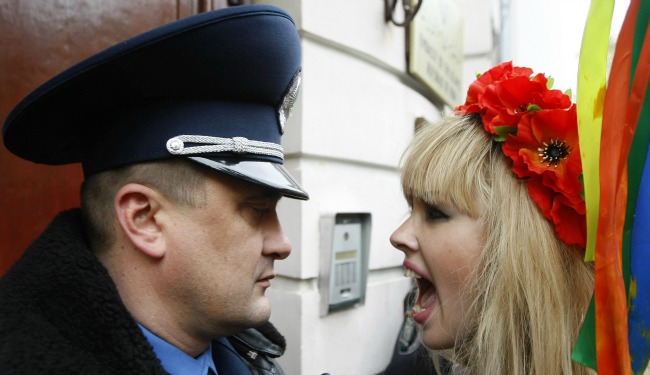
Kile Jones, atheistAs most of us are aware by now, there is a “feminist-sextremist” group from Ukraine called “Femen.”  This group has been very controversial by their public demonstrations of nudity, the words they paint on their bodies, and their explicit condemnations of political structures and organized religions.  They were started by Anna Hutsol in 2008 and have now spread throughout Europe and the Middle East.  The question I pose for this post is: Does Femen harness or hinder the power of the feminist critique?

Image from Konstantin Chernichkin/Reuters

Femen is precisely the kind of movement that pushes us in our understanding of feminism, the means by which it is best expressed, and the issues surrounding moral condemnation and religious sensitivity. Continue reading “(Femen)ism? by Kile Jones”

Taking Back the Caliphate: The Role of Muslim Women as Agents of Social Justice by Vanessa Rivera de la Fuente

Vanessa Rivera de la Fuente. Muslim Women as Caliphs.Whenever we talk of Muslim women, two dominant discourses reach our ears. The first is about women of the past who may serve as role models, such as Aisha, Fatima, and Khadija (ra). This perspective, which I call the historical approach, presents an ideal woman with qualities we should strive to develop, values that make life possible with more comfort and a deepening of our imam (faith). These values include wisdom, loyalty, courage, justice, perseverance, faith, independence, and generosity.

The second discourse is based on stereotypes and presents Muslim women as passive and without initiative. I call this the objectification approach, which says that Muslim women are oppressed and sees us as objects without voice or power, subject to the tyranny of the hijab (headscarf), and in need of someone to save us from the bondage of religion and from men, who, incidentally, are all terrorists. Continue reading “Taking Back the Caliphate: The Role of Muslim Women as Agents of Social Justice by Vanessa Rivera de la Fuente”

Creiddylad, Welsh Goddess of Flowers and Love by Judith Shaw

judith Shaw photo

May Day/Beltane (Calan Mai to the ancient Celts) is almost here and our hearts turn to thoughts of love, flowers and the bounty of our Mother Earth. Both Beltane and Halloween/Samhain (Calan Gaeaf) were liminal or threshold days, considered to be outside of normal time. These sacred, mystic days were more important than the solstices in the Celtic world view.

Creiddylad painting by Judith Shaw

Creiddylad, Welsh Goddess of Flowers and Love, is celebrated at this time. (Her name is pronounced cree-THIL-ahd)  She is the eternal May Queen, always seeking peace and stability.  She remains eternally constant in the face of all change.  She is the promise of love, golden glowing moon-flowing love, enduring through all hardship and despair.  Creiddylad also shows us the necessity of self-love. Only by truly loving ourselves can we love another.

Creiddylad is mentioned only briefly in The Mabinogion but her symbolism reveals that she is surely an ancient and important Goddess, whose original stories have been lost to the mists of time.

Creiddylad, the daughter of Lludd Silver-hand, was promised in marriage to her heart’s desire, Gwythyr ap Greidawl. But before the marriage could be consummated she was abducted by Gwyn ap Nudd, who possessed many dark aspects akin to the Lord of the Underworld.

Gwythyr gathered together his warriors and set out to rescue his love, Creiddylad, from Gwyn.  A fierce battle ensued, during which Gwyn, who emerged as the victor, committed horrendous acts of brutality and butchery.

Continue reading “Creiddylad, Welsh Goddess of Flowers and Love by Judith Shaw”

Why are We Troubled by a Homeless Jesus? by Michele Stopera Freyhauf

Michele Stopera Freyhauf Durham John Carroll Religion TheologyThere are standard depictions of Jesus that show a Caucasian male with blue eyes (some pictures have the occasional brown eyes), shoulder length brown hair, and usually wearing a tunic with sandals. Jesus’ demeanor is usually victorious, prayerful, inviting, and even reflects humility. Our culture creates an unrealistic depiction of Jesus so that in the United States (at least), we see a savior as a white male representative of the power structures that permeate every facet of life.

There are some variations of this image. The most common is this same image with dark skin. A depiction that makes Jesus more tangible to people of color. If we can accept this variation of Jesus, then why would we be upset when images become more culturally tangible, send a message that encapsulates Jesus’ ministry, or make us stop and think – challenging us to take our rose colored glasses off. When an artist creates an image of Jesus that is different than the standard described above, controversy occurs at varying levels. The artwork is removed or de-commissioned, protests occur, and in extreme cases, the artist will even receive death threats. Here is a small sampling of images:

Jesus-in-Jeans-by-Peter-Royle
Jesus in Jeans (Peter Royle) picture courtesy of Wikipedia http://en.wikipedia.org/wiki/File:Jesus-in-Jeans-by-Peter-Royle.

chocolatejesus
Sweet Jesus (Cosimo Cavallar) picture from Cavallaro’s website (http://www.cosimocavallaro.com/html/chocolate_page.html
Edwina Sandys: http://www.naplesnews.com/news/2008/mar/06/my-life-so-far-edwina-sandys-69-artist/
T Edwina Sandys: http://www.naplesnews.com/news/2008/mar/06/my-life-so-far-edwina-sandys-69-artist/
Crucified Woman at Emmanuel College

Continue reading “Why are We Troubled by a Homeless Jesus? by Michele Stopera Freyhauf”