On Belief and Action by Ivy Helman

29662350_10155723099993089_8391051315166448776_oMy birthday was last Wednesday.  Perhaps more than any other time of the year (yes, even more than Rosh Hashanah and Yom Kippur), the days and weeks leading up to my birthday are filled with personal reflection.  Not that religious and secular new years don’t give me pause to reflect, but I think the lack of buzz around this personal event seems to offer me more space and time to think.

This year more than past years, I’ve been thinking about beliefs: what I believe in; how ideas and concepts that were important to me last year are less so this year and vice versa; how beliefs motivate me to act or not; what role belief plays in my life; why some beliefs demand solid resolve and others not so much; and so on.  I wanted to share with you some of my personal reflection. Continue reading “On Belief and Action by Ivy Helman”
Is there Space for Beyoncé in Worship? by Katey Zeh

Last month nearly 1,000 people gathered at Grace Cathedral, an Episcopal congregation in San Francisco, to participate in a worship service notably referred to as the Beyoncé Mass. Several of Beyoncé’s songs, including “Survivor,” “Flaws And All,” and “Freedom,” were sung throughout the liturgy. The service included a reading from Ella Baker and two versions of the Lord’s Prayer, the traditional English prayer and a modern Womanist version. The timing of the mass fell just weeks after Beyoncé’s stunning two-hour performance at Coachella (#Beychella), the first time a black woman headlined the event.

Continue reading “Is there Space for Beyoncé in Worship? by Katey Zeh”

If this be Madness … by Vanessa Rivera de la Fuente

Shams

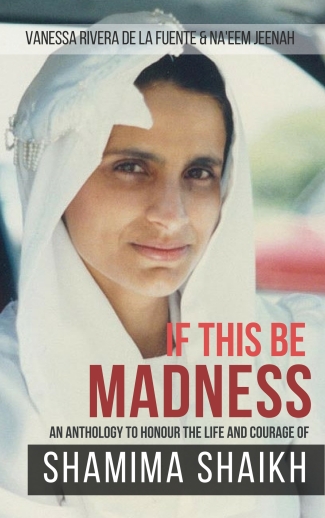
Shamima Shaikh (1960 – 1998) was South Africa’s best-known Muslim women’s rights activist. She was also a brave anti-Apartheid activist, notable Islamic feminist, community worker, journalist and devoted mother who died, 37 years old, from breast cancer. After the Holy month of Ramadan in 2016, I spoke with Islamic Feminist Shehnaz Haqqani about the new-to-me figure of Shamima. I was very excited to know about her and inspired by her fierce and at the same time compassionate moral courage. That year I wrote some pieces about her.

I asked, 18 months ago, Na’eem Jeenah, who was married to late Shamima, if there was a book about her where I could amplify my knowledge about her activism. He said, so far, there wasn´t. Later, I commented to my friend and Chilean feminist comrade, Rocio A., that the idea of an anthology book for Shamima Shaikh had arisen in me.

You must be mad, completely mad, you know? – she said

I am a feminist claiming that we women are people in a patriarchal world – I replied – of course I am mad. Continue reading “If this be Madness … by Vanessa Rivera de la Fuente”

Creation by Sharon Humphries-Brooks

It seems to me to be appropriate that since I’ve received so many ideas to consider, wondrous gifts, and thought-provoking insights from many of the essays, poems, and stories in the Feminism and Religion blogs, I should also give something in return.  One of the most precious gifts that I can offer is my writing.  So. . .

A bit ago, I started working on the book Mushente.  It takes place, among other locales, on a planet called—you guessed it—Mushente.  Many people who live there “walk” in the Mushente Way.  Below, I’ve copied the poem that opens that work.  As you can see, I’ve been very influence by a feminist interpretation of early Taoism. Continue reading “Creation by Sharon Humphries-Brooks”

Toil and Trouble (Part 3) by Barbara Ardinger

Continued from Part 2

The magical school bus, carrying twenty-seven young women, drives across two or three states almost as quickly as the magic carpet flew a few days ago. The bus seems to fly, guided by Bunbury and Icarus as GPS and guards and Kahlil riding on the bus driver’s shoulder (well, not always; the driver keeps shrugging the heavy raven off, so Kahlil finally perches on the back of the first seat) and giving directions. (How the GPS ravens communicate with him is not to be disclosed.)

“So whaddaya think the magic’s for?” Kahlil asks the driver. “We’re guardin’ these here girls. Takin’ ’em somewheres safe.”

All the driver can do is keep driving. When the bus and its precious passengers arrive at the witch’s farm and the girls descend, everyone can see that the finery they’d been wearing to sit in El Presidente’s audience is no longer fine. Their silks and satins have turned into ragged T-shirts and crepe paper. Their priceless jewelry is now colored plastic straws strung together with string. Their exquisite hairdos are now lank and limp. And soon there are loud cries from the witch and her friends—these girls have black eyes and bruises all over their bodies. Some of them are missing chunks of hair or their front teeth. They are all barefoot, and their feet are filthy. And these twenty-seven former princesses—were they ever genuine princesses?—are scared. Continue reading “Toil and Trouble (Part 3) by Barbara Ardinger”

My Many Grandmothers by Laura Shannon

Carol P. Christ has described spending meaningful time with her grandmother as a child and the unconditional love she received from her mother and grandmothers: ‘my relationships with my mother and grandmothers were full of love. This makes it easy for me to imagine the loving arms of Goddess embracing the world.’ She talks about this in her new book with Judith Plaskow, Goddess and God in the World: Conversations in Embodied Theology.

I have always loved to hear these kinds of stories from Carol and other friends, since I lost my own grandmothers before I felt I really knew them. My mother’s mother passed away when I was a young child. My father’s mother lived until I was in my twenties, but Alzheimer’s stripped her of her ability to recognise her family many years before her physical death. How I wish I had known them as an adult and had been able to talk to them, even once, woman to woman. And how I wish I had received the advice, support and unconditional love which Carol describes, and which I have seen other grandmothers offer their grandchildren. This absence has left an aching heart, a raw wound, for my entire adult life.

Continue reading “My Many Grandmothers by Laura Shannon”

A Feminist Retelling of Noah’s Ark by Trelawney Grenfell-Muir

My daughters came to me after Sunday School one day, concerned about a story they had heard in which God drowned almost everyone on Earth. So I sat down and thought about why a community might want to tell that story, and what valuable wisdom might be lifted from it for my children. Here is what I told them:
God/ess  has  many  faces,  which  help  us  understand  different  things we  need  to  know  at different  times.  Sometimes we think of God/ess  as  Crone,  an  old,  old  woman  crowned  with  silver  hair  as  an  emblem  of  her  wisdom,  who helps  us  learn  to  let  go  of  anything  that  is  holding  back  the  wellness  of  our  community  and ourselves.  Continue reading “A Feminist Retelling of Noah’s Ark by Trelawney Grenfell-Muir”

“The Burning Lava of a Song” by Joyce Zonana

Aurora’s autobiographical narrative is a passionate paean to poets as the “only truth-tellers, now left to God”; she celebrates them as agents for personal and social transformation. As we come to the end of this National Poetry Month in the U.S., where truth is under siege, it’s worth recalling Aurora Leigh and its daring exploration of poetry, gender, divinity, and social justice.

jz-headshotI was in graduate school when I first read Aurora Leigh, Elizabeth Barrett Browning’s fiery 1856 epic about a young woman claiming her vocation as a poet despite Victorian society’s patriarchal strictures. The poem was not on any assigned reading-list; I’d simply stumbled across it while doing research for my dissertation. The opening lines brazenly assert the speaker’s authority and ambition:

OF writing many books there is no end;
And I who have written much in prose and verse
For others’ uses, will write now for mine,–
Will write my story for my better self . . .

Encountering those words, I was immediately possessed by Aurora’s voice and vision, a welcome change from all the male poets and critics I’d been reading. I devoured the verse novel’s nine books in one night. The poem became the centerpiece of my dissertation, and I studied and enthusiastically taught it for years.

Continue reading ““The Burning Lava of a Song” by Joyce Zonana”

Bible Study Back in the White House after 100 Years – And… They Still Hate Gays and Women! by Marie Cartier

So, I am perusing my twitter feed and I come across this headline:

White House Bible Study Led by Pastor Who Is Anti-Gay, Anti-Women and Anti-Catholic

The opening paragraphs read like my LGBTQ+ religious studies nightmare:

“The first Bible study group held for the U.S. Cabinet in at least 100 years is led by a pastor who believes homosexuality is ‘illegitimate,’ who doesn’t believe women should preach and has described Catholicism as a ‘false’ religion.

Ten members of the Cabinet, including Vice President Mike Pence, Secretary of State Mike Pompeo, and Education Secretary Betsy DeVos, sponsor the study group, which holds meetings lasting between one hour and 90 minutes every Wednesday, according to BBC News. It unfolds at a location in Washington, D.C., that is kept secret for security reasons.

Its leader is Ralph Drollinger, a pastor and president of Capitol Ministries: an organization which aims to ‘evangelize elected officials and lead them toward maturity in Christ.’”

Continue reading “Bible Study Back in the White House after 100 Years – And… They Still Hate Gays and Women! by Marie Cartier”

Dragonfly, Guide to Transformation and True Sight by Judith Shaw

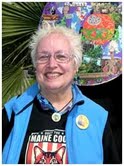
judith shaw photoDragonfly, dragonfly darting quickly hither and yonder, up and down, left and right –  a transparent shimmering spark with effervescent wings, representing the dreamtime and the illusionary nature of reality.  Dragonfly, dragon – both immortalized in mythology worldwide.

Continue reading “Dragonfly, Guide to Transformation and True Sight by Judith Shaw”