Judy Chicago, Feminist Trailblazer by Joyce Zonana and Janet Maika’i Rudolph

“Instead of looking to the male world for approval, I had to learn to rely on my own instincts. In some strange way, the rejections I faced strengthened me, but only because they forced me to learn to live as I saw fit and to use my values and judgment as my guides.”
The Flowering: The Autobiography of Judy Chicago 

Available here.

Janet: I live near New York City and am fortunate to be close to many museums. The New Museum has been showing an exhibit by Judy Chicago that takes up the entire facility of four floors. And it is remarkable. Not only is the breadth of her work astounding but so are the stories of how she has had to fight to be accepted in a man’s world of art. Joyce Zonana first recommended that I go. This blogpost came about as part of a discussion between the two of us.

Continue reading “Judy Chicago, Feminist Trailblazer by Joyce Zonana and Janet Maika’i Rudolph”

Star Beings? by Sara Wright

Photo credit Mathew Nichols

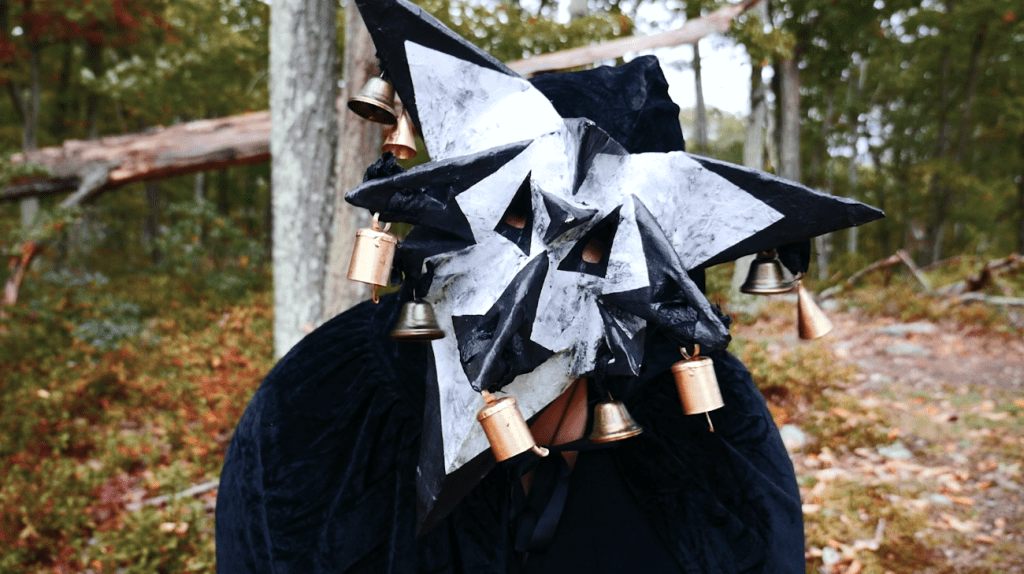
The well-known writer LESLIE MARMON SILKO has a very interesting idea – that star beings come to earth crossing over occasionally when the membranes of parallel worlds are more permeable than usual. She painted some star beings and they spoke to her without words…. Some were not friendly; most of hers lacked compassion and didn’t care much for human beings.

This made me think about astrology, a very popular cultural belief system that has ancient origins involving divination and was once correlated with the stars in our galaxy and the patterns they created (the stories they might have been telling and others we told about them), but has since split away into a very fixed system that make little sense to me.  However, since the 60’s popular astrology has become a kind of religion for some. Perhaps astrology is taking the place of religions of various kinds that are in a state of collapse? 

Continue reading “Star Beings? by Sara Wright”

Legacy of Carol P. Christ: Body, Nature, Ancestors

This was originally posted on January 23, 2012

Some years ago, womanist theologian Karen Baker–Fletcher asked about ancestors following a lecture I gave on the body and nature.  I have since come to realize that ancestors are a missing link between the two:  we cannot speak adequately of embodiment and interdependence in the web of life without recognizing the ancestors whose lives made ours possible.  Our mothers quite literally gave us our bodies.  All of our ancestors gave us their genes.  Care and callousness with origins going back longer than conscious memory was imprinted on the psyches of our parents and grandparents and transmitted to us.  All of our ancestors give us connections to place.  While many black people in America can recite oral histories that begin with slavery in the United States, I come from a family where stories of origin for the most part were not valued or told.  Both of my father’s parents lost their fathers when they were very young, and my father, who was raised Catholic at a time when Catholics were discriminated against, preferred to think of our family as “American now.”  Like the hero of the film Lost in America, most members of my family dreamed of “melting right into that pot.” In the process we lost stories we need to help us to understand ourselves and the complex realities that “becoming American” involved.

Continue reading “Legacy of Carol P. Christ: Body, Nature, Ancestors”

Rereading Adrienne Rich’s “Compulsory Heterosexuality and Lesbian Existence” by Xochitl Alvizo 

I recently reread the essay titled “Compulsory Heterosexuality and Lesbian Existence,” by late poet and essayist Adrienne Rich, with my students this semester. Published in the summer of 1980, on the heels of the Women’s Liberation Movement, I found that the essay still maintains its relevance and challenges us to remember that feminism is a political movement that itself must be continually interrogated.  

The essay (which you can read here, with a foreword from Rich published 23 years after the original) has four sections which are titled only with the roman numbers I-IV. I labeled these sections for my students to try and capture the focus of each: I. Compulsory Heterosexuality – The Groundwork; II. Male Power and the Inequality of the Sexes; III. Lesbian Existence as Political Identity; and IV. Woman-Identification as Source of Power and Energy.  

Continue reading “Rereading Adrienne Rich’s “Compulsory Heterosexuality and Lesbian Existence” by Xochitl Alvizo “

A Time of Renewal: Brigid Emerges at Imbolc by Judith Shaw

The wheel of the year continues turning and once again we find ourselves at the transition point from winter’s deep sleep to the first awakenings of spring. It is marked by an ancient Celtic festival called Imbolc, also known as Imbolg or Brigid’s day. It is believed to have been celebrated long before the Celts arrived in Ireland and Scotland, probably as far back as Neolithic times.

Continue reading “A Time of Renewal: Brigid Emerges at Imbolc by Judith Shaw”

Navigating the Dark by Sara Wright

Photo credit: Abiqui News

This morning I read an article about a woman who ‘forgot’ to light one of the candles on the Menorah or what I would call the ‘Tree of Life’ for the Jewish celebration of Hanukkah which takes place over a period of eight nights beginning in December. I was struck by her concern because she had forgotten one of the ‘rules’ and missed a night. Twice over a period of years…

While reading her reflection I noted that she seemed to get close to the underlying meaning behind the lighting of candles (present in every extant tradition) at the darkest time of year – she believed that she was bringing light into the literal darkness of night and kindling the divine spark within herself.

Continue reading “Navigating the Dark by Sara Wright”

Legacy of Carol P. Christ: Of Human Life*

This was originally posted on December 30, 2011

Watching the last episode of the Australian series Brides of Christ in which Catherine leaves the sisterhood of the convent because of her disagreement with Humanae Vitae brought me right back to the Yale Roman Catholic chapel and the folk mass I attended regularly.  In 1968 just after the publication of Humanae Vitae, priest and co-graduate student Bob Imbelli preached a sermon on the doctrine of conscience, arguing that though it was incumbent on Catholics to think carefully about the papal encyclical on birth control, it was also the responsibility of every Catholic to follow her or his conscience on the matter.  In the episode, Sister Catherine encourages a Roman Catholic mother of six who has already self-induced more than one abortion to take the pill, but the woman decides she cannot go against the church’s teachings.  Catherine allows an editorial against Humanae Vitae to be published in the school newspaper even though she knows it will probably lead to the expulsion of one of her favorite students.

Continue reading “Legacy of Carol P. Christ: Of Human Life*”

Let Your Voice Be Heard • Let Your Heart Be Inspired! by Dale Allen

I was honored to be a part of a special project for the Parliament of the World’s Religions Women’s Task Force: conducting interviews inside the first-ever Women’s Village in Chicago at the Parliament Convening. I had been on a team of women led by Sande Hart with Pat Fero. We met online over the course of nearly a year to plan the Women’s Village. It was a very special endeavor, and our group efforts produced a beautiful, calming, nurturing, sacred and inspiring space.  

The McCormick Center is America’s largest convention center, and yet we were able to create serenity.  The tapestries of Women’s Woven Voices provided a colorful and meaningful enclosure for our space.  A fountain cascaded a peaceful hum. Majestic staffs created by Erin Beatty stood as sentries; keepers of ancient feminine power. A great Mother Tree crafted by Elisa Guyton and Leah Myers spread her paper branches outward and received the written prayers and blessing posted there by attendees.  The crown-making table was always busy with women talking and crafting exquisite headpieces. The Red Tent room was a tranquil place of mediation, rest, and a variety of spirit-nourishing workshops and presentations.

The Great Mother Tree crafted by Elisa Guyton and Leah Myers, close up with written prayers and blessings.
Continue reading “Let Your Voice Be Heard • Let Your Heart Be Inspired! by Dale Allen”

Snake Priestesses of Crete as Earthquake Oracles? by Laura Shannon

Knossos Throne Room showing edge of lustral basin at left. Photo: Laura Shannon

A few weeks ago I was on Crete, having coffee with an archaeologist friend. She happened to mention something strange. Crete has always been a seismic zone, with lots of earthquakes, yet remarkably, in Minoan times, no one was killed in collapsing buildings; they were never taken by surprise. 

We pondered this – it seems astounding. They must have had some means of warning. Perhaps the serpents sacred to them could have given them some sign? 

Continue reading “Snake Priestesses of Crete as Earthquake Oracles? by Laura Shannon”

On the changing role of the Goddess

Goddess Prominence & Nature Participation through time

Today I reflect on the presence or absence of the goddess in religion and society, and how we view humanity and participate in nature as a result. 

This post is inspired by “The Myth of the Goddess. Evolution of an Image” by Anne Baring and Jules Cashford, and especially by its final chapter “The Sacred Marriage of Goddess and God: the Reunion of Nature and Spirit.” This dance of integration of apparent opposites is essential to my work.

Continue reading “On the changing role of the Goddess”