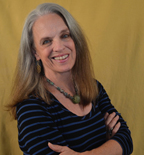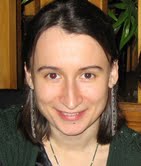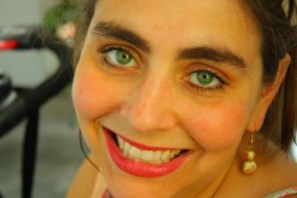
On 15th May, 2016 thea Gaia left this earth which was her home for 85 years. thea was born
Dorothy Ivy Wacker in Gatton, Australia on 9th February, 1931, the eldest of four children.
Her family were descendants of German immigrants who came to Australia in the 1860s.
In primary school, Dorothy was a bright student, winning a bursary enabling her to continue
her studies at high school which she completed in 1947. She then studied primary teaching
at Queensland Teachers’ College and from 1950-52 she worked at School for the Deaf,
Dutton Park, Brisbane.
Dorothy joined South Brisbane Congregational Church and became President of Queensland
Congregational Youth Fellowship. At age 22, she decided to take theological training to
become a Congregational minister. Dorothy studied for Bachelor of Arts and Bachelor of Divinity at the University of Queensland. In 1959, she was awarded a Certificate of Ordination by the Queensland Congregational Union. Dorothy was ordained on 17th April, 1959 at Broadway, Woolloongabba, the first woman ordained as a Minister of Religion in Queensland. Over the next 10 years she was minister for Belmont, Broadway and Chermside Congregational Churches. Continue reading “thea Gaia née Dorothy Ivy Wacker: Feminist Foremother and a Great “Ponderer” by Glenys Peacock”
This week I bought a pendant that caught my attention. It is Celtic knot work of horses, meant to represent Epona. This triggered my interest in Epona and off I went to learn more.
Epona is a goddess from Gaul. Sadly, any information about her from those early days of worship are lost to us. This is the case of the most ancient deities from that region and time in history. It is thought that she was picked up in Gaul by the conscripted soldiers of the Roman Army who saw a depiction of her upon her horse and they adopted her. Since this army rode across the land on horseback, she was the perfect deity to pay homage to and so, she traveled with them. She soon made it to Rome and is one of only a few deities, not originally Roman, to be worshiped in the Roman Empire. Continue reading “Epona – Goddess of the Land by Deanne Quarrie”
Sainte Sara encompassing Sainte Marie-Salome and Sainte Marie-Jacobe
O Sainte Marie-Jacobe, priez pour nous.
O Sainte Marie-Salome, priez pour nous.
O gardeures de la Provence, priez pour nous.
The priest intoned the words in deep, liquid accents, his voice echoing from the ancient stone church in the remote village of Les Saintes-Maries-de-la-Mer, in the Camargue region of Southern France, where the waters of the Rhone River meet the Mediterranean Sea in a wild, wide, flat expanse populated by black bulls, pink flamingos, and white horses.
“O, Saint Mary-Jacobe, pray for us.”
“O, Saint Mary-Salome, pray for us.”
“O, guardians of the gates of Provence, pray for us.”
I could feel the words resonating through me, bringing sudden, hot tears. The people gathered in the small village square repeated the priest’s chant, their voices rising above the low, white-washed houses into the sunlit sky, out towards the shimmering sea where legend tells us the two Marys had drifted two thousand years ago in a boat without rudder or sail.
“When all is said and done I think every Witch should, at some time, face the moon alone, feet planted on the ground, with only his or her voice chanting in the starry night.”
–Laurie Cabot, Power of the Witch
I will never forget the first time I heard someone recite the Charge of the Goddess from memory. Bare-breasted, she strode around the fire in sacred circle at a large goddess festival in Kansas, delivering the words with power, grace, and confident resonance. I thought: I will do that someday.
In February of this year, we took a family trip to Dauphin Island. While there, the afternoon of the full moon, I
decided that the time had come. I was going to memorize the Charge of the Goddess. First, I thought I would only memorize it a piece at a time. It seemed “too big” to do in a single sitting. I had it printed out on a piece of paper that rapidly became damp with the salty sea air. I drew a labyrinth in the sand with my toes, set one of my goddess sculptures at its entrance, and drew a Womanrunes card.
One stanza at a time, slowly I began to repeat the poem* aloud:
hear ye, the words of the star goddess
the dust of whose feet are the hosts of heaven...
Over and over, I said the words, letting them twine around my tongue and in the air, experimenting with cadence and rhythm. After I could reliably repeat one section, I’d move to the next, letting it build in my memory until I could put the two together confidently and then moving to the next.
I am the beauty of the green earth
the white moon amongst the stars..
I stared into the waves, listening to them rise and fall along with my words. My three older children dug in the sand.
My husband fished. My toddler toddled around and then came to sit on my lap and nursed to sleep for nap time:
before my face
beloved of all…
I whispered into his damp hair. I felt in an altered state of consciousness. The words began to wind their way through me, becoming a part of me, embedded in me. I danced with them as I have never danced with another piece of writing. I felt them merging with me. I sang them aloud. I stated them fast and slow and I built, adding the next line and then the next…
for behold, all acts of love and pleasure
all my rituals.
I turned over hard thealogical questions as the words spun their magic through the air. What does it really mean that “all your learning and seeking shall avail you not, lest your know the mystery.” Do I really feel the goddess within? Do I find her within myself or is she only outside and if she is only outside, does she really exist at all? Tears came to my eyes: do I even like myself?
Two hours passed. My baby awoke and returned to digging in the sand. My husband packed up his fishing gear. The sky began to darken and spit rain. I stood and danced the words into the sand with my feet.
let your divine innermost self
be enfolded
in the rapture
of the infinite
I felt rapturous. I felt triumphant. I had done it. Faster and faster my feet stamped the sand as I called the words into the waves. I spun in circles with my toddler chanting and laughing and offering my devotion before the sea, beneath the moon.
the mystery of the waters
the desire in human hearts…
*I used Shekhinah Mountainwater’s adaptation of the Charge, originally by Doreen Valiente, as included in the book Ariadne’s Thread.
Molly has been “gathering the women” to circle, sing, celebrate, and share since 2008. She plans and facilitates women’s circles, seasonal retreats and rituals, mother-daughter circles, family ceremonies, and red tent circles in rural Missouri and teaches online courses in Red Tent facilitation and Practical Priestessing. She is a priestess who holds MSW and M.Div degrees and recently finished her dissertation about contemporary priestessing in the U.S. Molly and her husband Mark co-create original goddess sculptures, ceremony kits, and jewelry at Brigid’s Grove. Molly is the author of Womanrunes, Earthprayer, and The Red Tent Resource Kit. She writes about thealogy, nature, practical priestessing, and the goddess at her Woodspriestess blog.
I’ve been asked by both academics and Pagans what inspired me to pursue doctoral research on the British Goddess movement: of the many ways that people first click with feminist politics, a story entwined with a ‘spiritual’ impulse might seem unusual, given the slow-to-change secular assumptions of mainstream feminism.
When I reflect on my history, two threads at the core of my early feminist identity leap out: one, the value of thinking and asking questions; the other, ‘feminist spirituality’, which for me describes a profound emotional, intellectual and creative investment in the struggle for a fairer, more inclusive world. Two early ‘click’ moments: as a child, asking persistent questions about the sexist gender roles modeled by those around me (and being told “You’ll understand when you’re older,” which I now recall with a grim irony), and—perhaps unusually—coming across the concepts of patriarchy, feminism and the Goddess by way of 1990s teen fiction about witches. Continue reading “Reflections on Researching the Goddess Movement in Britain by Kavita Maya”
In a previous post on FAR I explored Greek Easter customs which interweave Christian and pre-Christian beliefs. Today I would like to take a closer look at one of these customs, the women’s ritual dance known as Tráta, ceremonially performed on ‘Bright Tuesday,’ the Tuesday after Easter. Versions of Tráta survive in the towns of Mégara and Elefsina just west of Athens, on the island of Salamína directly across from them, and in the surrounding area as far as Thebes.
Elefsina, of course, is Eleusis, where for over 2,000 years the Eleusinian Mysteries enacted the story of Demeter and her daughter Persephone’s descent to the Underworld. Choral dance was a central part of the ceremonies at Eleusis – as at other sacred sites including Delphi, Knossos, Athens, and Vravrona – and the ‘Well of the Beautiful Dances’ can still be seen at the archaeological site. It is a a visible reminder of the circle dancing which was a part of the initiatory experience, bringing cosmic order – symbolised by the circle – into the human world. This is still one of the functions of the Tráta as performed today.
As I mentioned in my January 30, 2016 post, Grace Jantzen in Foundations of Violence makes a compelling case that Diotima is a fictional figure. She does not, however, adequately distinguish her from the poetizing female figures Parmenides and Boethius portray as instructing them in their respective works. If nothing else, the quality of the poetry of Parmenides and Boethius betrays the influence of a very real woman: Sappho.
By contrast, Plato essentially portrays Diotima as the personification of his philosophy–his metaphysics–and it is hard to believe there was such an ancient Greek woman. Although the term ‘metaphysics’ derives from a neologism coined in Greek centuries after Plato and Aristotle lived, its meaning (‘beyond’ (meta) the ‘natural,’ or ‘embodied’ world (physics)) appropriately characterizes what Diotima and hence Plato’s philosophy is all about. A key passage is where she characterizes the most intense love as “gazing at and being with” the beloved, without even the need to “eat or drink.” That leads her to ask rhetorically whether it would not be best to gaze at what is not “infected” by flesh and blood (Symposium (211 d-e)).
Niamh (meaning ‘bright’ or ‘radiant’) of the Golden Hair, one of the Tuatha de Danann and daughter of Mannanan mac Lir, Celtic God of the Sea, was Queen in the land of Tír na nÓg (pronounced Tear na Noge), the most famous of the Celtic Otherworlds.
A friend once laughed to hear me describe picking wild raspberries as a “holy task,” but it is. A task earthy, embodied, mundane, and miraculous at once. Each year, I sweat and struggle, am scratched and stung, but I return home once again with my bounty.
As I returned, red-faced, sweating, and after having yelled much more than I should and having said several things I instantly regretted, I was reminded of something that I manage to forget every year: one definition of insanity is picking wild berries with a toddler. In fact, the closest I ever came to spanking one of my kids was during one of these idyllic romps through the brambles when my second son was three. While still involving some suffering, this ramble was easier since I had a nine and a half year old as well as the toddler. This time, my oldest son took my toddler daughter back inside and gave her a bath and put her in new clothes while I was still outside crawling under the deck in an effort to retrieve the shoes and the tiny antique ceramic bluebird that my girl tossed over the railing and into the thorns “for mama.”
While under the deck, I successfully fished out the shoes (could not find the tiny bird) and I found one more small handful of raspberries. Since the kids were all safely indoors, I took my sweaty and scratched up and irritable self and ran down to my sacred sanctuary in the woods. I was thinking about how I was hot, tired, sweaty, sore, scratched, bloody, worn, and stained from what “should” have been a simple, fun little outing with my children and the above prayer came to my lips. I felt inspired by the idea that parenting involves uncountable numbers of small, wild adventures. I was no longer “just” a mom trying to find raspberries with her kids, I was a raspberry warrior. I braved brambles, swallowed irritations, battled bugs, sweated, swore, argued, struggled, crawled into scary spaces and over rough terrain, lost possessions and let go of the need to find them, and served as a rescuer of others. I gave my blood and body over to the task.
Like Inanna, I faced thorny gates and descended into darkness, crawled on my knees, and gave up things that I cherished, and in the process discovering things about myself, and then returned with a renewed sense of purpose and an awareness of my own strengths.
Now this year, I set out to make homemade marshmallow fondant icing for our daughter’s fifth birthday party. My goal: to make little fondant pandas for her birthday cake. I began with my two pounds of powdered sugar, my melted marshmallows, and my all-natural $12 jar of black food pigment. As I kneaded and kneaded the stiff and difficult dough, my journey became more arduous. I ended up yelling at my lovely children who were leaning over my shoulders to watch the adventure unfold. I said, “just get out of the kitchen!” to the birthday girl herself and I hollered for my now 12 year old to come peel the one year old away from my legs as he attempted to scale my body and reach my arms while my hands were covered with black-icing cement. I ranted and raved briefly about how this is an example of my own life-long tendency to overdo and overperform. Making these pandas wasn’t necessary. I do it to myself. Why do this to myself, I lamented over and over. What is the point? What am I teaching my kids—the cost of having fun and doing something nice and neat for each other is yelling and feel strained and tense? What didn’t I just buy lard-frosting, I lamented (meaning slimy hydrogenated oil frosting from the store). Why aren’t we eating Chicken McNuggets and a cake from Wal-Mart right now? Wouldn’t that be better than yelling at my kids and forcing myself to spend hours kneading panda dough? Shouldn’t we just eat frozen taquitos and watch TV all day and never, ever invite anyone to come to a birthday party ever again?
Then, I fell into a rhythm with the fondant. The sugar started to incorporate. The black started to knead in. I could see it coming together. This is a Hero’s Journey, I thought, this is an Inanna’s Descent. I heard the call to adventure, or fondant, as it were, and I answered. I set forth with my tools and my optimism. I was challenged on my journey. I came face to face with my own shadows. My fingernails became stained with effort. I cast away expectations and judgments. And, then I started to emerge, coming back from my trek, bearing my prize, carrying my treasure, offering my sweet elixir to my people. When I realized it was actually going to work, I started to feel a sense of exhilaration and glee. It is empowering to make your own dang fondant. I called out to my husband with a slightly manic bark of laughter, this is another one of those small adventures! Parenting involves hero’s journeys and Inanna’s Descents every day. What if I’d given up when the fondant got tough? Doesn’t that teach my kids to quit, to not bother, to not learn, experiment, do, and try? I thought about giving birth to my children—how the going gets difficult, how you feel like giving up, and then you emerge, tender and strong, a new human in your arms. I did that! I can do anything! My parenting is stronger, richer, and deeper from knowing that I can face difficult tasks and do them anyway, from knowing that I can draw upon my own strength, my own body wisdom, my own power, and succeed. I am a better person, a better mother, for having hit my own limit and then, incredibly, realized I could go beyond it, that I actually still had the will and courage left in me to do it. Those pandas, while less earth-shaking and life-changing than giving birth to children, were birthed from my own love and effort into my black-icing hands, and my willingness to do it myself, for the ones I love.
I’ve said before that I’d rather be the mom that does cool and fun stuff with her kids and sometimes yells while doing it than a mom who doesn’t yell, but who doesn’t do cool stuff because she’s afraid she might yell or worse yet, because she doesn’t have any fun ideas. (Of course, an awesomer option, would be to be the mom who does cool stuff and also doesn’t yell, but I’m not holding my breath on that one!) After I constructed the first tiny panda and seeing how cute it was and how excited my daughter was about her cake, I felt such a sense of thrill and triumph. I thought that if I hadn’t decided to do it and make it easier on myself, sure, I wouldn’t have yelled, but I also wouldn’t have felt the empowering sense of having done exactly what I imagined doing. When you do hard things and encounter shadows and keep going and come out the other side, you are strengthened. You learn something about yourself. You realize your own capacities and power. If you are unwilling to embark, you stay safer, and maybe even are a nicer person, but you do not experience the overwhelming satisfaction of accomplishment. The pairing—the difficultywith the triumph—is what makes the journey worth it. This is it, I told my husband, this is The Return. I have returned to my people and I come bearing bears. It feels good to be home.
Each child at her party made a panda to add to the cake.
Molly has been “gathering the women” to circle, sing, celebrate, and share since 2008. She plans and facilitates women’s circles, seasonal retreats and rituals, mother-daughter circles, family ceremonies, and red tent circles in rural Missouri and teaches online courses in Red Tent facilitation and Practical Priestessing. She is a priestess who holds MSW and M.Div degrees and recently finished her dissertation about contemporary priestessing in the U.S. Molly and her husband Mark co-create original goddess sculptures, ceremony kits, and jewelry at Brigid’s Grove. Molly is the author of Womanrunes, Earthprayer, and The Red Tent Resource Kit.She writes about thealogy, nature, practical priestessing, and the goddess at her Woodspriestess blog.
Western Easter has come and gone, and I missed it this year, by design. I went to Athens for the weekend, where Easter this year won’t come until May 1. In the Greek Orthodox Church, Easter is reckoned differently, so that sometimes (like next year) Easter falls on the same date in both faiths and sometimes (like now) the celebrations are several weeks apart.
In contrast to the UK, where Easter now seems to be mostly about chocolate, Easter in Greece is the main festival of the Christian year, much more important than Christmas. Throughout the Lenten period, fasting foods – ‘nistisimo’ – are available everywhere (heaven for vegan visitors).