When Life Hands You Lemons… by John Erickson

“When life hands you lemons, sometimes you have to make applesauce.”

I’ve been thinking a lot about something my grandmother would always tell me: “When life hands you lemons, sometimes you have to make applesauce.” I know, it sounds crazy, but life right now appears to be more on the crazy than the sane side.

We’re all in a state of uncertainty right now. The news is scary. Twitter is scary. Heck, even TikTok is losing parts of its humor. Everywhere we seem to turn, it’s more information about COVID-19, new cases, new lockdowns, and new things that we shouldn’t do for the foreseeable future. Continue reading “When Life Hands You Lemons… by John Erickson”

The Terrible-Horrible, Wonderful-Beautiful, Superbowl Halftime Show by Trelawney Grenfell-Muir

A lof of people have been raving about the Superbowl Halftime show, and for good reasons.

A lot of people have been raging about the Superbowl Halftime show, and for good reasons.

[Please hang in there with me as I conduct a back and forth exercise in this blog post; try to read it all the way through.]

Two famous, talented women of color performed impressive, culturally rich songs and dances, and along with children of color, they denounced the racism and cruel policies of the current administration. In many ways, it was the most progressive, ethically compelling Halftime show in history.

That’s all wonderful. It’s so wonderful, that one might ask whether anything more should be said. Why bring negativity into such a fabulous, fantastic celebration of culture and denunciation of racism? Continue reading “The Terrible-Horrible, Wonderful-Beautiful, Superbowl Halftime Show by Trelawney Grenfell-Muir”

Joy to the World, the CEO Is Come; Let Earth Receive Its President by Tallessyn Zawn Grenfell-Lee

Ah, Christmas. So nostalgic. So sentimental. Fat, fluffy sheep. Singing angels. The ‘little Lord Jesus,’ asleep on the hay. Happy sigh.

Except… well, except that no matter the candlelit warm glow, the truth is that the communities who wrote the birth narratives about Jesus of Nazareth never intended them to be sentimental at all. They were meant to point toward his prophetic ministry of anti-imperialism and justice for oppressed and impoverished communities, a ministry that ended in torture and execution – and yet nonetheless insisted upon the resilience of hope, peace, even joy in the midst of gruesome, relentless violence. So… what happened? What… weakened Christmas?

I’ve been mulling this idea over many an Advent. Of course, when the Roman Empire tried to neutralize the Christian movement, adopting it as the Imperial Religion and making it over in its own image, the radical and transformative message was forced to move underground and to the margins. We all sort of understand how political power manipulates religious and secular ideologies for its own oppressive purposes, throughout human history and today. Continue reading “Joy to the World, the CEO Is Come; Let Earth Receive Its President by Tallessyn Zawn Grenfell-Lee”

Where’s the Love by Gina Messina

In a recent post I wrote about finding God in music. I confess, I cannot remember the last time I set foot in a church. As a woman, I continually grapple with the foundational messages of Jesus and Catholic Social Teaching and the disconnect with the power structures that seek to control the ways we love and find justice. I long to participate in the culture I grew up in, but cannot support the weaponization of the tradition. 

Lately, I’ve come to realize that the messages I connect to I find in music. There are particular songs that offer me the guidance, philosophy, and ideas around meaning and purpose that I resonate with. One of those is “Where’s the Love?” by the Black Eyed Peas.  

I’ve been listening to it on repeat lately because it is the sermon I need to hear; it speaks to me and even though it was recorded quite a while ago, it is still relevant. I think it is fair to say that in our current socio-political culture, people are “acting like they got no mamas.”  And by the way, I include myself in that statement. Like anyone, I sometimes get so caught up in believing that my way is the only way, I forget to listen to what others have to say.

We are in the midst of a political civil war and are so busy yelling past each other, we’ve forgotten how critical unity is to shaping a healthy government that serves its purpose – caring for the people. Continue reading “Where’s the Love by Gina Messina”

Coming to Terms with Privilege: A Personal Reflection by Elise M. Edwards

elise-edwardsIn my two previous posts, I shared my recent experience talking about privilege at a church near me.  Today, I will wrap up this short series with a more personal reflection about privilege from a Christian perspective.  Last month, I was thinking theologically about what those of us who have privilege should do with it.  But, as feminists and womanists, acknowledging our privilege can be complicated.  Most of us in this FAR community do possess some forms of privilege while, at the same time, we lack other forms of privilege.  Each of us remains the same person wherever we go, yet our status can change when we switch contexts.  As a black woman, I do not have white privilege or male privilege.  But I am privileged when it comes to education and class and physical ability.  I am a Christian who works at a Christian university in a part of Texas that is culturally predominantly Christian. So that’s a form of privilege.  Although as a single woman without children, I don’t fit the cultural norm where I live, my sexual orientation and cis-gendered identity afford me some privilege, too.

Continue reading “Coming to Terms with Privilege: A Personal Reflection by Elise M. Edwards”

What Can We Do to Weaken Privilege? by Elise M. Edwards

elise-edwardsIn my previous post, I talked about discussing the concept of privilege (male privilege, white privilege, and class privilege) with nuance.  Earlier that week, I had led a workshop at a local church on “Fine-tuning Privilege,” using Peggy McIntosh’s 1989 essay “White Privilege: Unpacking the Invisible Knapsack” as a resource.  (If you are unfamiliar with it, take a few minutes to read it and reflect upon it.)  Part of my talk was about naming and understanding privilege.  Discussion and comprehension are not enough, though.  We must counter it.

One strategy for fighting privilege is making it visible. The recipients of privilege are often unaware that they have to systemic advantage over others. Privilege, used in the context of racism, sexism, heterosexism, classism, and religious dominance, is not something earned on merit alone. In the essay linked above, McIntosh describes it like this: “I have come to see white privilege as an invisible package of unearned assets which I can count on cashing in each day, but about which I was meant to remain oblivious.” These are conditions built into our culture that some groups receive which benefit them to the detriment of others. Making privilege visible means naming it and calling it out. Wage gaps, digital divides, and racial profiling practices exist; ignoring them perpetrates the problems.

Continue reading “What Can We Do to Weaken Privilege? by Elise M. Edwards”

Photo Essay–Long Beach, California by Marie Cartier

Long Beach Pride 2019
50 YEARS OF PRIDE CELEBRATING
THE STONEWALL REBELLION of 1969!
**All photos by: Marie Cartier**
See the photo essay from last year’s Pride week-end here.
And the photo essay from Pride 2017 here.

Continue reading “Photo Essay–Long Beach, California by Marie Cartier”

Gift-Economy in a Time of Lack by Elisabeth Schilling

Carol Christ wrote about gift economy on this blog in 2013, and I am taken by her story of the woman who brought raisins or cracked nuts to the group even though she had very little. In beginning to encounter the literature on gift economy myself, I am wondering how it all works, especially wondering, perhaps outside of such a conversation if it doesn’t relate or misses the point, what someone who feels they have nothing to give can give.

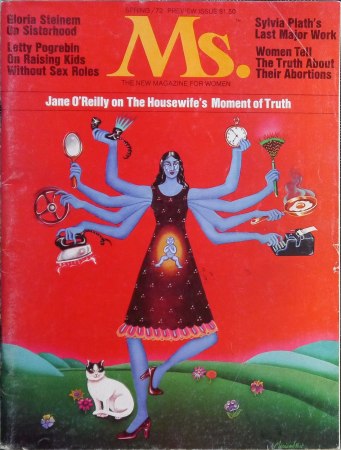
When Genevieve Vaughan wrote about gift economy in Ms. Magazine in 1991, she wrote, “where there is enough, we can abundantly nurture others. The problem is that scarcity is usually the case, artificially created in order to maintain control, so that other-orientation becomes difficult and self-depleting.”

I think we start to look for other ways of existing when we experience the brokenness of a current existence. The exchange economy under mindless capitalism does not honor equal, fair exchanges. If we could keep from manipulating and being deceptive about what a product is worth, if we could more generously assess the contribution of workers, then some of us might not be bothered. Of course, for that work which is never compensated by money, mostly women’s work, that is the other issue that might not be solved by more equal exchange, and probably more the point of Vaughn’s.

Continue reading “Gift-Economy in a Time of Lack by Elisabeth Schilling”

The Legend of Arawello, the Somali Goddess by MaryAnn Shank

Image of Arawello. Since there is no known portrait of Arawello, this is an artist’s interpretation.

I did not intend to find her.  In fact I wasn’t even looking.  But there she was, soaring before me, on my last night in Baidoa.  This majestic Somali woman reached high into the heavens, engulfed in a glorious wraparound garment that reflected the hues of the world around her: the azure of the Indian Ocean, white sparks of the splendiferous Milky Way, the orange of the clay soil beneath her feet.

The golden snake wrapped around her arm identified her immediately.  This was Arawello, the Somali Goddess.

I had only heard hints of this treasured goddess.  She was born of her people in the first century.  She took the beatings, the whips that scarred her as a child, and escaped to the aromatic fields of myrrh in the northern Somali mountains.  Female torture was rampant at that time, an outgrowth of the centuries-old clan wars.

In the fields of myrrh Arawello found many women like herself, women who ran to save their own lives, women who wanted to help their sisters, mothers, aunts and friends left behind.

And so she formed her plan.

Continue reading “The Legend of Arawello, the Somali Goddess by MaryAnn Shank”

Ruminations on Emor by Ivy Helman

29662350_10155723099993089_8391051315166448776_oThis week’s Torah portion is Emor, or Leviticus 21:1 – 24:23.  It details purity and the priesthood including whose funeral a priest can attend, who can marry a priest, bodily blemishes and temple services, and under what circumstances daughters of priests can still eat temple food.  Emor also discusses the treatment of animals. A baby animal must be 7 days old before it can be sacrificed and cannot be killed the same day as its mother. In addition, the parshah describes the holiday calendar, including the counting of the Omer, how to harvest fields, and what type of oil should be used in the Temple’s Menorah.  Finally, it outlines punishments for various crimes including blasphemy and murder.

To say that there is a lot there would be an understatement.  In fact, a good question about this parshah is where does one begin?  An obvious place would be the mention of the named woman, Shelomit bat Dibri of the tribe of Dan, almost at the end of the parshah.  First, it is remarkable that a woman has been named and more so that her name has been remembered as significant. It begs the question of who was she?  Why remember her name? Why mention her at all? The discussion about her son’s crimes could easily not have needed any mention of her name! So why is it there? Continue reading “Ruminations on Emor by Ivy Helman”