Human, Just Human by Xochitl Alvizo

Mary Daly and other feminist scholars of her time knew that taking away the power of naming, whether oneself or the world, is one of the primary ways to take a people’s power away, to subjugate them to a world they do not help form or create.[1] Control over their bodies, their sexuality, and their relationships, is another. It has happened throughout history that not all people are allowed the same level of sovereignty over their bodies. Women, children, black people, indigenous and enslaved people, and whoever is deemed a threat to the social, economic, and cultural status quo being advanced (enforced) at a given place and time, have been forcibly and violently legislated against and policed into submission through varying implicit, explicit, informal, and institutionally sanctioned ways.

Continue reading “Human, Just Human by Xochitl Alvizo”

Bathsheba: From Survivor of Sexual Abuse to Queen Mother by Linda Cooper Costelloe

Bathsheba by Artemisia Gentileschi, wikimedia commons, public domain

The image we have of Bathsheba is that of a scheming temptress. That’s the way she’s been portrayed in media, such as the 1951 movie, David and Bathsheba, and Leonard Cohen’s song, Hallelujah. She deliberately bathed on a rooftop in sight of King David. She caught his eye and he was helpless to withstand her charms. The Bible does not support that image of Bathsheba, however. It says that Bathsheba was used and abused by David, and God was displeased.

The Bible says that David was on his rooftop. It does not say where Bathsheba was, only that she was bathing to purify herself after her period (2 Samuel 11:2-4). She was probably in an inner courtyard. In their book, Flawed Families of the Bible. How God’s Grace Works Through Imperfect Relationships, David E. Garland and Diana R. Garland write: “The laws required ritual washing at the conclusion of her menstrual period. A woman would be highly unlikely to conduct such a cleansing from her menstrual period as a come-on. If she were in public view, she would have washed without disrobing. There is no reason even to assume that she was naked. Public nudity was not acceptable in this ancient Jewish culture but instead was considered shameful. There is no foundation for assuming she was some kind of exhibitionist.”i

Continue reading “Bathsheba: From Survivor of Sexual Abuse to Queen Mother by Linda Cooper Costelloe”

Who Gets to Define What it Means to be Pro-Life? by Janet Maika’i Rudolph

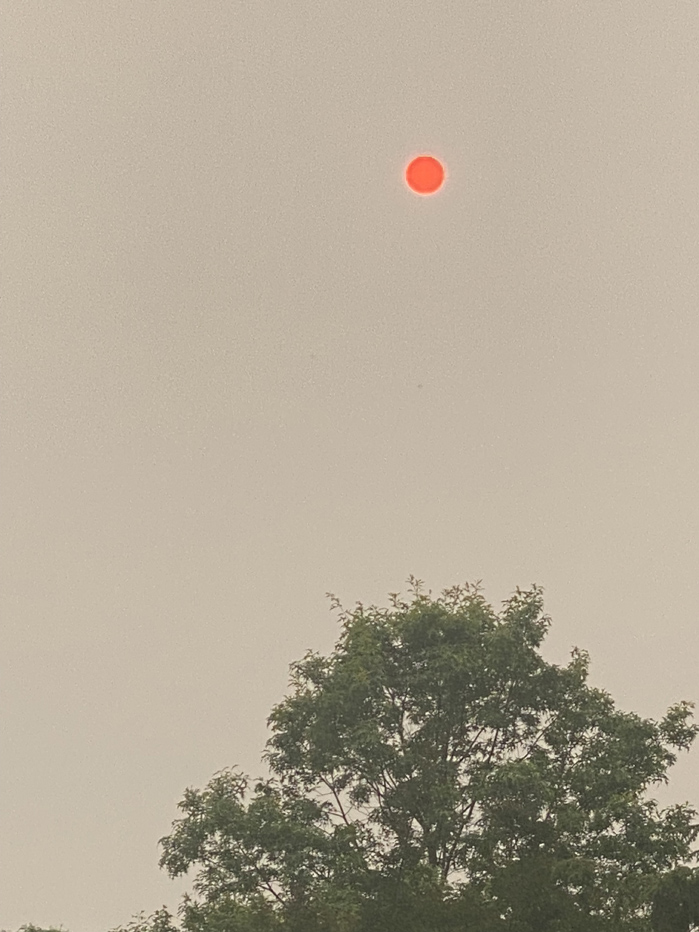
The sky and sun on June 7th in the afternoon on Long Island.

Today I am coughing and choking here on Long Island because of our unhealthy air quality.  The smoke from the wildfires of Canada have reached us. We, here in NY, are not alone in dealing with air so polluted that breathing is at risk. I think of the CA wildfires, the SpaceX rocket that exploded in April, the Ohio train derailment in Feb. No place is safe.

While coughing and thinking about this, two bits of news came into my consciousness, The first was the Supreme Court ruling narrowing the scope of the Clean Water Act.

My first thought was, do they and their children not have to live in this world too?  Do they think they can buy a clean environment for themselves and their families and the rest of us be damned? 

The next report I heard was from a prominent conservative commentator who explained how “prolife” he is and went on to describe his “deep concern” for life.

Continue reading “Who Gets to Define What it Means to be Pro-Life? by Janet Maika’i Rudolph”

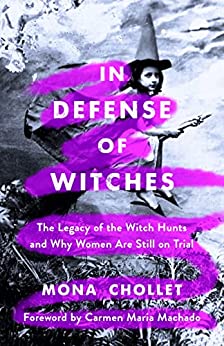
Life Still Shaped by the Witch Hunts? by Eline Kieft

In this article I reframe my understanding of feminism through the lens of Mona Chollet’s In Defence of Witches, and reflect on how my psyche as a woman today is still deeply influenced by the effects of the witch hunts in mediaeval times. 

Continue reading “Life Still Shaped by the Witch Hunts? by Eline Kieft”

PATRIARCHY’S OFFSPRING by Esther Nelson

Elvis Presley (1935 – 1977) popularized the song “In the Ghetto” written by Mac Davis in 1969.  The following TikTok video, featuring an artist with whom I am not familiar, is better—in my opinion—than any other rendition I’ve heard.  Such depth!  Such raw passion!  Such strength!  Such vulnerability!

https://www.facebook.com/100064420368301/videos/1352885832113207/

Here are the lyrics:

As the snow flies
On a cold and gray Chicago mornin’
A poor little baby child is born
In the ghetto…

Continue reading “PATRIARCHY’S OFFSPRING by Esther Nelson”

Is Sin An Antiquated Concept? by Rev. Dr. Karen Tate

I believe many could and would characterize abuse and exploitation as varying degrees of sin, from gossip and verbal intimidation on one end of the spectrum to murder, rape or thievery on the other. Yet, while we’ve normalized some acts that we recognize fall into the categories of abuse and exploitation, if you asked someone if society has normalized sin, I suspect most people would say “of course not.” I believe that cognitive disconnect is proof we’ve become numb and acculturated to many forms of abuse. The concept of sin, and what constitutes sin along with redemption, purification and penance are not on the minds of people today as they once were, despite the rampant abuse and exploitation, aka sin. We accept it like we’ve come to believe greed is good when it once was one of the Seven Deadly Sins. I think prosperity gospels too need to be evaluated for the anti-Jesus message these teachings perpetuate that does little to advance an evolved and compassionate humanity. 

Continue reading “Is Sin An Antiquated Concept? by Rev. Dr. Karen Tate”

We Endure Abuse to Survive, Part 1 by Karen Tate

I considered myself savvy and educated and an advocate for peace, fairness and equality.  I thought abuse was something that happened to others, not me.  But it was happening to me.  It had happened to me and I didn’t see the danger signs as my life careened off the road.  I became aware abuse and the resulting trauma can happen to anyone.  I came to realize we have to examine all aspects of our lives for both blatant and insidious abuse.  We must recognize it and take steps to eradicate abuse from our lives and society.  That’s where I’ve been on for the last five years and I’m only now able to begin to share that journey.  To write a new book, Normalizing Abuse, and bring my radio show, Voices of the Sacred Feminine, back on the air after a long hiatus.

Part One

If you knew me before my unraveling, you might remember I was the hostess of the Voices of the Sacred Feminine podcast for more than a decade where I had the privilege of interviewing some of the most prominent thought leaders in spirituality, politics and academia. I’d published six books, gave talks at the Parliament of World Religions, the Academy of Religion and various other public and private associations. I had done dozens of interviews and was all over YouTube. I was out there and then gradually I wasn’t. I faded away and became a shadow of my former self.  And for a time I don’t think I cared if I ever came back. I had no motivation or inspiration.  I didn’t open my closet for three years. I didn’t care if I bathed or brushed my teeth. I was dreaming someone was trying to push me into a dark hole in the wall of a building. I’d hear floorboards creaking and feared the foundation of the house I was living in would collapse. I’d wake up with heart palpitations because the latest dream was one where our home had no ceiling or roof. I’d think cars slowly driving by my house were surveillance. 

Continue reading “We Endure Abuse to Survive, Part 1 by Karen Tate”

Memoirs of a Cult Survivor by Chasity Jones

This blogpost is a reflection on my experience creating a podcast series concerning religious trauma experienced in cults as well as how to heal from traumatic cult experiences.

Firstly, I had to be very intentional about the word survivor as opposed to victim. Survivor was the obvious choice because I used to cringe when thinking of myself as a victim. However, As I heal, I can honor both the survivor and the victim, for they are the same. I cannot forget to acknowledge though that some victims do not survive and this is the same concerning cults. Many people at this very moment are in exile or in hiding from their cults when they escape and for that reason some of the people who engaged in this series were forced to engage anonymously.

Continue reading “Memoirs of a Cult Survivor by Chasity Jones”

The Uses of Color On Screen by Freia Serafina

We have to thank a woman named Natalie M. Kalmus for her contributions to the development of color on screen. Being a woman and the executive head of the Technicolor art department in the 1930’s was nothing short of extraordinary, and, in 1935 she released a document titled Color Consciousness in which she explored color theory and the use of color on screen. And, while this was illuminating and groundbreaking at a time, we also have some serious problems with the document that need to be re-examined from an anti-racist and feminist perspective.

Kalmus tells us how and when to use color given that particular color’s moral and psychological associations. She tells us that different colors evoke emotional reactions from the audience because these colors paint a realistic worldview. This presents a problem because, if, as Kalmus suggests, the usage of color and its associations represent a realistic worldview then the worldview Kalmus presents is an inherently racist one. Kalmus writes that black “… has a distinctly negative and destructive aspect. Black instinctively recalls night, fear, darkness, crime. It suggests funerals, mourning. It is impenetrable, comfortless, secretive.” In stark contrast to the color black, Kalmus writes that white “… reflects the greatest amount of light, it emanates a luminosity which symbolizes spirit. White represents purity, cleanliness, peace, marriage… White uplifts and ennobles, while black lowers and renders more base and evil any color.” To put it simply: black is evil and white is good. What does any of this have to do with spirituality? Well, the way we think and feel about color and how characters are depicted on screen taps into our psychological understanding of how “good” or “bad” a color is. This trickles over into our magical and spiritual practices with the notions of “Black Magic” vs. “White Magic.”  We often associate someone who practices black magic as someone who works with dark or evil forces, and white magic with someone who practices magic for the good of others.

Continue reading “The Uses of Color On Screen by Freia Serafina”

What Would a “Good Christian Woman” Do? by Liz Cooledge Jenkins

Early morning lap swim at the local pool is generally a peaceful space for me. It’s usually pretty uneventful. I try to go three times a week; I don’t always feel like going, but I always feel better after I do. The other day, though, something happened that upset my equilibrium and got me thinking.

When I showed up at the pool, ready to mind my own business and get a good workout in, I was happy to see three empty lanes. I don’t mind splitting a lane when needed, but it is a nice little luxury to have a lane all to myself. I chose one of the empty lanes, and in the next few minutes, two other swimmers arrived and filled in the other two. I did a long, leisurely warm-up and then stopped at the wall to find that another swimmer had joined me in my lane.

As he swam back and forth on the right side of the lane and I did the same on the left, I realized that he was taking up more than his fair share of the lane. I felt a little annoyed and disrespected. But it didn’t seem like a big deal. I started on my next set.

Continue reading “What Would a “Good Christian Woman” Do? by Liz Cooledge Jenkins”