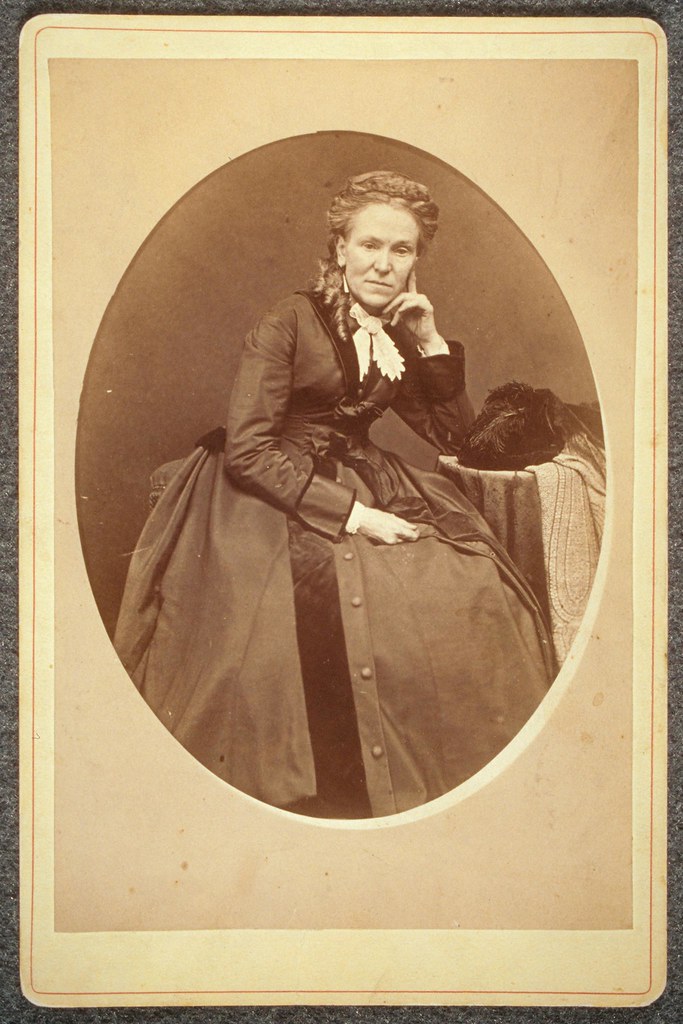
From the Archives: Censored Angel: Anthony Comstock’s Nemesis. A Novel by Joan Koster

This was originally posted on October 10, 2024.

Moderator’s Note: With the Trump administration getting closer and closer to re-establishing the Comstock Laws in their efforts to stop all abortions in the United States, we felt it important to repost this story. It is about Ida Craddock, her life and her efforts to stand against Anthony Comstock. Joan Koster wrote a powerful book about her. This post today is also a prelude to tomorrow’s post which will discuss a new movie Sex Radical that will be premiering this month about Ida Craddock’s life.

“I would lay down my life for the cause of sex reform, but I don’t want to be swept away. A useless sacrifice.” Ida C. Craddock, Letter to Edward Bond Foote, June 6, 1898
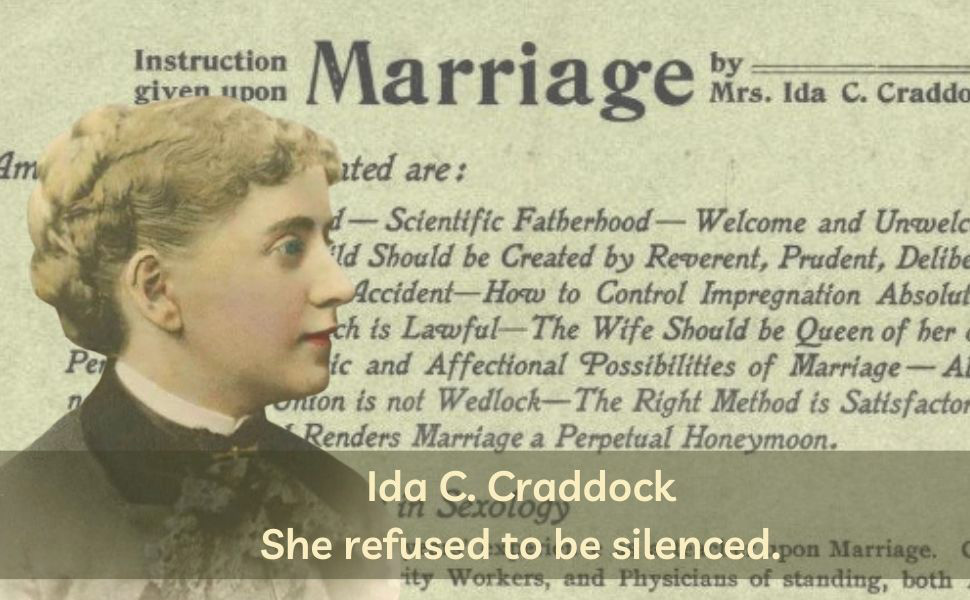
In 1882, Ida C. Craddock applied to the all-male undergraduate school of University of Pennsylvania. With the highest results on the entrance tests, the faculty voted to admit her. But her admission was rejected by the Board of Trustees, who said the university was not suitably prepared for a female. (U of P only became co-ed in 1974)

With her aspirations blocked, Ida left home determined to leave her mark on women’s lives by studying and writing about Female Sex Worship in early cultures. At the time, little information was available to women about sexual relations. To do her research, Ida resorted to having male friends take books forbidden to females, such as the Karma Sutra, out of the library for her.

An unmarried woman, she turned to spirituality and the practice of yoga, a newly introduced practice to the American public at the time, as a way to learn about sex. In her journals, she describes her interaction with angels from the borderlands, and in particular, her sexual experiences with Soph, her angel husband through what was likely tantric sex.

Continue reading “From the Archives: Censored Angel: Anthony Comstock’s Nemesis. A Novel by Joan Koster”
Let’s Have The Talk – What Does “The Birds and The Bees” Actually Mean: By Zoe Carlin

Recently, I have thought about a common idiom that has been used to refer to sexual reproduction, the birds and the bees. I became curious why animals that appear in most gardens were used as an example to explain where babies come from, until I did some research. It turns out that since the birds lay eggs, that is their representation of the female body and the bees represent the sperm due to pollination. It is a very subtle, overlooked message that can be disguised as being more age-appropriate to young children. However, I decided to dig a bit deeper. Ed Finegan, a USC professor of linguistics and law, has stated that this phrase has existed a lot longer than one might think. There is evidence of it being used in a somewhat sexual context going back to at least two authors, Samuel Coleridge Taylor (1825) and an entry from John Evelyn’s The Evelyn Diary (1644). 

In Work Without Hope, Samuel Coleridge Taylor quotes, “All nature seems at work . . . The bees are stirring, birds are on the wing . . . and I the while, the sole unbusy thing, not honey make, nor pair, nor build, nor sing.” This separation of the birds and bees is indicating the loneliness and sadness of missing out on a potential romantic connection. When going even further back in time to 1644, it was noticed in the Evelyn Diary that there was an entry discussing the interior design of St. Peter’s in Rome: “That stupendous canopy of Corinthian brasse; it consists of 4 wreath’d columns, incircl’d with vines, on which hang little putti [cherubs], birds and bees.” This description is illustrating that there is a possible sensual or sexual meaning of the architecture in St. Peters.

Continue reading “Let’s Have The Talk – What Does “The Birds and The Bees” Actually Mean: By Zoe Carlin”

Womanist Sapphic Reflections on Sex, Desire, and Power by Chaz J.

**This post is based on my personal experience, research, survivor of the purity movement, and professional experience as a therapist and spiritual advisor of 5 years.

**Sapphic = women loving women <3

Everything is sex, except sex- which is power. Now ask yourself who is screwing you. – Janelle Monae

Desire, a flame that flickers, not always fanned to embers of the flesh, but today, let’s speak of its carnal heat, its dance with power, its intimate embrace with sex. 

A tempest roils within, desire’s current a raging, untamed beast. A lifetime shrouded in the gloom of putrified dread, where yearning was condemned, branded a scarlet path to eternal fire, has left its indelible scar. The hollow pronouncements of warning, like the venomous whisper of James 1:14-15, still slither within, etched into the marrow of my bones: “Temptation comes from our own desires, which entice us and drag us away. These desires give birth to sinful actions. And when sin is allowed to grow, it gives birth to death.” These words, seared into my soul, a brand of shame, a constant, gnawing reminder of the perceived treachery of wanting, the supposed sin of simply feeling and wanting.

Continue reading “Womanist Sapphic Reflections on Sex, Desire, and Power by Chaz J.”

Censored Angel: Anthony Comstock’s Nemesis. A Novel by Joan Koster

“I would lay down my life for the cause of sex reform, but I don’t want to be swept away. A useless sacrifice.” Ida C. Craddock, Letter to Edward Bond Foote, June 6, 1898

In 1882, Ida C. Craddock applied to the all-male undergraduate school of University of Pennsylvania. With the highest results on the entrance tests, the faculty voted to admit her. But her admission was rejected by the Board of Trustees, who said the university was not suitably prepared for a female. (U of P only became co-ed in 1974)

With her aspirations blocked, Ida left home determined to leave her mark on women’s lives by studying and writing about Female Sex Worship in early cultures. At the time, little information was available to women about sexual relations. To do her research, Ida resorted to having male friends take books forbidden to females, such as the Karma Sutra, out of the library for her.

An unmarried woman, she turned to spirituality and the practice of yoga, a newly introduced practice to the American public at the time, as a way to learn about sex. In her journals, she describes her interaction with angels from the borderlands, and in particular, her sexual experiences with Soph, her angel husband through what was likely tantric sex.

Continue reading “Censored Angel: Anthony Comstock’s Nemesis. A Novel by Joan Koster”

Navigating Arousal and Desire: What do you fantasise about?

Sexuality is a complex topic that blends the personal with the collective and the mundane with the sacred. We often engage with it privately, yet it is intertwined with broader cultural values and beliefs. This makes navigating sexual fantasies a delicate balance of desire, respect and consent.

In today’s world, especially with movements like #MeToo gaining traction, there’s a heightened awareness around the importance of boundaries—both physical and psychological—in the realm of sex and fantasy.

This post explores how we can engage with sexual energy in ways that respects both our own and other’s integrity, that don’t “steal” from others, nor diminish ourselves.

It starts with the power of consent in fantasies, discusses 4 steps to navigate desire without acting on it, and introduces the possibility of archetypal fantasies.

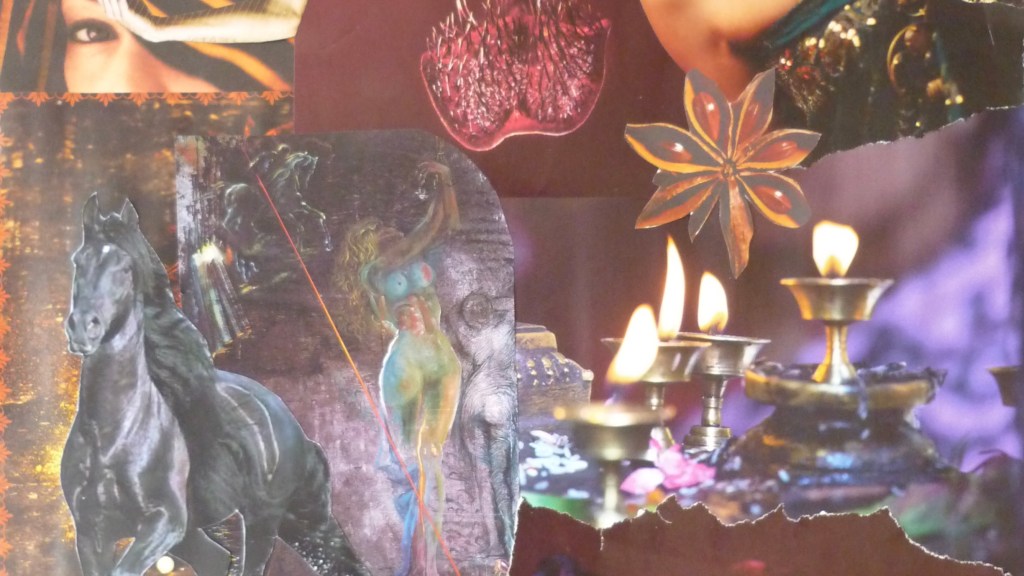
Detail of Passion. Collage by Eline Kieft (2.9.12)
Continue reading “Navigating Arousal and Desire: What do you fantasise about?”

From the Archives: Writing Through the Body: Betty Smith’s A TREE GROWS IN BROOKLYN by Joyce Zonana

This was originally posted on April 29, 2017

In her 1975 manifesto, “The Laugh of the Medusa,” French feminist Hélène Cixous urges women to write: “Writing is for you, you are for you; your body is yours, take it. . . . Women must write through their bodies, they must invent the impregnable language that will wreck partitions, classes, and rhetorics, regulations and codes . . .”

“The Laugh of the Medusa” remains a thrilling essay, challenging and inspiring women to “return to the body” and to language.  “Woman must write woman,” Cixous insists, “for, with a few rare exceptions there has not yet been any writing that inscribes femininity.”

Continue reading “From the Archives: Writing Through the Body: Betty Smith’s A TREE GROWS IN BROOKLYN by Joyce Zonana”

Patriarchy as Primer of Cruelty by Janet Maika’i Rudolph

Matilda Joslyn Gage

This was a hard post to write. When I write about my personal trauma, it is not only healing for me but adds to the canon of stories of other women that help all of us navigate trauma. That makes it easier. When writing about the trauma of women in a whole culture, I feel a sense of helplessness, especially here in the United States. We are all experiencing a group trauma and it is digging in deep.

January 5, 2024, will live in the Patriarchal Hall of Infamy. On this date the Supremes agreed to allow the rapist, misogynist, trying-to-be-dictator former President an opportunity to have his rights heard. But this same date, the Supremes also told we women that our lives are insignificant. No that’s not right, less than insignificant, a mere distraction to what they consider to be more important issues. They allowed an Idaho abortion law to go into effect that doesn’t allow an abortion even in the case of a medical emergency when a pregnant woman in life-threatening distress has been rushed to the emergency room. The split screen exhibits patriarchy for what it is. I want to use the word, “culmination” but that means the height. I don’t think we’ve reached a culmination because there seems no end to the cruelty that patriarchy seeks to inflict.

Continue reading “Patriarchy as Primer of Cruelty by Janet Maika’i Rudolph”

Legacy of Carol P. Christ: Sacred Marriage or Unholy Cover-up?

This was originally posted on November 7, 2016

Many women are drawn to the image of the Sacred Marriage—perhaps especially those raised in Roman Catholic or Protestant traditions where sex is viewed as necessary for procreation but nothing more, and who learn that the naked female body as symbolized by Eve is the source of sin and evil. In this context, the positive valuing of sexuality and the female body found in symbols of the Sacred Marriage can feel and even be liberating.

Jungians have claimed that the Sacred Marriage is an archetype of the wedding between the “masculine” and the “feminine.” Many women have been attracted to this idea as well. It “softens” the radical feminist critique of patriarchy and male dominance. Rather than “castrating” the “phallocracy” as Mary Daly urged, we can think in terms of the “marriage” of qualities traditionally associated with male and female roles. Women, it is said, can use a good dose of ego and assertiveness traditionally associated with the masculine, while men need to have their dominating rational egos tempered by feminine qualities like care and compassion.

Continue reading “Legacy of Carol P. Christ: Sacred Marriage or Unholy Cover-up?”

Prehistoric Feminine Icons

In this blog post I’d like to take you with me on a recent visit to the special exhibition “Arts and Prehistory”* in the Museum of Mankind (Musée de l’Homme) in Paris.**

Like the Feminine Power in London exhibition I wrote about last year, this is another ode to human imagination and creativity in connection to the mystery of life.

The exhibition features women figurines and cave paintings from dating between 26.000-34.000 years old, and I wonder how these prehistoric icons can inspire us to look at female bodies today…

Continue reading “Prehistoric Feminine Icons”

The Motomami Theology: “Segundo chingarte, lo primero Dios.”* Part II

*“God comes first. Fu*king you, a close second.”

In Part 1 of this post, I described my first encounters with Rosalía’s music and visual arts, which are controversial for many, but I find them wonderful. I mentioned how she integrated God, mainly Catholic references and images, into a story of love and suffering in El Mal Querer. But I finished emphasizing my surprise when I listened to the album Motomami, since she managed to combine reggaeton (sexual-indecent music) and her views of God.

So, here is my attempt to describe Rosalía’s theology in Motomami. (Before I start, let me say: yes, I heard every song multiple times collecting references of God or the Christian tradition, so I hope you enjoy it.) Rosalía understands God as someone who controls our destinies amid grief and joy. In Como un G she says “It’s sad when you want something, but God has different plans for you” (“Qué pena cuando quieres algo pero Dios tiene otros planes pa’ ti”.) In Diablo, she says, “What God gives, God takes back” (Si Dios te lo da, te lo quitará), referring to her fans who first loved her but afterward became haters. God also protects us from an evil former partner when she says in Despecha‘ “May God forbid I go back to you” (“Que Dios me libre de Volver a tu la’o). God also is our help and supports our choices. Rosalía brings this concept talking about her identity as a woman, her freedom and autonomy in Saoko: “I know who I am, and I don’t forget where I’m going. I’m driving while God guides me. I am mine and I transform myself” (“Sé quién soy, y a dónde voy nunca se me olvida. Yo manejo, Dios me guía.)

Continue reading “The Motomami Theology: “Segundo chingarte, lo primero Dios.”* Part II”