The Sacred HU by Janet Maika’i Rudolph

Sing to the LORD, all you godly ones! Praise his holy name.

Psalm 30:4 (New Living Translation)

Therefore I will give thanks unto thee, O LORD, among the heathen, and I will sing praises unto thy name.
2 Sam 22:50

Let them praise the name of the LORD: for this name alone is excellent.
Psalm 148:13

The wording of these passages is very odd. After all, why is God’s name always being praised? It’s like saying to someone, “you must be a wonderful person because you have a lovely name,” or “the LORD must be great because ‘he’ {sigh} has such a great name.” Actually though, as I began to go deeper into my own personal practices of spirit work and chanting, I found that there is a profound truth to this use of praise. Most, if not all, of the ancient names of deities are made up of power syllables. By this I mean certain sounds that have a vibrational essence which not only resonate within our bodies but connect us with all the vibrations that surround us. Sounds made by these syllables are a bridge between worlds created by our breath.

Mystically speaking we could say that the breath of creation and our own breath interfuse. We can experience this through the vibration of power syllables. The most common syllables in the west are familiar ones – AL LA HA AH YA LO WAH and the mighty HU. Think of all the names of divinity that can be created by experimenting with these syllables. Continue reading “The Sacred HU by Janet Maika’i Rudolph”

Forgive Me My Ancestor(s) by Elizabeth Cunningham

Elizabeth Cunningham

When I was a child in the 1950s we often played cowboys and Indians. There is a photograph of my brother and me in no doubt inauthentic costume complete with feathered headdress. In kindergarten I named myself Morning Star. (I just googled and see that I must have gotten the name from the 50s television series Brave Eagle, the first with an indigenous main character. Morning Star is the female lead.)

When I was a teenager, my aunt came across a privately printed book The Gentleman on the Plains about second sons of English aristocracy hunting buffalo in western Iowa. My great grandfather accompanied them as their clergyman. I wish I could find that book now to see how this enterprise was presented. In my adolescent mind these “gentlemen” looked like the local foxhunters in full regalia. On opening morning of foxhunt season an Episcopal clergyman (like my father) was on hand in ecclesiastical dress to bless the hunt and then invited to a boozy breakfast. Continue reading “Forgive Me My Ancestor(s) by Elizabeth Cunningham”

“Para limpiar el corazon”: To Cleanse the Heart by Joyce Zonana

It should have been a wonderful journey, organized by three dear friends who run a yoga center in Costa Rica. I would be traveling with my husband, these friends, and thirteen other like-minded folk to the Sacred Valley of the Incas in the Andes highlands of southern Peru. We’d be staying at a lovely retreat center just outside Pisac, an ancient market town encircled by imposing mountains. And our itinerary would take us to some of the most important Inca sites, including the iconic, hauntingly beautiful and remote Machu Picchu.
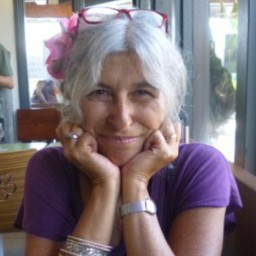
jz-headshotIt should have been a wonderful journey, organized by three dear friends who run a yoga center in Costa Rica. I would be traveling with my husband, these friends, and thirteen other like-minded folk to the Sacred Valley of the Incas in the Andes highlands of southern Peru. We’d be staying at a lovely retreat center just outside Pisac, an ancient market town encircled by imposing mountains. And our itinerary would take us to some of the most important Inca sites, including the iconic, hauntingly beautiful and remote Machu Picchu.
We’d made the plans almost a year ago, and I’d been looking forward to the trip. But I fell sick several weeks beforehand and was hesitant to leave my Brooklyn home. Everyone assured me the journey would be magical, and so, feeling better but still uncharacteristically fearful, I reluctantly decided to go. Continue reading ““Para limpiar el corazon”: To Cleanse the Heart by Joyce Zonana”

In Dreams by Natalie Weaver

I am grateful for dreams.  I don’t know what they are, of course, in any absolute sort of way.  Defining dreaming is as elusive as dreams themselves.  Moreover, I find that understanding dreaming is complicated by the vastly variegated quality one finds in hearing people speak of their experiences of dreaming.  Some say things such as “I can never remember a dream,” while others say they only remember bad dreams.  Some place no stock in dreams at all, while for others they are the numinous truth realms beneath all waking phenomena.  I have spoken with hard-science minded colleagues as well as artists about dreams, who regardless of professional vocation can be utterly untouched by their nighttime journeying.  On just a few occasions have I ever heard people speak of their dreams as definitively shaping their lives in the way that my dreams, or more precisely, in the way that the faculty of dreaming, has impacted my life.

Continue reading “In Dreams by Natalie Weaver”

“This Golgotha of Modern Times” by Joyce Zonana

Our visit to Poland coincides with the Feast of the Assumption, a time when tens of thousands of pilgrims arrive on foot to pay homage to Our Lady of Częstochowa, Poland’s Black Madonna. I too am a pilgrim, visiting the sites, not of miracles but of martyrdom. As I make my way through what Pope John Paul II called “this Golgotha of modern times,” I am overcome; like him, I “am here kneeling down” to implore Our Lady to help us heal the vast, still open wound that is our life on this earth.

4BC9846D-628B-4F1D-89BF-BB212E5D94BCI had never imagined visiting Eastern Europe, a place toward which I felt no attraction, or, if anything, a deep aversion. To my mind, these were the killing fields, where six million Jews, Roma, political prisoners, homosexuals, and others were massacred by the Nazis during World War II. As a bisexual Jew, a dark-skinned Middle Easterner sometimes taken for a gypsy, why would I want to go there?
But my husband, who was raised Catholic in Chicago, is of Polish and Lithuanian descent. He and his two sisters have talked for years about visiting the villages from which their grandparents, escaping economic hardship and military conscription, had emigrated early in the twentieth century. It remained wistful talk until Mike and I made plans to attend a yoga retreat in rural Denmark. We’d be so close, we reasoned, why not cross the Baltic to explore his ancestral homes? His two sisters readily agreed to join us. Continue reading ““This Golgotha of Modern Times” by Joyce Zonana”

Movement of Moving and Spiritual Journey by Elisabeth Schilling

It looks like it is time again for me to pack up and drive a few hundred or more miles to a new destination, a place I will finally try to plant roots, this time offering commitment + endurance, hoping to build a life of more balance and authenticity. I assume I will need a constant reminder of gratitude, quelling the entitlement that can bubble up when I think “this should be easier.” I’m not sure when, why, or where I’ve picked up that refrain, but I see it in others and myself and wish for an alternative.

With the help of several people, I’ve secured a full-time college teaching position on a beautiful college campus of a kind of institution I am certain is doing its part to heal the world. At least that is what I feel when I serve at a community college, a place where I feel inspired and challenged by students who have a diversity of needs. I’ve been teaching in such institutions for so long, I’ve fallen in love and know, by experience, that I can help in such spaces.

Continue reading “Movement of Moving and Spiritual Journey by Elisabeth Schilling”

Finding God in Music by Gina Messina

We cannot force a connection with God through a faulty conduit. What is important is that we affirm ourselves when we find it — when we feel it. Embrace those experiences, name them for what they are and recognize that you are sacred and the divine – whatever that means to you – is present.

When I’m in a funk, I generally feed into it and make it worse. Once we are in a rut it is easy to continue the spiral downward. I’m good at admonishing myself for lacking gratitude when I feel this way. It might be a Catholic guilt thing.

A few days ago, I was in a dark place; but this time I tried to own my sadness, acknowledge it, and let it go. The only thing I could think to do in hopes of shifting my emotions was to put on music – something up beat that would allow me to transcend the moment.  

I listened to a live version of “Stay” by The Dave Matthews Band, a song about embracing the beauty of our lives and the idea that those moments where it feels like we are just wasting time are often our most precious; the ones that allow us to connect with each other and ourselves. It was the sermon I needed — and an important lesson my uncle taught me — but more on that shortly.

I often say that I think music is the sound of my spirit — our spirits. As I started writing this, I struggled with finding the words to articulate the feeling music provokes within me. There is little else that creates such an indescribable experience and that is why I think that music is where I find my connection to the divine. 

Traditional religious services have always felt challenging to me.  I don’t connect to much of anything and generally find myself feeling angry and rejected by the Church and the community where I am supposed to find God. My grappling with Catholicism aside, we are told that our spiritual lives must take place within particular dimensions, and for many of us God is not there. Continue reading “Finding God in Music by Gina Messina”

Nourishing Your Caring, by Molly Remer

Take time 60107979_2326071390938403_2921363486892097536_o
to nourish
your caring.
It is needed.

Last month it was raining heavily on a Saturday morning and I spent time coloring letters to fairies with my younger children and baking a cake. Before I knew it, the day had slipped away into the rain and I didn’t get to make my daily visit to the woods behind my house as I like to do in the morning. While the things I did instead were fun and loving, I found myself telling my husband, once again, that I am feeling burned out in my life in general and like I’ve lost my caring. I sometimes worry that I don’t care anymore, that I’ve used up my care, my inspiration, my passion, that I’ve fueled magic for others for so long, that my own has evaporated and I’m finished, extinguished. I listed off the things I need to refuel my soul and restore my care so that I can be there for others, for our work. My list was simple and short and my husband pointed out that I get the things on it almost every day:

  1. Go to the woods.
  2. Write and journal.
  3. Walk and discover things.
  4. Create/draw/take pictures.
  5. Read.

I need to nourish my care, I tell him, because I can’t stop caring.

Caring is what holds life together.

What do you need to nourish your caring?

This year, I have found myself struggling with recurrent episodes of feeling like I don’t care. I feel careworn, care-overloaded, care-burned out, care used-up. Sometimes I even feel like I actually can’t care anymore, like all my care is used up, spent, extinguished, exhausted. I have also found myself feeling a little sad and wistful remembering how much I used to care, about everything, but at times I also feel liberated by owning the “don’t care” sensation. Sometimes it sets me free. The world is stained, strained, and brittle from so much lack of care from so many people. We must keep caring, we must care, even when it is a strain. I suppose the secret may be not to care too much about things that don’t require our care, not to overload ourselves with cares that are not our own, or that don’t actually require our attention and are, frankly, quite fine without us and our meddling.

After the month’s Pink Tent ritual with my local circle, a friend tells me that she has been 58639012_2319362924942583_1704575264542949376_o(1)going to yoga class and every time she lies on the floor at the end of class, she thinks of me. I consider this a compliment. If I could be known as a lay-down revolutionary, that would please me. At least two years ago, I put on my list of “100 Things to Do this Year,” to lie on the floor for at least three minutes every day. I have kept this up more or less every day since then, even setting my phone timer for three minutes at the end of my personal yoga practice each morning, so I know I’m actually giving this to myself. I wonder what might change for many of us if we allowed ourselves three minutes a day to lie on the floor? Ten minutes? Fifteen minutes? One hour? Another friend tells me she needs a time out to refill herself until she is overflowing, instead of just refilling her cup a tiny bit and then draining it over and over again. I feel this too. I have the sensation that I been coasting on my reserve tank for at least a year and my reserves are now becoming depleted too. It takes more than three minutes to fill the tank, so that it carries sustained and lasting energy to fuel my soul.

In the woods the next day, I sit with my eyes closed in the sunshine, basking in the warmth. I hear the sound of birds from each side of me, ping-ponging off of one another into the sparkling green air. I listen to them until my mind softens and I am no longer tormenting myself with questions of how to be better, be more, fix it all. I am very still on the rock and when I open my eyes, I see a vulture coasting towards me. It swoops very low, skimming the treetops, possibly checking to see if I am actually breathing there on the stone, it circles once, twice, three times, above my head, at each pass coming very low, low enough that I can see its red head turn from side to side, looking at me.

Hey, buddy, I say. Yes, I’m still breathing!

My floor-lying friend has spent the night at my parents lodge and I go to visit her and to paint with my mom, my daughter, and my friend and her family. My head is throbbing with the headache I often get following an intense ritual and I don’t feel very present, but we paint anyway, the colors swirling and mixing and the freeform nature of the pour painting meaning there are no mistakes, only magic. When we finish, I help her load a weaving loom into her car and we speak briefly about group dynamics and ritual etiquette, and priestessing energetics. As we speak, I look up to see nine vultures this time, circling in the wide sky above the large open field surrounding the lodge building. They dance in the air and they whisper, It is okay to let go. It is okay to soar. It is okay to be free. It is okay to clean things out and away. That is how you can keep caring.

Recipe for Rebuilding a Soul:

1 weary heart61445954_2342336385978570_2975037873578835968_o(1)
2 open arms
1 large flat rock
As many tall pine trees
as you can find
1 empty book
Many pens
Lots of water
2 scoops of sunlight
An infinity of starshine.

Mix together patiently and wait in the shadows. Let rise in the sun. Let rise with the moon. Check for delight. If still soggy and deflated, expose on a hillside or soak in the ocean. Sprinkle with laughter.

Submerge beneath a stream of inspiration.
Drizzle with dreams and a generous helping of time.
Steep with incredible slowness.
Dust with flowers and need well.
Let become exquisitely tender and soft.

When fully risen, warmed throughout, and glowing with strength and satisfaction, enjoy with a tall glass of moonlight, a side of magic, and a handful of enchantment.

Create regularly for best results.

Additional audio poem: Careworn Soul

This essay is excerpted from my book in progress, The Magic of Place: Rebuilding the Soul Where and How You Are.

Molly Remer has been gathering the women to circle, sing, celebrate, and 61538890_2344169199128622_8199673458095816704_oshare since 2008. She plans and facilitates women’s circles, seasonal retreats and rituals, mother-daughter circles, family ceremonies, and red tent circles in rural Missouri. She is a priestess who holds MSW, M.Div, and D.Min degrees and wrote her dissertation about contemporary priestessing in the U.S. Molly and her husband Mark co-create Story Goddesses, original goddess sculptures, ceremony kits, mini goddesses, and jewelry at Brigid’s Grove. Molly is the author of WomanrunesEarthprayerShe Lives Her Poems, and The Red Tent Resource Kit and she writes about thealogy, nature, practical priestessing, and the goddess at Patreon and at Brigid’s Grove.

Grounding My Love by Xochitl Alvizo

I love living in a second-story apartment. Having a view of Los Angeles, of the palm trees, the expansive sky, the distant mountains, and the city lights of downtown, makes life feel bigger, more full of possibilities. In the struggle of transitioning my life back to L.A., the view from my second floor apartment helps make me feel ok in the world. I’m in love with Los Angeles – the land, its topography, its sky, its desertness – and even its traffic. Beside the fact of sometimes being made to arrive late somewhere, I don’t mind being in our famed L.A. gridlocks – I don’t mind being in the slow moving flow of cars. I kind of enjoy being among the thousands of other folks sharing the collective experience of trying to get someplace. Traffic becomes for me a leisurely time when I get to do nothing else but enjoy the city.

Plus, the freeways – I love them! Have you ever driven on one of L.A.’s sky high on-ramps or carpool lanes? It’s like you get to fly. You get to be up in the sky among the top of the palm trees, with all the other cars and buildings off in the distant view. I would drive somewhere just to get onto one of our sky-high carpool lanes, I swear. Just recently I merged onto the carpool lane of the 110 North from an on-ramp I had not taken before, a magnificently long single-lane on-ramp that took me high up into the air, and I immediately thought, I need to remember this way so that I can drive it again sometime. Continue reading “Grounding My Love by Xochitl Alvizo”