Fannie Lou Hamer’s Commitment to Life by Elise M. Edwards

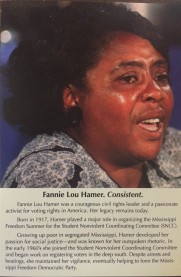
Elise EdwardsA few weeks ago, I came across a postcard that I was given at a conference last year. I got the postcard (advertisement?) because it has a picture of Fannie Lou Hamer on it, and in my home and office, I like to display images and quotes from inspirational women, especially black women. Hamer was a sharecropper from rural Mississippi who became a leader within the civil rights movement in the United States. I was happy to have something with her likeness on it. It was only later that I looked at the text on the front and back of the card, which read in part, ”Often called the ‘spirit of the Civil Rights Movement,” Hamer worked tirelessly on behalf of the rights of others—including the unborn. [She said,] ‘The methods used to take human lives such as abortion, the pill, the ring, etc. amounts to genocide. I believe that abortion is legal murder.’” I realized then that the card was distributed by an organization called Consistent Life, who, in support of a “consistent ethic of life,” is “committed to the protection of life threatened by war, abortion, poverty, racism, capital punishment and euthanasia.”

I was conflicted about the ushamere of Hamer’s image for this organization’s purposes. It is true, Hamer did have those views about abortion and birth control. But I did not know if her image and story was being manipulated for a particular political and religious agenda—one I do not align myself with. I put the card in a box of other images and quotes. I didn’t display it, but I didn’t throw it away, either, which is why I came across it again a couple weeks ago as I was cleaning and decorating my home office. I had the same misgivings about the image as before, and I set it aside again. Continue reading “Fannie Lou Hamer’s Commitment to Life by Elise M. Edwards”

The Dangers of Learning Your Lesson by Abigail Smith

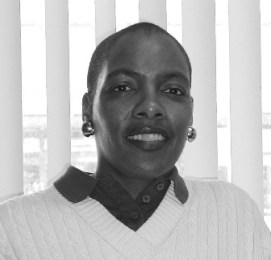
Abigail TreeIt’s been almost two years since I lost someone I loved. The relationship was short, tortured, unhealthy (as all my romantic relationships have been, but that’s another story…) However, I fell particularly hard for this one. When we separated, the pain was unthinkable. I was surprised by how deep it ran. I didn’t know until he was gone how much I really cared about him.  I became physically sick, and even now there are days when I only have to bring him to mind to conjure a familiar pressure behind my eyes and in my throat.

Why did he leave? Why did I love him so much? What went wrong?  How can I stop suffering from this? I’ve discovered that satisfactory answers are nonexistent.

All I could find were platitudes. “It’s his loss.” “Now you know his true colors.” “You’ll find someone else eventually.”  And then there are the hollow religious comforts like, “God has someone better.”  Unsurprisingly, these flippancies don’t help much, but they are predictable and forgivable. Continue reading “The Dangers of Learning Your Lesson by Abigail Smith”

Are You Ready for Some Football? by John Erickson

Although putting women in charge of drafting new policies that address the “woman problem” currently facing the NFL, it too reeks of the similar dismissive and patronizing actions women face when trying to obtain leadership roles in their religious traditions. Supercilious progress for the sake of progress isn’t progress and progress under the guise of silence is still misogyny. We need women in positions of leadership in both the NFL as well as in religious traditions. The culture of violence and silence will only continue, albeit with a Band-Aid firmly in place, holding the painful experiences and histories of women, long forgotten and often overlooked, until society values their rights just as much as the men leading the prayers and those that are being prayed for on Sundays across America.

John Erickson, sports, coming out.There is never a reason for physical violence.  There is never a reason to hit your partner or child to the point where they are unconscious or bruised.  There is never a reason to inflict violence against someone else, but apparently there are exceptions to these rules if you’re an NFL football player.

In my native state of Wisconsin, watching football on Sunday is synonymous with attending church prior to the game.  Watching football on Sunday is a cultural norm in many, if not all, different regions of the country where individuals, whether you like it or not, gather each Sunday to both praise and pray that your team ends up on top.
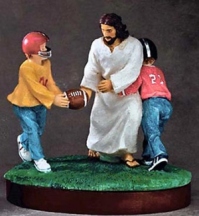
Football Jesus

In Wisconsin, you attend church with your family and head to your desired destination where you gather with friends and family to eat, talk about your life, and of course watch your local football team battle their weekly rival.  Although I am not much of a football fan these days, I have very fond memories of attending football games, watching them with my family and talking about the Green Bay Packers’ Super Bowl chances.  It was my time to both bond with the men of my family as well as catch up on the gossip the women would whisper back and forth to each other at the dinner table while the men were in the other room screaming at the TV.

Although I’m sure I will watch more games in my future, lately, all I do is cringe when I think about the growing violence that women and children face and have faced in the large shadow of an organization worth north of $9 billion dollars.

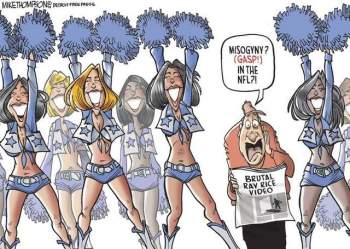
The biggest scandal to hit the news waves lately is that of Baltimore Ravens running back Ray Rice’s assault of his wife in an Atlantic City elevator.  Although Rice and the various other incidents regarding NFL players and violence is disturbing, the biggest problem facing the NFL isn’t just its treatment of women but its continual commodification of them as a disposable resource emblematic with the culture of violence that it has created.

photo (1)

If you didn’t know, women make up an estimated 45% of the NFL‘s more than 150 million American fans and have, in recent weeks, become their most valuable resource and source of criticism.  However, after a long string of incidents stemming back from NFL teams underpaying cheerleaders to the Ray Rice incident, one needs to ask what the roles of women, if any, are outside of the disturbing images of the abused wife, hypersexualized cheerleader?  Is being dragged out of an elevator by your abusive husband the only way to get women’s issues addressed in the NFL by fans, league owners, and the NFL commission?

The roles of women in the NFL and religion have many similarities.  Aside from end zone celebrations where players praise God for his apparent direct role in helping them score a winning touchdown or certain players edifications as gods on Earth, women make up the crux of both NFL fandom and attendance but are responsible for the gatherings similar to the ones I, and many others, grew up with.
bilde

Although putting women in charge of drafting new policies that address the “woman problem” currently facing the NFL, it too reeks of the similar dismissive and patronizing actions women face when trying to obtain leadership roles in their religious traditions.  Supercilious progress for the sake of progress isn’t progress and progress under the guise of silence is still misogyny.  We need women in positions of leadership in both the NFL as well as in religious traditions.  The culture of violence and silence will only continue, albeit with a Band-Aid firmly in place, holding the painful experiences and histories of women, long forgotten and often overlooked, until society values their rights just as much as the men leading the prayers and those that are being prayed for on Sundays across America.

Ann Braude said it best in her foundational text Sisters and Saints that “if we want to understand the history of American women, we need to examine the religious beliefs and activities that so many have found so meaningful.” Without women, we wouldn’t have many, if not all, of the religions that are present throughout the world today and in case we forget, without women, we too wouldn’t have the millions of little boys who grow up being taken to and from practice by their mothers with the hope that they too could one day become the professional football players that fans scream and pray for.

Without women, there is no NFL and without women, there is no religion.  Kelly Brown Douglas said it best on this very blog when she stated, “It is the violence that violence creates.”  Although I agree with her, I would only add that while violence does indeed create violence, the real sin isn’t the violence itself but rather the silence that follows.

Let us pray that we will continue to not be silent and that we will rise up and fight for the millions of women (and men) each day who do not live in fear that their significant other’s multimillion dollar contract will not be reinstated but rather that they and their children may not see another day on this Earth.

 John Erickson is a Ph.D. Candidate in American Religious History at Claremont Graduate University.  He holds a MA in Women’s Studies in Religion; an MA in Applied Women’s Studies; and a BA in Women’s Literature and Women’s Studies. The LGBTQ and women’s rights movements, masculinity studies, gender theory, and the utilization of technology in forming communities and creating new teaching methodologies influence his research interests.  His work is inspired by the intersectionality of feminism, queer identity, LGBTQ history, and religious and sexual cultural rhetoric. He is a Non-Fiction Reviewer for Lambda Literary, the leader in LGBT reviews, author interviews, opinions and news since 1989 and the Co-Chair of the Queer Studies in Religion section of the American Academy of Religion’s Western Region, the only regional section of the American Academy of Religion that is dedicated to the exploration of queer studies in religion and other relevant fields in the nation.  When he is not working on his dissertation, he can be found at West Hollywood City Hall where he is the City Council Deputy and Chief of Staff to Councilmember Abbe Land. He is the author of the blog From Wisconsin, with Love and can be followed on Twitter @JErickson85

The Yazidi Genocide in Iraq by Michele Buscher

Michele BuscherRoughly seven hours prior to my composing this blog, a report was disseminated across the Internet offering what is being called a first-hand account of Mosul women’s prison currently in Iraq where possibly thousands of Yazidi, Christian and Muslim women are being held.  After these women are rounded up and sent to various prisons across Iraq and parts of Syria, they are given a choice to either abandon their religious tradition and convert to Islam or be sold to ISIS soldiers for roughly 30 dollars whereafter they will be raped, forced into marriage, and in some cases will later be tortured to death.  After the women have been sold they are forced to call their families and offer detailed descriptions of what has just occurred.  This sort of psychological warfare is why many UN aid workers are calling ISIS more diabolical than al-Qaeda.

Let me back up here. A couple of years ago, while researching religious freedom abuses in Iraq, I came across a small religious group called the Yazidi.  Having never heard of this religious sect before, I took interest in why the United States Commission on International Religious Freedom, USCIRF, was highlighting specifically this group, naming religious persecution by Sunni militants in Iraq against the Yazidi as a reason for citing Iraq as a CPC, or Country of Particular Concern, making Iraq uniquely vulnerable to U.S. government sanctions.  The Yazidi have been given the unfortunate nickname, “Devil Worshippers” in Iraq because their God is known as both Malak Taus and Shayton (or Shaitan), the latter meaning Devil in Arabic.  The Yazidi are known to be highly secretive regarding their religious praxis which allegedly incorporates elements of Islam, Judaism and Christianity; hence, there is much confusion about who the Yazidi are and what they stand for.  Articles from the BBC’s World Report and the Daily Mail in the UK have both pointed out that one of the few known cornerstones of the Yazidi faith is that one cannot be converted to the faith – one must be born a Yazidi and one may not ever denounce one’s faith.  If a Yazidi woman were to claim another religion, she would be expelled from her community not only for the rest of her life, but eternally.  This should help elucidate why imprisoned Yazidi women refuse to convert, choosing instead rape, slavery and ultimately death.

Now, who and what is ISIS and why is ISIS targeting the Yazidi among other minority groups in Iraq and Syria?  ISIS or IS represents the Islamic State of Iraq and Syria or the Islamic State of Iraq and the Levant.  The leader of this militia goes by the name of Abu Bakr al-Baghdadi.  A religious fundamentalist, al-Baghdadi is fighting for the systematic removal of the Yazidi along with all other religious minority groups in Iraq and Syria.  ISIS controls major cities on both sides of the Iraqi border which have allowed them to mobilize and procure enough weaponry to arm their fight across the entire region.  The Huffington Post has reported several incidents of Sunni Muslim insurgents celebrating mass murders of the Yazidi and other minority religious groups by shooting massive weaponry in the air and parading through the streets.

The United Nations, along with Human Rights Watch, released a statement calling the current systematic murder of Yazidi men and the imprisonment and rape of Yazidi women, “religious extermination” and an “ongoing genocide”.  An official spokesperson for Iraq’s Human Rights Ministry has said that, “the terrorists by now consider [the women] sex slaves and they have vicious plans for them…these women are going to be used in demeaning ways by those terrorists to satisfy their animalistic urges in a way that contradicts all the [sic] human and Islamic values.”    The U.S. and France have been delivering aid to those minority groups that have fled to and are attempting to survive the harsh Mt. Sinjar climate.  U.S. drone attacks along with missile strikes have flooded the areas where the ISIS militia is fighting.  But is this enough?

The U.S. has an inarguably complicated political history with Iraq and many, including some UN representatives, wonder if the U.S. and its allies are truly doing enough to help the Yazidi women. There are multiple reports across social media, claiming family members in Iraq and in the U.S. are receiving phone calls from female relatives who have managed somehow to retain their cell phones.  The women detail similar accounts of being captured, separated from their husbands and children, forced onto trucks and taken to abandoned schools and mosques.  Some have witnessed other women being sold in the marketplace to ISIS men.  One woman describes witnessing a pregnant woman being shot on sight for refusing to get into a truck headed to the now infamous Mosul prison.  Certainly, the U.S. has many decisions to make regarding how and to what extent the U.S. government should help the plight of a religious minority in Iraq.  The Yazidi community is being targeted directly, but so are many other religious minority groups in Iraq.  The Yazidi specifically have been targeted by Islamic extremists for centuries in Iraq and many Yazidi have found refuge in Syria, until now.  Women are undoubtedly being targeted by ISIS in this genocide as women are so often the target in religious conflict across the globe.

The USCIRF has named Iraq a CPC since 2008 and has detailed the ongoing Yazidi religious persecution in almost every annual report.  What more can the U.S. government and U.S. allies do for the minority citizens of Iraq?  They must take the threat of religious persecution seriously and understand that when religious freedom is not equally protected and valued by the government then basic, universal human rights are equally disvalued.  When women’s rights are not protected, basic human rights are not protected.

Michele Buscher, PhD, received her degree from the Claremont Graduate University in 2013. Her PhD is in Religious Studies with an emphasis on Theology, Ethics and Culture.  Her dissertation titled, Commission Impossible: The International Religious Freedom Act and its Impact on U.S. Foreign Policy with Particular Reference to Iraq and Burma, 1999-2012 explores the relationship between the International Religious Freedom Act of 1998 and current U.S. foreign policy abroad.  She is interested in the role religion plays in the development of U.S. foreign policy particularly in the Middle East and how this contributes to human rights.  Additionally, her scholarly interests include Feminist Theologies and Modern Catholic Studies.  She received her BA from Seattle University in Creative Writing and her MA from Union Theological Seminary in Theological Studies.  Michele works at Pitzer College as the Language & Cultural Lab Coordinator, Instructor for the International Fellows Program and Program Coordinator for the Kobe Women’s University visiting Cultural Program.

Domestic Violence: The Sin that Sin Created by Kelly Brown Douglas

Rev.-Dr.-Kelly-Brown-Douglas - Version 2In these last several weeks, the horror that one out of four women will encounter domestic violence- sometimes referred to as “intimate partner” violence- in their life time has come to the national forefront. Indeed, women are more likely than men to be killed by their “intimate partner:” one in three women who is a victim of homicide is killed by an intimate partner. While sixty percent of domestic violence incidents occur in the home, this is not where domestic violence begins. It is the perhaps inevitable result of a culture of violence against women. It is the violence that violence creates.

This is a culture of violence in which women’s work continues to be grossly undervalued. One third of all women are living in or near poverty, what has been described as “the brink of poverty.” Two-thirds of minimum wage workers are women. The average white woman is paid 77 cents for every dollar her male counterpart man makes; for African American women it is 64 cents and Hispanic women 55 cents for every dollar made by white men. Women devote more than double the hours as men to “unpaid interactive children care.” Women over 65 “are twice as likely as men of the same age” to live in poverty—primarily because they are full or part-time caregivers. A 2013 “State of the World’s Mothers Report” ranked the United States 30th of the 30 best countries in the world to be a mother, based on indicators such as economic status, political opportunities and universal health care. And what this report makes most clear is that the status of children reflects the status of their mothers. This means that at least 28 million children are living in poverty in the United States.

As for physical violence, one in four college aged women experiences an attemptted or actual date rape. Forty-two percent of women who have been date raped consider suicide. In the Shriver Report, Sister Joan Chittister suggests that in the United States, “rapes in military and rapes on college campuses go unpunished because ‘boys will be boys,’ and winning wars and football games are more important than protecting the integrity of the women who are victims of rape.” These statistics represent nothing less than systemic and cultural violence against women and their children.[i] And, such violence is a sin. Continue reading “Domestic Violence: The Sin that Sin Created by Kelly Brown Douglas”

We Are All Jennifer Lawrence by Martha Cecilia Ovadia

Martha Cecilia OvadiaI don’t want to be an angry feminist.

I don’t want to be angry.

I’m angry.

I’m angry a lot.

I’m sad more often than I am angry.

The sadness that I speak of runs deep.

I had an entire blog ready to go for posting this week, but as news broke of Jennifer Lawrence’s stolen pictures, I couldn’t bring myself not to speak up.

If you have not heard yet, hackers broke into Jennifer Lawrence’s personal accounts and uploaded quite a stash of private photos on to the internet. They are currently threatening to upload stolen videos as well.  You can find the story chronicled here. I’ve decided to link to a feminist website that is withholding the photos because, trust me, you do NOT want to wade the waters of what is out there in regards to this story. It is rage inducing. Continue reading “We Are All Jennifer Lawrence by Martha Cecilia Ovadia”

#YesAllWomen, the Darwin Debate, and the God Complex by John Erickson

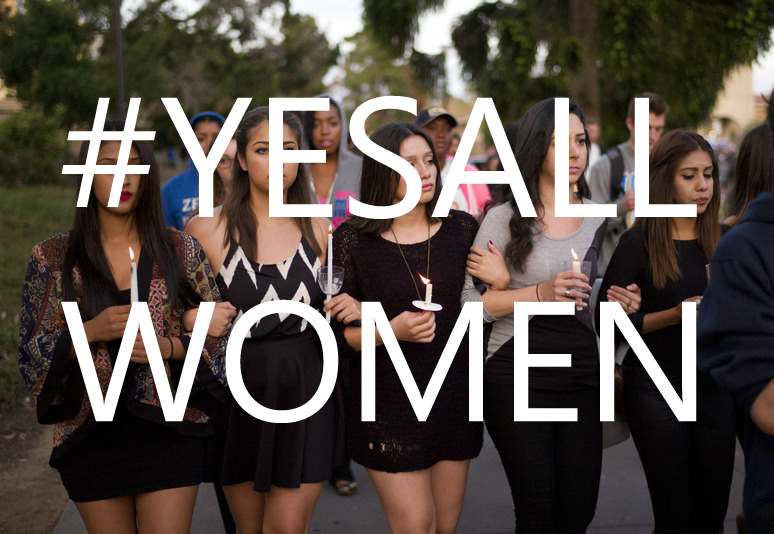
#YesAllWomen proved that although not all men commit horrible crimes against women, the men that often get the headlines and create the most controversy are the ones that need to be watched out for.

John EricksonThe one thing I typically will choose to do on the rare occasion that I’m able to sit down and relax is to watch a documentary.  While some people may go to the gym, read a book, or hang with friends, I typically choose to stay in, nestle up on my couch, and learn.  While on my last bout of relaxation, I chose to watch the HBO documentary Questioning Darwin. Although it offers very little new insight into the evolution vs. creationism debate, it does offer an interesting new way to look at the recent social media hashtag war feminists, allies, and supporters found themselves in over the #YesAllWomen movement that took the world by storm.

yesallwomen

Now, before I discuss #YesAllWomen, I have to admit that I did not enter into the safe space women created for themselves to tell tales of the horrible things they have and have had to face on a daily basis.  I firmly believe that men should not have entered into the digital space Continue reading “#YesAllWomen, the Darwin Debate, and the God Complex by John Erickson”

BARBARA LEE SPEAKS FOR ME by Carol P. Christ

carol christWhile I was in Crete on the Goddess Pilgrimage teaching about and experiencing a Society of Peace where violence and domination were neither celebrated nor encouraged, another war broke out in Iraq, breaking my heart, breaking all of our hearts—yet again. When will we ever learn, oh when will we ever learn?

Barbara Lee was the only member of Congress to vote against the US war powers authorized after 9/11 which were used to launch war in Afghanistan; she also voted against authorization for the Iraq war in 2002. Hillary Clinton voted for the Iraq war, despite clear indications that the US administration was lying about weapons of mass destruction—which were never found in Iraq. I voted for Barack Obama because he opposed this war. Then he listened to General Petraeus and expanded the war in Iraq. Barbara Lee speaks for me. Hillary Clinton and Barack Obama do not.

The Iraqi people are once again living in fear of their lives as reports surface that armies and militias are engaging in mass executions of their so-called “rivals.” Is there any cause that could justify this? Continue reading “BARBARA LEE SPEAKS FOR ME by Carol P. Christ”

The Girl Who Lived: Reflections on Malala, the Middle East, and Feminism by Erin Seaward-Hiatt

Erin-Close-Up-BWAs I return home from a busy day signing off on proofs and churning out cutesy paper patterns, I find my husband, Neil, at the kitchen table. He wears a complicated frown as he pores over a score of tiled browser windows telling various iterations of a singular story. “Come here,” he says, flipping to a second tab, “you’ve got to see this.” It’s The Daily Show, and as I poise for Tea Party zingers and Obamacare barbs, I see instead a girl in hijab, a brilliant smile, and a whole new hope for world politics.

The story was all about a girl. Malala Yousafzai achieved international fame one day when she took a Taliban bullet to the head. Her vocal support for girls’ education had earned her a spot on the Taliban’s hit list. It’s a group with an all-too-familiar radical bent that thrives, among other things, on the cultural ideal of women’s inferiority and silence. One moment Malala was boarding a bus and the next, she faced a hopeful assassin, eager to erase her words and her work from the world. Continue reading “The Girl Who Lived: Reflections on Malala, the Middle East, and Feminism by Erin Seaward-Hiatt”

The Feminization of Poverty: The Impact on Migrant Mothers in the U.S. by Michele Stopera Freyhauf

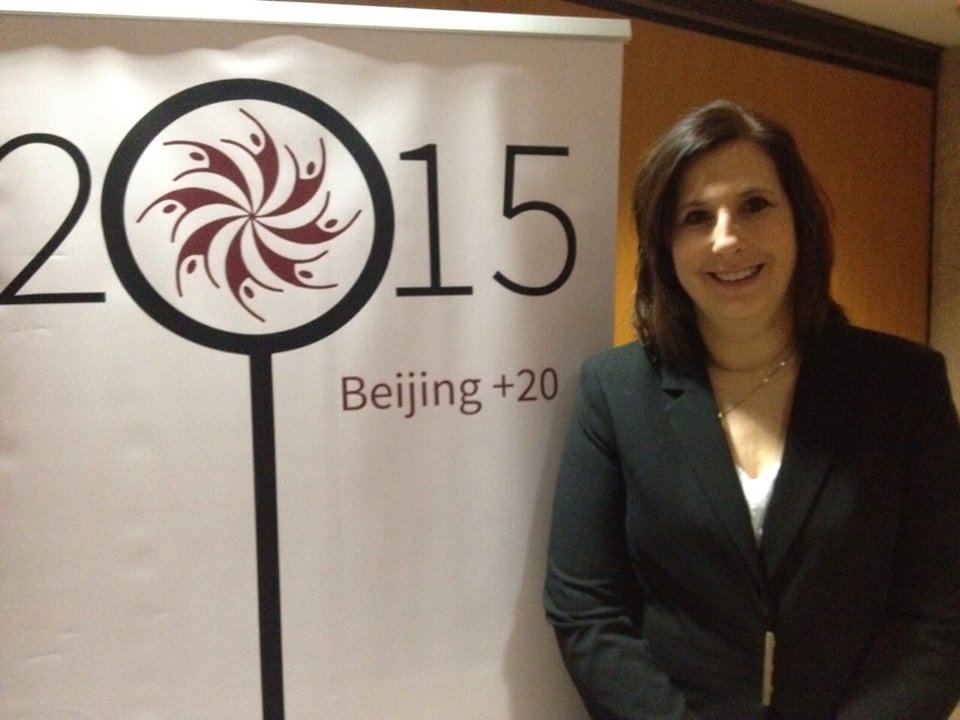
Freyhauf, Durham, United Nations, Feminism and Religion, John Carroll, UrsulineI had the honor of speaking at the United Nations during the Commission for the Status of Women this past March about the Feminization of Poverty and the Impact on Migrant Mothers.  Below is the text of my speech delivered.  By posting my speech, it is my hope to use social media to help draw attention to this problem and use our resources to find solutions.

Over the last thirty years, rich countries have grown much richer, and poor countries have become, in absolute and relative terms, poorer. Global inequality in wages are striking and poor countries are turning to the IMF or World Bank for loans, which require “so-called” structural adjustments of devaluing currency, cuts in support for “noncompetitive industries,” and the reduction of public services such as healthcare and food subsidies, which has provided disastrous results for the poor, especially women and children.

The feminization of poverty not only means that more of the world’s poverty is born by women, thanks in large part to globalization of the world economy, but includes a denial of access to fundamental human rights, including health, education, nutritious food, property, representation, etc. Feminized poverty encompasses more than matters of individual suffering – it ensnares a vicious cycle of poverty that impacts their entire family.

Feminization of poverty has no singular cause. The United Nations Development Fund for Women identified 4 key dimensions that indicated a heightened rate of poverty for women:

First is called “the temporal dimension,” which means that women are often the primary caretakers of children and household duties. Women who live in developing nations may also have agricultural or physical responsibilities. With these demands, less time is available to devote to paid employment causing them to earn a smaller income even though they effectively do more work than their male counterparts.

Second is “the valuation dimension” which is defined as unpaid labor that women perform to take care of family members and other household chores. Work that is considered “less than” because formal education or training is not required.

Third, is “The employment segmentation dimension.” Women are natural caretakers and thus corralled into “women’s work”, such as teaching, working with textiles, or domestic servitude that includes caring for children or the elderly.

Finally, “the spatial dimension.” When employment is non-existent or difficult to find, women may have to migrate to other areas to find work temporarily. If a woman has children, she may refuse to take the job and stay to care her family. However, Some opt to leave their families behind, to secure what they consider a better life – a means of support – but this choice often comes a great cost. Continue reading “The Feminization of Poverty: The Impact on Migrant Mothers in the U.S. by Michele Stopera Freyhauf”