The new podcast seriesThe Witch Trials of J.K. Rowling is a deep dive into some of the most contentious ideological conflicts of our age through the experience of the world’s most successful author, a woman who has been vilified and physically threatened and whose books have been burned by both right-wing Christians and, more recently, by her detractors on the liberal and progressive left.
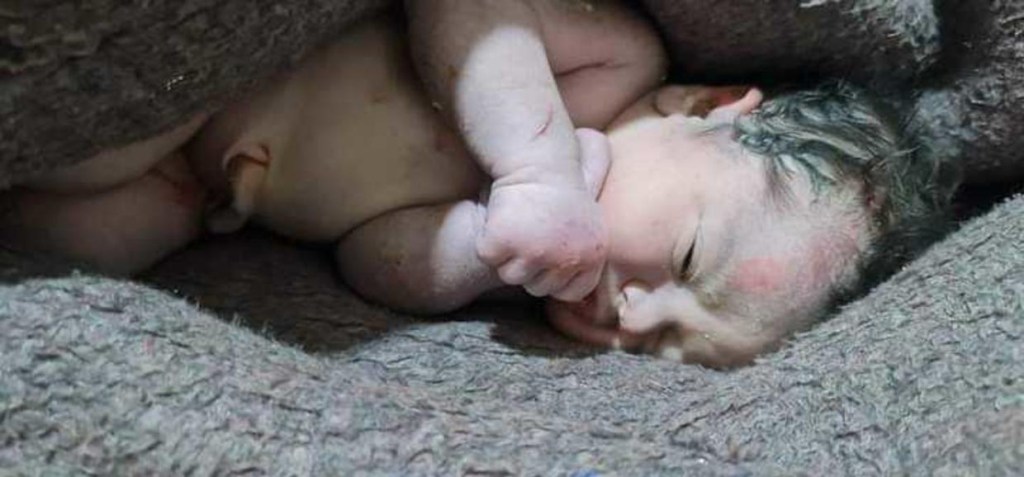
The image of the baby born under the rubble of the earthquake in Syria has been haunting me. So has the image in my mind of her mother, giving birth to her baby while trapped after the building, where she, her husband, and their children were sleeping, collapsed. The baby’s uncle, when digging through the debris hoping to reach his brother and family, found the baby alive, her umbilical cord still attached to her mother. When he cut the cord, the baby let out a cry. Tragically, her mother had died after giving birth, as had her father and siblings.
My grandmother Clarine was an incredible human being. I absolutely could not be more proud to be her granddaughter. She started her first teaching position in 1927 at age 17. She met my grandfather in seminary; but despite her clear talent and call, the church apparently felt one minister was enough for the family and refused to ordain her. Undaunted, she famously wrote a one line reply to the bishop: Well, Moses got along fine without it, and Jesus got along fine without it, so I’ll be fine without it, too.
Hope: What is a heart transplant if not hope? In granting the possibility of new life out of death, it is the essence of hope. Yet, hopefulness is also knowing death is imminent and finding a way to live well into that knowledge. The impulse of hope encourages us to go on despite the odds. Hope indeed seems to spring eternal. In my darkest days, something would come along and lift me up. Hope is a testimony of the human spirit, lifting us up, refusing to refuse us. This new heart brought hope to me, and I believe that in our going on together, we carry the hopes of my donor’s loved ones as well.
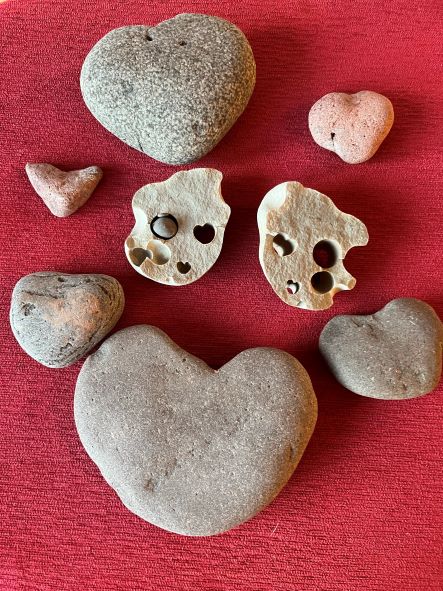
February is “Heart Month.” Presumably the American Heart Association chose February as the month to raise awareness about cardiovascular health because in February we celebrate Valentine’s Day which we observe by the giving and receiving of hearts of all kinds — heart-shaped Valentines, candy, jewelry – symbolic declarations of love, of giving our hearts to one another. Hearts have long been associated with love. When bringing our emotions to the surface, we “wear our hearts on our sleeve.” When speaking our deepest feelings, we “pour our hearts out.” Feelings of tenderness “warm our heart,” and compassion “pulls at our heartstrings.” When grieving, we feel “heartache,” and loss of love renders us “heartbroken.” The French word for heart, coeur, associates hearts with courage. We “take heart;” we “lose heart;” we “hearten.” We can engage in a task “wholeheartedly,” “halfheartedly,” or our “heart’s not in it” at all. We can be “bravehearted,” “lighthearted,” “tenderhearted,” “hardhearted,” or totally “heartless.” That’s a lot for the heart to carry.
What happened to you really was bad. This should not happen to any child. It should not have happened to you.
In our culture there is often a rush to forgiveness that precedes acknowledging the harm that has been done. When I was a child and my father yelled at me or withheld love, I was told by mother, “He really does love you. He just does not know how to show it.” She sometimes added, “Even though he will never say he is sorry, you should forgive your father, because he did not really mean what he said.”
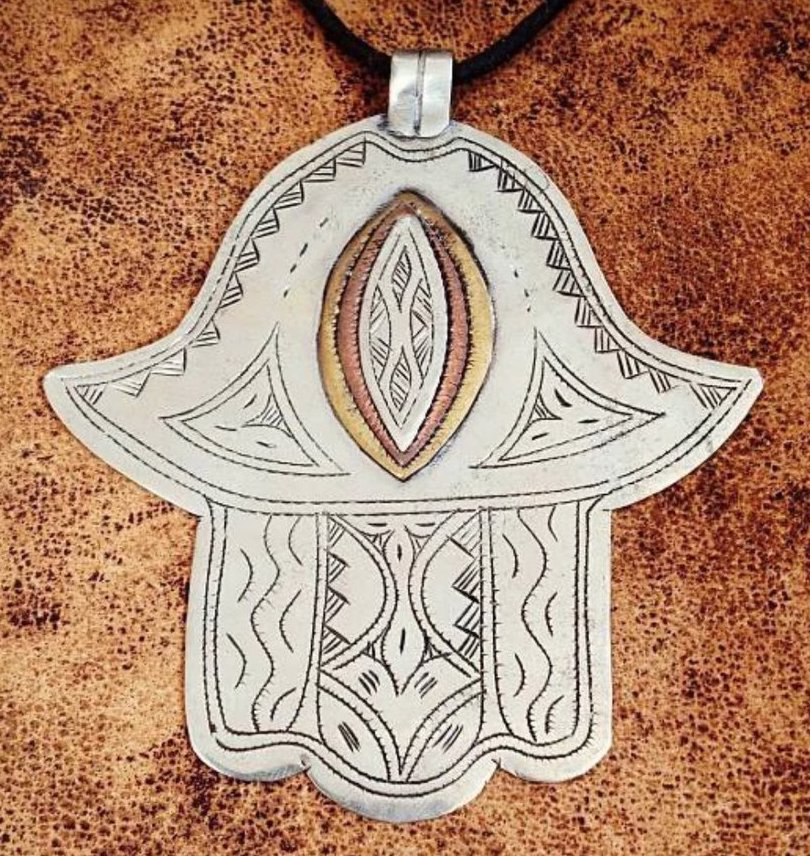
In my recent post ‘Forty Days After Childbirth, Mary Returns to the World,’ I wrote that ‘the woman’s power to bless and protect, as well as to create, is shown in the symbol of her hand.’ We see expressions of this power in the Orthodox Christian icon of the Three-Handed Madonna, whose third hand is over her womb, and the Hamsa, the hand-shaped talisman common to Jewish, Christian, and Islamic traditions. Also known as the Hand of Fatima, Miriam, or Mary, the Hamsa often incorporates eye or vulva motifs, which also offer protection.
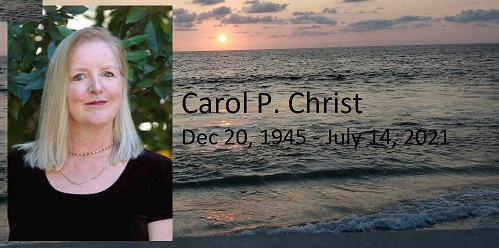
Hand, womb, and eye all signify female creative power, personified in the image of Goddess and revered in Neolithic Old Europe. This life-giving principle is expressed in many ways apart from childbearing: as Carol Christ affirms, early technologies of spinning, weaving, pottery, and agriculture, along with Neolithic religion, were most likely invented by women.
Imbolc brings an invitation into change, to step into the forge of transformation, to sink into the holy well of healing, to open ourselves up to an evolving path of growth and discovery. It is now that we remember we are our own seeds of promise and while there is time yet to stay in the waiting place biding our time and strengthening our resources so we have what we need to grow, soon we will feel the wheel urging us onward, the call to set forth becoming unmistakable and strong. Let us settle ourselves into center, nestle into trust and determination, and extend outward from here feeling the sweet wind caress us and the fiery forge beckon us as we heed the summons to roll on, the path opening up before us as we move.
In this blog post I’d like to take you with me on a recent visit to the special exhibition “Arts and Prehistory”* in the Museum of Mankind (Musée de l’Homme) in Paris.**
Like the Feminine Power in London exhibition I wrote about last year, this is another ode to human imagination and creativity in connection to the mystery of life.
The exhibition features women figurines and cave paintings from dating between 26.000-34.000 years old, and I wonder how these prehistoric icons can inspire us to look at female bodies today…