The Music of Creation: Exploring Verse and Vibration in the Bible by Janet Rudolph, Book Review by Carolyn Lee Boyd

“What if the teachings within the Bible were not dualistic, but taught of oneness, connection, and the flow of energy?” (9) In The Music of Creation: Exploring Verse and Vibration in the Bible, Janet Rudolph (whom FAR readers already know as a FAR co-weaver) explores the definitions and vibrational elements of the sounds of original Hebrew words in the Bible. This is her latest book. In this book, Janet creates retranslations that express the energy, flow, dynamism and movement of the verses. She also discusses ways for readers to experience the power and potential of the verses for themselves. As she notes, Hebrew is a “sacred language” so that “the words themselves carry a vibrational element that we, as human beings, find meaningful and compelling” (3). In doing so, her retranslations revive the energy of “nature and its cyclical wisdom” (4). These are remnants of the original teachings, bringing forth their fresh beauty, inspiration, and world perspective we so need now.

Continue reading “The Music of Creation: Exploring Verse and Vibration in the Bible by Janet Rudolph, Book Review by Carolyn Lee Boyd”

Born Again by Sara Wright

“Let me sing to you about how people turn into other things.” (Ovid)

Years ago I placed my brother’s ashes in a shallow depression that I had dug near a granite fern and moss covered boulder. The brook flowed just a few feet away and at the last minute I scattered a few filaments over the shallow waters, returning them to the sea. A week later I planted a hazel nut tree nearby. A fossilized spiral ammonite marks my brother’s grave.

Thanks to the underground highway created out of millions of tree/plant roots, the extensive net of fungal hyphae and this communal system’s miraculous ability to exchange nutrients/minerals/sugar, my brother lives on as part of this forest…The gracefully spreading hazel and all the other trees (spruce, maple, balsam, hemlock, ash) that are scattered around this hallowed woodland grove have been nourished by the bones of one I loved.

Yet only recently have I been possessed by revelation.

Continue reading “Born Again by Sara Wright”

From the Archives: Passover and the Exodus: A Feminist Reflection on Action, Hope, and Legacy by Michele Stopera Freyhauf

This was originally posted on March 26, 2015

Freyhauf, Durham, Hahn Loeser, John CarrollLast week, Supreme Court Justice Ruth Bader Ginsburg was in the news again, but not for reasons you would expect.  She, along with Rabbi Lauren Holtzblatt, penned a feminist essay about the Exodus title “The Heroic and Visionary Women of Passover.”  Finding this story was exciting, especially because I am so drawn to the Exodus story (the intrigue and curiosity of which caused me to return to school and study, as one of my main areas of focus, Hebrew Scriptures – along with Archaeology and Ancient Near Eastern History).  Now women’s roles in this story are being elevated thanks to Justice Ruth Bader Ginsburg and Rabbi Holtzblatt.

Before I discuss the message and the importance this message brings, I think it is important to know an important fact about Justice Ginsburg.  Ginsburg is not observant, but does embrace her Jewish identity.  When her mother died, she was excludedRuth_Bader_Ginsburg_official_portrait[1] from the mourner’s minyan because she was a woman; an event in Judaism that is meant to comfort the mourner, brings a sense of community, and is considered obligatory – a means of honoring our mother/father.  This important event left an impression and sent a loud message that inspired and influenced her career path – she did not count – she had no voice – she had no authority to speak.  No wonder her life and career focuses so much on women’s rights and equality.

As many of us know, the story of Exodus is focused on two things 1) Moses and 2) liberation from the bonds of servitude and enslavement; women are rarely discussed.  In the essay co-authored by Ginsberg, women are described as playing a crucial role in defying the orders of Pharaoh and helping to bring light to a world in darkness.  In the Exodus event, God had partners – five brave women are the first among them, according to Ginsburg and Holtzblatt.  These women are: Continue reading “From the Archives: Passover and the Exodus: A Feminist Reflection on Action, Hope, and Legacy by Michele Stopera Freyhauf”

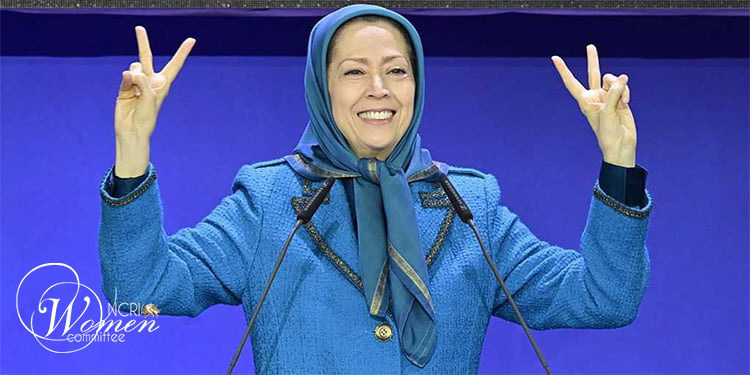
Structural Inequality and State-Sanctioned Oppression of Women by NCRI

Moderator’s Note: This post has been posted in cooperation with the NCRI women’s committee. NCRI stands for the National Council of Resistance of Iran. You can learn more information as well as see this original article by clicking by link below. A description of their Council can be found at the end of this post. As an introduction, a NCRI representative sent us the following statement about the war. It was originally posted on March 11th and we are reposting it because of its importance.

 STATEMENT: I would like to mention that the Iranian Resistance — which established a government-in-exile years ago — has long advocated a clear position: no to war, no to appeasement of the mullahs, but a third option — regime change by the Iranian people and their organized resistance.

Mrs. Maryam Rajavi, the President-elect of the Resistance and an internationally recognized figure, has outlined this vision in her Ten-Point Plan. I am sharing the link below, as it reflects the roadmap of the Iranian Resistance. Maryam Rajavi’s Ten-Point Plan for the future of Iran

Unfortunately, behind-the-scenes dealings and political interests have often ignored this democratic alternative. In recent days, a provisional government framework has also been announced as part of this process. Announcement of the Provisional Government by the National Council of Resistance of Iran (NCRI)

Continue reading “Structural Inequality and State-Sanctioned Oppression of Women by NCRI”

Ariadne & Me – Betrayers by Arianne MacBean

Two of the most well-known aspects of mythical Ariadne are the way she betrays and is betrayed. Hers is the ultimate ancient Greek karma story. She casts off the burden of her father’s narcissism, her mother’s bewitchment, her half-brother’s torment. No one thinks she has it in her. But she does. In the thick night, she holds the thread for her lover while he makes his kill and flees with him into the dark open sea. Then, in the most vulnerable space between sleep and wakefulness, she finds herself abandoned. Here, on an island in the middle of nowhere, she cries out and is moved. Did the ancient Greeks tell this tale as warning for women, or advice?

What kind of woman would do what Ariadne did – leave everything – her inheritance, her kingdom, her role as a priestess – for the unknown other? Why would a daughter do that?

She wanted to exist.

Continue reading “Ariadne & Me – Betrayers by Arianne MacBean”

Dancing with the Divine by Rabbi Nadya Gross

Moderator’s Note: The first part of this blog first appeared on the Yerusha website on Sept. 29, 2025. You can see it here.

From my earliest memories, I saw things others didn’t see and knew things I had no business knowing. I thought everyone noticed the dance of light around bodies, or the tiny life forms at the base of trees. I assumed everyone could feel another’s emotions as vividly as their own.

That illusion ended when my grandmother—my Savta—took me into the kitchen (where everything important happened), closed the door, and said: “Never speak of these things to anyone but me.” And so, my training began.

Savta’s gifts were different from mine. She had grown up in a circle of women and their daughters—a circle where wisdom was passed from generation to generation. In that circle, women taught each other, shared their insights, cultivated their gifts and skills, and preserved a legacy of sacred knowing.

The wisdom she shared with me was as ancient as the land itself. We began with reverence for the Earth and her elements—echoes of pre-patriarchal Goddess traditions. She taught me that everything is interconnected: harm to a tree, insect, or stream is harm to us. Respect is not something to demand, but to embody. I learned to ask permission before lifting a stone from its resting place, to give thanks to the fruit-bearing trees in my grandparents’ yard when I plucked the ripened fruit, and to recognize Creation as a web of relationship.

Continue reading “Dancing with the Divine by Rabbi Nadya Gross”

From the Archives, Herstory Profiles: Irish Women of Faith, Activism and Politics by Anjeanette LeBoeuf

As it is March, and March is a month for me that is always devoted to celebrating my Irish roots and women, my Herstory Profiles will be on a few exemplary women from Ireland: Brigid (Irish Goddess and Catholic Saint), Margaret O’ Carroll of Éile (Paragon of Leadership, Strength, and Compassion), and Mary Robinson (Historic Leader, Activist, and Humanitarian.)

We look first to one of the most known religious, divine females in Ireland – Brigid. She plays a fascinating role as she is both in the Celtic Religion (Predates Christianity and can be considered part of the indigenous religion of the Celtic Isles) and as a Christian monastic/saint. She has many variations of names and celebrations but she is first and foremost  crucial and important enough to last through the ages and changes in religious traditions.

Brig, Brigid, Brigit – the Celtic Goddess of wisdom, poetry, healing, protection, smithing, and domesticated animals. There is evidence that she was considered at times, a triple deity; Brigid the Poet, Brigid the healer, and Brigid the Smith.

Continue reading “From the Archives, Herstory Profiles: Irish Women of Faith, Activism and Politics by Anjeanette LeBoeuf”

Standing On the Edge: Flipping the Goddess Community & Bringing Her Back by Caryn MacGrandle

As the creator of the divine feminine app, an online platform to find circles, events and resources to which an average of three women a day have found their way to for the past decade, I have been privy to quite a few opinions.

A large majority of the 12,000 women who have registered on the app are Circle hosts, course creators, retreat organizers, book authors, singers, product sellers and others that ‘She’ has tapped on the shoulder.

And I hear quite a lot.

‘Be careful about her.’ ‘Do you know what she did?’ ‘I would watch your back.’

‘Why do you have her work on your app?’

Continue reading “Standing On the Edge: Flipping the Goddess Community & Bringing Her Back by Caryn MacGrandle”

Ariadne & Me – daughters of narcissist fathers by Arianne MacBean

Portrait of Minos, king of Crete, from the Promptuarium Iconum Insigniorum

As the Ancient Greek myth is told, Ariadne’s father, Minos, is a powerful brute. The offspring of rape by the God Zeus of the Phoenician Princess, Europa, Minos’ violent origins reflect his development as a man, ruler, and father. He conquers and plunders while harboring secrets and wreaking havoc on his family. In the mythic world he is the definition of a victorious king. In today’s world, we call Minos a narcissist.

Half divine and half mortal, Minos moves between sacred and profane spaces to his advantage. He gains his throne as King of Crete with the support of the Sea God, Poseidon. When given a giant white bull as a congratulatory gift, Minos chooses not to sacrifice the bull as he promises Poseidon, but to keep it for himself. It is this choice that reveals Minos’ shadow narcissism. To Minos, the bull is his greatness, not a symbol of it. In a rage, Poseidon punishes Minos for his choice by cursing his wife, Pasiphaë, to become enraptured with the magic bull. While Minos is away from Crete conquering other lands and other women (he fathered several children outside his marriage), Pasiphaë under possession of Poseidon’s spell, convinces the inventor, Daedalus, to build a contraption to lure the bull into her. Ariadne’s half-brother, the Minotaur, is born out of this union.

Continue reading “Ariadne & Me – daughters of narcissist fathers by Arianne MacBean”

Mother/Meter: Reclaiming Poetry’s Sacred Goddess Languages by Annie Finch

Enheduanna poem to Inanna on tablet

Those of us on the paths of the Divine Feminine can go to great lengths to approach Her.  We might read and study hard-to-find books, invest time and money to visit temples and museums, and seek out Goddesses-related power spots around the world. We might acquire ceremonial jewelry and devotional artworks, attend conferences, track down Goddesses-inspired music, and apprentice with teachers from spiritual traditions that may be far removed from our own heritage. We might invest in supplies and training to craft devotional music, art, sculpture, and apparel, and create or attend performances, healings, and rituals honoring the Feminine Sacred.

Yet there is one important ritual activity that we routinely forget and ignore, one that we know was key to Goddess worship whenever we have written prayers, from Demeter to Inanna, Isis to Freyja, Hekate to Sarasvati. This time-honored practice is simple to learn, costs nothing to use, and quickly, safely, and legally creates an altered state of mind that brilliantly and efficiently connects us with our spirits, the natural world, the Divine Feminine, and each other. And furthermore, this ancient sacred craft is not limited to indigenous or ancient cultures but is already part of the familiar heritage of anyone who speaks English, so there is no danger of cultural appropriation in using it.

Continue reading “Mother/Meter: Reclaiming Poetry’s Sacred Goddess Languages by Annie Finch”