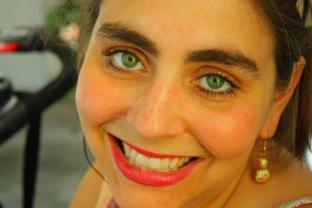
 This past term I had the opportunity to teach courses on the Christian doctrines of Christology and Trinity. My first inclination was to approach these doctrines from the perspective of their historical development. For, I find the historical study of doctrinal development to be a fascinating and liberating approach to theology because it delivers the searcher from the illusions of ubiquity and universality, even in matters of the most central tenets of faith. When people can see doctrine in its political, polemical, and posited guises, we can be free from absolutization of belief in past expressions as well as in present permutations.
Yet, as much as I enjoy tours through the historical development of faith formulations, I found myself unable to really commit to this approach this year. I was more concerned with allowing students space to think about Christ and to think about God. I wanted to introduce the problems and tensions that have dogged Christian logic and practice for millennia, but I wasn’t interested in arriving at conclusions or teaching modern experts’ answers. I wanted to create occasion for my students to answer for themselves questions of justice and mercy; theodicy; particularity; scandal; and more. Continue reading “Musings on the Triune God by Natalie Weaver”
 Authorities have observed that climate change is a feminist issue because it disproportionately affects women. Among these, the United Nations has gone further to acknowledge that climate change is a feminist issue because women are on the forefront of adopting climate-change mitigating techniques and technologies. A recent UN report states that “women are key actors in building resilience and responding to climate-related disasters…”
 There might be lots of lessons to consider. These lessons might have holes, for I’m not a wise sage, and I’m not really even a mother. As I am a couple of years from 40, I think about what lessons I would teach my daughter if I had one, lessons to honor her physicality, lessons to create space for her soul. What do you think of these lessons? Would I be a bad mother?
  Tall, hearty. sometimes pushy, and usually very loud, Outtadeway-O is easily able to propagate and multiply Herself so that we can find Her in crowded airport terminals, at bus and subway stops, and just about anywhere people are traveling from or to. She’s in charge of trains, planes, and taxi-cabs. She’s the One who, when we’re in a hurry to get somewhere on time, shouts, “Please, oh, please get out of the way!” Pilots, engineers, station masters, ticket agents, and ÜberAlles drivers all hear Her. You better bet they get out of Her way.
 I was once asked “why do I stay Muslim”? That was the question prompt, and it begged an answer…Reason #2: I believe Islam has vagueness in the Quran (I answered
  I served as general editor for the recently published
 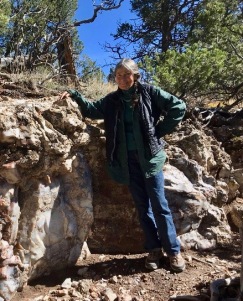 I have been traveling across country during the past week from New Mexico to Maine, leaving one “home” for another wondering what the word even means for me these days. I suspect the word doesn’t refer to a place, but a state of mind/body that continues to elude me.
 Every year when the cherries, pears, plums, and apple trees begin to bloom, I go out walking. I look for every spot in my vicinity where white and pink blossoms are blooming in exquisite profusion like foam on an ocean. Every year I take photographs, even though I already have so many. I walk at every hour of the day because, as the light changes, the colors change. I have albums and albums of pictures of my beloveds, the trees.
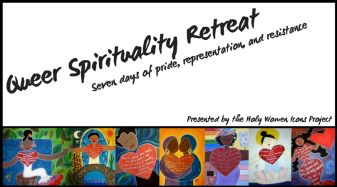
 As we enter Pride month, do you ever finding yourself wishing there were unabashedly queer resources to aid clergy and people of faith in nurturing spirituality, celebrating queer families, or offering liturgies that celebrated revolutionary queer women? Look no farther! The