

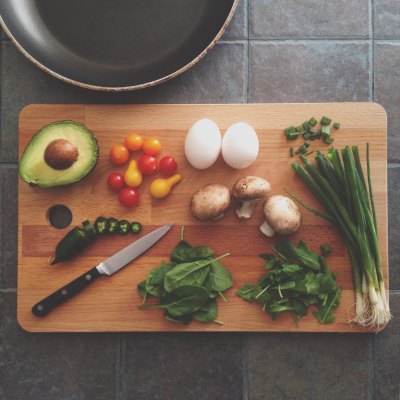
During the holiday season we’re bombarded constantly with contradictory messages about how we ought to take care of our bodies this time of year. Over the early winter months there is a collective expectation and even glorification of indulging in all kinds of ways–eating, drinking, spending money, etc. But if we dare enjoy ourselves a bit, we’re then on the receiving end of the diet and fitness culture propaganda that capitalizes on our time of indulging by telling us we need to clean up our eating and get (back) to the gym–assuring us that 2018 will be the year when we finally achieve our “dream bodies.”
Oftentimes the coded language of “wellness,“ “clean eating,” and even “health” is rooted in the same problematic framework that toxic diet and fitness culture espouses: your best self is your thinnest self. Strict binary language used to describe food–processed foods high in fat or sugar are “bad” while fruits, vegetables, and whole grains are “good”–attributes moral weight to what we eat. Beneath this is the myth that our health outcomes and the way that our bodies look are completely within our control. If we simply commit to “healthy” habits, we can become “good” (thin). Continue reading “The Trouble with “Wellness” by Katey Zeh”
 By now the exit poll statistics from the recent election in the state of Alabama are well known: 98% of black women and 92% of black men voted for Democrat Doug Jones, while 74% of white men and 65% of white women voted for Republican pedophile and child-molester Roy Moore.
 Over the past year I have travelled to Bali on a number of occasions for both pleasure and work, and with each visit a little more of my heart and soul stays behind on this green tropical island paradise waiting for my next return. I was never really that keen to travel to Bali in the past; my pre-conceived ideas had been largely influenced by the negative media attention this “hot destination” often receives in Australia. Whether it be a volcano erupting, scooter accident, terrorist attack. or young Australian party-goers getting up to mischief while on holiday, the shadow side of Bali tourism remains the focus for hype-hungry media – with consequences often detrimental to the tourism industry that the island has become so reliant on.
 After the horrific events of September 11, 2001, Haroon Moghul, the undergraduate leader at New York University’s Islamic Center, was called upon to be a representative voice for Muslims in America even as he negotiated his own relationship with Islam. He recounts his religious journey, alongside personal encounters with suicide and bipolar disorder, in his recently published memoir:
  Since I am teaching in a charter high school this year, this is the level of education I am speaking about. I teach college English, and often craft my writing classes in thematic ways. This semester, I did units on mindfulness and the environment. Some of my younger students were resistant to the texts that were Buddhist in tradition, and when I suggested, perhaps to take a more comparative and inclusive approach, we actually do a world religions unit for my classes next semester, the administration was very kind and supportive, yet hesitant due to the “conservative” nature of our institution. I am grateful that the administration is willing to work with me and possibly allow me to do the unit next academic year with some guidance and advisement. But, again on the younger student level, I hear “This is an English class and not a Religious Studies class” or even the question, “Can we study religion in school?”
 For those of us living in Southern California, it has been a tense week to say the least: flames ravaging up and down the coast, homes lost, thousands displaced, freeway and school closures, smoke thick in the air, and ash raining from the sky.
 If there are devotees of the Dark Goddess on your Yuletide gift list, Starr Goode’s gorgeous book, Sheela na gig: The Dark Goddess of Sacred Power, may be the best gift you could choose for them.
 The disdain with which the work of archaeologist
 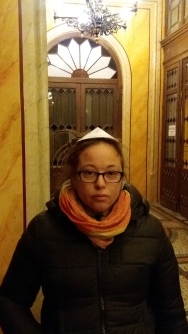 Last week Sunday, my partner and I were in Budapest, Hungary. We stopped at the Dohany Street Synagogue, the second largest synagogue in the world and the largest in Europe. After we bought our tickets and proceeded through security, we decided to go into the synagogue first and then the museum.
