

For the last year I have had the honor of serving as Chair of the Board of Directors for the Religious Coalition for Reproductive Choice (RCRC). This leadership role often requires great personal and professional sacrifices and yet blesses me tenfold in return. At this moment in history I can think of no more important organization to offer my time and gifts than on behalf of RCRC.
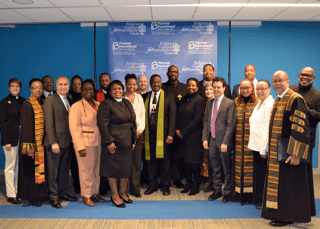
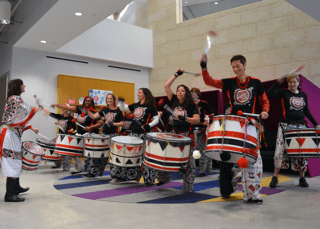
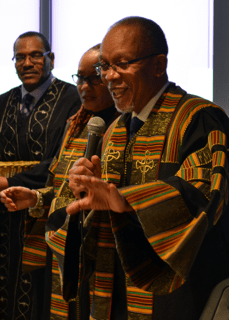
Last week RCRC partnered with Planned Parenthood of Metropolitan Washington (PPMW) to hold an Interfaith Unity Ceremony to honor their brand new health center in southeast D.C. I had the privilege of joining more than sixty clergy, justice leaders, and clinic staff as were led by the Reverend Doctors Dennis and Christine Wiley, co-pastors of the Covenant Baptist United Church of Christ, through an interfaith service of blessing. There was drumming from the all female percussion band Balatá, testimonies from providers and patients, poetry, liturgical dance, a Hindu chant, and a ritual of healing from the shame and stigma surrounding abortion.
At one point during the service a colleague of mine turned to me and whispered, “I’ve got goose bumps. Something is happening here, isn’t it?” I said, “Yes, Spirit is here.”
Many might find an encounter with the sacred at a Planned Parenthood surprising to say the least. It might have been for me had I not experienced something quite similar ten years ago. At the time I was a seminary student at Yale, and I had recently participated in RCRC’s pastoral care training on how to walk alongside women making decisions about their unplanned pregnancies. Before I offered any kind of counseling I wanted to see for myself what went on in abortion clinic. After taking a tour of the local Planned Parenthood health center I was so moved by the love and kindness of the doctors and support staff that I decided to volunteer on days when abortions were provided. Through that experience I felt the holy nudge to dedicate my ministry to supporting the work of abortion providers like Planned Parenthood and standing up for the rights and dignity of those who need access to safe, legal abortion care.
Now, almost a decade later, I found myself back in a health center. That time of being amongst my people, surrounded by words and sounds of truth affirming the sacred decisions of women about their bodies and lives, felt like I had tasted my first bite of food after a long, difficult fast. I didn’t realize how much over these last few months I had been starving for hope, love, and life-giving energy until that ritual of blessing held within the walls of the Planned Parenthood health center.
Later that night on my drive back to the airport I found myself repeating the same simple prayer, “Thank you, thank you, thank you.” I felt an overwhelming sense of gratitude for the way that ritual had restored my spirit and affirmed my call to ministry. For the first time I felt prepared to take on the heavy burden of the next four years. I am ready. Are you?
Katey Zeh, M.Div is a thought leader, strategist, and connector who inspires intentional communities to create a more just, compassionate world through building connection, sacred truth telling, and striving for the common good. She has written for outlets including Huffington Post, Sojourners, Religion Dispatches, Response magazine, the Good Mother Project, the Journal for Feminist Studies in Religion, and the United Methodist News Service. Her book Women Rising will be published by the FAR Press in 2017. Find her on Twitter at @kateyzeh or on her website kateyzeh.com.

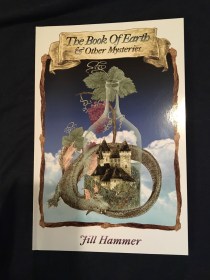 When a poem shows me something in a strange and wonderful light and at the same time awakens some bone-deep knowing of my own, I feel more alive, I feel less alone. My soul is stirred and satisfied.
  Lilith has been a misunderstood, appropriated, and redeemed woman throughout the ages. Many feminists claim her as an empowering figure in Jewish mythology, her story reclaimed by contemporary artists such as Sarah McLachlan, who created the all-women music tour, “Lilith Fair.” Some queer scholars have surmised that Lilith had a romantic relationship with Eve. Others have claimed that Lilith was a demon who seduced men and strangled children in the night. Quite a disparity, isn’t it?


 Although “the” Ramayana is a fluid narrative, scholarship has traditionally recognized the Sanskrit Valmiki Ramayana as the most authoritative of Ramayanas. But recent studies have brought to light the hundreds of regional stories of Rama and Sita which are more popular with the masses. These would include Krittibasa’s Ramayana in Bengal, Kamban’s Tamil Iramavataram in South India, notably in the state of Tamil Nadu, Tulsidas’s Ramcharitamanas among the Hindi-speaking belt of northern India, and so on. But even here, a pattern seems to emerge; all the above-mentioned authors are male. Within this scenario, a rather unique text stands out, and that is Chandravati’s sixteenth century Bengali Ramayana, for its author was a woman. Even more fascinating is the double-toned nature of the narrative – through Chandravati’s own voice and through the voice of its tragic heroine, Sita.
 In the middle of the night in waking sleep, I asked my great-great grandmother
  “Why is religion important to ecofeminism?”
