

 In 1965, the Council document Perfectae Caritatis, Decree on the Adaptation and Renewal of Religious Life, encouraged women religious to situate themselves and their vocations in the social milieu to which they belonged. Each religious community adjusted rules and customs to accommodate the needs and demands of particular ministerial vocations. For those communities that embraced Perfectae Caritatis entered into a complete paradigm shift in thinking that changed forever how they understood themselves and their chosen vocations. I recall vividly the morning, when, in 1968, Sister Mary DePatzie entered our classroom clad in a shorter habit and dress revealing the startling fact she 1) indeed had brilliant, beautiful red hair; and 2) rather shapely legs even in her sensible shoes. Continue reading “Presumed Guilty by the Sin of Silence: U.S. Nuns, Network, and The Congregation for the Doctrine of the Faith by Cynthia Garrity-Bond”
Feminists Be Silent! Making a Stand in Solidarity with our LGBT Friends Against Bullying and Harassment By Michele Stopera Freyhauf
 “A Day of Silence” occurs tomorrow, April 20th. Created in 1996, University of Virginia students wanted to raise awareness of the bullying and harassment of issues that LGBT students faced on campus. Since then, A Day of Silence makes a statement against those who have tried to silence LGBT teens and young adults in school through harassment, bias, abuse, and bullying. Participating students, led by GLSEN, will hand out cards that read the following:
“Please understand my reasons for not speaking today. I am participating in the Day of Silence, a national youth movement protesting the silence faced by lesbian, gay, bisexual and transgender people and their allies in schools. My deliberate silence echoes that silence, which is caused by harassment, prejudice, and discrimination. I believe that ending the silence is the first step toward fighting these injustices. Think about the voices you are not hearing today. What are you going to do to end the silence?”

The issue of bullying LGBT teens resonated with the world when Tyler Clementi took his life in 2010 after his roommate secretly transmitted via webcam Tyler’s sexual encounter with someone of the same sex. Tyler’s suicide brought national attention to the issue of bullying and harassment that LGBT people face. To my chagrin, while writing this article, another victim fell. Kenneth Weishuhn, Jr., a 14-year-old gay teen, committed suicide because of the intolerable harassment and bullying he dealt with at school.
To really understand the magnitude of this issue, I wanted to examine the statistics surrounding bullying. The numbers are staggering. However, when adding the LGBT component to that same teen, the numbers escalate. Continue reading “Feminists Be Silent! Making a Stand in Solidarity with our LGBT Friends Against Bullying and Harassment By Michele Stopera Freyhauf”
Reproductive Justice by Gina Messina-Dysert
 Following the testimony of Sandra Fluke on the lack of availability of contraception and the appalling remarks by Rush Limbaugh that took place in early March, 2012, much discussion around issues of reproductive justice has emerged. Among these conversations, Mary Hunt recently shared her thoughts in “Contraceptive Controversies” on the issue on FSR-Inc., and graduate students Katie German and Linda Claros organized an event at Loyola Marymount University to invite faculty members, students, and interested persons to engage in dialogue on reproductive justice. I was honored to have the opportunity to participate in that discussion and would like to share my thoughts here in an effort to continue that dialogue.
To begin, I understand reproductive justice as the call for the social, political and economic ability to make responsible and healthy decisions about gender, sexuality, and procreation for ourselves and our communities with the goal of transforming power inequities and bringing about systemic change. The denial of reproductive justice in the Catholic Church is a symptom of the larger rape culture. When I use this phrase I am referring to a culture that not only perpetrates rape, but all forms of sexualized violence against women and girls. Continue reading “Reproductive Justice by Gina Messina-Dysert”
A MEDITATION ON A MIDRASH: “ABRAHAM’S DAUGHTER” BY ARCADE FIRE by Sara Frykenberg
 The wages of the sin of sacrificing our children is their death, whether the sacrifice is to some supposed higher order, to absolute obedience or to appear to be the “good Christians” we are “supposed to be”…
Maybe its because I enjoyed the books more, or because of my sister’s all too expectation-garnering reviews or even, because I’d seen this theme before, in an amazing yet gruesome Japanese movie, Battle Royal, I left the theater unsatisfied after watching The Hunger Games. I did however, LOVE the song that played at the end of the movie, which I downloaded before we left the theater. I listened to it in the car on the way home. I listened to it the next day, the day after that and for days after that… I listened and listened, and I found surprise, power, anger, sorrow and a channel for grieving that I had needed in the Midrash “Abraham’s Daughter” by Arcade Fire.
Abraham took Isaac’s hand and led him to the lonesome hill
While his daughter hid and watched, she dare not breathe
She was so still.
I discovered the practice and potential power of Midrash from my teachers in graduate school. The idea of an “extra-biblical” story that might help to expound upon Biblical passages that are all too often unexplained or unsatisfactory to (my) feminist consciousness was very appealing to me—and it is still appealing to me. But I have to admit that the feminist Midrash I read in my classes seemed too positive and did not resonate with me. The pieces were too much like a tender hug or a mother hen covering my wounds with her wings. I wanted to hear a story of Bible that could help me make sense of the violence I’d discovered in my childhood religion. I needed a story of Bible that honored my violent struggle to counter the abuse within it and within me.
Like Isaac, I was too intimate with my abuser: unable to avoid walking hand and hand with him when pushed to do so. Asked to create a prayer or Midrash for a class once, I wrote about the way I would turn the radio in my car up when I started to hear ‘God’ speak to me. I didn’t know how to listen and tune out the abusive maxims that played over and over again in my head (maxims that surfaced every time I even thought about the divine). Continue reading “A MEDITATION ON A MIDRASH: “ABRAHAM’S DAUGHTER” BY ARCADE FIRE by Sara Frykenberg”
EASTER OF THE GODDESS: A VIEW FROM GREECE by Carol P. Christ
 On Good Friday, Easter Saturday, Easter Sunday, and Easter Monday the blogs on feminismandreligion.com celebrated mothers and God the Mother.*
This is my body, given for you.
This is my blood, given for you.
While these words are the center of a Christian liturgy celebrating the sacrifice of Jesus as the Christ, they are more appropriately spoken of our own mothers. Your mother and my mother and all mothers, human and other than human, mammalian, avian, and reptilian, give their bodies and blood so their offspring might have life. True, mothers do not always make conscious choices to get pregnant, but almost all mothers affirm life in their willingness to nurture the young who emerge from their bodies and from their nests. Had mothers—human and other than human–not been giving their bodies and their blood from time immemorial, you and I would not be here.
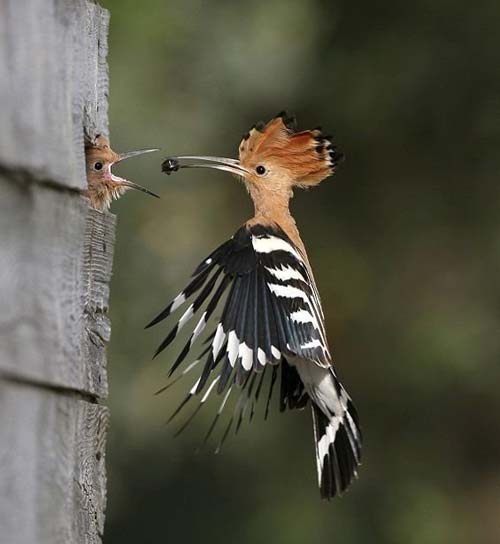
The Easter liturgy fails to acknowledge that the original offering of body and blood is the mother’s offering. Christianity “stole” the imagery associated with birth and attributed it to a male savior. If that was all Christians had done, it would have been bad enough. In most countries today there are laws against theft. Christian theologians and liturgists should also be given an “F” for plagiarism–defined as presenting the ideas of others as if they are one’s own. Z Budapest was right when she famously famously opined, “Christianity didn’t have any original ideas.
Continue reading “EASTER OF THE GODDESS: A VIEW FROM GREECE by Carol P. Christ”
Magic Names by Barbara Ardinger
 Many modern pagans adopt magical names. I think I’ve found one for myself. It’s a good motto, and even saying it aloud reminds me of the daily blessings of the Goddess to her children. The Latin name I’d choose is Beata elle. “Blessed is she.”
When I attended a pagan studies conference recently to read from Secret Lives (and sign and sell a few copies), I listened very carefully to another presenter who spoke about magical names. When we go through an initiation, he said, we receive a new name. It’s a custom that is familiar to people through the ages and around the world. The presenter spoke about why people adopted magical names during the 19th-century European occult revival and why pagans still take magical names. And he set me to thinking. When you earn your Ph.D., you don’t get a new name. The Ph.D. is indeed an initiatory experience. Ask anyone who’s done it. You go through multitudinous ordeals both physical and intellectual. You face judges, speak what you’ve learned, and finally attain gnosis. But all you get for all your work and suffering are those nifty letters to put after your name. But I digress. Continue reading “Magic Names by Barbara Ardinger”
Buffy Vs. Bella by Anjeanette LeBoeuf
 In the past four years I have become overwhelmed by society’s thirst for vampires. The introduction of True Blood, Twilight, and The Vampire Diaries has marked a downright fervor for anything and everything “vampire.” Now don’t get me wrong, I like a good vampire story now and again. One of the first books I remember reading solely on my own was Bram Stoker’s Dracula. I grew up watching the WB show Buffy the Vampire Slayer. It was a coup d’état that I got to watch a show that had very visible scenes of violence, evil, and death, but I’m pretty sure that my parents thought that if watching this show was my only act of rebellion, they were in good shape. What I remember most about watching Buffy wasn’t really that it was a show about vampires, but that it was a show about a strong high school girl that had to save the world — which is exactly what I wanted to do.
I have always gravitated towards the mythical and supernatural, which is one of the reasons I study religion in the first place. Society uses vampire stories as a way to transmit social critiques. Vampire stories began to expand on the common idea that women were easily seduced by the “dark side” and that a strong male would need to swing in to save the day. Continue reading “Buffy Vs. Bella by Anjeanette LeBoeuf”
Reflections on My Spiritual Journey: Claiming Judaism By Ivy Helman
 “Is Ivy Helman Jewish?” This question and knowing that eventually I’d have to respond one way or another to it has caused me many sleepless nights. At the same time my faith journey has become integral to who I am and I would like to spend some time today sharing it with you.
Why share this and why now? Well, first, I have not been ready until now. In addition, external forces which I will talk about in a minute are making my spiritual path an issue. So I share my story with a measure of concern about its possible effects but also with a great deal of joy about the ways in which my faith journey has challenged me to grow, reflect and change.
Margaret Farley emailed me about two weeks ago asking me how I identified religiously. Someone had emailed her asking if I was Jewish because this person had read one of my past blogs in which I wrote “my rabbi” on feminismandreligion.com. This same person is reviewing my book: Women and the Vatican: An Exploration of Official Documents. Here is how I answered Margaret: “Hi Margaret, I’m Catholic although I do attend services at a Jewish synagogue on occasion since I was raised in essentially a multi-faith home. On that blog, there really is no Jewish voice, so I try to comment on ideas from that tradition as much as I can. Ivy.” I felt unauthentic sending that email. But, I did.
Still troubled by that answer and rather than put my friends and colleagues in the middle of questions about my faith, I feel that this has now become a public issue that I must address. It is a question I have known I would have to answer at some point. Nevertheless, this is not a decision that came easily or quickly. I’ve literally agonized over it now for months. During the time, I’ve never questioned my resolve to be Jewish and to continue to follow that spiritual journey in my life; I’ve worried more about how other people will respond and how their responses will affect my career in academia. If I were allowed to rewrite that email to Margaret, then this is what I would say. Continue reading “Reflections on My Spiritual Journey: Claiming Judaism By Ivy Helman”
A Response to the Maryknoll Community on Women’s Ordination by Fr. Roy Bourgeois
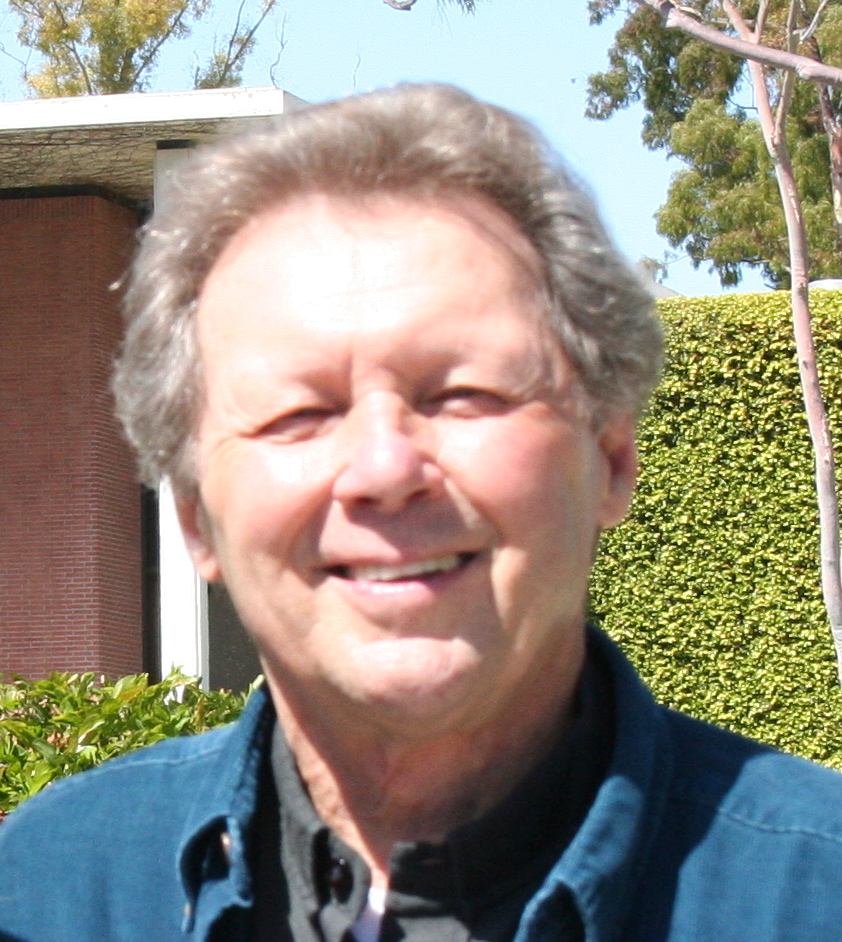 This letter was written to to Rev. Edward Dougherty, M.M., Superior General and the Maryknoll Community on August 8, 2011 in response to the call for Fr. Roy Bourgeois to recant his stance on women’s ordination in the Catholic Church.
My Brothers,
I have been a Catholic priest for 39 years and Maryknoll has been my faith community, my family. So it was with great sadness that I received your letter of July 27, 2011 (Second Canonical Warning), stating I must recant my belief and public statements that support the ordination of women, or I will be dismissed from Maryknoll.
In my ministry over the years I have met many devout women in our Church who believe God is calling them to be priests. Why wouldn’t they be called? God created men and women of equal dignity and, as we all know, the call to be a priest comes from God.
My brothers, who are we to reject God’s call of women to the priesthood? The Holy Scriptures remind us in Galatians 3:28, “There is neither male nor female. In Christ Jesus you are one.” How is it possible for us to say that our call from God, as men, is authentic, but God’s call of women is not? Continue reading “A Response to the Maryknoll Community on Women’s Ordination by Fr. Roy Bourgeois”
Power and Wealth in The Hunger Games by Lisa Galek

Unless you have been living in grim, dystopian world for the past few months, you’ve no doubt seen or heard something about The Hunger Games. The movie, which is based on the first in a best-selling trilogy of novels by Suzanne Collins, debuted several weeks ago to mass acclaim. It has already had the biggest opening weekend ever for a non-sequel and its advanced ticket sales eclipsed that of the most recent installment in the Twilight Saga.
Feminists can rejoice a little in the fact that this movie, which tells the story of strong, female protagonist, Katniss Everdeen, has surpassed the Twilight movies in ticket sales. Unlike the Twilight movies, the plot of The Hunger Games does not revolve entirely around a romantic love triangle. Though two suitors do vie for Katniss’s attentions, the heroine has much more pressing concerns – like whether or not she will be able to survive until morning.
But, aside from the good news that tough, well-drawn female characters can perform well at the box office, the movie has also spawned some interesting discussions about government and politics. In fact, both liberal and conservative commentators have claimed The Hunger Games supports their personal viewpoints (See “Liberal, conservatives embrace ‘Hunger Games’ for very different reasons”). For me, the books and movie fall more squarely onto the liberal side of the fence for one reason – they call into question wealth and power and those who are unwilling to change existing structures of oppression. Continue reading “Power and Wealth in The Hunger Games by Lisa Galek”

