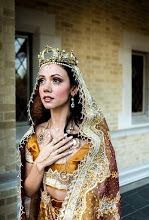
A Feminist Retelling of Noah’s Ark by Trelawney Grenfell-Muir

My daughters came to me after Sunday School one day, concerned about a story they had heard in which God drowned almost everyone on Earth. So I sat down and thought about why a community might want to tell that story, and what valuable wisdom might be lifted from it for my children. Here is what I told them:
God/ess  has  many  faces,  which  help  us  understand  different  things we  need  to  know  at different  times.  Sometimes we think of God/ess  as  Crone,  an  old,  old  woman  crowned  with  silver  hair  as  an  emblem  of  her  wisdom,  who helps  us  learn  to  let  go  of  anything  that  is  holding  back  the  wellness  of  our  community  and ourselves.  Continue reading “A Feminist Retelling of Noah’s Ark by Trelawney Grenfell-Muir”

With Our Tears, Let Compassion Flow: Remembering the Armenian Genocide by Laura Shannon

Today, April 24, is the worldwide day of remembrance for the Armenian genocide of 1915. On this day three years ago, marking the centenary of the genocide, I wrote about dance as an expression of solidarity with the Armenians people, and with all victims of genocide throughout history and throughout the world. You can find that piece here.
Now as then, I am encouraging my students to dance Armenian dances with their groups this week, or even simply to light a candle, listen to Armenian music (some recommendations are listed at the end of this post), with an open heart. How better to heal the wounds of history than with such tiny and intimate acts of compassion?
The root of the word ‘compassion’ essentially means ‘to suffer with’, and I think that one of the gifts of our own suffering might be that we can begin to have sympathy for those who have suffered like us.
Through compassion, our own heartbreak helps our hearts to be broken open. Although suffering can cause us to feel terribly isolated and utterly alone, at the same time, our pain opens our hearts in sympathy for the pain that others feel. To paraphrase Tibetan Buddhist teacher Chogyam Trungpa, this enables us to ‘reach out to help others… to discover a greater universe and a fuller and fuller broken heart. This is not something to feel bad about; it is a cause for rejoicing.’

Continue reading “With Our Tears, Let Compassion Flow: Remembering the Armenian Genocide by Laura Shannon”

The Power of Black Panther by Xochitl Alvizo

Note: Black Panther movie spoiler alert.

I attended my friend’s dinner party (now my beautiful partner) recently in honor of her birthday. It was an intimate gathering of nine, mostly her immediate family, so I felt privileged to be included. At one point during the dinner, her sister-in-law initiated a ritual in which we went around the table taking turns to share words of wisdom in honor of the birthday woman. Her words in particular stayed with me. And looking back, I see how the ritual she initiated was in itself an embodiment of the words she spoke:

Stand in your power. We got you. We have your back.

She said more, but the gist of it all was summed up in those three short sentences. Looking my friend in the eye as she raised her glass in her honor, her sister-in-law’s words meant something. I could feel the truth of them – I have seen the truth of them in her relationship with her. She, along with her wife (who is my friend’s sister), really do have her back and truly do want to see her “stand in her power.”   Continue reading “The Power of Black Panther by Xochitl Alvizo”

Crowding into the Spirit World: Reclaiming a Metaphysics of Multiplicity by Jill Hammer

A number of years ago, I had the opportunity to take a class with Chava Weissler, a scholar at Lehigh University who studies Jewish history, community, and sacred practices– particularly those practices related to women.  My fellow students in the class were other rabbis, taking a break from their work in order to do some learning.  Dr. Weissler was teaching about an Ashkenazi Jewish women’s practice known as “soul candles”—the making of candles during the High Holiday season to honor the dead of the community as well as the mythic ancestors.  Candles for Abraham and Sarah were made alongside candles for grandparents and other deceased relatives, using wicks that had been laid out along the graves to take the “measure” of the dead.  During the making of the candles, the candlemakers would ask that these ancestors would pray for the living, just as the living prayed for the dead.  As Dr. Weissler described this practice, a nervous giggle passed through the room.

I remember being shocked.  I understand that my colleagues have varying beliefs around life after death and around spirit in general.  And, hearing my colleagues laugh at such a ritual and its attendant beliefs surprised me.  Those same colleagues would never laugh at the idea that God wrote the Torah (even if not all of them believe that) or at the idea that God answers prayers (even though I’m sure many of them struggle with that idea too).  But the belief in ancestors who could intercede on behalf of their relatives was alien enough to be funny.  This caused me to notice that the contemporary spirit world, for some Jews, is rather empty.  It contains an abstract God, and no one else.

Continue reading “Crowding into the Spirit World: Reclaiming a Metaphysics of Multiplicity by Jill Hammer”

Another Gay Bar Closes – Paradise Lost by Marie Cartier

It’s where I went when I wanted to be around other gay people when John Kerry debated George Bush in 2004 for the presidency. I had just moved to Long Beach from Los Angeles and I was still figuring out the city. I didn’t have access to the debate on my TV at home, and I needed to see it. The bartender turned it on for me and we all gathered around and watched. By we all, I mean the gay men and lesbians who frequented that corner café and bar.

I remember laughing so hard that day when someone in the bar said what I still love as a quote, “John Kerry: Bring complete sentences back to the White House.”

Later when I met my girlfriend, who would become my wife, we were living a few blocks apart and in the middle of those few blocks was The Paradise Café. We didn’t have access to the lesbian TV series smash The L-Word. We often went to the Paradise and guilted them into turning it on. We’d sit at the bar with French fries, which to this day I think are the best fries in Long Beach, and watch The L-Word, chiding a lot of gay men around us that they needed to watch to and catch up on this “amazing show!!”

It was where I went, where tons of us went after gay marriage was declared legal in California. I went in with a friend of mine, Carolyn Weathers, who is the cover girl on my book, Baby, You Are My Religion: Women, Gay Bars, and Theology Before Stonewall (BYAMR).

Continue reading “Another Gay Bar Closes – Paradise Lost by Marie Cartier”

A Feminist Retelling of Cain and Abel by Trelawney Grenfell-Muir

Eve and Adam had many children. Two of them, the sisters Cain and Abel, were best friends. When they grew up, Cain became a farmer, and Abel became a shepherd. In their community, people shared what they had with each other. They shared this way in order to help the community be strong, and to practice gratitude. They shared with each other in sacred, holy ceremonies, in which they put their communal offerings onto an altar for Sister God/ess, to be blessed. One day, both Cain and Abel brought an offering to their community. Cain brought some food she had grown, and Abel brought a sheep. The community gathered for the ceremony. They prayed prayers of gratitude and blessing, and thanked the Earth for its abundance. They each laid hands on the sheep and thanked her for her life, blessed her spirit that it might journey peacefully and joyfully to reunite with Sister God/ess, and praised her for giving her body to feed the community.  Then they killed the sheep, as quickly and carefully as they could, and set the meat in the sacred fire to cook. Abel was glad that she could help her community be fed and healthy with the sheep she had given.

Continue reading “A Feminist Retelling of Cain and Abel by Trelawney Grenfell-Muir”

Queen Esther from The Goddess Project: Made in Her Image by Colette Numajiri

Queen Esther
An orphan child,
who became
a well respected queen,
Esther, the Queen of Persia,
was a woman of integrity,
Wisdom and courage,
a beautiful woman, truly supreme,
favored by God,
She had a awareness of dependability,
steady strong, long-suffering faithfulness, with vision foreseen
in courage to stand in times of trouble
with true self esteem,
wise above measure,
Esther, Queen of Persia.
Like many Goddess tales, Esther (from the Old Testament “Book of Esther” or the “Megillah”) took full control of a dangerous situation and against all odds created a miracle, saving the lives of ALL OF HER PEOPLE.
There is a yearly Jewish celebration because of Her called PURIM (today, March 1st this year) where people wear costumes, re-read the Megillah, feast and give gifts of food and money to the needy.

Continue reading “Queen Esther from The Goddess Project: Made in Her Image by Colette Numajiri”

To Love the Earth and Fear the Forest: My Paradox as an Ecofeminist by Tallessyn Zawn Grenfell-Lee

I am privileged to live near a wood where I can walk with my family, my dog, or alone – when I have the courage. I fear the woods, see; not because of physical danger from humans or wild animals, at least, not really. I fear the woods because time in the wilderness forces me to think and feel things I normally can distract myself from.

It took me years to figure out why I resist going to the woods alone. I’m not really alone, of course – there are other people and their dogs on the trails, not to mention all the wild animals and plants whose homes I am visiting. But without a walking companion, sometimes, something rushes in, something that crushes me, so that I can’t breathe. Is it Nature’s Wall of Grief, as nature connection mentor Jon Young posits – the stark reality of the ecological crisis and my own disconnect with my earthly roots? Is it the summation of all my past grief and trauma, or a fear inherited from my ancestors? Is it whatever feelings of fear, inadequacy, or pain that I usually process in smaller, more manageable quantities? All of the above? No, no… it’s much safer to wait until someone wants to go with me. Continue reading “To Love the Earth and Fear the Forest: My Paradox as an Ecofeminist by Tallessyn Zawn Grenfell-Lee”

Children of German Immigrant Farmers in Cherry Ridge: American Stories by Carol P. Christ

In my genealogy research, I traced my father’s grandmother, Catherine, to her roots on the Iloff farm in Cherry Ridge, Honesdale, Pennsylvania, about two hours north of New York City. Catherine’s parents were Henry Iloff, who emigrated in 1841 from St. Nicholas, Saarland, and Catherina Lattauer who emigrated in 1845 or 1846 from Ober-Floerscheim, Hesse-Darmstadt. They were married February 2, 1846 at St. Matthew’s Church in “Little Germany” on the Lower East Side of Manhattan.

Iloff farmhouse

In 1850, Henry and Catherina purchased land in Cherry Ridge, Honesdale, where they built the farm that remained in the family for a hundred years. In 1851 Catherina’s sister Agnes Lattauer Schweizer emigrated with her family from Ober-Floerscheim to Cherry Ridge. The Schweizer farm also remained in the family for a hundred years.

I had been told about the family Henry Iloff had with two wives who were somehow related: nine children with his first wife and nine with his second over a forty year period–fourteen of whom were living at the time of his death in 1889. I was shocked to learn that when his first wife died in 1869, Henry married his wife’s sister’s daughter Johanna Schweizer–who was half his age and his children’s cousin. I suspect that the marriage was considered scandalous in a conservative farming community, and that it did not sit well with the children of the first marriage, four of whom left the local area. Nonetheless, Henry Iloff was elected to the prestigious position of Wayne County Commissioner a decade later. Continue reading “Children of German Immigrant Farmers in Cherry Ridge: American Stories by Carol P. Christ”

Opening Our Hearts Through Armenian Dance by Laura Shannon

The candle represents the light of love, compassion and connection kindled in our hearts as we dance.
In these challenging times, one of the hardest things to do is to keep our hearts open. Grief and despair tend to shut them down. And even among close friends, colleagues, family members, and people with whom we share worship, when we clash over differing political opinions, trust can swiftly erode. These kinds of losses and sorrows can make us just want to close the doors to our hearts.
Yet hardened hearts and minds are not going to help us overcome conflicts and affirm connections. Only if we can open our hearts to one another, holding the fullness of our (and others’) feelings in a compassionate way, can we weather the storms which threaten to divide us further. And only if we are united can we find our way together through those storms.
One of the best ways I know to connect with others and to open my heart is through the joyful experience of traditional circle dance, particularly Armenian dances. I have written previously on this blog (The Dance of MemoryThe Wishing Tree) about Armenian dances and their ancient roots, their links to the pre-Christian Goddess, and how they affirm survival throughout the traumas of history. I have also written about my friend and colleague Shakeh Major Tchilingirian and her inspiring Circle of Life project, which brings Armenians, Turks, Kurds, Assyrians, and other survivors of atrocities and genocide to dance together for reconciliation.

Continue reading “Opening Our Hearts Through Armenian Dance by Laura Shannon”