 The term “panpsychism” is made up of two Greek words: pan, meaning all, and psyche, often translated mind or soul. Panpsychism is the view that (forms of) soul or mind or consciousness are found throughout the web of life. This view is in contrast to the traditional western philosophical and theological consensus that having a soul or a mind is what sets human beings apart from other forms of life. In contrast, mystics, children, and many indigenous people assume that human beings are not the only form of life with consciousness.
Traditional western thinkers believed that God created the world out of nothing according to principles in his mind. Those principles included the idea that minerals, plants, and animals are “lower” unconscious forms of life, while humans, angels, and the deity are not only “higher” forms of life, but are the only forms with consciousness or mind.
This view was still widely held when I was in graduate school in the late 60s and early 70s. My professors mocked anyone who dared to suggest that animals—including family pets—had any form of consciousness or feeling. However, the notion that human beings are essentially different from other forms of life creates an unanswerable question for evolutionary theory: how did human beings with consciousness or mind evolve from forms of life that had no consciousness or mind? Continue reading “The Ability to Feel and to Feel the Feelings of Others by Carol P. Christ”


 The otherworldly energy of Snake – it’s vitality, its uncanny ability to sense danger, and its ability to shed its skin and reappear as if reborn must have invoked feelings of awe in our ancestors. All across the pre-historic world one finds depictions of Snake and the spiral or meander as Snake’s symbols.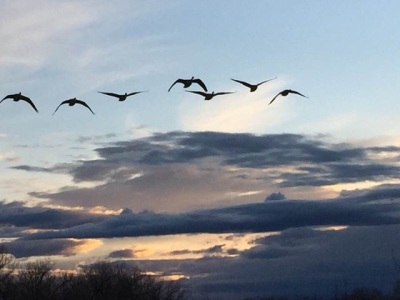
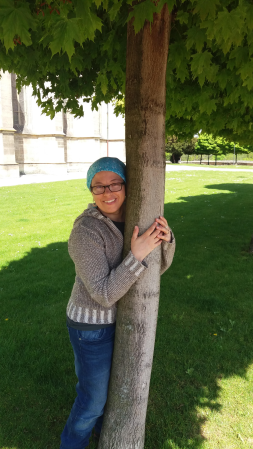 Tomorrow is Tu B’Shevat, the New Year of the Trees, or their birthday. It is the day of the year when all trees, regardless of when they have been planted, turn another year older. The rabbis standardized this day in an effort to minimize complexities, since in the land of Israel, fruit can only be eaten from trees that are four or older (Leviticus 23-25). Tu B’Shevat, then, on a practical level, marks how old fruit bearing trees are.
 When I walked into the space a bolt of
 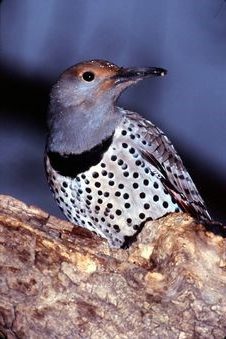 [
[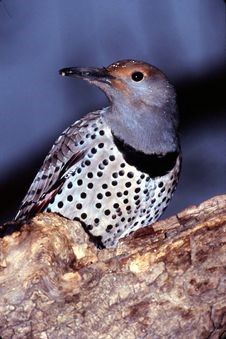 January 1st dawned clear and cold as I meandered through the frosted scrub and under the graceful Cottonwoods that line the Bosque by the river. I hadn’t planned on a walk because it was so frigid but the ethereal light that precedes the dawn often becomes a “calling” I cannot resist, pulling me towards the river regardless of practical intentions.
 Sixteen years ago, I was living alone in New Orleans in a lovely Craftsman’s Cottage I’d purchased the year before. In late December—just around now—a friend called to tell me about a kitten she’d seen at her Uptown veterinary office: “It’s time you got a familiar,” she declared. “I think this one’s perfect for you.” Grudgingly, I agreed to visit the vet’s office and take a look at the little black-and-white female tabby she’d seen. I wasn’t at all sure I was ready, but Mary was my priestess, the leader of our small coven, and I trusted her implicitly.
