The original Night Chant involved four teams who danced twelve times each with half-hour intervals in between-a total of ten hours. The dance movements involve two lines facing each other. Each of the six male dancers takes his female partner, dances with her to the end of the line, drops her there, and moves back to his own side. The chant itself is performed without variation and has a hypnotic effect on the listeners. The only relief is provided by the rainmaker-clown named Tonenili, who sprinkles water around and engages in other playful antics.
The medicine men who supervise the Night Chant insist that everything-each dot and line in every sand painting, each verse in every song, each feather on each mask-be arranged in exactly the same way each time the curing ceremony is performed or it will not bring about the desired result. There are probably as many active Night Chant medicine men today as at any time in Navajo history, due to the general increase in the Navajo population, the popularity of the ceremony, and the central role it plays in Navajo life and health. Continue reading “Navajo Night Chant – Part 2 by Sara Wright”
With the Winter Moon waxing on nights when stars are falling from the sky and the winter solstice passage, I am much aware of the healing and dwelling place that I inhabit that also characterizes these dark months of the year.
Unfortunately, even those who acknowledge our seasonal turnings rarely honor the dark as sacred. At the winter solstice the emphasis is still on light.
She climbed steep hills
and rubble to reach the meadow.
The flat – topped mountain peered down
at the woman
gathering stones
as if they were diamonds.
Amber, moss, pearl white,
rose red and orange,
gray and ebony – a luminescence
emanated from each,
almost as if the moon had
infused each flake and boulder
with her translucent light.
The Pedernal absorbed
her child-like wonder
and gifted her
with stones
that told a story
of a sea of shells and plants
that once lived there
before people.
Stones speak to
those who love them.
Notes on the Pedernal:
In Abiquiu, New Mexico there is a flat – topped mountain that is called the Pedernal that can be seen from most directions and has been painted and photographed from every angle. Indigenous peoples considered this mountain to be sacred. The mythical (Navajo) Changing Woman was born on this mountain, and it is said that she lives there still. Each year she is born in the spring, emerges as a young woman during the summer, becomes a mother in the fall, and turns into an old woman during the winter season, only to be born again. In the East she is Earth Woman, in the South Mountain Woman, in the West she is Water Woman and in the North she is Corn Woman. Changing Woman embodies Nature’s as a whole and since the Navajo trace their lineage through a matrilineal line she is the Mother of all the People.
The first way Changing Woman saves the world is by birthing the twins, the male aspects of herself. This embodied female/male energy is capable of taking action on behalf of all the people, ridding the world of monsters. It is important to note that the twins require the help of Spider Grandmother’s wisdom, guidance and protection because Spider Grandmother is Changing Woman’s older wisdom aspect, a continuation of her mother – line.
The second and most critical way Changing Woman saves the world from “monsters” is because she secures the matrilineal line for the People. The matrilineal system traces descent through maternal roots. Men who marry move to the wife’s residence (matrilocal) and become part of the maternal family. Mothers, aunts, and grandmothers bring up the children, protecting, guiding, and teaching the children the ancestral family stories. This system unites Navajo society and creates the social structure of the culture connecting generations through kinship.
Although in present day Navajo culture Patriarchy has eroded women’s power the four tenets (harmony, beauty, balance, peace) remain part of the judicial system of the Navajo people.
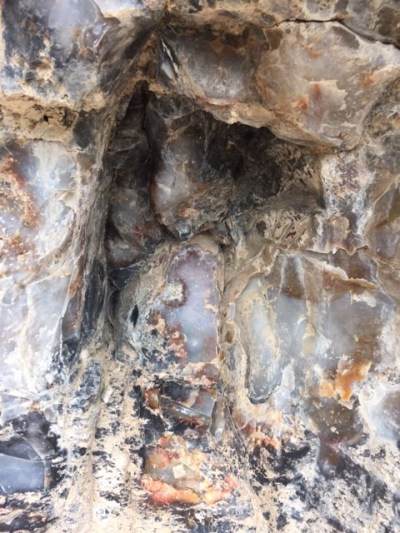
The multicolored stone called chert and its darker twin, flint, are structural (quartz) parts of this mountain. These stones were once collected to craft the finest arrowheads for hunting.
This collection of chert fragments lies on my desk along with a vessel made by an Indigenous woman. These stones remind me of the power of Changing Woman and how she continues to work through my life even as I return to the North, my homeland.
The mountain absorbed
her child-like wonder
with pleasure,
and gifted one
who climbed to her summit
with a stone
that told a story
of a sea of shells and plants
that once lived here.
Stones speak to
those who love them.
In the myth Changing Woman never dies; she grows old and young again with the seasons. In the East she is Earth Woman, in the South Mountain Woman, in the West she is Water Woman and in the North she is Corn Woman.
Changing Woman embodies Nature’s as a whole and since the Navajo trace their lineage through a matrilineal line she is the Mother of all the People.
According to Navajo mythology the first way Changing Woman saves the world is by birthing the twins, the male aspects of herself. This embodied female/male energy is capable of taking action on behalf of all the people, ridding the world of monsters. It is important to note that the twins require the help of Spider Grandmother’s wisdom, guidance and protection because Spider Grandmother is Changing Woman’s older wisdom aspect, a continuation of her mother – line.
The second and most critical way Changing Woman saves the world from “monsters” is because she secures the matrilineal line for the People. The matrilineal system traces descent through maternal roots. Men who marry move to the wife’s residence (matrilocal) and become part of the maternal family. Mothers, aunts, and grandmothers bring up the children, protecting, guiding, and teaching the children the ancestral family stories. This system unites Navajo society and creates the social structure of the culture connecting generations through kinship.
Although in present day Navajo culture Patriarchy has eroded women’s power the four tenets (harmony, beauty, balance, peace) remain part of the judicial system of the Navajo people.
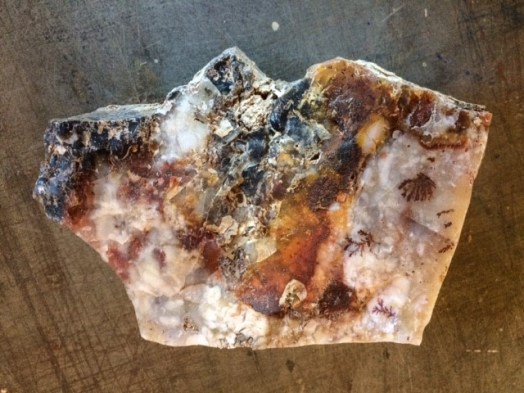
Above photo of plant and shell fossils in the chert was taken by Iren Schio
Working notes:
In Abiquiu, New Mexico the flat – topped mountain we call the Pedernal can be seen from most directions and has been painted and photographed from every angle. Indigenous peoples considered this mountain to be sacred. The mythical (Navajo) Changing Woman was born on this mountain, and it is said that she lives there still. Each year she is born in the spring, emerges as a young woman during the summer, becomes a mother in the fall, and turns into an old woman during the winter season, only to be born again. The multicolored stone called chert and its darker twin, flint, are structural (quartz) parts of this mountain. These stones were once collected to craft the finest arrowheads for hunting.
I have a passion for all stones but especially chert because of its colors. Chert and flint are microcrystalline varieties of quartz. Their crystals are so tiny that chert and flint fracture more like glass than quartz crystals. Skilled Native peoples chipped chert and flint pieces into arrowheads, spear points, scrapers, and other tools. The only difference between chert and flint is color: flint is black or nearly black, while chert tends to be white, gray, pink, or red and can be plain, banded, or preserve fossil traces.
Sara is a naturalist, ethologist ( a person who studies animals in their natural habitats) (former) Jungian Pattern Analyst, and a writer. She publishes her work regularly in a number of different venues and is presently living in Maine.
When I asked Debra about this circle she said “the circle around the eye is symbolic of the moon, a nightly ritual of seeing the moon.” Curiously, women as ‘seers’ have an intimate relationship with the moon. Both eyes seem to be able to stare directly through the mask. The woman’s lips are parted; she is breathing but there is no sense that she is about to speak.
The length of the woman’s neck is accentuated by its distinct slate blue tones. This neck seems especially vulnerable – stretched perhaps to endurance. Suddenly it occurs to me that it is also a neck, like a chicken’s neck, that is ready for the chopping block. Has this woman lost her voice? Her ability to breathe? Is there a threat of being separated from her body? The suggestion of a body ends at the woman’s shoulders so we are left wondering…
Since our feelings and emotions reside in our bodies the suggestion here is that this woman may be without access to her body on an instinctual level. If so she is unable to protect herself. Blue is a color that is sometimes associated with death. In some Native traditions, like that of the Zuni and the Lakota Sioux blue is the color of the Underworld. Particularly touching is the pale four petaled flower to the lower right of the left half of the relief, a flower without a stem or root, or is this a wheel of some kind, one that is in motion – whirling – chaos? To my mind a number of aspects of this portrayal speak to the presence of death. Continue reading “The Mask and the Mirror – Part 2 by Sara Wright”
Mother Earth does not discriminate. She cares for all her children in all their varied forms. Our ancient ancestors considered Earth and its many geological elements to be feminine and/or associated with goddesses – from caves, to rivers, lakes and seas, to forests, to agricultural fields, to mountains.
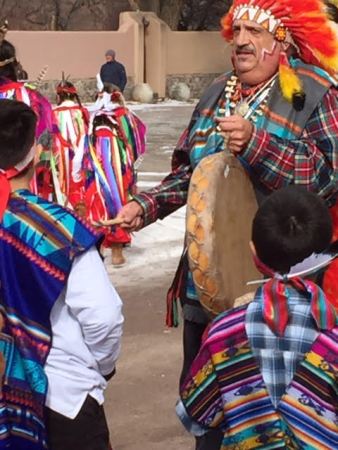
This morning I went up to the village plaza in Abiquiu to watch the dancers parade around the church with their saint who is also honored at this village festival held every year at the end of November.
This is one of the two Native American festivals that is honored each year by the genizaros who are mixed Spanish and American Indian people who embrace and practice the Catholicism that was once forced upon them.
This eclectic community is made up of descendants of Native American slaves. Those captured in warfare were brought here, converted to Catholicism, taught Spanish and held in servitude by New Mexican families. The young women and female children endured the usual atrocities perpetuated on captive females including rape at the hands of their captors. Some New Mexican male genizaros gained their freedom by serving as soldiers to defend frontier villages like Abiquiu from Indian raids. By the late 1700s, genizaros comprised one-third of the population of New Mexico. Ultimately these non – tribal peoples were assimilated into New Mexican culture.
The dances are beautiful to witness with the smallest female children dressed in predominantly white regalia some wearing a rainbow of ribbons, the young girls were dressed in red and white and had red circles of war paint inscribed on their cheeks, some of the older women also wore red, many carried turkey or eagle feathers in their hands. Most wore face paint.
It should have been a wonderful journey, organized by three dear friends who run a yoga center in Costa Rica. I would be traveling with my husband, these friends, and thirteen other like-minded folk to the Sacred Valley of the Incas in the Andes highlands of southern Peru. We’d be staying at a lovely retreat center just outside Pisac, an ancient market town encircled by imposing mountains. And our itinerary would take us to some of the most important Inca sites, including the iconic, hauntingly beautiful and remote Machu Picchu.
It should have been a wonderful journey, organized by three dear friends who run a yoga center in Costa Rica. I would be traveling with my husband, these friends, and thirteen other like-minded folk to the Sacred Valley of the Incas in the Andes highlands of southern Peru. We’d be staying at a lovely retreat center just outside Pisac, an ancient market town encircled by imposing mountains. And our itinerary would take us to some of the most important Inca sites, including the iconic, hauntingly beautiful and remote Machu Picchu.
We’d made the plans almost a year ago, and I’d been looking forward to the trip. But I fell sick several weeks beforehand and was hesitant to leave my Brooklyn home. Everyone assured me the journey would be magical, and so, feeling better but still uncharacteristically fearful, I reluctantly decided to go. Continue reading ““Para limpiar el corazon”: To Cleanse the Heart by Joyce Zonana”
Roughly 3 ½ years ago my FAR post was about the struggle that the Hawaiian people were facing with the proposed building of a Thirty Meter Telescope on the most sacred mountain in the Hawaiian Islands, Mauna Kea. When that post was published, there was a large social media presence and protests that helped cease construction of the telescope and sent the issue to the Hawaiian Courts. I am writing this post because Mauna Kea is again under threat. The Courts ruled in the favor of the telescope and for the last two months, large scale protests have gone under way on the road up to Mauna Kea.
Eagle, with its soaring flight, its vision, and its courage, has inspired humans since our early days. Eagle, Lord of the Birds, is the ultimate symbol of grandeur, splendor and nobility.


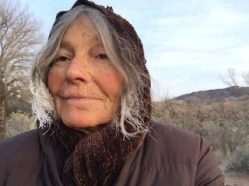
 With the Winter Moon waxing on nights when stars are falling from the sky and the winter solstice passage, I am much aware of the healing and dwelling place that I inhabit that also characterizes these dark months of the year.
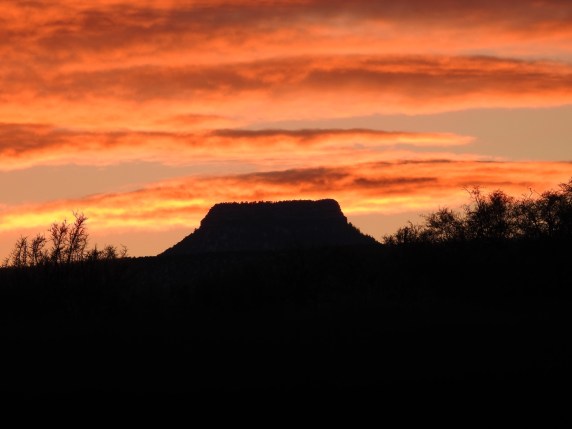 She climbed steep hills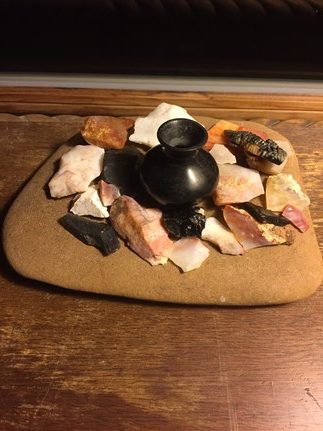


 It should have been a wonderful journey, organized by three dear friends who run a yoga center in Costa Rica. I would be traveling with my husband, these friends, and thirteen other like-minded folk to the
  Roughly 3 ½ years ago

