Echoes of Mesopotamia by Molly

IMG_0522

Echoes of Mesopotamia
small figures from ancient places
ancient times
and ancient faces
ancient words
and ancient wisdom
still flowing in my veins

Clay in my hands
clay in her hands
running on the rivers of time
spiraling in the mysteries of being
spinning in the eddies and ripples of eternity…

I have a strong emotional connection to ancient Paleolithic and Neolithic goddess sculptures. I do not find that I feel as personally connected to later goddess imagery, but very ancient figures call to something deep and powerful within me. I have a sculpture of the Goddess of Willendorf at a central point on my altar. Sometimes I hold her and wonder and muse about who carved the original. I almost feel a thread that reaches out and continues to connect us to that nearly lost past—all the culture and society and how very much we don’t know about early human history. There is such a solid power to these early figures and to me they speak of the numinous, non-personified, Great Goddess weaving her way throughout time and space. Continue reading “Echoes of Mesopotamia by Molly”

On the Path of Holiness by Ivy Helman

headshotGrowing up, there was a way in which I always felt excluded from holy things.  There was the holy: blessed water, sacred oil, priestly blessings, consecrated priests, pilgrimage sites, religious buildings and communion to name a few and then there was everything else including me.  Yet, I was a good kid who always (or almost always) did as I was told.  Doing good works is not contrary to a Catholic childhood or education.  In fact, it is an integral part of Catholicism, but there is also a competing notion that good works are in a different ontological category from holiness.  While goodness merits salvation, salvation is not connected to being holy.  Holiness was granted; salvation was earned.  In addition, holiness also seemed more distant because men had more access to holiness than women did.  Only men could be ordained and priests consecrate the Eucharist, celebrate the sacraments and bless people and things.  These are all holy things and the closer one interacts with holiness, the more holiness is bound to transfer onto the person coming into contact with them. Continue reading “On the Path of Holiness by Ivy Helman”

Moving In by amina wadud

amina 2014 - cropped

After 52 days of homelessness—or more precisely as I heard it called “sofa surfing”—sleeping between the sofa and air mattress in my children’s homes, not eating their food unless invited, contributing to their upkeep, including cleaning bath tubs and dishes – I finally found a place that fits the basic requirement and income bracket for me, my daughter, her son and her former roommate (plus two cats).  It was promised on the 11th, but up until the 14th nothing even remotely resembling a kitchen was in place.  No appliances, no cabinets, not even a kitchen sink.  But my daughter had already twice extended her lease at her previous address and we were up against a new deadline. 

“We’re okay without a kitchen,” we said, so long as we can move in now.  It was promised on the 11th. I’m not going to fudge on the dates, because almost every day we were told about one thing or another that would take ‘one more’ day.  Two weeks later, I wake for morning prayer and meditation only to find water flooding beneath the refrigerator. And there is still a gaping hole where a dishwasher will one day be.  Continue reading “Moving In by amina wadud”

Creating Space: Mosques Affirming All Bodies, Minds, and Hearts by Laury Silvers

Silvers, Bio Pic FRBlogIn my first blog for Feminism and Religion, I discussed the cognitive and embodied dissonance that some Muslims experience as a result of historically (not eternally) gendered ritual forms. I ended with a promise to share with readers the ways in which el-Tawhid Juma Circle mosques try to create space to break free of those forms. Our mosques affirm all human beings as spiritually, socially, and ritually equal and try to break down the social hierarchy of ritual and theological leadership by opening up a space for all bodies, minds, and hearts to lead and follow as equals among each other.

Continue reading “Creating Space: Mosques Affirming All Bodies, Minds, and Hearts by Laury Silvers”

Ar-Rahman, Ar-Rahim and Ar-Rahm by Jameelah X. Medina

 [The Most Compassionate, Beneficent, Ever-Merciful and the Womb]

In the Islamic tradition, there are numerous Names of Allah of which 99 are said to be known. Of these 99 Names or Attributes of Allah, two open the Qur’an in the very first line in the first chapter: ar-Rahman and ar-Rahim. The Qur’an begins with, “Bi ismiAllahi ar-Rahmani ar-Rahim [in the Name of God, The Beneficent, The Merciful]…” These two names are also ubiquitously repeated by Muslims when reciting from the Qur’an, initiating prayers, commencing events and gatherings, and more.

Although I am not particularly interested in etymology, I have long been fascinated by these two Names or Attributes of Allah coming from the same root as the word for “womb” and “mercy”—ar-rahm and ar-rahma respectively. Since all of human creation is brought into physical being through a womb I had so many questions: 1) Of all the root words that could have been used to establish the meaning of these opening words of the Qur’an to describe the Creator, why were words that relate to the womb, wom(b)anhood, female anatomy, and motherhood chosen instead of some phallic symbol of power and creation?; 2) How is mercy, beneficence, compassion, and graciousness related to the womb in Arabic?; 3) Was this Allah’s way of elevating the status of women at that time in that time and among the people to whom the Qur’an was originally revealed?; 4) If the female attribute of a womb  is related to these two Attributes of Allah, is the womb godly? Is the wom(b)man divine?; and lastly, 5) Could we have all been created from the figurative or even literal Womb of Allah making Allah The Great Mother of all creation? Continue reading “Ar-Rahman, Ar-Rahim and Ar-Rahm by Jameelah X. Medina”

How I Loved Myself through Charismatic Worship by Andreea Nica

Andreea Nica, pentecostalismBreaking up with your first love can be an excruciating process; especially when it happens to be completely entangled with your being. God was my first love and he stayed for a long while. We had many exhilarating times together, particularly within the branch of Christianity I was raised in: Pentecostalism. I fell in love with God when I uttered his divine language at 13 years of age.

Currently, I’m writing my memoir and narrative nonfiction, Freeligious ™, for which I explore the scientific explanations of my charismatic experiences in the church, which inevitably led to a closer attachment to God. In the Pentecostal church, we were encouraged to connect with God through supernatural phenomena.

Examples include: speaking in tongues (glossolalia), healings, trances (drunk in the holy spirit), visions (hallucinations), prophetic messages (delusions), rebuking evil spirits (paranoia), and many more god-friendly activities. While some of my church peers and most outsiders found the charismatic ordeal to be phantasmical and plain ol’ crazy, I became enchanted by the initiation. The initiation process was quite simple really. As believers in Christ, we must receive the baptism of the holy spirit which usually took the form of speaking in tongues, clinically known as glossolalia. Continue reading “How I Loved Myself through Charismatic Worship by Andreea Nica”

Size Islam: Where do I fit in? by Jameelah X. Medina

Size Islam: Where do I fit in?

Reading Laury Silvers’ recent post caused me to reflect upon not only how my body is gendered in worship as a Muslim woman, but how my body is displaced, inconvenient, and often seen as an assault on thinner women’s, and even Islamic, sensibilities. This is a phenomenon in the prayer line, on prayer mats, in socio-religious gatherings, and even in online discussions with Muslims and other major religions.

I am usually the tallest (or among the tallest) women in mosques I have frequented. I am also obese and among the largest women in the mosque. I enjoy lifting weights, which also causes me to have very large thighs and arms and broad shoulders. Additionally, I have long feet, as well as wide hips and a large backside that no amount of fabric can hide. Among girlfriends, I’ve often referred to my shape as a “three-hour glass.” Needless to say, some shorter and smaller people find my frame imposing. Continue reading “Size Islam: Where do I fit in? by Jameelah X. Medina”

The Quiet Voice of the Frame Drum by Oxana Poberejnaia

oxanaLayne Redmond passed away on 28 October 2013. Days before her death I received by post her signature Lotus Tambourine which Layne developed with Remo, manufacturer of world frame drums. Remo posted a tribute to her on her page as a Remo artist. Percussive Arts Society published an In Memoriam of her, along with the link to an article by Layne Redmond “Frame Drums and History”. Facebook and especially Women Frame Drumming page exploded with expressions of gratitude, sympathy and testimonials of how Layne changed people’s lives. Here is an account of Layne’s last summer by a person who supported her in her end-of-life transition.

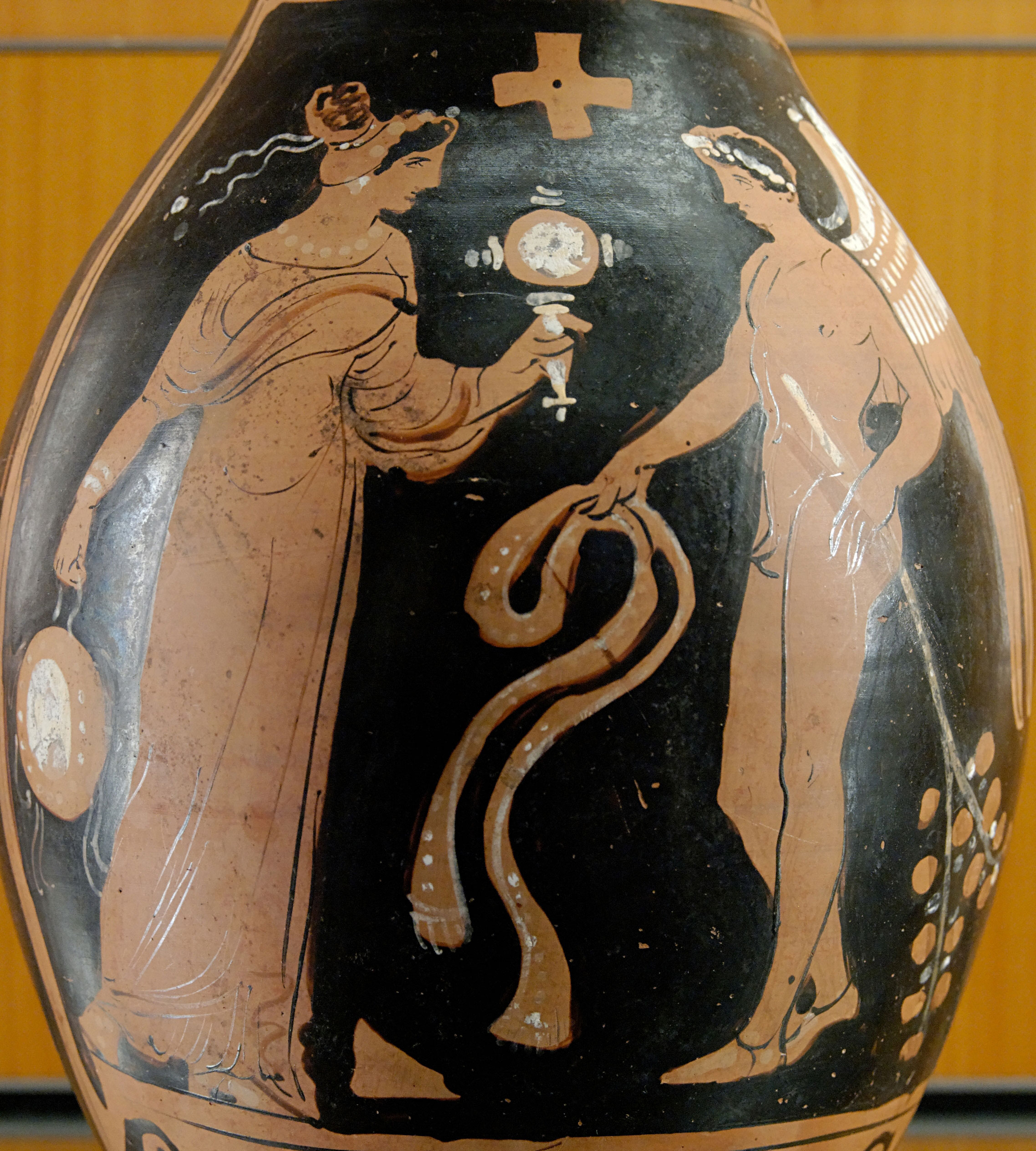
Woman_mirror_tambourine_MBA_Lyon_L631FWLayne Redmond was intensely busy with two projects during this time: completing her film about drumming spiritual practices to dream awake Afro-Brazilian Gods and Goddesses, and preparing her seminal book When The Drummers Were Women for re-printing with new materials and photos. She put out appeals for both projects, including on Karen Tate’s show “The Voices of the Sacred Feminine” in June 2013, and people helped with their money and time.

Continue reading “The Quiet Voice of the Frame Drum by Oxana Poberejnaia”

A Poem About Sister Love by Marcia Mount Shoop

A Poem:  Sister Love

This post will
never be complete
it can only house the fragments,
the remains
of days at my sister’s hospital bed

the vortex of medical labels
“critically ill”
“brain aneurism”
the singular attention to
fragile body chemistry
sodium, potassium, blood sugar, magnesium

Continue reading “A Poem About Sister Love by Marcia Mount Shoop”

Longing for Hermitage by Elizabeth Cunningham

Elizabeth Cunningham headshot jpegAt least since the days of the Desert Mothers in the 4th and 5th centuries CE, there have been women in the Christian tradition (and doubtless other traditions) who have lived lives in religious solitude, whether by choice or circumstance.  In Medieval Europe many churches had anchorholds, small enclosures inhabited by men or women dedicated to a life of solitude and prayer. The word anchorhold implies that the presence of the anchoress or anchorite grounded the church community, but the word derives from the ancient Greek verb (pronounced anachōreō) for to retire or withdraw.  Anchoress Julian of Norwich is still revered as the author Revelations of Divine Love, possibly the earliest surviving book written by a woman in the English language.  Six centuries after her death, her vision of Jesus our Mother continues to challenge, comfort, and inspire.

I grew up in an Episcopal rectory, daughter of a secretly agnostic mother who loathed being a minister’s wife (living in a fishbowl, she said) and a father who preached and practiced the social gospel as had his father before him. If you weren’t directly feeding, clothing, visiting “the least of these my brethren,” your pieties (as my father dismissed them) were worthless. At every meal we prayed, “make us always mindful of the needs of others.”  Selfishness and individualism were synonymous. The pronoun “I” was frowned upon.  The only route to salvation was social and/or political activism. My father walked his talk, literally, taking part in the 1965 march from Selma to Montgomery.

Continue reading “Longing for Hermitage by Elizabeth Cunningham”