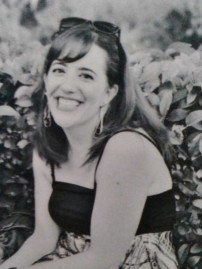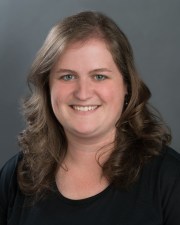
Empowering Toys and the Problem of Class Divisions by Katie M. Deaver

I recently noticed that I’ve been spending a lot of time thinking about financial security, the way class systems work in the United States context, and how these types of realities inform my feminism.  Part of this is no doubt due to the fact that for the first time in my life I am not a student with multiple part time jobs, but rather am a “real” adult working full time at a job that offers retirement and medical benefits.

As I’ve written about before, I grew up in a poor family in rural Wisconsin and as a result I am often hyper vigilant about my finances.  While I likely go a bit overboard when organizing my budgeting, balancing, saving, and spending this type of organizing is something I can control.  The simple act of paying a bill, or determining how much I can spend on groceries this week gives me a profound sense of safety because for the first time there really is enough coming in to support my basic needs.

Continue reading “Empowering Toys and the Problem of Class Divisions by Katie M. Deaver”

Birthing a New World by Xochitl Alvizo

Yesterday I “paused” my post and left you with words from a dear friend Edyka Chilomé, a powerful “artivist” invested in the healing of our world. And our world is in need of healing indeed.

Today was another tough day of carrying the pain of our continued inhumanity toward one another: Las Vegas, Puerto Rico, Myanmar…and so many other ongoing tragedies. I find it hard to find words – to know what to offer here on Feminism and Religion. Some days it seems necessary to go on with our work as planned; la lucha is every day and we keep at it. But other days, keeping on as planned just seems absurd.  I think these are precisely the days that Audre Lorde had in mind when she wrote that poetry is not a luxury. Continue reading “Birthing a New World by Xochitl Alvizo”

The Spirit and Jarena Lee: Inspiration to Break Boundaries by Elise M. Edwards

elise-edwardsI am so frustrated that we are still fighting to affirm women’s place in leadership.  I’ve been thinking about this struggle in the context of church ministries (especially preaching) and social activism, seeing a stark contrast between the way institutional churches and universities promote and subvert women’s authority and the ways movements like Black Lives Matter do.

Particularly, I’ve been struck by the ways that more radical movements employ language and practices that are based in spirit more than hierarchical authority.  I have found a theme emphasizing equality in humanity’s access to spirit in both historical and contemporary movements and writings about religious experience.  I’m certainly not the first one to notice or discuss how appeals to Spirit have empowered those excluded from dominant systems of power to challenge constrictive social structures, but I would like to share how this dynamic has become more visible to me so that, together, we might find encouragement, inspiration, and food for thought.

Continue reading “The Spirit and Jarena Lee: Inspiration to Break Boundaries by Elise M. Edwards”

Reclaiming My Time: A Meditation about Mindfulness and Faithfulness to One’s Purpose by Elise M. Edwards

elise-edwardsYou may have seen the viral video of Congressional Representative Maxine Waters’ demands for “Reclaiming my time!”  Video was taken during a proceeding in which Representative Waters is questioning Treasury Secretary Steven Mnuchin, who responds with long-winded answers and indirect statements.  Ms. Waters appears annoyed, and she is not interested in flattery.  She wants a direct response to her question.  When she does not get it, she appeals to protocol, which allows her to “reclaim” the time allotted to her (intentionally) wasted by a man who wants to dodge her questions.

The video was very popular on my social media feeds.  I know of preachers who used “Reclaiming my Time” in their sermons the following Sunday.  There were memes, of course.  There was even another viral video of Mykal Kilgore singing his gospel composition of Waters’ words.  He and Waters appeared on a TV show soon after.

It’s fairly obvious why this video–and the sentiment behind it–struck such a chord with so many people.  We wish we could reclaim our time in situations where we are moving forward with a purpose, only to be met with delays and roadblocks from those who want to deter us.  Sometimes, these delays are unintentional.  But too often, they are strategic attempts to wear us down, distract us, and redirect our energy away from our goal.  Ms. Waters wasn’t having it.  She called out the delay tactics and held firm to what was rightfully hers.  Her time.

Continue reading “Reclaiming My Time: A Meditation about Mindfulness and Faithfulness to One’s Purpose by Elise M. Edwards”

Viśākhā: Surrogate Mother of Buddhism by Oxana Poberejnaia

oxanaViśākhā is often called the greatest female lay follower of the Buddha. She prompted the Buddha to give numerous teachings. She also donated generously to the Sangha (monastic order). Her crowning contribution was building a monastery called Migāramātupāsāda.

Visakha Directing the Construction of the Eastern Monastery in Savatthi, at the Nava Jetavana, Shravasti

She is said to either die as a “stream-enterer” (a person who will definitely become enlightened, no matter how many life times it will take). Another account about her afterlife says that she would live for eons in happiness in one of the divine realms before achieving the final Liberation there and then.

Viśākhā appears in numerous Suttas of Theravadin Canon. From the modern feminist point of view, the content of these discourses reinforces patriarchal gender stereotypes. In particular, Viśākhā is portrayed as a caring Mother for her relatives, Bhikkhus (Buddhist monks and nuns), and other people.

Continue reading “Viśākhā: Surrogate Mother of Buddhism by Oxana Poberejnaia”

Sex, Death and the Gods (Part I) by Vibha Shetiya

Vibha I recently re-watched a BBC documentary my students and I had discussed in class last Fall. “Sex, Death and the Gods,” directed by Beeban Kidron, takes a close and rather intimate look at the Devadasi system as currently practiced in Karnataka, a state in southern India. In its ancient form, young girls were dedicated to temples, and their duties included dancing and singing to the deities, a form of worship in itself. Delivering on its provocative title – one that describes how prostitution and sexually-transmitted diseases such as AIDS intersect with the realm of the divine – the film sheds light on how a practice once sanctioned by religion came to offend public sensibilities because of changing mores regarding sexuality, ultimately leading to its being outlawed in twentieth century India.

Despite the ban and denials by government officials, however, the practice continues to exist in some villages and towns, albeit watered-down from its historical form. In the first part of this post, I present the background of the system; in the second, I discuss how “Sex, Death and the Gods” problematizes the concept of women’s agency, a thorny matter especially when issues of morality enter the picture, as it almost always does with “problematic” professions that involve an exchange of money for sex. Continue reading “Sex, Death and the Gods (Part I) by Vibha Shetiya”

What Traci West Taught Me about Dominant and Excluded Voices by Elise M. Edwards

Elise EdwardsIn my previous post, I mentioned a book I am writing about how theological and ethical considerations in architectural design can define good architecture.  In that post and in ones to follow, I am acknowledging the feminists and womanists and mujeristas who have influenced me while also opening up the dialogue to the feminists in this community who continue to inspire and guide me to do my best work.

But today, instead of talking about creativity or architecture, I want to discuss how I arrived at the conviction that community decisions about how we ought to live—whether those are decisions about laws, institutional policies, religious practices or architectural buildings—need to include the voices of the diverse people they directly and indirectly influence. Continue reading “What Traci West Taught Me about Dominant and Excluded Voices by Elise M. Edwards”

Mazel Tov Tzidkaniyot of the Wall by Ivy Helman

20151004_161012I have never understood the logic behind sexism. Why is half (or so) of the human race better than the other half? Of course, patriarchy and patriarchal religious traditions offer various seemingly logical reasons, sometimes even divine explanations for the inequality between the sexes. Still, the –isms of patriarchy, whatever their “reasons” or perhaps better excuses, puzzle me.

Even more puzzling are the steps patriarchy-orientated men and women take to preserve these distorted systems. Violence usually goes hand-in-hand attempting to control others in order to preserve the status quo. Obviously if you need to resort to violence to keep people in their place, there is something horribly wrong with society. That being said – one could say that almost no society, nation or culture in our modern times doesn’t have some form of patriarchal violence within it. One would be correct to attribute some measure of the increase of violence to globalization, capitalism, fear, past colonialism and/or neocolonialism. Nonetheless one is hard pressed to find a culture without sexism, without patriarchy and without the need to keep the system in place through violence. Continue reading “Mazel Tov Tzidkaniyot of the Wall by Ivy Helman”

The Great Mother Calls Us to Action by Carolyn Lee Boyd

carolynlboydWhen Flint, Michigan’s water supply was poisoned by lead through a policy decision— as has been widely reported, especially by Rachel Maddow — LeeAnne Walters and Melissa Mays started an organization called Water You Fighting For in protest, emphasizing their roles as mothers of children suffering from lead poisoning. Despite continual ridicule from state and local officials, Walters, Mays and others, including Flint’s new mayor, a woman, refused to give up until their voices were heard.

According to Ms. Magazine, it is largely due to Walters and Mays’s efforts that the source of the water, which had been changed to save money from fresh lake water to river water that corroded the city’s pipes, was switched back. Unfortunately, it is too late for the 100,000 residents of Flint, including babies and small children, who have already been exposed to the lead that can cause permanent and irreversible brain damage and other health problems. Lead poisoning is continuing because the pipes have suffered irreparable damage.

“Mother’s movements” have proven to be extremely powerful agents of change for decades. Mothers Against Drunk Drivers and Moms Demand Action for Gun Sense in America in the US and Mothers of the Plaza de Mayo in Argentina are just some of the many movements organized by women who relate their activism to being mothers. While the instinct to protect children is deeply ingrained in the human soul, could it be that another important reason that these mother’s movements are so powerful is because they tap into a sense of the sacredness of the Great Mother, the Creatrix of the universe who has been envisioned as a mother since the beginning of human history? Continue reading “The Great Mother Calls Us to Action by Carolyn Lee Boyd”

The Right to Choose is the Right to Our Lives by Marie Cartier

MarieCartierforKCETa-thumb-300x448-72405Friday, January 22nd marks the 43rd anniversary of the Roe v. Wade decision of 1973 which provided all women nationwide, for the first time, the right to get a legal abortion for any reason–the right to choose. There are celebrations, and actions for visibility planned throughout the nation. Some of them are listed on the Planned Parenthood website.

On this anniversary,  the stakes for women’s access to legal abortion are higher than ever. Politicians threaten to further restrict access and the U.S. Supreme Court soon will  hear the biggest abortion case in decades. What was life was like for women before legal abortion–and what could it again become? Politicians threaten to continue to take women’s health backwards. Continue reading “The Right to Choose is the Right to Our Lives by Marie Cartier”