Women and plants have been in relationship since the dawn of humankind. Women were the Seed keepers. Women created agriculture. Women learned what herbs to use for healing. Women noticed wildflowers, loved them, grew them and painted them, created poems about them. Some women and plants still share a deep bond, and as an herbalist I am one of these women. My relationship with wildflowers stretches back to the first word I ever spoke – “cups” for the wild buttercups I loved and gathered as a toddler.
Recently, I joined a wildflower identification site online because wild flowers are so dear to my heart. Every spring I am drawn into the forest glades to meet my diminutive friends that burst unbidden, unfurling from moisture laden rotting leaves. So many are fragrant!
With the summer solstice on the horizon and abnormally high temperatures, we are living a withering drought, and my intrepid little wildflowers are fading, their annual cycle completed earlier than usual. Even in a good year this wildflower season is never long enough for me.
One of my former students recommended UNFOLLOW to me, a memoir written by Megan Phelps-Roper, granddaughter of Fred Phelps (1929 – 2014), the (in)famous pastor of Westboro Baptist Church, Topeka, Kansas.
Some people may not be aware that Fred Phelps began his career as a civil rights attorney—someone who, in the 1960s, took on racial discrimination cases no other lawyer would touch. Today, he is best remembered as a preacher who vociferously opposed homosexuality, spreading his message “God Hates Fags” both in the pulpit and while picketing in public spaces. He and his followers also picketed the funerals of fallen soldiers with signs that read “Thank God for Dead Soldiers.” Phelps believed soldiers’ deaths (as well as natural disasters) to be God’s punishment for the country’s “bankrupt values,” especially the “sin” of homosexuality. Hence, God unleashes calamity and catastrophe on the United States, a nation in dire need of repentance.
This week’s Torah portion is Chukat. It covers a lot of ground. There are the mitzvot concerning purification with a red cow, the deaths of important individuals, and the continued wanderings in the desert, which are rife with complaining Israelites, plagues of snakes and destructions of enemies. It would be impossible to cover all of these events well in the length of this post, so instead I will am going to concentrate on a theme: water. I also want to explain some of the ways Jewish feminists have enriched our connection to water.
Water is first associated with the prophetess Miriam. Miriam is first called a prophetess in Exodus 15, when she takes the women of the community out to sing about their deliverance from Egypt by way of the Re(e)d Sea. Her “Song of the Sea” is thought to be, by many scholars, one of the oldest written texts of the Torah. Yet, the connection between Miriam and water starts earlier in the Torah. Miriam is Moses’ and Aaron’s sister and the one who watches over Moses when his mother, Joheved, hides him in a reed basket on the edge of the Nile (Exodus 2:4). She approaches the Pharaoh’s daughter to secure a milkmaid for her brother (Exodus 4:7).
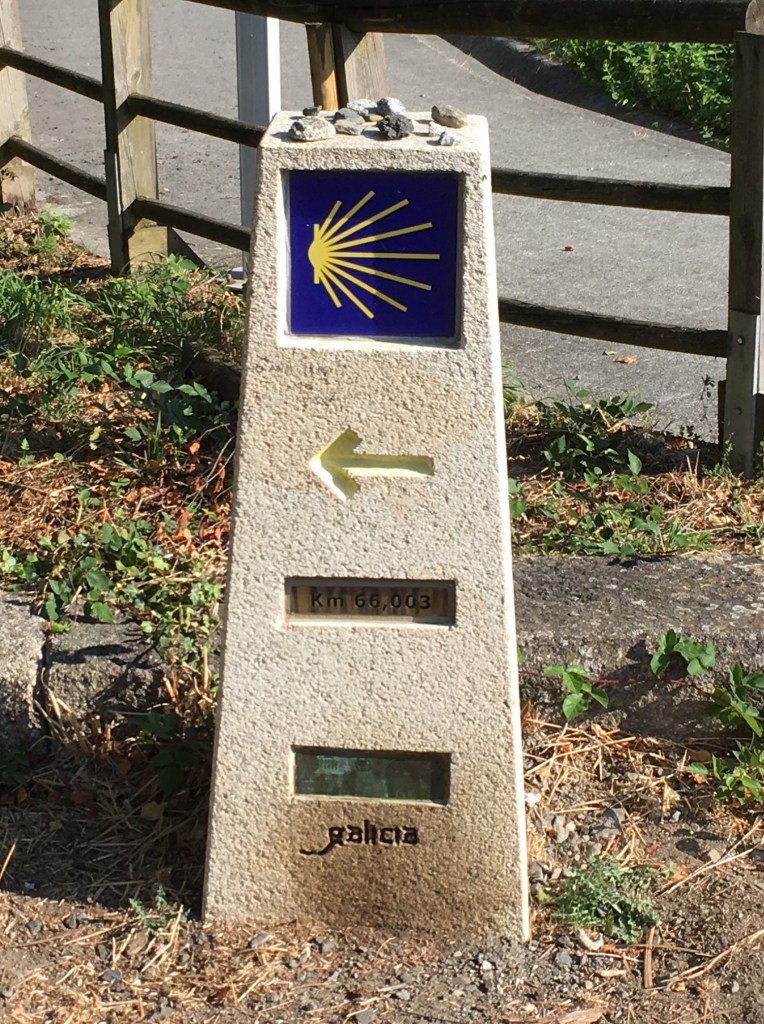
A way marker on the Camino de Santiago de Compostela, Galicia, Spain.
Throughout our long Covid crisis, our daily walk offered precious respite from the tedium of being perpetually housebound and viewing the outer world through electronic screens. Walking brought us exercise and fresh air. It cleared our heads, lifted our mood, and even gave us the rare opportunity to have socially distanced conversations with other humans, face to face.
As we come out of this pandemic year, let’s keep walking. What if we turned our daily walk into a pilgrimage? If we reframed each walk as a daily leg of a journey that will eventually lead us into a post-pandemic future? A pilgrimage in place, as it were.
A pilgrimage is a journey, traditionally taken on foot, to a sacred destination, Mecca, Jerusalem, and Rome being some of the most famous examples.
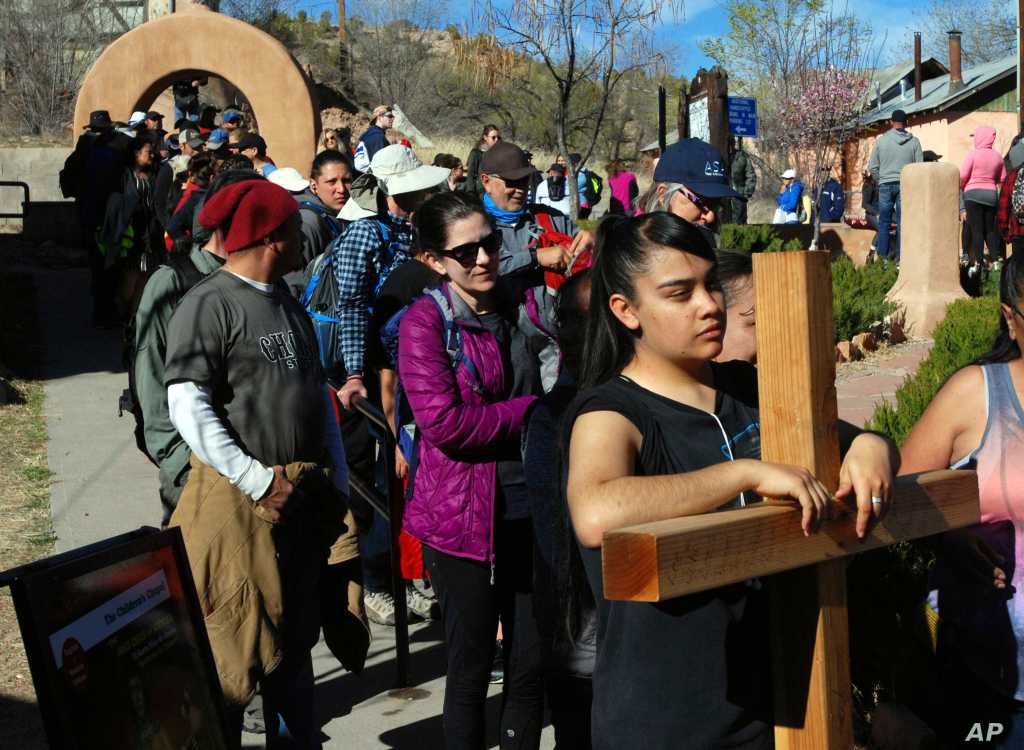
Before Covid, an estimated 300,000 pilgrims walked to the shrine of Chimayó, New Mexico each year in the week before Easter. Some pilgrims even carried heavy homemade crosses to participate in Christ’s journey to Calvary. During my visit to Chimayó some years ago, I witnessed the faithful arriving in the simple adobe church and kneeling before a round pit in the floor to take handfuls of the tierra bendita, the blessed earth, believed to have healing properties.
Jasmin Perez, 17, of Espanola, New Mexico, carries a cross on a pilgrimage to the small adobe church in Chimayo, New Mexico, on Friday, March 30, 2018. (AP Photo/Morgan Lee)
Pilgrims’ eyes perceived the sacred as manifest in what would mundanely be viewed as dirt. To be a pilgrim is to step into a realm of wonder and grace, where anything might happen. The Church itself won’t comment on any purported miracles, yet pilgrims leave abandoned crutches behind in the sanctuary as testimony of their experience.
Perhaps this revelation of the holy in the commonplace means that we can also be pilgrims without even leaving our neighborhood.
You don’t have to be an observant practitioner of any particular faith—not every pilgrim is religious or even spiritual. Some people walk the path to try to figure out what their spirituality even is.
When I walked the Camino, the iconic pilgrimage route to Santiago de Compostela in Galicia, Spain, I encountered people of diverse backgrounds making the pilgrimage for a variety of reasons. Some were taking a break from the stresses of their career to experience a simpler existence—sleeping in hostels and sharing communal meals with strangers. Others were walking to heal trauma and grief. I met grim-faced ex-military guys marching so fast that they wouldn’t deign to respond to other pilgrims’ cheerful greetings of, “Buen Camino!”
Each pilgrim was walking their personal Camino. There is no false reason to go on pilgrimage. Aren’t we all searching for something—some deeper meaning and sense of purpose? In a world so fractured by divisiveness and hatred, sharing the Camino with these vastly different people was an incredible experience of hospitality and spiritual homecoming that I will never forget. The pilgrim’s path is big enough to include us all.
So, what’s the difference between a pilgrimage and a walk? Your intention and your attention, which make all the difference. To have the richest possible experience, we need to be present in our physical bodies, here and now. Not staring at our smart phones or curating our experience on Instagram. Pilgrimage is a time out, a refuge from the news cycle and social media feed.
Pilgrimage doesn’t need to cover a lot of physical distance. It doesn’t even need to be linear. It can be circular. When visiting Nepal, I observed Buddhists circling for hours around the great Boudhanath Stupa in Kathmandu. All the while, they chanted mantras and fingered their mala beads. For one afternoon, I joined them, if only because I was too intimidated to walk elsewhere with the crazy traffic and air pollution. The shrine seemed like the safest and most peaceful place in the city.
Boudhanath Stupa in Kathmandu, Nepal
This kind of Circling the Center can be practiced anywhere and gives a whole new perspective to walking round the block or your local park.
If you feel so inspired, you could even draw a labyrinth in chalk on your driveway and practice the ancient and meditative art of labyrinth walking.
Pilgrimage isn’t about the external destination as much as the journey, the inner process. The ultimate pilgrimage brings us to the shrine of loving presence within our hearts.
There are many ways to be a pilgrim, but there are still some rules to be respected. The most important is practicing open-hearted hospitality for those you meet on your way, maybe stopping to chat with lonely neighbors.
Likewise, we need to be compassionate and welcoming to all the shadowy parts of ourselves that don’t feel the least bit spiritual—all our fear and rage and despair concerning this pandemic.
We come to our pilgrimage as we are and meet ourselves with radical acceptance.
Let us embrace the street where we live as our personal Camino. The sacred is present all around us and, indeed, within us, if we only look through pilgrims’ eyes and pay attention.
Buen Camino!
Mary Sharratt is on a mission to write women back into history. Her acclaimed novel Illuminations, drawn from the dramatic life of Hildegard von Bingen, is published by Mariner.Her new novelRevelations, about the mystical pilgrim Margery Kempe and her friendship with Julian of Norwich, is now available wherever books and ebooks are sold. Visit her website.
One of the 18 characteristics of Africana Womanism is being a self-definer. This piece is a sliver of my process to do and be exactly that.
I am striving to be a whole Black woman. I have an awareness that I am a whole person and transcend the role that Amerikkkan* society has given black women. Wholeness is justice and justice/liberation is wholeness. We are unaware of the full extent that racism has impacted Black women psychologically and emotionally. I’m saying racism constricts us in exhausting ways- the results have been wearing on our mental and sexual health, senses, nerves, physical health for years. And it still is.
One of the key factors to me that differentiates feminist spiritual paths from many dominant religious traditions and frameworks is the recognition and acknowledgement of the body as a source of wisdom, a source of pleasure, a source of learning, and a source of knowing. Not viewed as unclean, dirty, or as something to be mistrusted or transcended, we can return to our bodies again and again, dropping down into our bellies, bones, and blood, returning to center, and returning home to ourselves. Those who embark into thealogy quickly realize that it is a spirituality better lived than analyzed. My own experience of my goddess-oriented path is an intensely embodied one. I am here on this earth, in this body, my feet on the ground, my eyes on the sky, listening, feeling, and sensing. This, to me, is sacredness in motion, this is the Goddess right in front of me, she is witnessed in the very fact that my pulse beats in my wrist and that my eyes alight on those three crows coasting lightly into the treetops.
Sara Avant Stover, writing in the Book of SHE says: “Our bodies aren’t indentured servants here to labor for us until we take our dying breath. They are sacred chalices . . . . Our bodies always tell the truth and hold the information we need to thrive” (p. 43).
And, one of my favorite quotes of all comes from Camille Maurine in Meditations Secrets for Women who writes: “Your body is your own. This may seem obvious. But to inhabit your physical self fully, with no apology, is a true act of power.
At one time, I would have focused my attention primarily on women and encouraging women to trust their bodies, to listen to their bodies, and to honor their bodies. I’ve come to see that a goddess-centered approach to ethics, values, and embodied spiritual experience includes all people who have a body. In my heart of hearts I would like all people to value their bodies, honor their bodies, trust their bodies, and listen to their bodies. I think if this was true, the fundamental way in which we relate to, treat, and care for one another would change and the feminist values of cooperation, compassion, and empathy would come to form the foundation of society. Every single one of us begins life within someone else’s body. We enter the world through someone’s body. And, we have a body that interacts with other bodies for our entire lives. This is altogether simple, obvious, and profound. Our bodies are our seats of reality, of being human, of being present in the world. A life firmly rooted in concept of the body as sacred, no longer allows room for violation of or harm to others.
Carol Christ writes in Rebirth of the Goddess: “The rituals and symbols of Goddess religion…[bring] experience and deep feeling to consciousness so that they can shape our lives; helping us broaden and deepen our understanding of our interdependence to include all beings and all people; binding us to others and shaping communities in which concern for the earth and all people can be embodied.”
When I talk to other people about self-trust and building self-trust, I often encourage them to check in with their bodies for a physical response to a decision, idea, choice, or happening. Where does it land in your body? What do you feel inside when you think about making this decision or taking this action? Does your body respond with a “yes” or a “no” when you think about this idea? For me, the sensation comes in my chest, around my heart—a lightening or expansion or a contraction or heaviness. This is not what all people will experience, perhaps you feel the answer in your belly, in your head, around your jaw. Perhaps you feel it as a color, sensation of warmth or coolness, or as a “rightness of being.”
I must also acknowledge that many people have experienced some form of physical trauma or abuse in their lives and that these experiences can complicate our relationships with our bodies, our sense of intuition, and our trust in ourselves. If your body has been a site of violation, it may be more difficult or complex to connect to this body-based sense of “knowing” or intuition that I reference and I do not wish to oversimplify what can be a complex and multilayered personal experience of embodiment.
If you mentally walk through your body, what do you see?
What is your body as home like for you? How re-sourced is it?
What needs attention within you?
Do you have a sense of your inner and outer ground?
What do you feel in your belly, right now?
I have been leading a process this year called #30DaysofGoddess and one of the things I suggest on some of the days is to offer a “body prayer.” Since people have asked for additional guidance with what that means, I sat on my yoga mat one morning and let a body prayer emerge. After I moved through the motions, I typed it out and I offer it to you now (as well as prayercard version of it). May it nourish you.
A Body Blessing: Fold your hands in front of your heart, feel your palms warm and your pulse beat. Kiss your fingertips. Raise your hands and cradle your face with love and then, move one hand to the top of your head and one to your heart. Pause. Cross your arms over your chest, one hand on each shoulder and sway back and forth gently. Kiss your palms and lay them upon your belly. Run your hands down your legs. Wiggle your toes. Fold your hands in prayer pose and bring them back to your heart-level. Breathe deeply and then open your hands. Gaze into them. Envision the day’s potential nestled there. What do you see in your own cupped palms? Kiss your fingertips again and whisper what it is you need to hear. Say: thank you.
Note: I do have a companion video about the body as home here.
Molly Remer’s new book Walking with Persephone is now available for pre-order from Womancraft Publishing. Her prayerbook, Whole and Holy: a Goddess Devotional was published in November. Molly has been gathering the community to circle, sing, celebrate, and share since 2008. She plans and facilitates women’s circles, seasonal retreats and rituals, mother-daughter circles, family ceremonies, and red tent circles in rural Missouri. She is a priestess who holds MSW, M.Div, and D.Min degrees and wrote her dissertation about contemporary priestessing in the U.S. Molly and her husband Mark co-create Story Goddesses, original goddess sculptures, ceremony kits, mini goddesses, and more at Brigid’s Grove. Molly is the author of Womanrunes, Earthprayer, Sunlight on Cedar, the Goddess Devotional, She Lives Her Poems, and The Red Tent Resource Kit and she writes about thealogy, nature, practical priestessing, and the goddess at Patreon,Brigid’s Grove, Feminism and Religion, and Sage Woman Magazine.
She was more than a sapling, so robust. One summer she bowed her tear shaped body, offering a hundred sweet pears to any creature that sought her gifts. Did the deer remember? Fruit that fermented became fertilizer for hungry plants.
When they girded her slender trunk that winter I felt betrayed by the herd of graceful creatures I fed…
She was dead. Her sweet cambium stripped away under rough bark. Unable to carry nitrogen, water, nutrients from trunk to twig
Any new book by Judy Grahn is cause for celebration. For decades, Grahn has been a lyrical and passionate poet, author, mythographer, and cultural theorist whose work features both goddess wisdom and contemporary culture centering on women and queer people. Nightboat Books has just published her newest book, Eruptions of Inanna: Justice, Gender, and Erotic Power, which offers ancient yet fresh world views with which to approach such issues as injustice, sexuality and gender, climate change, and more just when we need it most.
In Eruptions of Inanna, she brings what she calls her “poet’s eye” to eight stories featuring the Sumerian goddess Inanna as well as religious practices of those devoted to her. She explores how these have directly influenced our world and, in her words, can continue to “feed our needs and help us take better care of each other and our world.” According to Grahn, Inanna “is a combination of human, creature, erotic and other energetic forces, and civilization. She also inherited very old powers that grew out of women’s rituals” (55). Her essence engenders sovereignty and self-worth, especially in women and queer people. She is a goddess of love, espousing passion and the joy of eroticism as integral to both life and society. She practices an expansive justice that creates positive outcomes in response to horrific acts. She creates a civilization of the arts, beautiful and useful crafts, abundance, and a jubilant communal life. She demands respect for nature and ecological sustainability.
Just as each Roman man had his genius, or guardian spirit of masculinity, so did each woman have her juno, or guardian spirit of femininity. Juno ruled every woman’s life, every feminine occasion. In the civic life of Rome during both the Republic and the Empire, Juno stood with Jupiter and Minerva as the Capitoline triad that ruled the city. In one of her aspects, Juno was regina, “queen.” In another she was Juno Moneta, the “warner,” so called because the sacred geese of her temple once squawked so ferociously that the city was warned of a Gallic army outside the walls. Generals began to visit Juno Moneta’s temple for support, both popular and monetary, which is where we find an echo (“money”) of this goddess’s name today.
*Trigger Warning – Reference and description of distressing violence against women at the hands of police*
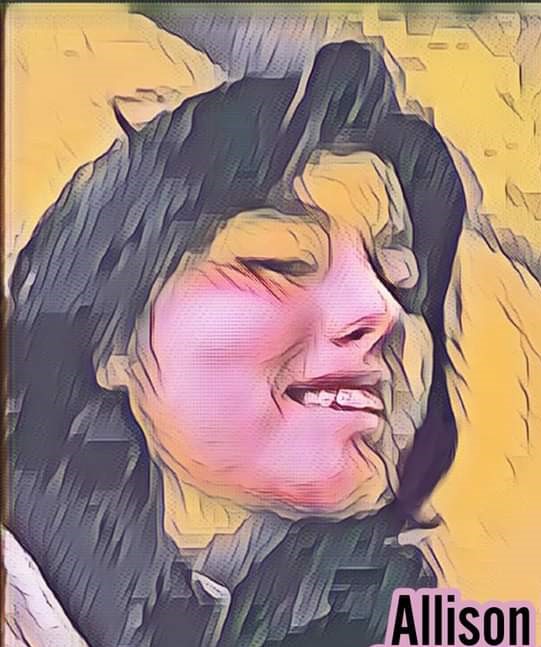
Alison Melendez was 17 when she was sexually abused last week by a group of Colombian policemen. She was captured for allegedly being part of the protest groups in Popayán, a city in the south of my country Colombia, South America. The next day Alison was found dead. The official version states that she committed suicide. In the social networks, there is a video of four policemen carrying Alison to the detention center, each holding one of her extremities. One can hear Alison screaming, “Four were necessary to carry me? Four against one woman? Cowards!” The next day – before she was found dead – she posted on Instagram that she was not part of the protests that night. She was walking to a friend’s house when the police showed up. She started recording their actions, they saw her and went mad, so they captured her. When she resisted, four of them took her to the police station. In the post, Alison mentions how they groped her to the soul.” In the video, one can see how her pants came off while they were carrying her, and the policemen did not care. They just kept walking. The last time we see Alison in the video is inside the station. Then cameras were turned off.
*End Trigger Warning*
Alison is one of the 18 cases of sexual violence reported during the protests that started last April 28 in different cities of Colombia. In addition, there are 87 reports of violence and abusive behavior against women protesting. Alison’s case has been more visible, but it is easy to find several videos of police officers beating, harassing, and capturing women in the protests on social media. We have been witnessing this terrible violence full of indignation and impotence, despite protesting is our legitimate right as citizens.







 Feminism and Religion