Sheep, Goats, and a Donkey Named Balthazar by Joyce Zonana

JZ HEADSHOTA few days ago, at the New York State Sheep and Wool Festival in Rhinebeck, NY, I purchased a six-ounce skein of fine, reddish-pink mohair bouclé, directly from the woman who’d dyed it using the natural pigments cochineal and logwood. My plan is to make a soft, long winter scarf with it.

I recently started knitting again, lured by some thick, heathered purple wool yarn I’d glimpsed in a farm store in upstate New York. “Is this wool from your sheep?” I asked the farmer. “No, but it’s from a farm down the road,” she assured me. “Her sheep and mine are related, and I know those sheep well.”

I was delighted to be knitting an afghan with wool carded and spun from the fleece of Continue reading “Sheep, Goats, and a Donkey Named Balthazar by Joyce Zonana”

The Brazilian Great Mother by Mirella Faur (Part 2)

This article was originally published by The Beltane Papers issue #30 February 1998. FAR is republishing it with permission from the author in order to digitally archive this important work. Part 1 is available here.

The indigenous Brazilian tribes worshiped all Mothers and believed they created life without the male presence. All Goddesses were virgins, but their virginity was only a symbol of independence and self-sufficiency, without any physical meaning. In some myths, the virgins are impregnated by numinous energies, manifested as animals (snake, birds, porpoise), forces of Nature (rain, thunderbolts, rays of light), ancestors or Deities. As other native people, they weren’t aware of the male participation in the conception and respected and revered the menstrual blood as something sacred, filled with magical powers, because after the “supernatural” ceasing of the monthly flow, life was created. Only after the interference of the white settlers and the massive Catholic indoctrination that the native cosmology was distorted, the Father assumed the main place, the Son became the second one in the divine hierarchy and the Mother was transformed in a suffering and silent virgin. Even so, many native traditions survived in the legends, folk beliefs, shamanic healing and magical practices as the Pajelança and Encantaria.

Besides the “Good Mother”, some of the native legends also mention the “Terrible Mother”, Boiuna, the Giant Snake of the Amazon River. The bottom of the river was her habitat and she appeared only at night, destroying boats and devouring people. Her terrifying aspect and her connection with the darkness, death and night are, as a matter of fact, features of the Dark Goddess, the Reaper, who controls the eternal cycle of birth, life, death and transformation.

Another manifestation of the Dark mother is Caamanha, “Mother of the Woods”, protector of the wild life who punished all intruders and violators of her domain. In other myths, she was transformed either in the Curupira or the Caapora, strange male beings, with twisted feet, who walked backwards, thus acting as guardians by misleading hunters or even attacking them.

In some Guarani myths we find mentions to the “Mother of Gold”, described as a beautiful woman or a brilliant globe, which seduced the gold prospectors and took them deep in the mountains, far away from the gold mines. Considered a Guardian of Mother Earth’s treasures, she sometimes manifested herself as Boitatá, who could appear as a phantasmagorical snake, with a luminous body and huge eyes, or only as a giant head, floating over hidden treasures, frightening or punishing those who destroyed Nature in search of fortune. Continue reading “The Brazilian Great Mother by Mirella Faur (Part 2)”

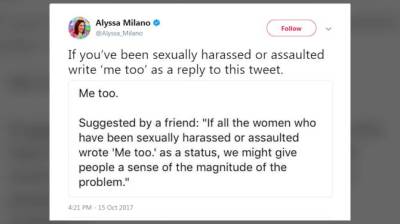
#MeToo or Why I Didn’t Make a Film in Film School by Marie Cartier

I needed to check out a camera for an assignment. I was in the small equipment room looking at equipment I clearly did not know how to use yet. But, I was required to check out a camera and start. I was excited to begin.
I turned around to ask a question of the guy who helped us check out equipment. I was surprised, and then stunned to see him close the door behind him. I don’t know if he locked it, but he stood in front of it, blocking my exit, and asked me, “How bad do you want that camera?”

I was a radical lesbian separatist who wore “ACT-UP FIGHT AIDS” T-shirts regularly to school. I stared at him and said the first thing that came to my mind, “I am not the person you want to do this to. Trust me.” We stared at each other. He laughed and slowly moved away from the door. I left, with the camera (I think), I finished that assignment and somehow passed the camera class. What I do know for sure is that I never checked out a camera again, and somehow convinced myself that the “equipment” part of film making was somehow too technical for me.

I had come out to LA from Colorado and was extremely proud to get into one of the best theater and film schools in the US. However, I was completely not “used to” the level of casual and cruel sexism women in the industry were subjected to. There was an unwritten code that if you wanted to make it as a woman—well, you better toughen up and get used to what the industry looked like for women. Continue reading “#MeToo or Why I Didn’t Make a Film in Film School by Marie Cartier”

Rape Culture and Muslims by Vanessa Rivera de la Fuente

rape culture

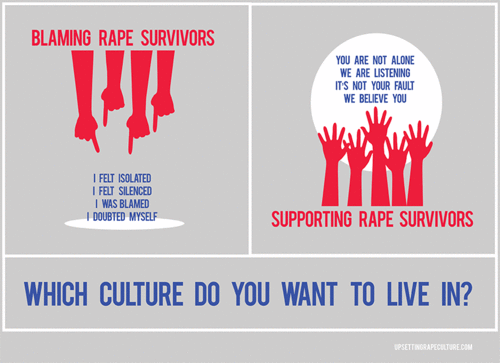
There is no doubt that Rape Culture is installed within religions and Islam is not an exception. Lately, “honorable Islamic scholar,” Nouman Ali Khan (NAK) was exposed as sexual predator, causing a battle in social media. NAK is only one more in the list of sexual offenders operating in religious spaces, on many occasions with the support of opinions leaders, or the silence and blind eye of the community of believers.

During my months in Cape Town, as you know, I engaged in critical education in Gender and Islam through workshops with Muslim women from the Cape Flats, where the rigid dynamics of researcher-object of study, gave way to an equal interaction of “people talking.” A recurrent theme, as I said in a previous article, was sexual violence and the discursive tenets that facilitate it.

In the light of the controversy aforementioned, I want to share excerpts that I recorded during our sessions of the sincere statements of Muslim women between 25 and 60 years old from different suburbs of Cape Town on Rape Culture and religion as they live it.  Continue reading “Rape Culture and Muslims by Vanessa Rivera de la Fuente”

Season of Change – Transformation by Judith Shaw

judith shaw photoFall is here, the leaves are changing color, the days are shortening and our ongoing natural cycle of change and transformation now moves toward the dark, quiet days of winter. Both the idea and the process of transformation have fascinated me my whole life. Blame it on my Scorpio rising. Scorpio is ruled by Pluto, the planet of transformation and regeneration. Diving deep and surfacing has always been my mode.

Continue reading “Season of Change – Transformation by Judith Shaw”

The Brazilian Great Mother by Mirella Faur (Part 1)

This article was originally published by The Beltane Papers issue #30 February 1998. FAR is republishing it with permission from the author in order to digitally archive this important work.

Brazil is traditionally known as a Roman Catholic country, with a great influence of African cults and a growing number of various Protestant sects and different spiritualist, new age and esoteric groups. One of these, Wicca, has been catching up the public attention, appearing lately on the media and making us ask ourselves many questions such as – with so many myths and legends in our origins, why do we have to import from abroad, through books and especially virtual information, other cultures’ traditions and practices?

There are not, yet, reliable written records or academic research, except a few private studies, proving the existence of an ancient cult of a Brazilian Great Mother. On taking possession of Brazil’s primitive land, European conquerors discarded and destroyed the ancient universe of the native people. Modern archaeological discoveries prove that the rock art,  anthropomorphic and zoomorphic figurines and the ceramic objects left by the  people that inhabited Brazil 15.000 years ago, have magical and religious attributes, similar to those found in Europe. There are also plenty of native myths and legends left, some of them disguised in folklore or children’s stories, that can be, in the future, used to translate the country’s pre-history, shedding more light on the lost past and recovering the vestiges of an Ancestral Mother. For the time being, we must count upon the Afro-Brazilian cults and the hidden meaning of legends to discover images of a Mother Goddess, as the ones below.

Despite of its fundamentalist official religion and patriarchal society, Brazil concentrates, with the exception of India, the greatest amount of worshipers of one of the manifestations of the Divine Mother, which is Yemayá, the ancestral Goddess of Water, and Lady of the Ocean.

Every year, on New Year’s Eve and on February second, millions of Brazilians, dressed in white, take their offerings and prayers to the sea shore or sail in boat processions. These processions, similar to the Egyptian and Roman ceremonies called Navigium Isidi, dedicated to Isis, the protectress of the seafarers, who, like Yemayá, is also called “The Lady of the Navigators”. Although this huge Brazilian devotion to Yemayá, her cult is not an indigenous one, being brought to Brazil by the Yoruba slaves, in the XVIII century. Continue reading “The Brazilian Great Mother by Mirella Faur (Part 1)”

The Impact of Marija Gimbutas on My Life and Work by Carol P. Christ

Last winter FAR contributor Glenys Livingstone lovingly and professionally edited all of the interviews for the film on Marija Gimbutas’ life and work, Signs Out of Time, by Donna Read and Starhawk, and posted them on youtube. Though I received a link to my interview from Glenys, I was too busy (or too depressed?) to watch it at the time.

As I watched and listened to my twenty years younger self yesterday, chills went up and down my spine. How, I wondered, did she know so much way back then? Maybe (I thought) she really was drawing on the underground spring described by Marija Gimbutas as bursting forth from time to timε to bring us wisdom from the ancestors of Old Europe.

Thank you Glenys for the fantastic editing job.

* * *

a-serpentine-path-amazon-coverGoddess and God in the World final cover designCarol’s new book written with Judith Plaskow, is  Goddess and God in the World: Conversations in Embodied Theology.

FAR Press recently released A Serpentine Path: Mysteries of the Goddess.

Join Carol  on the life-transforming and mind-blowing Goddess Pilgrimage to Crete. Sign up now for 2018! It could change your life!

Carol’s photo by Michael Honegger


Earth Liturgies for Healing and Hope by Elisabeth Schilling

In the times of our environmental crisis, I long for rituals, literature, music that can help me navigate the challenge of figuring out how to help, that can inspire me, keep this reality in my mind. I would love to write earth-based poetry myself, but I’m not nearly as connected or intimate or hopeful within my soul as such a task might require.

I think Carol Christ’s Goddess Pilgrimage would be lovely for re-connecting with the earth. I would love to read a post or comments on just how ecology and earth-based awareness factor into this project. I have the pilgrimage on my list to go to some day when I can.

Another possibility is Starhawk’s permaculture retreats. She and other teachers regularly hold “Earth Activist Training” which teach about permaculture as a way to save the earth and mitigate violence. If any of you have taken part, let’s discuss! 

In the meantime, as a student of Sanskrit, luckily, I have been assigned to choose a chant that I would like to memorize, and so I have chosen the first two verses of the Ganga Stotram. A stotra (Sanskrit for ‘hymn of praise’) is a poetic conversation with or about the divine with guidelines for life embedded within. This particular stotra, 14 verses in length, honors the mother, the goddess of the waters, in the form of the Ganges River in India. It originates from the glaciers in the Himalayan mountains. About 1/4 of the country of India is made up of the river basin and 40% of the country’s population resides in this area as well. It is prominently featured in the sacred literature of Hinduism, such as the Rāmāyana and Mahābhārata and, as the strota mentions, the Vedas. This is the chant in transliteration with the English below. Continue reading “Earth Liturgies for Healing and Hope by Elisabeth Schilling”

Who is the Perpetrator? by Oxana Poberejnaia

A poem by Thích Nhất Hạnh, a Vietnamese Buddhist monk and peace activist, “Call Me By My True Names,” lists various situations from natural world and the world of humans, most of them to do with violence and death. He claims in the poem to be both: the victim and the perpetrator of violence.

This poem has always bothered me. I can understand a world perspective where you express solidarity with all the sufferers, but how to come to terms with identifying oneself with the oppressors and murderers?

At my current limited level of understanding of the Buddhist teaching I can only say that perhaps the words: “I am a rapist and a murderer” point to tendencies that are present in all of us. First and foremost it is a tendency to divide, to separate. The most noticeable separation is between the “I” and the “outside” world.

First we counter position ourselves against all the others. Next we start believing that it is possible to achieve happiness just for ourselves, at the expense of the others. So we live egotistically. From here, I suppose, there is only a small step to rape and murder.

Continue reading “Who is the Perpetrator? by Oxana Poberejnaia”

Kneeling as Protest by Anjeanette LeBoeuf

In a previous FAR post, I talked about the newest trend in sports of including women in marketing strategies for American football. Today I have decided to throw my hat into the ring regarding the recent polarizing “Kneeling” protest taking place at NFL games. I started writing this on the morning that the current Vice President walked out of a NFL game due to players ‘taking the knee’ during the National Anthem; a protest which has been reported to cost TAXPAYERS $200,000. Weeks have gone by with the issue getting bigger and bigger. I can no longer stay silent.

This protest started when NFL quarterback Colin Kaepernick took a knee during the National Anthem in August of 2016. He stated he was taking a knee to stand for people that were being oppressed. It has since exploded as a social movement/protest.

It has become a highly sensitive and polemic topic. And it is polarizing bcause the two groups which are opposing each other are actually, talking about two different things. The group that supports the kneeling protests understand that this ‘peaceful, and respectful’ act during the National Anthem is an important way they can voice their solidarity, take a stance, and bring awareness to the violence and injustices that minority groups face, especially African Americans. The group that radically opposes this protest only see it as a disrespecting act of our country, our flag, our troops, and their faith. Thus, the arguments and pseudo-discussions are not getting anywhere. Continue reading “Kneeling as Protest by Anjeanette LeBoeuf”