Where the Dance Is . . . On Cultivating a Daily Practice by Joyce Zonana

Although Goddess traditions invite us to embrace a world of immanence and change, rather than to seek to escape into transcendence—which some yoga teachings seem to point toward—I have come to believe that the “still point,” is, as Eliot writes, where “the dance is.” In other words, daily practice might grant us the capacity to always move through the world with grace and joy. The mind will be steady as it encounters and embraces the turning world. We will be whole.

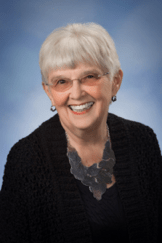
jz-headshotWhen I was growing up, I was fascinated to see my father each day recite the morning blessings mandated for Jewish men. While the rest of the household bustled sleepily—my mother in the kitchen, my brother and I taking turns in the bathroom, my grandmother slowly getting dressed—my father, still in his pajamas, would stand in the center of our small living room, yarmulke on his head, tefillin wrapped around his arm and forehead, tallit draped over his shoulders. Using a tattered old siddur he had brought with him from Cairo, he would face the east and begin the ancient Hebrew prayers: “Blessed art thou, Lord our God, King of the Universe . . .”

I never knew then the content of what my father intoned, but I knew how committed he was to his practice: he prayed every morning without fail, from the day of his bar mitvah at the age of eleven (the rabbi in Cairo had decided to initiate him early because he had lost his father as a young child) until he a few years before his death at 84, when he became debilitated by Parkinson’s Disease. Ours was not a traditionally Orthodox Jewish family—we did not observe the Sabbath or keep kosher—but my father’s faithful performance grounded him and all the rest of us, bringing us us to what T.S. Eliot called “the still point of the turning world.”

Continue reading “Where the Dance Is . . . On Cultivating a Daily Practice by Joyce Zonana”

The Room Where We Support Each Other, Part 2 by Carol P. Christ

Last week, In the Room of Undressing where women strip themselves to the bone, my great-great-grandmothers on my father’s side spoke in me. I had been afraid they would judge me for not being a wife and mother like they were, but they did not.

The story continues with my great-great-grandmothers on my mother’s side.

Ingrid Mattsdottor, born 1829, Överhogdal, Jämtlands Län, Sweden, died 1918, Kansas City, Missouri, proprietor of a boarding house, mother of five daughters:

I was the oldest of eight children. Our father died when I was eleven. At sixteen I was sent to work as a servant in a village far from home. I stayed for six years. After that, I worked for two years on a farm in our village. I was twenty-nine, and wondering if I would be an old maid, when Olof and I married. Our five daughters came quickly. I knew a lot more about work and children he did, so I took charge. When the crops failed all over Sweden for two years running, I said enough was enough. As soon as our last daughter was born, I sold the farm, and we left for America.

Iowa was worse than Sweden. Our little Carin died the first year. Olof gave Ingrid to a wealthy Swedish couple without so much as a word to me. He kept talking about going back to Sweden. One day he took the money I set aside and bought his ticket.

By the time he came back for us, Anna, Sarah, Belle, and I had moved to Kansas City. I was running a boarding house. I told Olof that we had no intention of going back to Sweden with him. When Anna married, instead of moving out, she brought her husband and his children to live with us. Belle became quite the business woman and took over my role as provider. Sarah and her family were always close by.

I worked as hard as any man and Belle did too. “Far better off on our own,” we would often say. We are proud to have another strong woman in our family. I am sorry you didn’t get to meet Belle. You would have liked her.

Continue reading “The Room Where We Support Each Other, Part 2 by Carol P. Christ”

The Room Where We Support Each Other, Part 1 by Carol P. Christ

Over the past year or so I have been reciting my mother line, seven generations back, as a mantra of gratitude that helps me sleep at night. Sometimes I also name my sixteen great-great-grandparents, though I often fall asleep before finishing.
I have gained courage from the strength of their lives, but I never wondered what my eight great-great grandmothers would think of me. My life feels so different from theirs. Perhaps I feared they would judge me and my life.

This weekend, while re-reading Woman and Nature, I followed the narrator through a Passage to the Room of Dressing:

Where the women are not close. Where the women keep themselves at a distance.  . . . where the women tell each other that they are happy.  . . . The room where the daughter denies she is anything like her mother. (156)

Continue reading “The Room Where We Support Each Other, Part 1 by Carol P. Christ”

Why Pro-Life Stops at Birth: Who Really Supports Life and Why by Winifred Nathan

The patriarchal Catholic Church claims to be pro-Life.  But is it pro-Life?  Or is it pro-Birth?  A Catholic Benedictine sister outed the pro-Life movement. Her position: the pro-life crowd shows little if any ongoing interest in life after birth.  They’re pro-birth, but not pro-life.  Legislators who enact laws to restrict a woman’s right to an abortion, but then stand firm against funding  programs that assist the mother and her baby once the child is born are not pro-life.   Too often the goal of anti-abortion advocates is for the fetus to make it to birth. Birth is the important value, life not so much.

I propose the starting point for deciphering this puzzle is to look at our desire as human beings for immortality.  We want to defy death believing that there is a spiritual continuation of who we are after our bodies shut down.  We want death to be a new beginning.

A great deal of effort goes into seeking  an answer to the question what comes next.  A question we presently lack the capacity to answer. We honestly do not know what if anything happens following death.

Continue reading “Why Pro-Life Stops at Birth: Who Really Supports Life and Why by Winifred Nathan”

Windigo by Sara Wright

Windigo,

the Potawami Nations call him.

Malignant,

this spirit thrives

in the Northern Woods,

within the human soul.

Hatred for self or other

hidden

under Lies.


Windigo, the

Potawami Nations call him

He thrives

on greed.

Empty

He can never

Be filled.

Continue reading “Windigo by Sara Wright”

Celtic Awen, Spiritual Homecoming, and Singing with Trees by Trelawney Grenfell-Muir

Does your name have a special meaning? Mine does. In fact, in one corner of the world, you would be very hard pressed to find anyone who did not know the significance of the name Trelawney and its history. They could probably even sing you a rousing song about it:

And shall Trelawny live? Or shall Trelawny die?

There’s twenty thousand Cornish here, will know the reason why![1]

But growing up in New England, no one had ever heard the name Trelawney before, or the name “Cornwall,” the land of Trelawney. If I said “Celtic,” they would finally nod.

Then with the internet came affordable communication “across the pond” to Britain, and my earliest internet explorations connected me with Cornwall, where my grandfather came from. I taught myself Cornish folk songs, I found folktales, recipes, and a more richly detailed cultural nourishment than my Cornish grandfather had managed to pass along to us. A lifelong mystic and Methodist minister, but if you ever asked my grandfather his religion, he would reply, “Druid,” with just that hint of mysterious twinkle in his eye.

Continue reading “Celtic Awen, Spiritual Homecoming, and Singing with Trees by Trelawney Grenfell-Muir”

Dear Mary by Sara Wright

This piece was written in response to Gina Messina’s recent Feminism and Religion piece “Who is God?”

Dear Mary,

When I responded to a post on feminism and religion this morning I wrote that you were my first goddess. As a child I knew little beyond that you were the “Mother of God,” and I found your presence immensely comforting, even seeking you out in secret, entering your rose garden in a local monastery. I needed you so.

Early in adolescence I learned that your life was one of purity, sacrifice, and loss. Your purity left me bereft. How could a young Victorian girl be “good enough” to serve such a figure? I was fierce and passionate – a thorny red rose – with an empty hole in my heart.

Sadly, I released you and chose your sister the whore, the Black Goddess in disguise… but I didn’t know that then; I only knew that the “black” woman succumbed to her flesh as I did, covered herself in shame…What lies Patriarchy tells…

Continue reading “Dear Mary by Sara Wright”

On Tetzaveh by Ivy Helman

29662350_10155723099993089_8391051315166448776_oThe Torah parshah for this week is Tetzaveh (Exodus 27:20 – 30:10).  Mostly it describes the priesthood, both of Aaron and his sons. It details how they should be consecrated, what they should wear, the difference between the garb of the high priest and the others, institutes the daily burnt offerings of rams, and provides instructions for the construction of an altar for locally-sourced incense.  
The parshah works to establish differences between members of the Israelite community through consecration as well as in function and in dress by decreeing the institutionalized of the priesthood.  Priests undergo an elaborate consecration ceremony which includes the sacrifice of animals, the smearing of their blood, the waving of various animals parts into the air and the burning/cooking of the sacrificed animals’ flesh.  In addition to the blood smearing and animal sacrifices, the priests are also anointed with oil and offer oil and grain offerings to the divine. In terms of function, priests should offer daily sacrifices to the divine in the form of two rams (one in the morning and one in the evening).  Also, all priests have four items of similar clothing: tunic, girdle, turban and short pants. However, the high priest has four special items only he wears, like the breastplate and a golden forehead piece. His clothes are laden with gold, precious stones, and royal dyes.   Continue reading “On Tetzaveh by Ivy Helman”

Generosity and Community: the Alternative Worldview of Women’s Ritual Dances, Part 2 by Laura Shannon

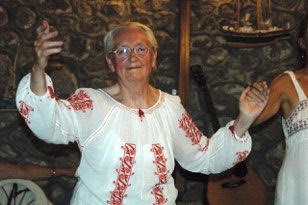
Dr. France LeJeune Milchberg taking her turn to lead the dance line, Lesvos 2007. Photo: Sheryl Ackerman

Starhawk describes the work of her Reclaiming collective as the creation of ‘spaces of refuge from a harsh and often hostile world, safe places where people can heal and regenerate, renew our energies and learn new skills.’[i] These words also apply to the women’s traditional dances. One participant on my courses expresses it thus: ‘In the circle no-one is left out, no-one is ignored, all are held and included, all have their place, all are connected.’[ii]

Crucially, women’s ritual dances empower everyone to develop leadership skills. Every woman must know how to lead the line at the appropriate time, and she must also know how to pass on the responsibility afterwards. Continue reading “Generosity and Community: the Alternative Worldview of Women’s Ritual Dances, Part 2 by Laura Shannon”

Seeking Enlightenment? Let’s Try Endarkenment by Barbara Ardinger

In the version of the calendar I follow, February 1 is the true beginning of spring. That’s because early February is when we can see the light coming back. We know spring is really coming. February opens with a holiday/holy day variously known as Imbolc, Brigid, and Groundhog Day. Imbolc is the name of a traditional Celtic festival. The word is related to milk, possibly ewes’ milk, as lambing starts around this time. Brigid, whose name means “bright one,” is a triple goddess and ruler of (1) the sun and fire (and smithcraft), (2) poetry and inspiration, and (3) healing and medicine. It’s said that the straw left over from making Brigid’s crosses and other charms has healing powers. The newer Brigid is the Catholic saint who refused to marry and became a nun. And, of course, Groundhog Day is a secular holiday that uses helpless animals to make silly predictions. (But the movie is good.)

February (from the Latin word februa, which mean purification) gives us opportunities to become both enlightened and endarkened (yes, another word I invented).

ENLIGHTENMENT: “You light up my life.” A charismatic person “lights up the room.” When we become aware of something, the “lights go on” or we suddenly “see the light.” In cartoons, a light bulb turns on over the head of the guy who has the idea. Conversely, we call someone who isn’t enlightened “a dim bulb,” or maybe we say, “The lights are on but nobody’s home.”

Continue reading “Seeking Enlightenment? Let’s Try Endarkenment by Barbara Ardinger”