

 Part of my research is focused on how the social sciences relate to “religion” and religious studies. More specifically, I spend time examining the sociology of religion. I look at stats, demographics, and polls. I look at rates of attendance, frequency of prayer, levels of “religiosity,” apostates (or the less religiously-loaded term “exiters”), and political outlooks. I also look at how bias this area of study is in favor of religion. One facet of this work that has always interested me, is the differences in “gender” and “sex” as they relate to religious beliefs and observances. Accepting the fact that there are spectrums of sex, gender, and identity, and the presence of difficult philosophical questions surrounding self-identification and the limits of labels, some really interesting facts and statistics crop up time and time again. In what follows I will lay out a couple of these interesting facts, along with some thoughts on them: Continue reading “5 Interesting Facts about Women and Religion by Kile Jones”
Category: Children
Ancient Spirit Wisdom by Jassy Watson
 On a recent journey within, guided by drumming and visualisation I encountered my Muse. Her Native American Indian appearance surprised, even bewildered me, as I know so little about North America’s indigenous cultures.
As I painted her into being I listened closely to what she told me, stating clearly “I am Ancient Spirit Wisdom,” the wisdom of our ancestors passed on through story, image, sculpture, word, song, dance, ritual, prayer and ceremony. The closer I listened, the more my Mysterious Muse reminded me that I had a story within, one of my very own, yet one shared by women everywhere. I too am a container of Ancient Spirit Wisdom, more precisely, Ancient Women’s Wisdom.

Genetic Testing: The Ethical Implications of Expanded Newborn Testing – Who Benefits? (Part Two) by Michele Stopera Freyhauf

With Angelina Jolie’s decision to have a double mastectomy due to a genetic test that revealed she carried the BRCa gene, the issue of genetic testing is in the forefront once again. This is the second part of a three-part essay exploring genetic testing on newborns (part one and part two) and concludes with exploring personal choices and the psychological ramifications of genetic testing.
False Positives, Lack of Empirical Evidence, and Dangers in Expanded Newborn Screening
In the year 2000, most states only screened for about four conditions. As of November 2008, most states adopted screening for the 29 recommended primary conditions and up to 25 secondary conditions (See President’s Council on Bioethics, “The Changing Moral Focus of Newborn Screening,” 36). Since no federal mandate on newborn screening exists from state to state, this number varies due to the lack of understanding of the diseases or showing no proven benefit. In fact, the twenty-five secondary conditions recommended by the American College of Medical Genetics do not need urgent treatment in the newborn period or have no proven treatment (Also see Mary Ann Baily and Thomas J. Murray, “Ethics, Evidence. And Cost in Newborn Screening” Hastings Center Report (38, 2008), 28 ).
Then there is the multiplex technology of tandem mass spectrometry (MS/ MS) that can screen for over 40 “inborn errors of metabolism” from a single drop of blood (See President’s Council, “The Changing Moral Focus of Newborn Screening,” 9). While this technology has reduced the numbers of false positives, it is still far from being reliable. This is due to screening for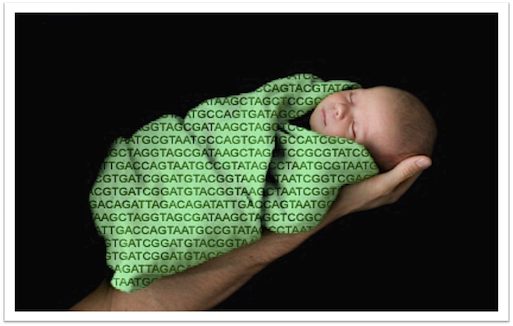 rare disorders on a population wide basis – about four million babies annually. To illustrate this point, in 2007, 3,364,612 infants were screened for Maple Syrup Urine Disease (MSUD) in the United States and 1,249 tested positive. After retesting, only 18 cases confirmed a positive result (See President’s Council, “The Changing Moral Focus of Newborn Screening,” 14). MSUD is a well-understood condition that shows some benefit for screening. However, when we expand screening to add conditions that are not understood as well as mandate all newborns in the United States to be tested, false positives are likely to be in the tens of thousands (See also Beth Tarini, et al. “State Newborn Screening in the Tandem Mass Spectrometry Era: More Tests, More False Positives” Pediatrics, 118 (2006), 448-456).

![2013-05-13-BethWinegarner.jpg David Kinnaman and Gabe Lyons in their book unChristian, of the majority religion, Beth Winegarner noted that a lot of teens have "lost respect, because they find [Christianity] anti-homosexual, judgmental, or hypocritical."](https://i0.wp.com/images.huffingtonpost.com/2013-05-13-BethWinegarner.jpg) A passionate supporter of social causes, a civic voice sounding our shifting cultural landscape, a wonderful mother, and a brilliant writer — meet Beth Winegarner. Creator of
A passionate supporter of social causes, a civic voice sounding our shifting cultural landscape, a wonderful mother, and a brilliant writer — meet Beth Winegarner. Creator of Protecting our Families: How the U.S. Falls Short in Protecting New Mothers (and Fathers) by Michele Stopera Freyhauf
Last weekend, I had the privilege of speaking at the National Convention for American Mothers, Inc. about motherhood in the 21st Century. Because this is such a vital issue for mothers that live in the U.S. (since a large majority of families have two full-time wage earners), I thought it would be appropriate to share my speech here. With the understanding that this a forum for feminism, I believe that this topic fits this forum because it continues to show how unequal the treatment is between the sexes – whether it is pay, position in employment, healthcare, education, or simply balancing the responsibilities of family/career. For those that live in the United States, there is often a sense of exceptionalism, and as I clearly demonstrate in this speech, we are certainly a far cry from being role models that when it comes to protecting mothers (whether by birth or adoption) and families.
As a side note: One topic that was not explored, due to lack of data, is how maternity/paternity leave impacts same sex couples who become new parents – I have to believe that this is a topic to also examine (and I am would encourage any feedback here).
Recently the United States ranked 25 out of 165 countries for being the best place to live if you are a mother. This number is up from 31 a year ago and places us between Belarus and the Czech Republic.
You may be asking yourself, Why isn’t the United States in the top five or even in the top ten? The answer to that question becomes evident once we examine how that determination is made. The categories examined are:
- Mother’s education;
- Child’s Health;
- Economic status;
- The Election of women to government office;
- Breast feeding programs. In the United States 75% of mothers breastfeed their babies, 35% continue to breastfeed after six weeks. The number shrinks because mothers usually return to work and find it difficult to to pump at the office;
- Maternal death rate is another factor, which stunned me when I found out that the US has the highest maternal death rate of any industrialized nation. Approximately 1 in 2,100 women are at risk of dying during child birth;
- Infant death rates is another category. Infant deaths are estimated to be 8 per 1000 births – a number that throws us behind 40 other countries;
- The final item is maternity leave benefits for mothers working outside the home. This seems to be one of the biggest problems. That is why I think it is important to take a closer look at this issue with the hope of educating ourselves so we can perpetuate change. Continue reading “Protecting our Families: How the U.S. Falls Short in Protecting New Mothers (and Fathers) by Michele Stopera Freyhauf”
Grief Beyond Belief and Rebecca Hensler by Kile Jones
In my last post, “A Pro-Science, Skeptical Woman Speaks” I interviewed a woman with whom I share many views in common. One of my goals here at Feminism and Religion is to introduce different secular, atheistic, liberal feminists who share many of the same ethical views as regular contributors and readers, but not the same “religious” or “spiritual” ideas. In this post I examine an online support network for unbelievers, Grief Beyond Belief, and ask a few questions to its founder, Rebecca Hensler.
I met Rebecca in February in San Francisco while on a visit I made to meet with the Unitarian Universalist Association in regards to my ordination. My girlfriend and I met Rebecca in North Beach, San Francisco for dinner and drinks. I experienced her as a compassionate, friendly, and genuine person. Her experiences and insights inspired me to think more about the role of grief and pain among unbelievers. I mean, atheists cry, agnostics experience loss, skeptics lose family members, and we do it all without a “God” or “spirit” to help us. And if we were to meet C.S. Lewis, we would make
sure to exclaim, “No…pain is not some megaphone for God to rouse a deaf world.”

Why did you start Grief Beyond Belief?
The original idea was born of my own grief. After my son died, I found a group in which to share comfort and compassion with other grieving parents: The Compassionate Friends, a mainstream parental grief support organization with a strong online presence. It was so close to exactly what I needed, but I frequently felt alienated by the religious and spiritual content — not just the offers of comfort that depended on beliefs I do not hold, but the assumption that everyone there held some sort of belief in life after death. And the assumption, so common in mainstream grief support, that even if I am not the same religion as you are, I have a religion, and I believe in some sort of afterlife was equally alienating and hurtful. Continue reading “Grief Beyond Belief and Rebecca Hensler by Kile Jones”
Dialogues With Our Children by Kelly Brown Douglas
Son: My friends and I were stopped for going 61 mph in a 55 mph zone, frisked and had our car searched. We thought the police were going after the car of white boys in front of us going at least 70, but they stopped us instead.
Mother: It’s not the first time.
Intergenerational dialogues are key to Alice Walker’s womanist definition. This definition includes a dialogue between a mother and a daughter in which the daughter announces that she is going to Canada and taking others with her. The mother replies that she would not be the first one to make such a journey. During this Women’s History Month, I as a womanist am reminded of the dialogues that haven take place between black women and their children. These inter-generational dialogues have been fundamental to helping black children to “survive and be whole” in a world that looks down on their blackness and attempts to limit their ambitions. Continue reading “Dialogues With Our Children by Kelly Brown Douglas”
Marriage as a Commodity (Satisfaction Guaranteed) by Michele Stopera Freyhauf
This Saturday I will be presenting a paper about Cyberbrides at the United Nations Commission on the Status of Women. While my focus for that paper is the impact on mothers and families, my research also revealed how some Cyberbrides (or Mail-Order Brides) are selected from internet catalogues with “satisfaction guaranteed” and how “International Marriage Broker” may be a cloak hiding the agencies’ involvement with human trafficking.
Cyberbrides are essentially mail-order brides, but like pen pals, they can chat and exchange pictures on the Internet and interact through video or instant chat. There are almost 2.9 million website matches that turn up when Google-ing “Mail-Order Brides” within 19 seconds of pressing the “return” button. With the low cost of social media, a new venue to market and display this “commodity” is available. Presently, about 30 Facebook sites exist that advertise “Mail-Order” Brides. Continue reading “Marriage as a Commodity (Satisfaction Guaranteed) by Michele Stopera Freyhauf”
Second Class Rape Victims: Rape Hierarchy and Gender Conflict
Deconstructing masculinity isn’t the key to solving social, sexual, and domestic violence across the world but it is a step worth taking when attempting to engage men in affecting change to stop these violent actions since men, statistically are the perpetrators of such crimes that both cause such outcry as well as perpetual silence.
 The most disturbing part of the 2006 documentary Deliver Us from Evil isn’t the fact that Father Oliver O’Grady is rewarded by the Catholic Church with a new congregation in Ireland after his short stint in prison for the rape of dozens of children in the 1970s, but rather the hierarchy of gendered victimization which is often created throughout the various rape cases that are both reported and unreported throughout history.
I am often troubled by the ways in which rape cases are discussed and deconstructed via mediums such as blogs, online communities, social media networks, the news, and popular culture. No series of events troubled me more than the Jerry Sandusky trial, but more importantly, the ways in which the young boys and adult men who were subjected to Sandusky’s abuse quickly overshadowed the other rape cases that are reported on a daily basis, specifically those involving young girls and women. Continue reading “Second Class Rape Victims: Rape Hierarchy and Gender Conflict”
Please Excuse Me for Having a Penis: Taking a Back Seat to Privilege and Power by John Erickson
Male feminists must be aware that we not only engage in an ongoing struggle against sexual and gender inequality, but more importantly an ongoing fight with ourselves.
I have often struggled with that little voice, call it my conscience if you will, that speaks to me during times of distress. Although I consider myself a proud feminist, I still struggle with aspects of what I call, internalized misogyny, or more aptly defined as a male born characteristic trait that imparts the idea that men are not only dominant but also more powerful than the other 50% of the species.
For many reasons, I believe religion is one of the main culprits of this growing evil, one that we all witnessed throughout this last election cycle. However, instead of placing blame solely on religion and images of the male Godhead we have to begin deconstructing the sociological consequences these subconscious social, sexual, religious, and gendered norms have on men but more importantly men who identify as feminists. Continue reading “Please Excuse Me for Having a Penis: Taking a Back Seat to Privilege and Power by John Erickson”

