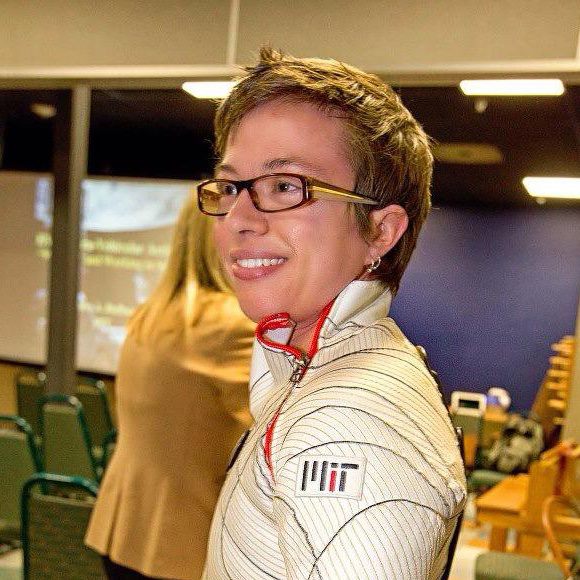
Purim and the Value of Courage by Ivy Helman

Ivy HelmanThe Jewish Festival of Purim and the book of Esther offer us an opportunity to reflect on the value of courage from a feminist perspective. The online Webster’s Dictionary defines courage as, “mental or moral strength to venture, persevere, and withstand danger, fear, or difficulty.” In religious discourse, courage is often categorized as a virtue or a moral principle. Aristotle (384BCE – 322BCE), one of the most famous of the virtue ethicists, believed a virtue like courage should be practiced according to the mean or the right amount. Too much courage leaves one rash, possibly too reactionary and hot-headed while too little makes one cowardly and weak, but just the right amount in a given situation leads to moral behavior. Virtuous living leads to happiness, or perhaps is itself happiness, for Aristotle.  Yet, as a feminist, I understand the worth of courage differently.  To me, the value of courage lies not in individualistic gains nor in personal happiness but in its use toward achieving justice and equality in society.

In the book of Esther, we read about Queen Vashti and Esther both of whom demonstrate courage. (There are many feminist commentaries on the inherent sexism of the book of Esther. While I acknowledge the need for such critique, I am not approaching Esther from this perspective as much as I am approaching it from what we can gain from the actions of the women in the story.) As the book opens, King Achashverosh asks Queen Vashti to parade her beauty at a feast for him and his guests. She refuses to be paraded and thus objectified. Men in the king’s royal court react harshly telling the king that if he lets her get away with such disobedience other women will surely follow suit. This is surely problematic for the kingdom as well as their households. Vashti is replaced as punishment. Continue reading “Purim and the Value of Courage by Ivy Helman”

Marriage as a Commodity (Satisfaction Guaranteed) by Michele Stopera Freyhauf

Freyhauf, Feminism, Religion, Durham, Old Testament, Blogger, Bible, Gender, Violence, Ursuline, John CarrollThis Saturday I will be presenting a paper about Cyberbrides at the United Nations Commission on the Status of Women.  While my focus for that paper is the impact on mothers and families, my research also revealed how some Cyberbrides (or Mail-Order Brides) are selected from internet catalogues with “satisfaction guaranteed” and how “International Marriage Broker” may be a cloak hiding the agencies’ involvement with human trafficking.

Cyberbrides are essentially mail-order brides, but like pen pals, they can chat and exchange pictures on the Internet and interact through video or instant chat.  There are almost 2.9 million website matches that turn up when Google-ing “Mail-Order Brides” within 19 seconds of pressing the “return” button. With the low cost of social media, a new venue to market and display this “commodity” is available.  Presently,  about 30 Facebook sites exist that advertise “Mail-OrderBrides. Continue reading “Marriage as a Commodity (Satisfaction Guaranteed) by Michele Stopera Freyhauf”

A Pro-Science, Skeptical Woman Speaks by Kile Jones

Kile Jones, atheistIn my last post, “Feminism and Religion: Where Do I stand?” I talked about how I support an atheistic, secular, and liberal feminism that criticizes organized religion and certain religious beliefs.  After reading the comments and responding to them, I figured that having a brief interview with a woman who holds these sorts of views would be a good way to introduce them to this blog.  I met Anondah Saide at a course at Claremont Graduate University titled, “Evolution, Economics, and the Brain,” taught by the Executive Director of the Skeptics Society and Founding Publisher of Skeptic Magazine, Dr. Michael Shermer.  Anondah was the TA for the course, and I found her comments in class to promote science, reason, and skepticism towards religious and spiritual claims of all kinds.  So without further ado, here is the interview: Continue reading “A Pro-Science, Skeptical Woman Speaks by Kile Jones”

Ringing In the Lunar New Year with LGBT Activism By Grace Yia-Hei Kao

Grace Yia-Hei Kao  On Sunday, February 10, the Tet parade in Little Saigon, Westminster (CA) went on as planned. Several thousand people turned up to celebrate the Vietnamese New Year, or what Khanh Ho, Assistant Professor of English at Grinnell College, has likened to “Mardi Gras, New Years, and Christmas all rolled into one.”

Continue reading “Ringing In the Lunar New Year with LGBT Activism By Grace Yia-Hei Kao”

Living by an Ethic of Love by Elise M. Edwards

Elise EdwardsIf we base our love ethic in the love of God, we will be committed to the presuppositions that everyone has the right to be free and to live fully and well. We will not try to deny others access to safety, food, shelter, and companionship, nor prevent them from obtaining opportunities for growth and outlets for self-expression because of their gender, sexual orientation, race, ethnicity, class or cost to ourselves.

I enjoy Valentine’s Day, and this has been the case for many years, whether I have been in a relationship or not.  I think romantic love needs to be celebrated, even if it is at the urging of greeting card companies, chocolatiers, florists and jewelers.  Of course, those of us who are even the least bit critical of consumerism and media propaganda will acknowledge that these companies try to convince us that we need to buy luxury items to demonstrate our love to the important individuals in our lives.  When our consumption of these goods hurts other people in our world and our planet (as in the consumption of blood diamonds or flowers that have been flown around the world, and thus contributing to environmental ills), we must recognize that they are not true reflections of love.   This is not to say that the intent of the giver or recipient is untrue.  I do want to challenge the predominance of these kinds of images of love, and provoke us to reflect on another way – an ethic of love rooted in the love of God. Continue reading “Living by an Ethic of Love by Elise M. Edwards”

Second Class Rape Victims: Rape Hierarchy and Gender Conflict

Deconstructing masculinity isn’t the key to solving social, sexual, and domestic violence across the world but it is a step worth taking when attempting to engage men in affecting change to stop these violent actions since men, statistically are the perpetrators of such crimes that both cause such outcry as well as perpetual silence.

johnThe most disturbing part of the 2006 documentary Deliver Us from Evil isn’t the fact that Father Oliver O’Grady is rewarded by the Catholic Church with a new congregation in Ireland after his short stint in prison for the rape of dozens of children in the 1970s, but rather the hierarchy of gendered victimization which is often created throughout the various rape cases that are both reported and unreported throughout history.

I am often troubled by the ways in which rape cases are discussed and deconstructed via mediums such as blogs, online communities, social media networks, the news, and popular culture.  No series of events troubled me more than the Jerry Sandusky trial, but more importantly, the ways in which the young boys and adult men who were subjected to Sandusky’s abuse quickly overshadowed the other rape cases that are reported on a daily basis, specifically those involving young girls and women. Continue reading “Second Class Rape Victims: Rape Hierarchy and Gender Conflict”

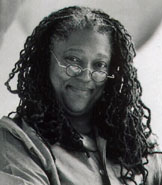
Monthly Highlight: Emilie M. Townes


Emilie M. Townes

“In my teaching I want to get students excited about that notion of, you know, you’re not just here to get a Yale degree and have it on your diploma and be able to hang it on your wall…You should be here thinking about what kind of contributions can I make to society….What are you doing that helps enhance the lives of all of us, as opposed to (our) own little idiosyncratic research interests.”  – – Emilie M. Townes

Emilie Townes is a pivotal person in the field of Womanist and Christian ethics as well as a foremother and pioneer in Womanist theology. Cornel West of Princeton University said:

“Emilie Townes is the towering womanist ethicist of our time….In this ice age of indifference and evasion, her powerful voice and viewpoint summon us. And we thank her for her vision and courage.”

At an opening address at the Convocation in 2005, Townes stated that there is a need to live in a “deep walking hope” that shapes lives “in ways that are not always predictable, not always safe, rarely conventional” and protests “with prophetic fury the sins of a world, and sometimes theological world views, that encourage us to separate our bodies from our spirits, our minds from our hearts, our beliefs from our actions.” Continue reading “Monthly Highlight: Emilie M. Townes”

Winds of Change in the Roman Catholic Church by Michele Stopera Freyhauf

Michele FreyhaufIn 2007, I had a conversation with a professor who felt that change was in the air for the Roman Catholic Church. The basis of this opinion was based on language. The words and the context used in writings that emerged from the Vatican were changing and somehow different – a difference that went beyond personal writing styles of Pope John Paul II and Pope Benedict XVI. This professor was hopeful that positive change for women could be coming. He was right about change in the Church, however, the changes surrounding women that emerged have not been positive.

As I continue to reflect on these words, I ponder the issue of language; specifically the impact words have and the way they are used to facilitate subtle changes in thinking, opinion, and beliefs. The method of persuasion that seems to be employed is the Aristotelian Rhetorical Theory that utilizes the five canons of rhetoric: invention, organization, style, delivery, and memory.

An example of this can be seen clearly in the changes in the liturgy that occurred last year. First, the teaching comes out with the rationale as to why the liturgy needs to change. From there a discussion, especially through the media, addressing the upcoming modifications are followed by subtle changes in the liturgy beginning with the call – response and the language in the creed. Next, the language of the celebrant began to change. Finally, the full implementation of changes is made with the addition of new gestures or movements. When I discussed the mass changes with a family member, there was an admittance that the changes no longer affect them – the changes were no longer noticeable. Their memory was impacted because the routine is now second nature.

In order to come to grips with the issue of language and the observation of my professor, I wanted to do a cursory review of the writings issued by the Vatican during this period. Admittedly, with a blog post, there is a limitation as to the depth and breadth of information that can be disseminated. It is my hope to eventually complete a thorough review of the modification of language used during Pope Benedict XVI’s papacy. For now, I want to address a few observations.

Continue reading “Winds of Change in the Roman Catholic Church by Michele Stopera Freyhauf”

Morals, Malala, and Mapping by Kile B. Jones

Kile Jones

Once again, recent events have me thinking of the ethical paradigms people utilize to comprehend and explain violent acts against women. These violent acts galvanize our moral compasses and beg for answers to our most fundamental moral questions. Do cultural relativism, pragmatism, divine command theory, utilitarianism, quasi-realism, virtue ethics, or moral realism better map on to the sentiments that arise in us when faced with misogynistic violence? Can we honestly say that an act is morally wrong when it is tangled up in the cultural and political characteristics of a certain country or group? Or can we justify, in the manner of moral realism, that certain acts are inherently wrong no matter what the context or culture? As you can tell, my ethical plate is full.

The first event that had me thinking of issues is the shooting of Malala Yousafzai. Malala, who I think should have won “Time Person of the Year” instead of President Obama, was gunned down on her school bus by members of the Taliban for being, amongst other threats, the “symbol of the infidels.” Malala survived a shot to her head and neck, and has since received innumerable awards and honors for her efforts to promote women’s education. Recently, 5 female school teachers were shot and killed by Islamic militants in the same province where Malala was shot. These teachers are thought to have been killed for their work fighting polio, since some Muslim extremists in that area think polio vaccines are a Western way of sterilizing Muslim children. Continue reading “Morals, Malala, and Mapping by Kile B. Jones”

The Future of Christian Ethics by Grace Yia-Hei Kao

The annual meeting of the Society of Christian Ethics is just around the corner (Jan 3-6, 2013). One of my responsibilities will be to meet again with members of the 2020 Future of Christian Ethics task force.

Our “charge” according to the chair of the committee, Charles Matthewes, is as follows:

Continue reading “The Future of Christian Ethics by Grace Yia-Hei Kao”